
London Approves New China Mega-Embassy amid Protests and Security Concerns
By Anna Toso | 3 February 2026
Summary
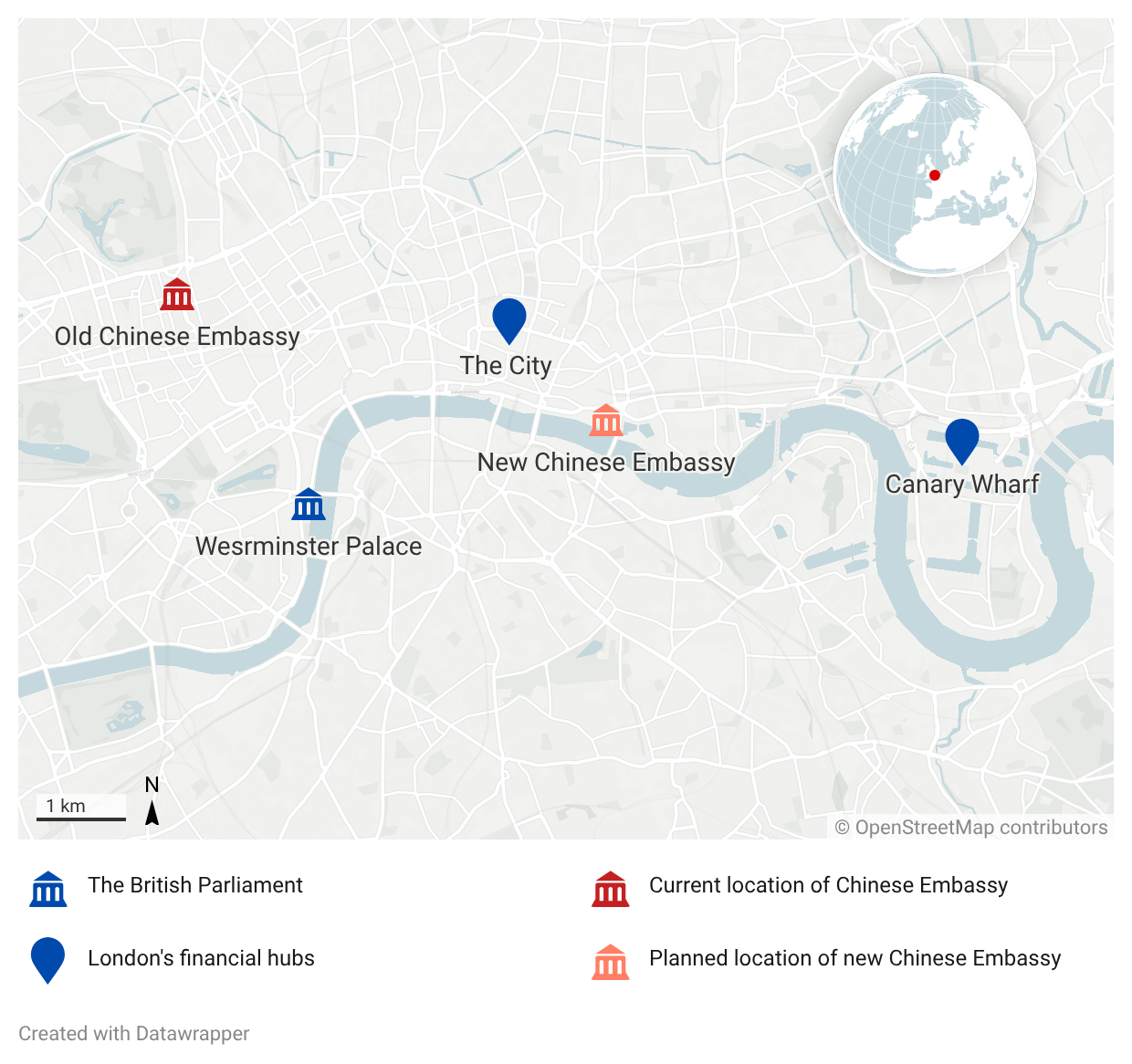
On 20 January 2026, the United Kingdom (UK) approved the plan to build China’s mega-embassy in a strategic location in central London, in proximity to the major telecommunication network of the City and Canary Wharf.
The approval sparked security concerns among residents, lawmakers, and international allies due to surveillance and espionage concerns, as well as fear of heightened repression among activists and dissidents from Hong Kong and China.
Bureaucratic delays in the operationalisation of the plan for the new embassy are likely to undermine its instrumental value in the diplomatic exchange between China and the UK planned for 29-31 January 2026.
Context
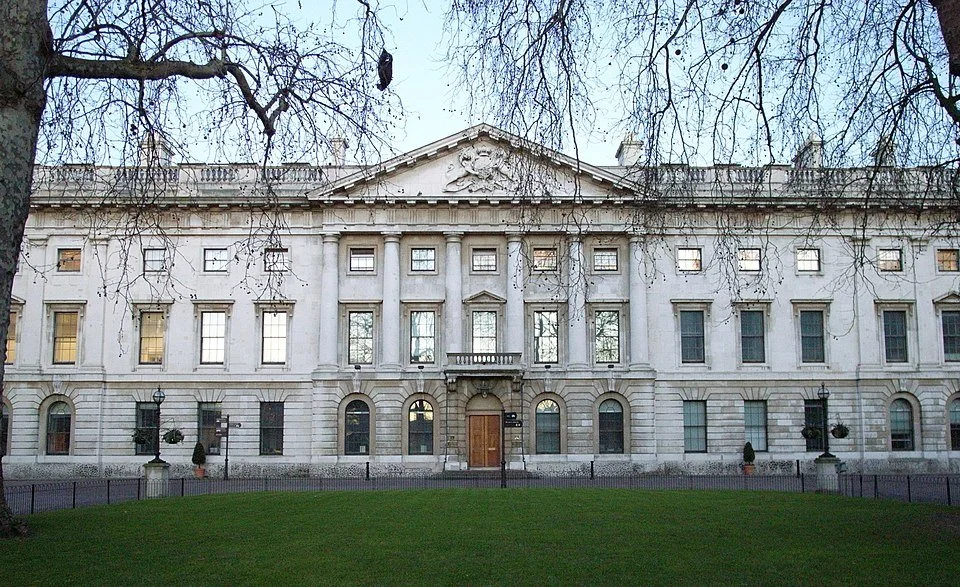
On 20 January 2026, the UK government approved China’s plan to build its largest embassy in Europe in London, after 3 years of negotiations. The Planning Inspectorate for England had previously recommended green-lighting the project in June 2025, despite strong opposition by local residents, Hong Kong activists, and lawmakers, over espionage concerns. In 2018, China acquired the Royal Mint Court building, the site of the new embassy. It is strategically located in central London, where fibre-optic cables and 3 data centres enable communications between the financial districts of the City and Canary Wharf.
Diplomatic implications
The approval of the new embassy could benefit the UK-China diplomatic relations and incentivise trade talks with China. Starmer will visit Beijing and Shanghai from January 29 to 31, 2026. This diplomatic meeting will represent the first official trip to China of a UK Prime Minister since Theresa May in 2018. The controversial approval of the embassy construction plan before this significant visit has fueled speculation about its instrumental role in the diplomatic relationship between the UK and China. In the UK, the current Labour administration is pursuing a conciliatory and trade-based relationship with China, reforming the approach of the previous Conservative government.
The redefinition of these bilateral relations intersects with the broader debate concerning the UK’s foreign policy outlook post-Brexit. In recent years, the UK administrations highlighted the need to revive British soft power in the international geopolitical arena, given the rising influence of countries such as China, Russia, and India.
China represents the fourth-largest trade partner for the UK and the second-largest source of international students attending British universities. According to the UK Foreign Secretary, progressive realism should be the principle driving the bilateral relations by supporting economic exchange while at a distance over security and human rights issues.
UK’s Domestic security risks and social unrest
Due to these concerns and potential threats to domestic security, residents of London have been protesting in front of the Royal Mint Court building. After the project’s approval, the campaigners announced their plan to legally challenge the governmental decision about the embassy. The new Chinese mega-embassy, its prospective staff of over 200 functionaries, and the heavily redacted construction plans that were originally submitted, with the undisclosed presence of multiple hidden rooms and underground chambers, raise fears of increased surveillance of British and Chinese nationals in the UK. Diaspora and pro-democracy activists from Hong Kong have already been targeted in the past by online hatred campaigns, bounties, and forced abductions. Alongside further repression of dissidents, the risk of spying against British lawmakers and politicians is also a concern, given the recent instances of Chinese foreign interference in Westminster.
International security concerns and China’s stakes
If the British national security and strategic communication lines were compromised by Chinese interference, its allies would be exposed too. This would threaten the UK’s international standing as an intelligence-sharing partner of the US and the other nations part of the Five Eyes alliance – Canada, Australia, and New Zealand – and of the Nine and Fourteen Eyes alliances. The members include several European countries whose security agencies cooperate to pool intelligence capabilities. An excessively accommodating stance towards China could provoke retaliation by those partners. For instance, the US could potentially curtail the latest UK-US Economic Prosperity Deal (EPD). Among its objectives, the EPD aims to marginalise American geopolitical rivals, such as China, and hamper its industries’ operations in the UK.
Beyond alleged opportunities for intelligence gathering and spying, China’s diplomatic and geopolitical toolbox entails multiple instruments of soft power. Firstly, by cultivating economic interdependence on China-based supply chains, Beijing can exploit commercial ties to gain the upper hand in its relations with its trade partners, such as the UK. Secondly, building a large-scale embassy in a host country symbolically signifies prestige, rising power, and commitment to long-term presence and ambitions.
Forecast
Short-term (Now - 3 months)
The residents will highly likely move forward with a legal challenge against the approval of the new embassy plan, causing further delays in the operationalisation of the project.
There is a realistic possibility that these additional bureaucratic delays will diminish the positive value of the plan’s approval as an instrument at UK’s advantage in the UK-China diplomatic exchange on 29-31 January 2026.
Medium-term (3-12 months)
Despite public disapproval and the delays, the plan for the new Chinese embassy will likely unfold by the end of 2026, allowing China to increase its diplomatic presence in the UK.
Long-term (>1 year)
Unless the current British administration respects their promises of strengthening their national security apparatus through tangible measures and updated legislation, the international security partners of the UK will likely downscale their intelligence sharing agreements with the UK due to heightened risks of Chinese foreign interference.
