Western Hemisphere's Jihadi Hub
By Gabriel Perkins | 14 April 2026
Summary
Trinidad and Tobago (TT), a Caribbean state, has the highest rate of Islamic State (ISIS) foreign fighters recruited per capita in the Western Hemisphere. Recruitment is sustained by entrenched radical social networks and decades of Islamist organising.
The continued detention of approximately 90 Trinidadian nationals, including at least 50 children, at Roj camp in northeast Syria and negligible repatriation progress, compounds long-term radicalisation risks domestically while exposing regional security gaps across CARICOM member states and into Latin America.
Without a structured framework to repatriate and rehabilitate detained women and children, and to counter radicalisation among domestic networks, Trinidad risks consolidating a second-generation security threat, with direct implications for US counter-terrorism interests, Caribbean regional stability, and Middle East security.
Context
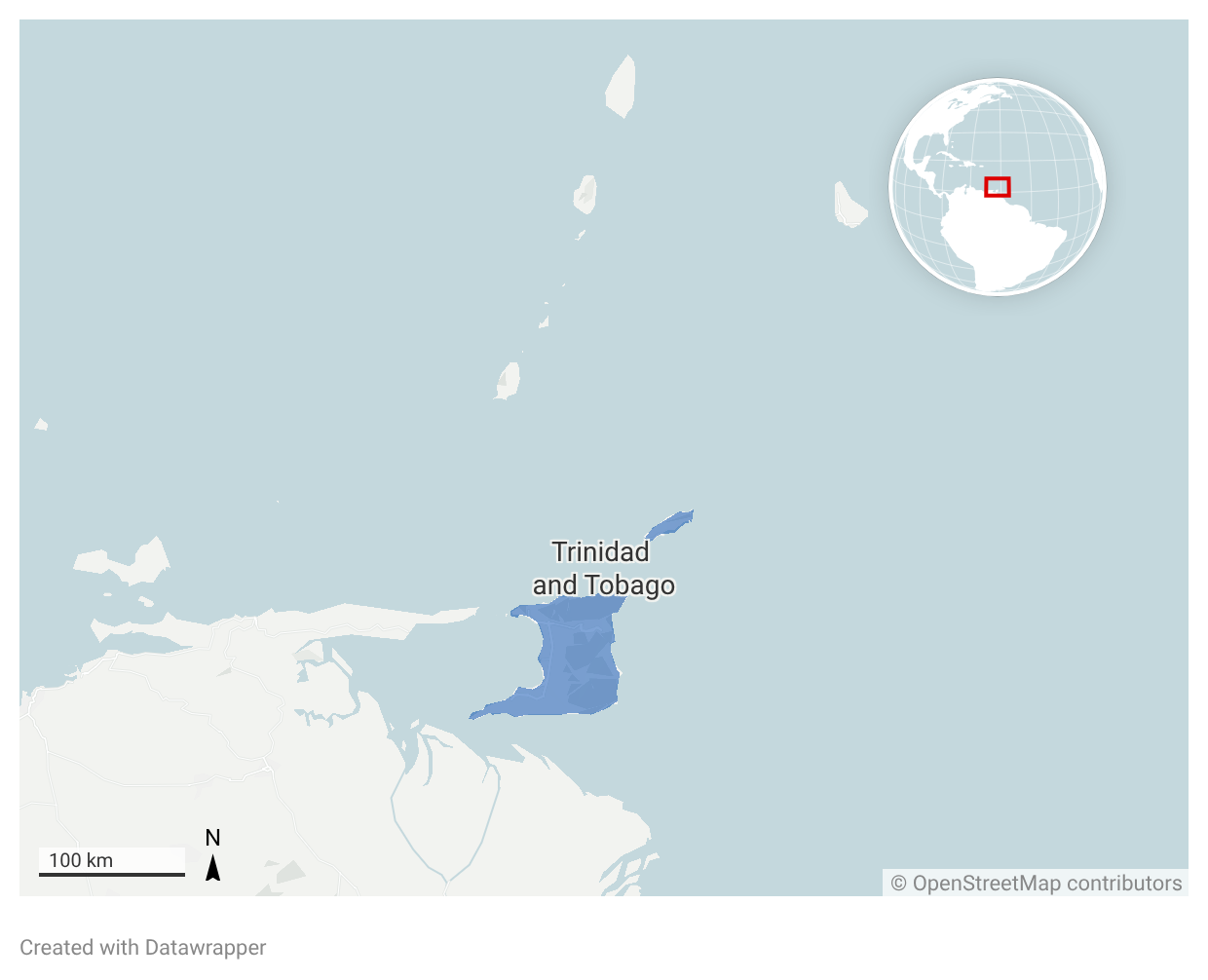
Trinidad and Tobago (TT) is a twin-island state in the southern Caribbean with a population of 1.4m people. Since 2013, over 100 citizens of TT have travelled to Syria and Iraq to join ISIS. Trinidad has the highest number of ISIS fighters recruited per capita in the Western Hemisphere.
Recruitment to ISIS was not driven by external operatives entering TT but by Trinidadian fighters already in Syria who maintained active communication with family and community members at home. Using personal ties and social media, these fighters drew on pre-existing kinship and mosque networks clustered around 3 geographic areas: Rio Claro, Chaguanas, and Diego Martin, encouraging further departures from within their own communities.
The issue of radicalisation is not new for Trinidad. In July 1990, the Jamaat al Muslimeen (JAM) staged a failed coup and escaped prosecution entirely, subsequently expanding its mosque and community networks and spawning offshoots, including the al-Qaeda-aligned Waajihatul Islaamiyyah, forming the radical infrastructure ISIS later exploited. In 2016, ISIS featured Trinidadian national Shane Crawford (Abu Sa'd at-Trinidadi) in its magazine Dabiq, calling for attacks on Western embassies across the Caribbean. Separately, Trinidadian citizen Kareem Ibrahim was sentenced to life in prison for his role in the 2007 plot to attack John F. Kennedy International Airport in New York.
Implications
Domestically, TT faces a growing gap between the scale of its radicalisation problem and its institutional response. The US State Department's 2023 Country Report on Terrorism confirmed that no arrests or prosecutions were initiated against any terrorist groups or individuals in TT in 2023. The radical social networks that enabled over 100 departures remain embedded in specific family clusters and communities, posing a fundamental challenge to TT's counterterrorism agencies, whose approaches remain focused on leadership disruption and key node targeting rather than network-wide disruption.
A further domestic concern is the connection between radical Islamist ideology and TT's criminal gang ecosystem. ISIS and criminal gangs draw from the same demographic pool: unemployed young men from economically marginalised communities who see few legitimate opportunities. This overlap is not merely theoretical; a Trinidadian gang operating under the name "Unruly ISIS" has openly adopted jihadist imagery and messaging, complicating both counterterrorism and conventional law enforcement responses. With TT recording 624 homicides in 2024, 42% gang-related, the structural conditions sustaining both pipelines remain firmly in place.
The security consequences extend beyond TT's borders. Trinidadian fighters rose to senior ISIS positions due to their English-language proficiency and were tasked with spreading ISIS messaging throughout the Caribbean. TT's proximity to the US, a 3.5-hour flight from Miami, and its nationals' visa-free travel across CARICOM member states create tangible vulnerabilities for regional partners. US officials have acknowledged that American diplomatic and oil installations in TT are potential targets for fighters returning with operational experience acquired in Syria and Iraq. Approximately 90 TT nationals, including at least 50 children, remain detained at Roj camp in northeast Syria as of February 2026, with their unmanaged return posing risks not only to TT and the Caribbean but to Middle East security architecture, given the deteriorating camp conditions and ongoing ISIS resurgence in the region.
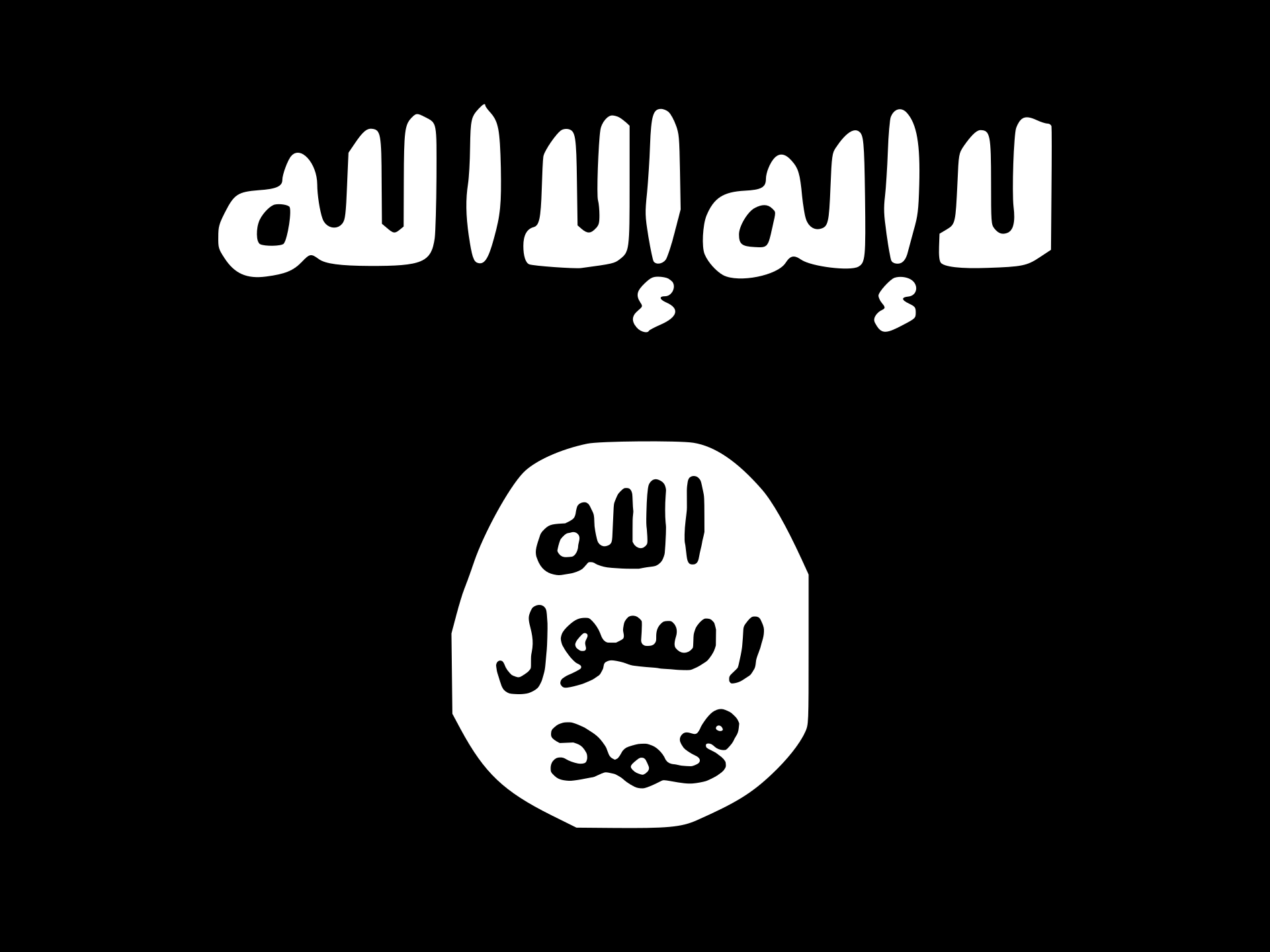
Wikimedia
Forecast
Short-term (Now - 3 months)
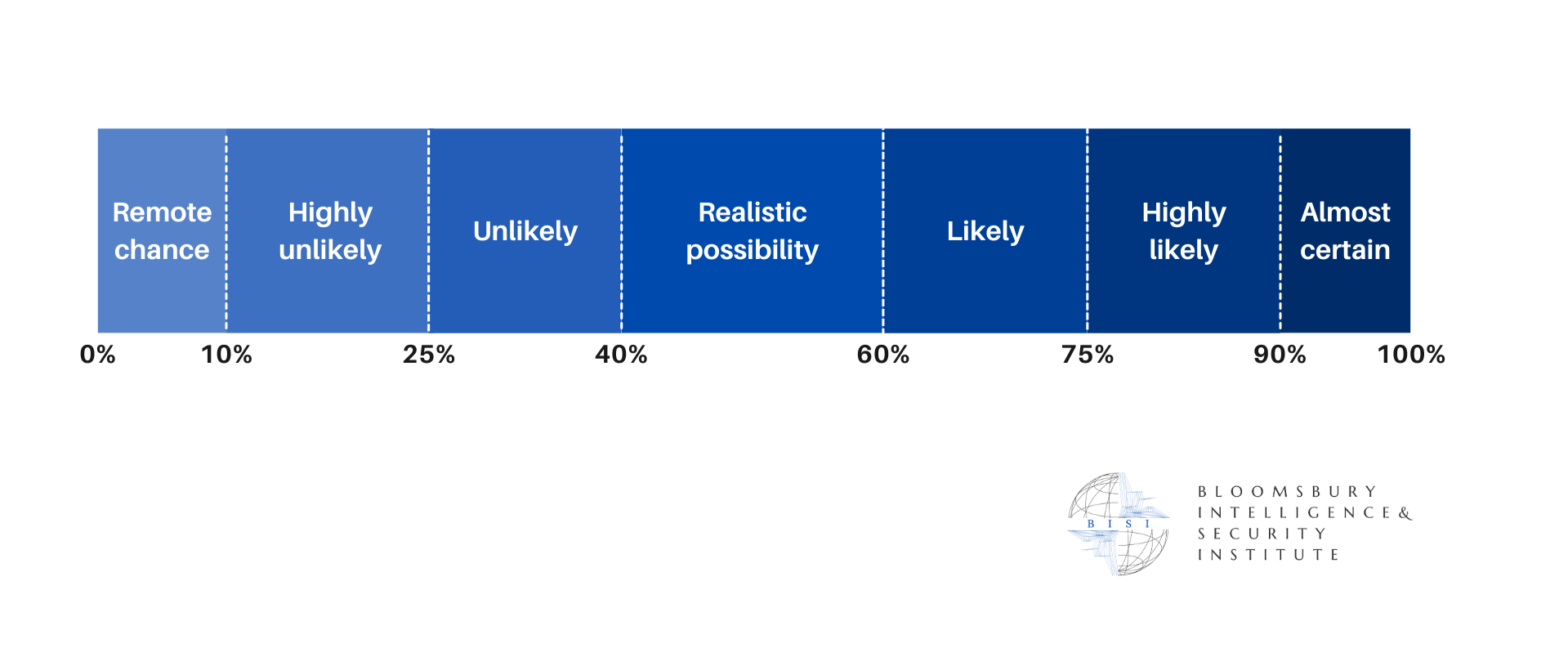
There is a realistic possibility that Prime Minister Kamla Persad-Bissessar will accelerate repatriation legislation following her appeals to the previous administration. Logistical and legislative barriers are likely to slow the pace of returns. Unmanaged repatriation increases the likelihood that returning youth become radicalised without rehabilitation support.
Medium-term (3 - 12 months)
There is a realistic possibility that radical networks will exploit returning nationals for domestic recruitment among marginalised youth. Trinidad's National Plan for Preventing and Countering Violent Extremism remains pending Cabinet approval as of the end of 2023, and the government's security attention has been further consumed by gang violence, having spent 10 of the last 14 months under a state of emergency, leaving counter-radicalisation programming deprioritised.
Long-term (>1 year)
It is unlikely that Trinidad will fully dismantle its radical social networks within 5 years, given their decentralised, family-based structure. Trinidad has reaffirmed sustained US security cooperation, and CARICOM-US intelligence-sharing remains active. However, this cooperation remains focused on narcotics and firearms rather than counter-radicalisation, limiting its impact on the jihadi pipeline specifically.