West Africa’s Mobile Money Evolution 2026–2030: From Payments to Trade Finance and Cross-Border Integration
By Stephen Nkrumah | 14 April 2026
Summary
Mobile money in West Africa processed about USD 498b in transactions in 2025, supported by over 517 million registered accounts, as platforms like MTN MoMo and Orange Money continue to grow from simple money transfers into services such as savings, credit, merchant payments, and even trade-related activities.
This evolution supports AfCFTA goals by making cross-border payments cheaper and easier in local currencies and reducing reliance on correspondent banking, while also bringing challenges such as regulatory harmonisation, cybersecurity risks, and concerns about financial stability.
By 2030, deeper Pan-African Payment and Settlement System (PAPSS) interoperability is likely to unlock more trade value for SMEs, but it could also increase operational and security risks if harmonisation and proper safeguards do not keep pace.
Context
Mobile money has become a core part of West Africa’s financial ecosystem. In 2025, the global industry processed over USD 2t in transactions, with Africa accounting for about two-thirds, equivalent to USD 1.43t. West Africa alone recorded USD 498b in transaction value, supported by more than 517 million registered accounts. Platforms like MTN MoMo and Orange Money have moved far beyond simple person-to-person transfers and now offer services such as savings, credit, merchant payments, and even early forms of trade finance.
The launch of the first wallet-based outbound payments corridor between Nigeria and Ghana in early 2026, through a partnership with Onafriq and the Pan-African Payment and Settlement System (PAPSS), marks an important step toward fast, low-cost cross-border payments in local currencies. This kind of progress reduces reliance on traditional correspondent banking, lowers transaction costs for both businesses and individuals, and helps build a stronger digital base for the African Continental Free Trade Area (AfCFTA) by making trade within ECOWAS countries easier and more efficient.
Implications
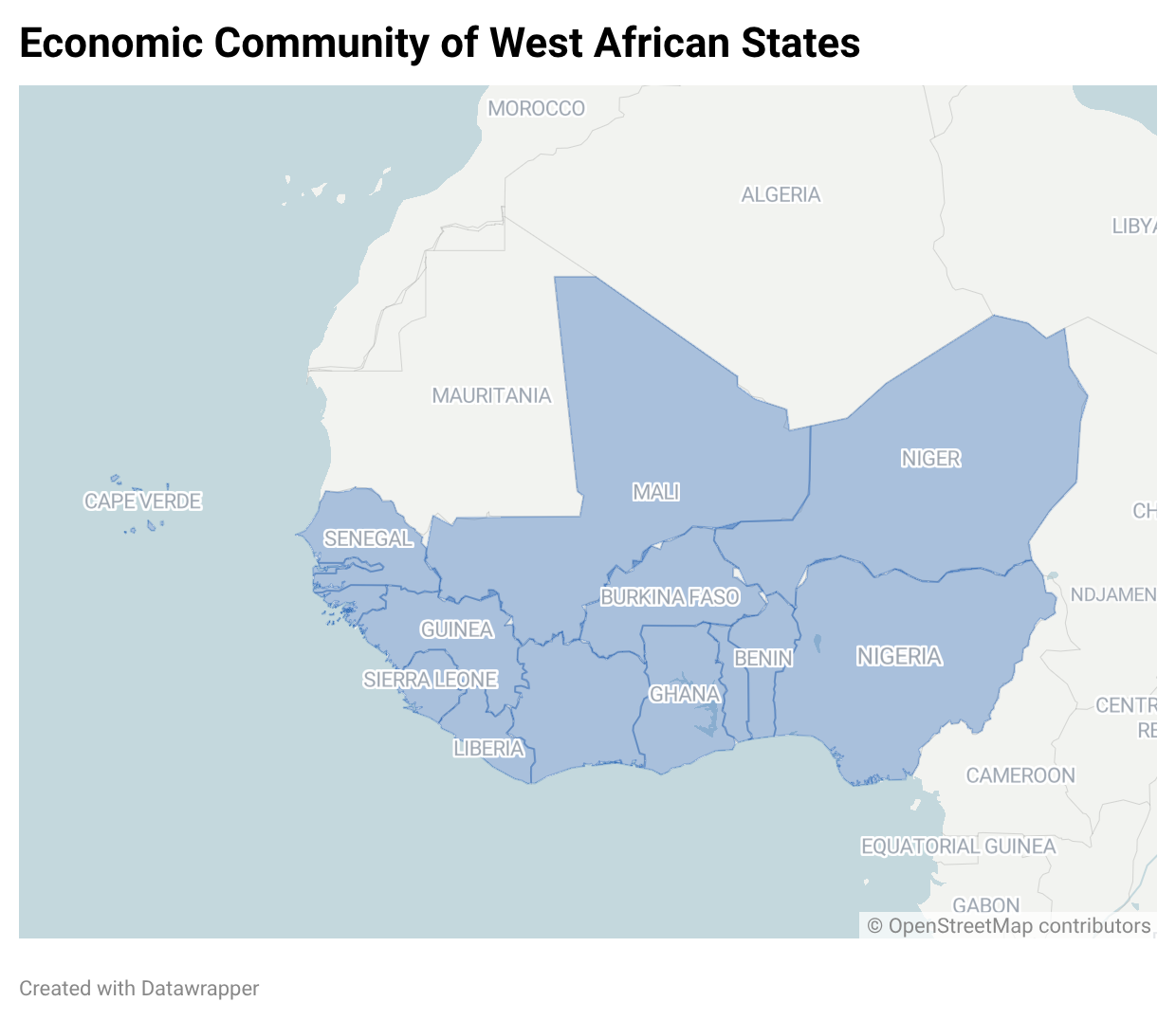
From a political perspective, regulatory fragmentation across the 12 ECOWAS member states is likely to slow down harmonisation efforts. Differences in national rules on licensing, consumer protection, and data localisation could lead to uneven adoption of cross-border mobile money frameworks, especially in smaller ECOWAS economies that may not have the capacity to align quickly with larger countries like Nigeria and Ghana. This fragmentation risks weakening AfCFTA integration objectives and delaying the development of a truly seamless regional payment system.
Operationally, interoperability pilots are expected to help SMEs and remittance-dependent traders by speeding up transactions and reducing costs, with early Nigeria–Ghana corridors already showing clear improvements in efficiency. Nonetheless, there are still some ongoing challenges. Weak telecommunications infrastructure and inconsistent digital identification systems, where adult ID coverage is still below 70% in many West African countries , may slow down smooth expansion across the region. These challenges are even more serious in rural areas, where informal traders and small-scale merchants may find it difficult to fully take part.
Economically, deeper integration of mobile money into trade finance is likely to speed up intra-African commerce and reduce external dependencies for SMEs, and this could help support AfCFTA’s goal of doubling intra-African trade from its current low base of about 16–20% of total trade. At the same time, fast growth in transactions without proper oversight could create liquidity pressures and financial stability risks for domestic systems, especially in countries where mobile money already makes up a large share of financial flows. By virtue of this, stakeholders such as regulators and local banks will need to carefully balance innovation with prudent risk management to sustain these gains.
Also, in terms of security, as mobile wallets become more connected, the chances of fraud, data breaches, and wider system problems also increase. Cyber threats are rising fast across Africa, with countries like Nigeria and South Africa reporting notable fraud losses in recent years. If security systems do not improve at the same pace as transaction volumes, there is a real risk of organised cyberattacks targeting important payment systems. This could reduce trust among users, affect both everyday customers and large trade finance users, and create wider financial stability concerns across the region.
Forecast
Short-term (Now - 3 months)
Further expansion of the Nigeria-Ghana wallet pilot is likely, and it is expected to bring modest gains in cross-border volumes as usage gradually increases.
However, delays in regulatory alignment may still occur, and these are likely to have a low-to-medium level of operational impact
Medium-term (3 - 12 months)
Additional PAPSS-linked corridors across ECOWAS are likely to emerge, helping to support SME trade as cross-border transactions become easier.
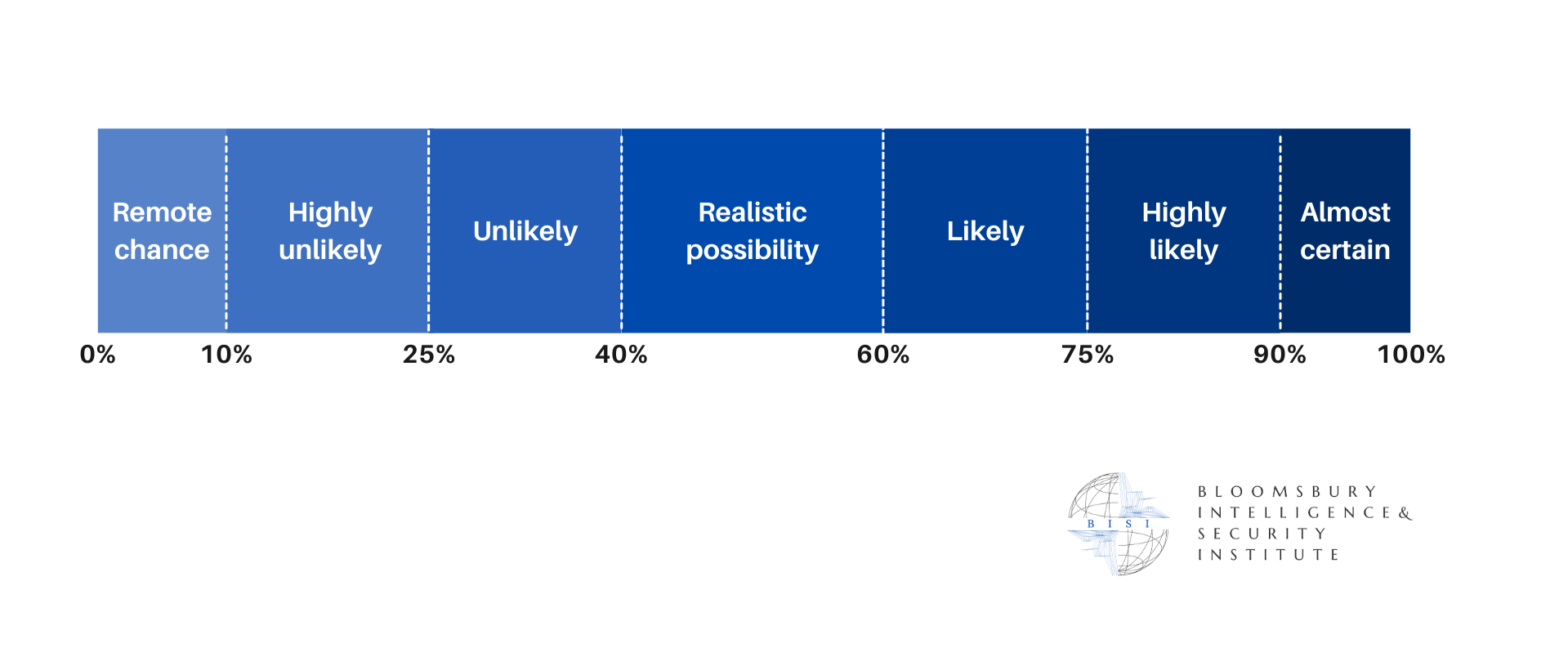
Nonetheless, cybersecurity vulnerabilities remain a concern, and if harmonisation efforts fall behind, there is a realistic possibility that they would be subject to medium-level impact.
Long-term (>1 year)
Mobile money is likely to consolidate as a key part of trade finance infrastructure under AfCFTA, with the potential to bring high economic benefits through lower costs and greater financial inclusion.
Nevertheless, if regional resilience measures remain incomplete, there is a realistic possibility that this could create risks of financial instability with a medium level of severity.