The Kurdish Card in the Iran War
By Trishnakhi Parashar | 13 April 2026
Summary
The ongoing war in the Middle East has renewed a spotlight on Kurdish groups operating along the Iran-Iraq border.
The evolving Kurdish dynamic risks opening a significant security challenge for Tehran, forcing it to divert military resources for internal stability.
Amid this situation, the United States (US) and Israel have increasingly engaged with Kurdish groups as potential catalysts for internal destabilisation, aiming to ignite a broader popular uprising against the Iranian regime.
Context
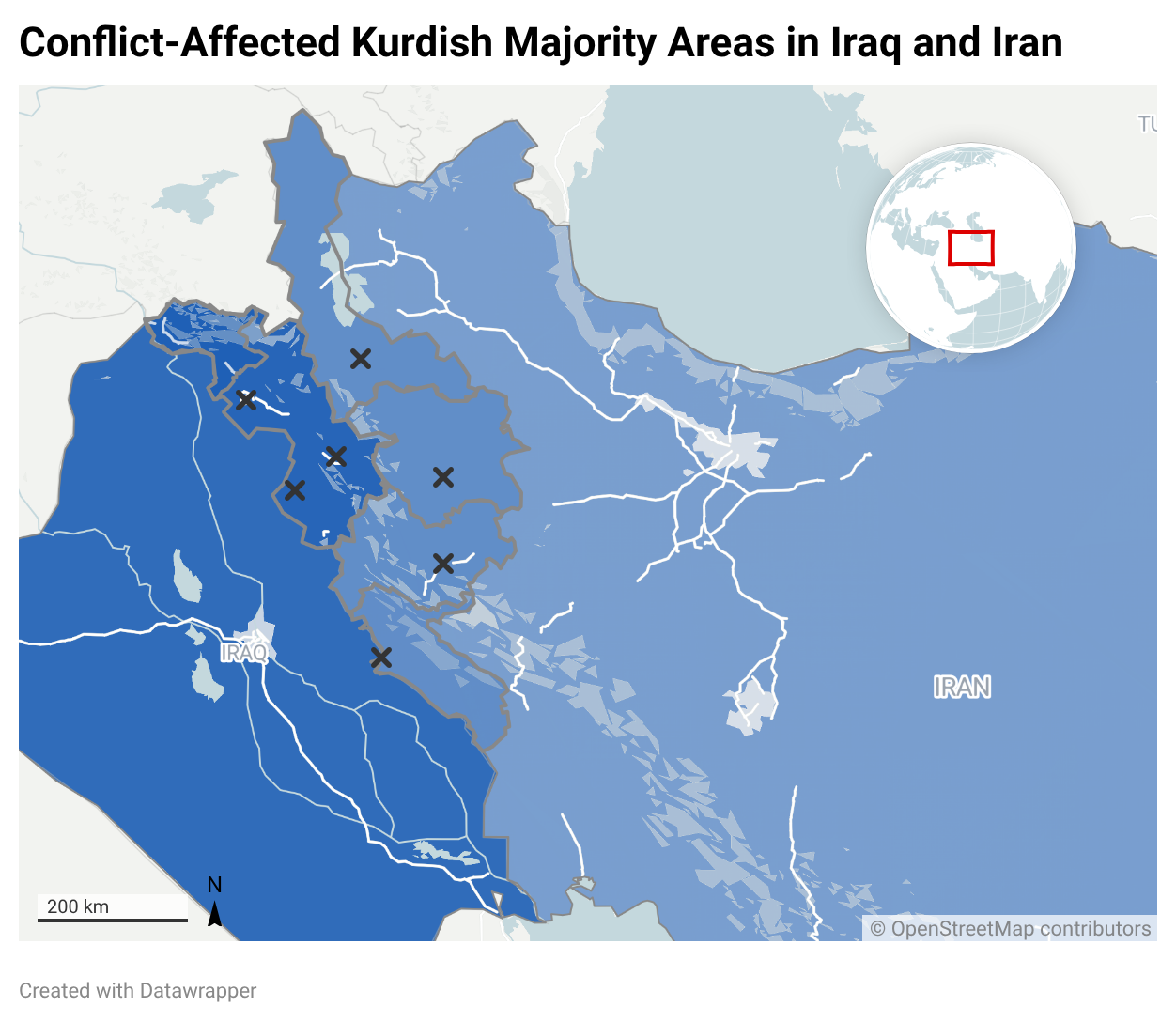
In the middle of a war, the Kurdish-Iranian crisis has emerged as a critical juncture. Since the beginning of 2026, Kurdish militant groups have claimed several attacks against Islamic Revolutionary Guard Corps (IRGC) personnel in western Iran. Amid this situation, on 22 February 2026, several major Kurdish opposition groups formed the Coalition of Political Forces of Iranian Kurdistan (CPFIK) to coordinate efforts against the Iranian regime. Following the escalation of the conflict on 28 February 2026, these groups have increased political mobilisation and signalled a greater willingness to expand their activities inside Iran, raising concerns in Tehran about the development of a new internal security front.
In response, Iran has conducted cross-border drone and missile strikes against Kurdish bases in northern Iraq. The Kurdish region, particularly the city of Erbil, has been repeatedly targeted, with dozens of attacks reported since late February. These attacks were carried out by Iran and Iran-aligned groups, mostly on military bases and infrastructures to neutralise Kurdish opposition networks near the Iran border. Simultaneously, it has increased security deployments and crackdowns in Kurdish-majority regions inside Iran. Security forces, including the IRGC and Basij units, have increased checkpoints, arrests, and surveillance across western provinces.
Against this backdrop, the US and Israel have reportedly expanded their involvement through discussions with Iranian opposition groups and Kurdish leaders. Reports suggest that it has also explored the possibility of providing political backing and logistical support to Kurdish factions operating near Iran’s western border. Kurdish forces positioned along the Iraq-Iran border have reportedly received weapons that were smuggled into western Iran to equip volunteers for potential operations against Iran. However, this proposed US-Israeli plan to utilise Kurdish militias as a ground force allegedly collapsed late in March following media leaks, regional diplomatic pressure, and hesitation among Kurdish factions themselves.
Implications
The formation of the CPFIK with a goal of establishing a democratic administrative system in western Iran represents a major challenge to the existing authority of Iran. Adding another layer of complexity, the war introduces a potential external pressure point for Iran. It has reportedly exerted pressure on the Iraqi government to intervene to restrict Kurdish armed groups, reflecting concerns over-cross border political coordination. However, the Kurdish Region of Iraq remains cautious about direct involvement, limiting the scope of Kurdish political escalation.
The war has highlighted the operational relevance of Kurdish groups as a potential auxiliary force. Indirect US engagement with Kurdish forces in neighbouring Iraq may further influence their operational and strategic environment. Earlier plans of utilising Kurdish militias as a ground force illustrate the operational feasibility of such an approach. However, due to media leaks, political concerns, and the Kurdish groups themselves have shown reluctance to allow their territory to be used, thereby limiting a deeper involvement.
The involvement of Kurdish actors has somewhat internalised the conflict’s security risks for Iran. The possibility of cross-border infiltration has required Iran to strengthen its troop deployments and surveillance along its western border. Iran had to divert its military and security assets to domestic border security.
Heightened security concerns in western Iran may have indirect economic implications, particularly if instability disrupts local infrastructure or trade routes in border regions. Earlier discussions involving Kurdish groups indicated the potential for significant disruptions. However, the reported suspension of such plans reduces the likelihood of immediate large-scale economic strain.
Forecast
Short-term (Now - 3 months)
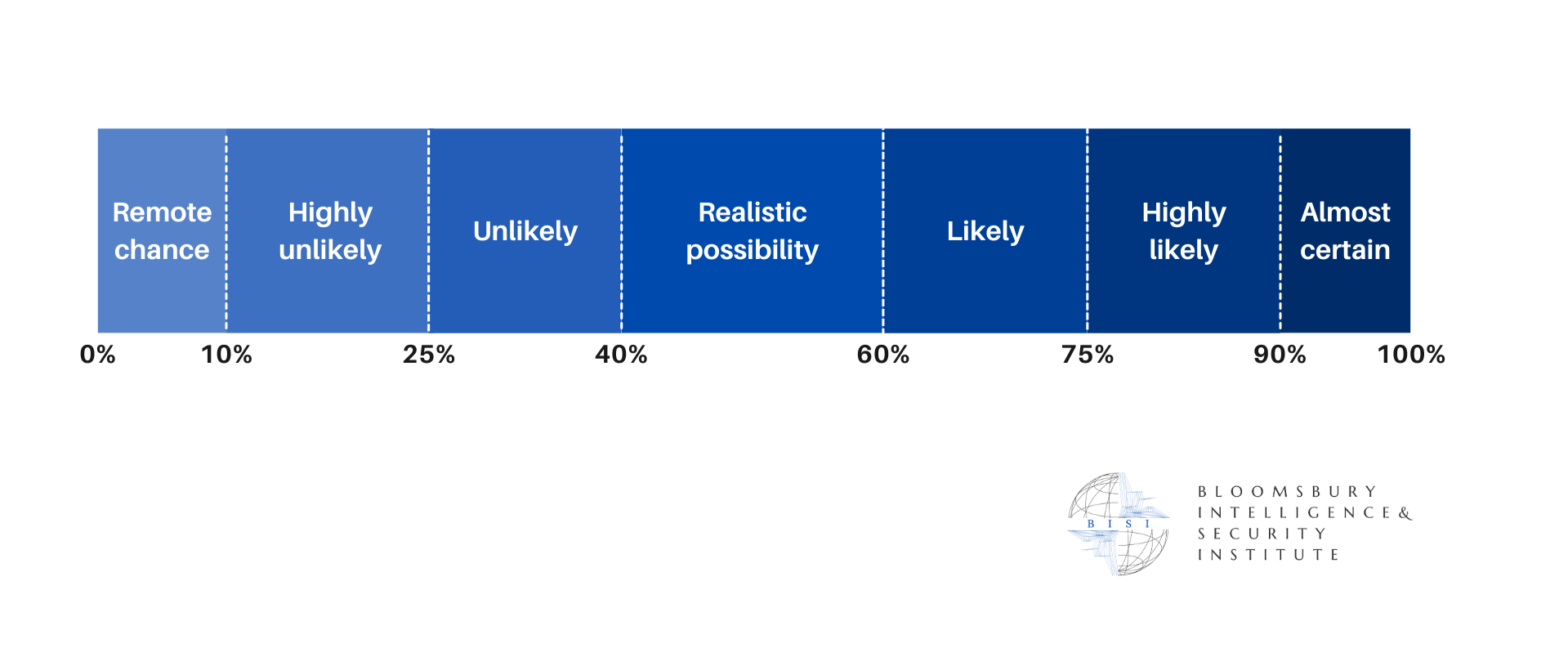
Kurdish groups will likely maintain a defensive posture, with at most low-scale, localised unrest remaining a realistic possibility.
Iran is likely to continue intensifying border security operations and strikes on Kurdish positions in northern Iraq, with medium severity for regional tensions.
Medium-term (3 - 12 months)
There is a realistic possibility of renewed external engagement with Kurdish leaders, although its scope is limited, with gradual implications for their operational capacity and regional alignment.
Long-term (>1 year)
The sustainability of the CPFIK will likely be tested, particularly with military pressure and limited external support.