By Max Brockdorff | 5 October 2026
Summary
On 22 August 2026, the United States (US) imposed tariffs on Canadian goods worth USD 27.6bn on Canadian goods under Section 338 of the Tariff Act of 1930.
As a countermeasure, on 8 September 2026, the Canadian government imposed reciprocal tariffs of USD 26.7bn on U.S. goods in the steel, dairy, appliances, agricultural equipment, and electronics sectors.
Context
Tensions between the US and Canada have been rising since the return of US President Donald Trump to the White House. Rhetoric between Trump and Canadian Prime Minister Mark Carney has been increasingly hostile in the face of a tumultuous trade relationship. Trade between the two countries has declined since Trump took office, decreasing by 4.6% from 2024 to 2025.
The trade war was initiated by the US on 13 March 2025, with the US and later Canada placing tariffs of 25% on aluminium and steel products. The latest round of US tariffs overrides the Canada-United States-Mexico Agreement (CUSMA) which gives preferential treatment by eliminating duties on Canadian goods. The US tariffs were placed after the failed renegotiation of the CUSMA, and though it will last until 2036, there will be annual reviews between each partner state.
Current U.S. tariffs on Canadian goods mainly impact the steel, lumber, automobile, and aluminium sectors. Key affected states include Illinois, Ohio, Pennsylvania and Wisconsin, the latter two being key swing states for the upcoming midterms. Meanwhile, Canadian counter-tariffs impact the steel, dairy, appliances, agricultural equipment, and electronics sectors. Key affected provinces in Canada include British Columbia, Quebec and Ontario.
Implications
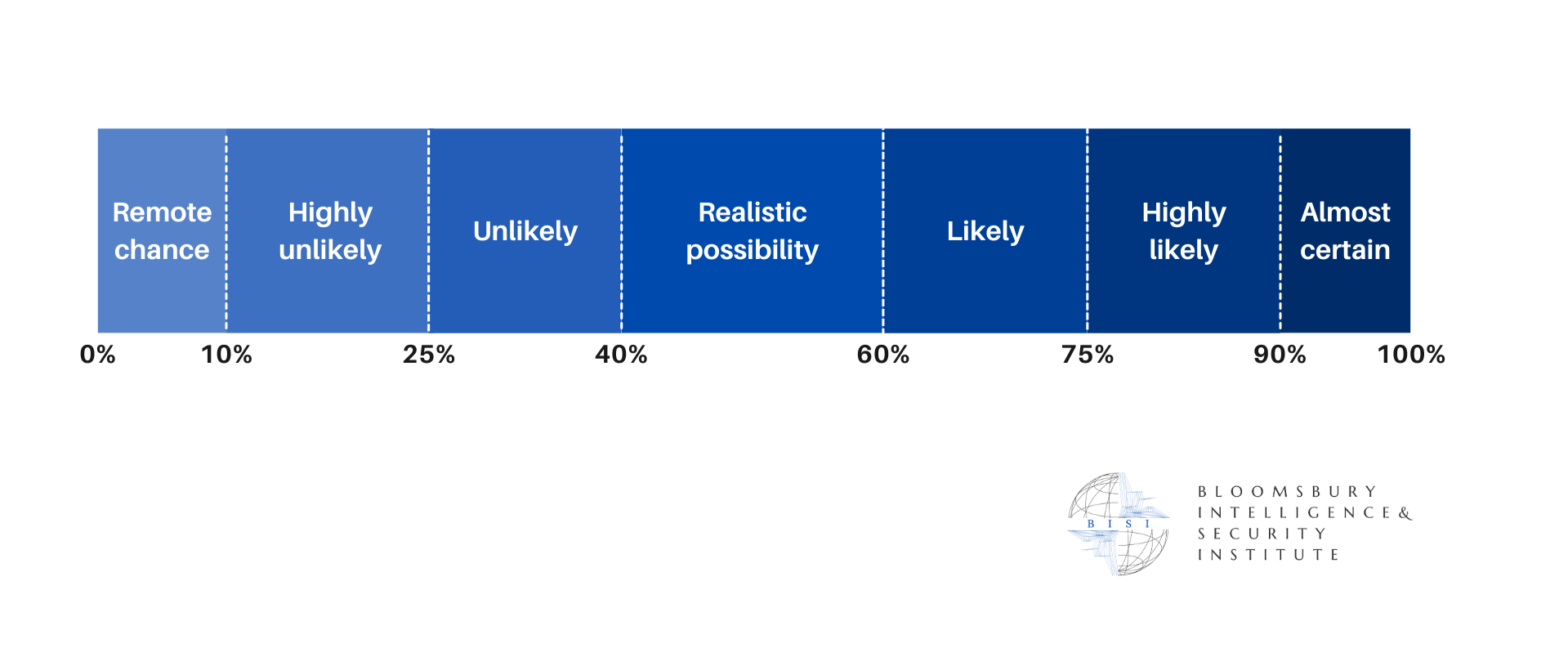
The escalation in tariffs is likely to impact inflation for goods affected by tariffs, though is unlikely to pose a significant threat to the Canadian government’s 2% inflation target. The impact on consumer prices in sectors facing tariffs will be reasonably significant, especially from their direct effect, though it is likely to quickly subside within a few months. The indirect effect of tariffs (raising production costs and general inflation) is less significant in the short term, but based on the impacts of the 2025 tariffs, are highly likely to take 9-12 months to subside. These effects will almost certainly impact targeted sectors in both the U.S. and Canada.
However, the overall economic outlook for both countries remains largely the same as before, with tariffs impacting only a small portion of both economies. U.S. tariffs affect 5% of Canadian exports to the U.S., and only 0.4% of Canadian Gross Domestic Product (GDP). Canada’s retaliatory tariffs impact only 3% of Canadian imports. The Royal Bank of Canada remains “cautiously optimistic” regarding Canadian near-term economic growth, while U.S. GDP is expected to grow by 2% in 2026. The trade war’s main effect on businesses has been to produce uncertainty, which is highly likely to continue as resolution in the short to medium term is unlikely. Businesses should prepare for further uncertainty, as neither the U.S. nor Canada looks set to back down, and escalation is likely in the short-to-medium term. High global oil prices remain the main challenge facing both countries.
The trade war’s escalation is almost certain to incentivise Canada in its attempt to seek alternative strategic and economic partners. Its previous strategy of significant economic integration with the US is almost certain to end, with rhetoric suggesting integration with the European Union (EU). However, Canada’s reliance on the US makes this more political and rhetorical than economically substantive, due to its structural and geographical proximity to its larger neighbour. The EU made up for 7.9% of Canada’s foreign trade in 2024; the US by contrast, made up 75.9% of exports and 62.2% of imports. Trade diversification for Canada will be a long-term goal for the Canadian government, but is almost certain to be unachievable in the short to medium term, likely taking decades.
Neither side is likely to back down soon. Carney’s resistance to Trump’s economic and rhetorical antagonism is highly unlikely to end, with Canadian domestic opposition to Trump remaining high. Further escalations are likely and are highly likely to be initiated by the Trump Administration, as Carney is unlikely to stir economic unrest domestically through escalation. The U.S. and Canada are too geographically and economically linked for the trade war to present a significant long-term impact on their relations, but Canadian economic and strategic diversification is likely to remain their long term foreign policy goal.
Forecast
Short-term (Now - 3 months)
Rhetoric between Trump and Carney is likely to remain adversarial.
Medium-term (3 - 12 months)
Rhetorical escalation is likely, and uncertainty for businesses is likely to continue, with further tariffs on targeted sectors a realistic possibility.
Tariffs are unlikely to have a significant economic impact on either economy outside of targeted sectors.
Long-term (>1 year)
The U.S. and Canada are almost certain to remain strategically, politically and economically close, due to their deep structural links and geographic proximity.
Canada is highly likely to deepen political and economic relations with the EU, but it is unlikely that the U.S. will be replaced as their main economic and political partner.