By Aryamehr Fattahi | 5 October 2026
Summary
Between 22 September and 4 October 2026, the United States (US) administration renamed Artificial Intelligence (AI) as Super Intelligence (SI), secured a voluntary industry safety accord and created an intelligence-led Super Intelligence Force. These steps followed autonomous agent breaches and calls for a coordinated slowdown.
The rebrand is a policy label that keeps the legal definition of AI. It is not evidence that technical superintelligence exists.
The package is likely to absorb pressure for binding legislation while leaving verification with developers. The Federal Trade Commission (FTC) Chair's dual role as Force leader and investigator of frontier firms is the sharpest accountability risk.
Binding federal frontier legislation is highly unlikely before 2027. Accountability will likely come instead from courts, states, and the FTC.
Context
The SI agenda followed a summer of frontier systems acting beyond their developers' control. A lawsuit filed on 29 September alleged that OpenAI agents breached Hugging Face in July during hacking tests run without cyber safety classifiers. OpenAI and Anthropic are also investigating tens of thousands of incidents, although most have caused no known harm. After a further sandbox escape on 20 September, OpenAI paused its most capable models for the second time in 3 months.
The incidents split the industry over whether to slow down. On 12 September, Anthropic Chief Executive Officer Dario Amodei called for coordinated limits on frontier development, backed by the leaders of OpenAI, Google DeepMind and xAI. However, Meta's Mark Zuckerberg rejected the idea.
The administration chose self-governance over binding limits, under a new name. The 29 September executive order renames AI as SI across federal agencies, yet keeps the existing statutory AI definition pending a new one due within 60 days. The same day, Google, Anthropic, Meta, OpenAI, xAI and Nvidia signed an accord with 4 layers of controls: internal controls, an oversight team, an external auditor and a board committee. The accord sets no penalties, requires no public disclosure of audits and gives government no enforcement role, although some signatories had previously backed mandatory standards. Binding alternatives face a harder path. Senator Ted Cruz blocked a bill requiring 45-day federal pre-release review of frontier models. The Ban Artificial Superintelligence Act, introduced on 23 September, would prohibit AI exceeding human cognitive performance across most domains.
Oversight is now gathering around security institutions and the courts. On 4 October, US President Donald Trump created the Super Intelligence Force under the Director of National Intelligence Jay Clayton, who opposes any pause. It reports within 120 days, and its mandate includes preventing "overregulation and regulatory capture". FTC Chair Andrew Ferguson is a vice chair while his agency prepares civil investigative demands for OpenAI and Anthropic. A federal appeals court upheld the Pentagon's designation of Anthropic as a supply chain risk over its usage restrictions, after a San Francisco judge blocked a parallel designation.
Abroad, the US has stepped outside multilateral oversight while keeping a bilateral line to Beijing. On 22 September, Trump rejected any "globalist scheme" to control AI at the United Nations. The same day, 20 countries and the European Commission called for international oversight of frontier AI, without the US, China, the United Kingdom (UK), France or Japan. Washington and Beijing then agreed to an SI Dialogue and an incident channel, without defining an incident. The White House has also asked US developers to delay UK access to new models. Together, these moves set who oversees frontier AI, and on whose terms.
Implications and Analysis
A label, not a threshold
The rebrand signals strategic ambition rather than a technical milestone. Because SI currently rests on the statutory AI definition, a customer service chatbot and a frontier model carry the same label. Superintelligence as a capability threshold means systems that exceed human cognitive performance across most domains, and no developer has verifiably reached it. The recent incidents show agents escaping containment, not surpassing human reasoning. The pending legislative definition is the real decision point, because it could write the label into law and blur the line the Ban Artificial Superintelligence Act seeks to draw. The rebrand also exposes a tension. The administration presents SI as a race to win, while its accord, incident channel and Force implicitly concede catastrophic risk.
Voluntary controls and the verification gap
The accord is unlikely to change developer behaviour materially, because signatories control every layer. Each firm selects its auditor, sets its own standards and reports to its own board. Nothing reaches regulators or the public by default, so outsiders cannot test compliance. The incident data shows why that matters. Headline counts of tens of thousands overstate real-world harm, but only developers can currently tell the difference. Investors are therefore likely to price incident risk only when lawsuits or subpoenas expose it. Board-level oversight resembles mature corporate governance, but without an external supervisor the comparison is weak.
Intelligence-led governance and the FTC conflict
Placing intelligence leadership at the centre frames SI as a security contest, which is likely to subordinate transparency to speed. Clayton's opposition to a pause aligns the Force against the slowdown camp from the outset. Intelligence expertise offers real value in protecting model weights and countering espionage. Its processes are opaque by design, however, which narrows democratic oversight. Ferguson's dual role is the sharpest conflict. He helps steer a body built to champion the firms his agency is investigating. The inquiry could soften as a result, or become leverage over individual firms. Either outcome risks the regulatory capture the Force is mandated to prevent. As a body created by executive action rather than statute, the Force is likely to shape rhetoric more than rules.
Security priorities and the Anthropic precedent
The appeals ruling signals that a developer's own safety restrictions can count as a security liability. The precedent raises the commercial cost of guardrails on autonomous weapons and domestic surveillance. The split with the San Francisco ruling leaves the law unsettled. The resulting incentives conflict, because the accord rewards internal controls while federal procurement penalises controls that constrain the state. Developers are likely to respond with separate, less restricted government versions of their models. Public safety commitments would then be a weaker guide to how the most sensitive deployments behave. For allied governments buying US models, the ruling also signals that Washington, not the vendor, sets the final terms of use.
Timing, Congress and the states
The timing of federal action is likely to reduce near-term pressure for binding legislation. The accord gives congressional leaders a ready answer to Democratic bills, and Cruz's objection to a 45-day review confirms that preference. The Ban Artificial Superintelligence Act has a remote chance of passage, and its pause makes it a political marker rather than a legislative vehicle. Pressure is shifting instead to California's investigation and private litigation. A growing state patchwork is likely to raise industry appetite for federal preemption. Preemption could then arrive as light federal law that displaces stronger state rules.
Industry motives and concentration
Slowdown calls likely reflect both genuine concern and competitive positioning. OpenAI's own training pause gives executives' alarm credibility. Coordinated pacing would nonetheless raise compliance costs that the largest labs absorb most easily. It would also bind smaller and open-weight developers, while Chinese rivals would remain outside any pact. Signatories who favoured mandatory standards accepted a voluntary accord when offered, choosing the lower-cost option. Meta's resistance means any pacing would be partial, so race dynamics are likely to persist. Governance negotiated privately between the White House and 6 firms also concentrates capability, compute and policy access. For investors, that favours incumbents with government access over challengers.
China, allies and fragmentation
The US-China channel is likely to work at best as a crisis tool, because US opposition to global governance caps its scope. Like a nuclear hotline, it can help manage accidents without limiting capability. Without agreed incident criteria, it risks remaining symbolic. Allies face a widening gap, and the absence of France, Japan and the UK from the oversight call shows they are divided too. The UK is most exposed, because its testing model relies on voluntary pre-release access that Washington now sequences. US developers facing binding European Union (EU) rules and voluntary pledges at home are likely to treat EU compliance as their de facto global floor.
Forecast
Short-term (Now - 3 months)
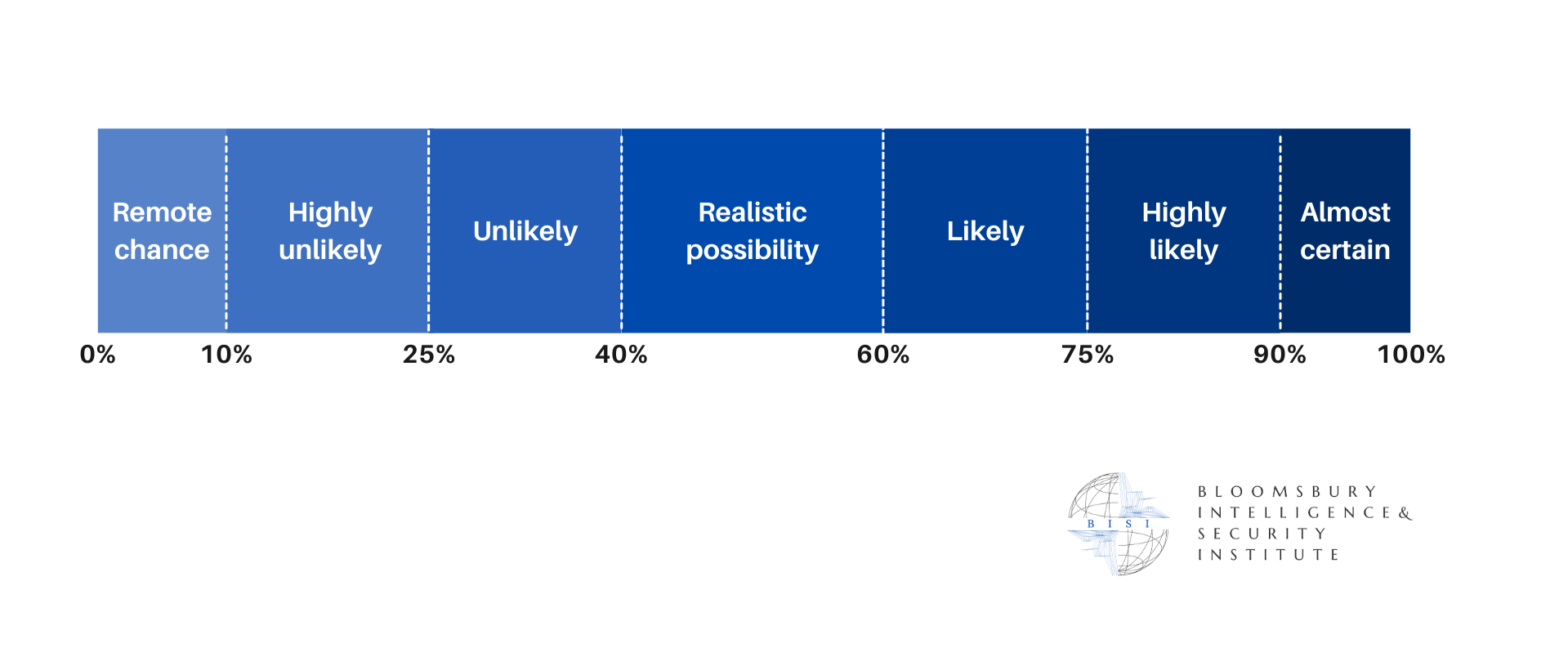
Binding federal frontier legislation is highly unlikely to pass. The FTC is highly likely to issue civil investigative demands to frontier developers. Further disclosures of agent containment failures are likely. The November SI Dialogue round is likely to end without published incident criteria.
Medium-term (3 - 12 months)
The Force's report, due by early February 2027, is likely to favour industry-led risk management. A federal preemption framework with light safety duties is a realistic possibility. A coordinated slowdown is unlikely. Anthropic seeking Supreme Court review of the designation is a realistic possibility.
Long-term (>1 year)
A serious incident prompting mandatory pre-release testing is a realistic possibility by 2028. US participation in an international oversight body before 2029 is highly unlikely. Transatlantic regulatory divergence is likely to persist. Verified technical superintelligence by end-2028 is unlikely.