By Mason Hurlocker | 25 November 2026
The views expressed in this article are the author’s own and do not necessarily reflect those of any institution with which the author is or may be affiliated.
Summary
On 25 October 2026, the Student List, a movement that grew out of two years of anti-corruption protests, won an outright majority in Serbia’s snap parliamentary election, ending 14 years of rule by Aleksandar Vučić’s Serbian Progressive Party (SNS).
The result removes one of Russia’s closest partners in Europe from power and creates an opening to restart Serbia’s stalled European Union (EU) accession process. Nonetheless, the incoming government has ruled out sanctions on Russia and rejected recognising Kosovo.
Serbia is likely to make faster progress on the rule of law and relations with its neighbours, while broader foreign policy alignment with the EU’s stances, especially on sanctions against Russia, is likely to be gradual and contested.
Context
On 25 October 2026, the Student List won 52.5% of the vote in Serbia’s snap parliamentary election, versus 39.3% for Vučić’s United Serbia list, according to provisional results. This gives it a projected 140 of the 250 seats in the National Assembly, well above the 126 needed for a majority. Turnout reached 68.8%, the highest in more than 30 years. Vučić, who had resigned as president on 27 September to run for prime minister, conceded defeat on election night.
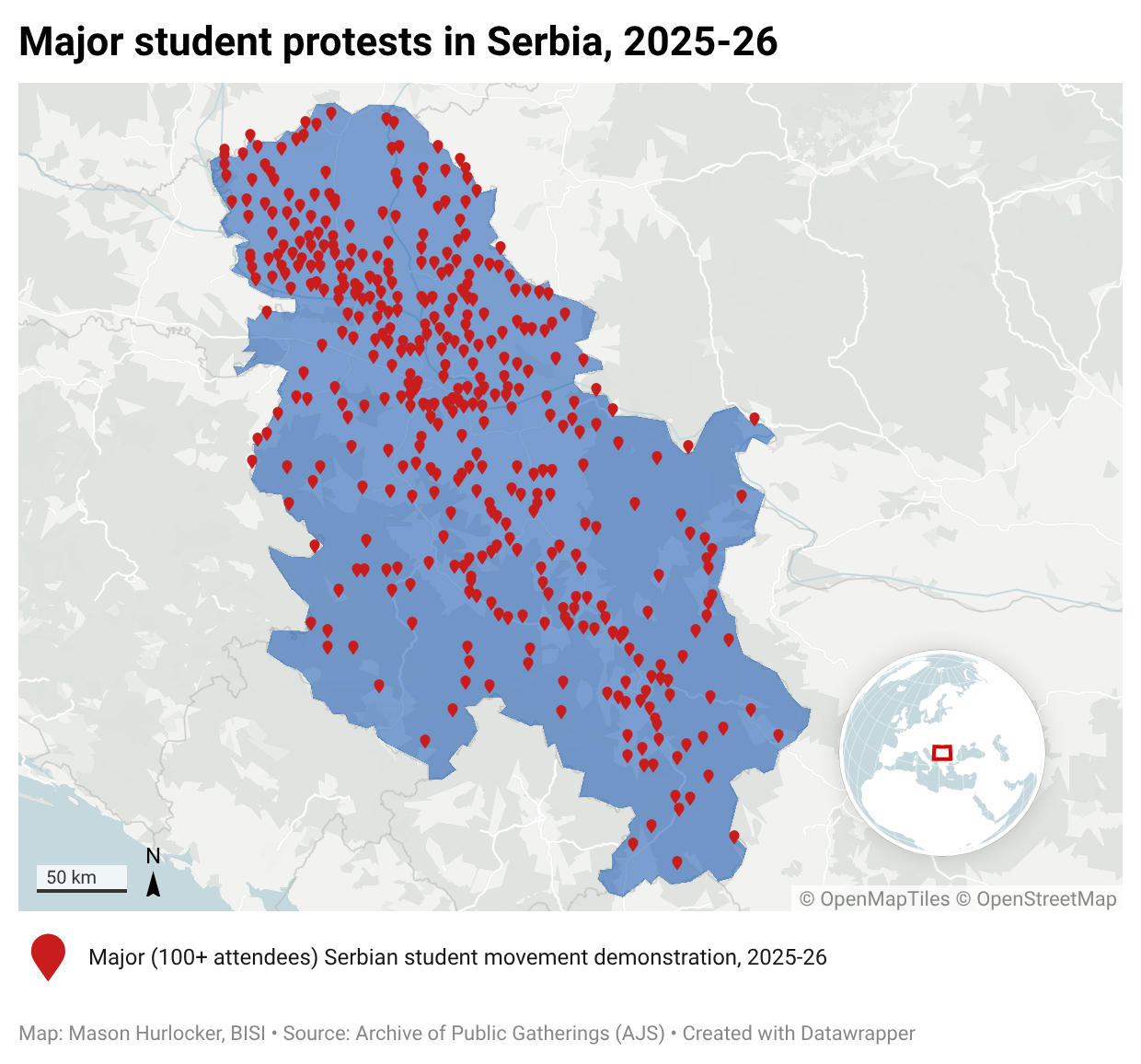
The movement behind the Student List began after 16 people died when a railway station canopy collapsed in the city of Novi Sad in November 2024. The protests that followed drew more than 325,000 people to Belgrade in March 2025 and forced Prime Minister Miloš Vučević to resign. The List’s leading candidate, Novi Sad cardiologist Ilija Srdanović, is likely to be the next prime minister. Its programme centres on fighting corruption, judicial independence, and media freedom, rather than foreign policy.
International observers found that the vote took place amid “unequal campaign opportunities”, citing “the grave misuse of public resources” by the ruling party and broadcasters’ clear bias in its favour. They nonetheless “positively assessed” the process at the vast majority of polling stations on election day.
Implications
Brussels has since welcomed the result. European Commission President Ursula von der Leyen said the EU was “ready to support reforms on the rule of law, media freedom, and the fight against corruption”, while Enlargement Commissioner Marta Kos declared that the result improves Serbia’s EU accession prospects. Serbia has been a candidate since 2012, but its talks have stalled in recent years. In July 2026, eight member states, including the Netherlands, Sweden and Lithuania, blocked the opening of the next group of negotiating chapters due to Serbia’s rule of law record and its refusal to align with EU sanctions on Russia. A government elected on an anti-corruption platform is likely to address the first objection, while Srdanović has also pledged to align Serbia’s judiciary and security policies with EU standards.
Meanwhile, the Student List has ruled out imposing sanctions on Russia, and one of its candidates, sociologist Jovo Bakić, has stated that the new government will not abandon Russian gas. Belgrade relies on Moscow’s diplomatic backing to block Kosovo’s international recognition, and the student movement rejected recognition in May. The Kremlin has also signalled its expectations for constructive work between the new Serbian government and Moscow.
Energy is likely to be the first test for the new government. Serbia’s main oil company, NIS, is around 56% owned by Russia’s Gazprom Neft, and has been under United States (US) sanctions since October 2025. It runs the country’s only refinery, near the city of Pančevo. Hungarian oil and gas company MOL has been negotiating to buy the Russian stake in NIS since January 2026, but the US licence allowing those talks expires on 11 December, and Forbes Serbia has reported that the talks have “practically failed”. Without a new licence, the refinery would stop, leaving Serbia with fuel reserves for just two to three months. If left unresolved, this is likely to result in significant country-wide fuel shortages, rationing, and even a potential collapse of the Serbian manufacturing and logistics sectors. Because of shortfalls in energy imports this year due to conflicts in Ukraine and Iran, the Serbian state is already absorbing much of the difference between market and retail fuel prices, creating a tangible reduction in budget revenues. The incoming government will therefore inherit a potential energy crisis shaped by decisions in Washington and Moscow before it has even taken office.
The election result is also likely to reshape regional politics. Vučić was the main patron of Bosnian Serb leader Milorad Dodik, who campaigned for him, calling a Vučić victory in Serbia a victory for Republika Srpska as well. Losing Belgrade’s backing is likely to weaken Dodik’s secessionist leverage within Bosnia and Herzegovina. Meanwhile, Hungarian Prime Minister Péter Magyar, whose party won power in April, congratulated the Student List, and Croatian Prime Minister Andrej Plenković welcomed its focus on better relations with neighbours. In particular, the Student List’s victory is likely to improve the prospects for economic cooperation, such as via the Central European Free Trade Agreement (CEFTA), a trade framework focusing on regional integration.
With both Vučić and Hungary’s Viktor Orbán out of office, Russia has lost its two most reliable partners in and around the EU within a year. However, the transition remains fragile. The SNS retains around 103 seats, a network of loyalists across state institutions, and a media apparatus built over 14 years. A presidential election must also be held by 27 December, giving the SNS a chance to retain an office that could obstruct the new government.
Forecast
Short-term (Now - 3 months)
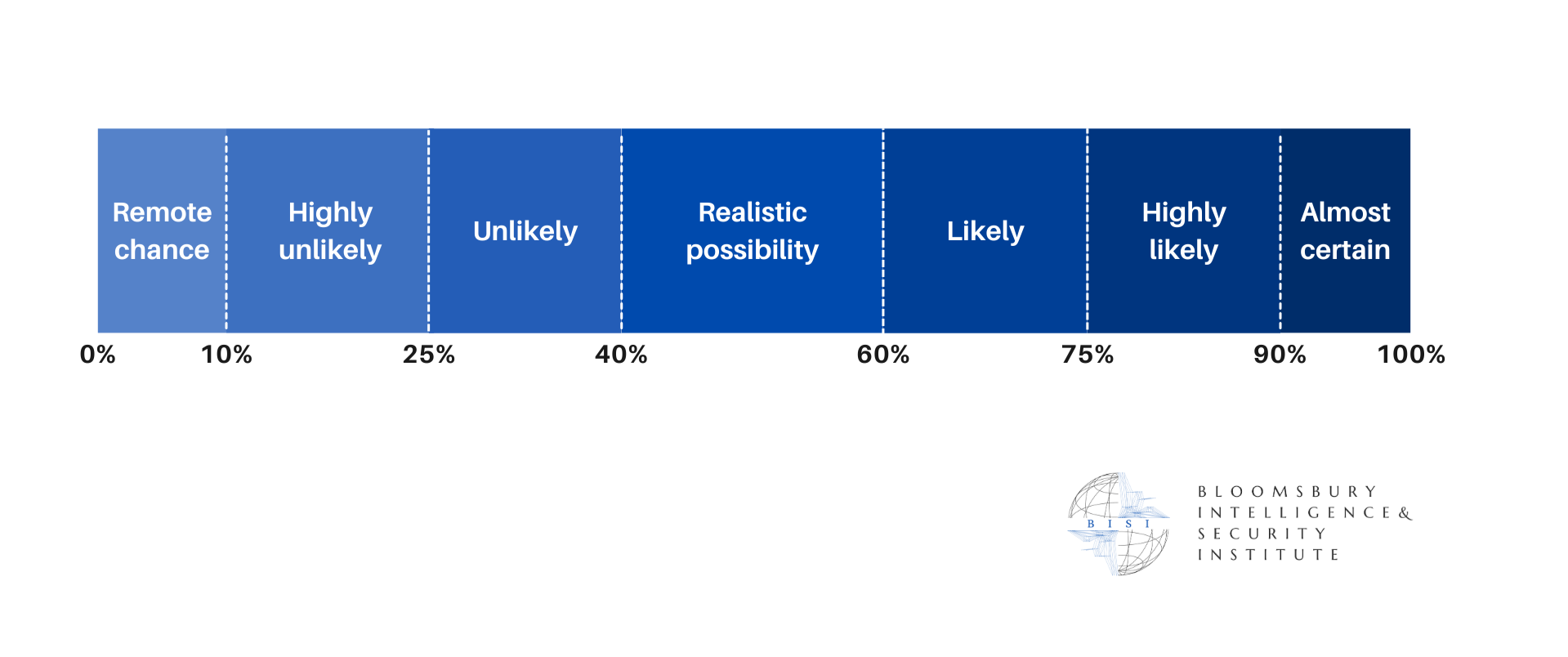
The Student List is highly likely to form a government without coalition partners, with Srdanović as prime minister.
The presidential election is likely to be closely contested, as the SNS seeks to keep the presidency as a check on the new government.
Washington is likely to extend the NIS licence for a short period, but a sale of the Russian stake is unlikely to be completed before the new government takes office.
Medium-term (3 - 12 months)
The EU is likely to open the next group of negotiating chapters once the new Serbian government passes initial judicial and media reforms
Some Member States, such as the Netherlands and Germany, are likely to keep objecting to Serbia joining the EU as long as Belgrade refuses to sanction Russia or make progress on Kosovo.
Progress on the rule of law is likely to outpace any alignment with EU foreign policy.
Dodik is likely to lose some political support from Belgrade, reducing the risk of a secession crisis in Bosnia and Herzegovina.
Long-term (>1 year)
Serbia is highly likely to keep refusing to recognise Kosovo, and Russia is likely to remain its main diplomatic backer on the issue.
There is a realistic possibility that Serbia gradually aligns with more EU foreign policy positions, while stopping short of sanctions on Russia.