The Drone War and its Costs Intensify: Russo-Ukrainian War Outlook for Winter 2026-27
By Mason Hurlocker | 12 October 2026
The views expressed in this article are the author’s own and do not necessarily reflect those of any institution with which the author is or may be affiliated.
Summary
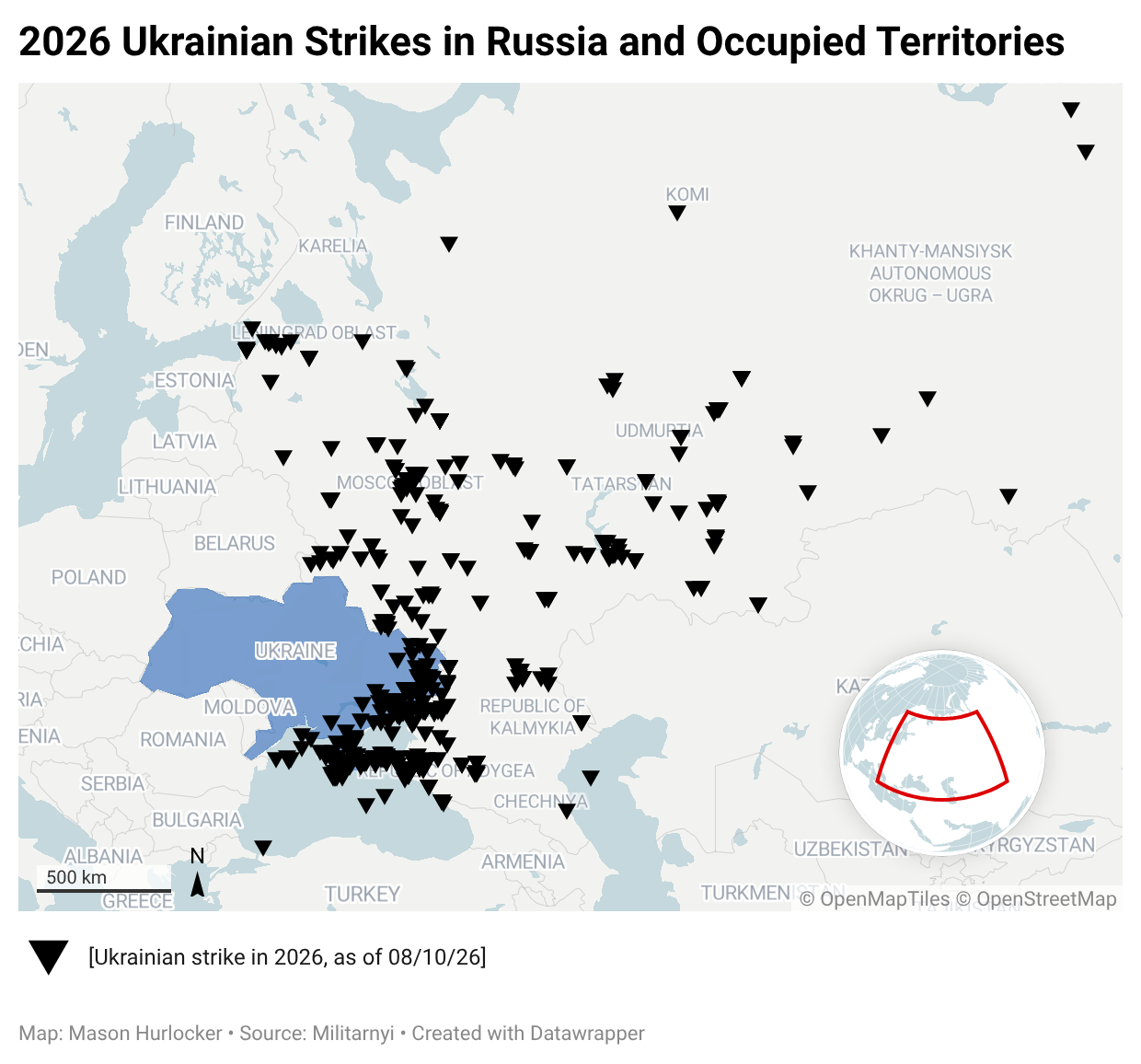
Since late August 2026, Russia has sharply escalated its drone and missile campaign against Ukraine, and its drone and aircraft incursions into North Atlantic Treaty Organisation (NATO) airspace along the eastern flank. Ukraine has also ramped up its own long-range strikes on Russian energy and logistics infrastructure.
This escalation carries risks of further stalled negotiations, a severe shortfall in Ukrainian air defence interceptors, increasing damage to critical infrastructure, and rapidly growing economic costs on both sides.
Strikes on Ukraine’s energy systems and incursions into NATO territory are likely to intensify in winter 2026-2027, making a ceasefire before January 2027 highly unlikely.
Context
Since late August 2026, Russia has intensified its war against Ukraine, driven primarily by jet-powered Shahed-type drones that fly faster and higher than earlier propeller models. Ukraine’s Air Force says that monthly launches of these drones rose from 350 in June to more than 2,800 in August 2026. During the week of 28 September alone, Ukraine’s President Volodymyr Zelenskyy stated that Russia launched more than 2,200 attack drones, 1,630 aerial bombs and 38 missiles, and that Ukraine currently intercepts around 57% of jet-powered drones. Strikes now mainly target the power grid, ahead of a winter in which Russia is likely to attempt to destroy energy, heating, and water infrastructure. At the same time, Ukraine has continued to increase its own attacks against Russian targets, knocking out more than 30% of the country’s current oil refining capacity this year and staging the largest drone attack yet on Moscow at the end of September. The intensification also threatens to expand the conflict, with multiple Russian-attributed violations of NATO airspace this year and warnings from European intelligence services of potential false-flag operations, or even limited military attacks in the coming months.
Implications
Politically, this escalation in attacks is likely to exacerbate an already stalled ceasefire negotiation process. US-mediated talks in September 2026 produced no breakthroughs, and Kremlin spokesman Dmitry Peskov stated on 28 September that prospects of speedy progress were “bleak”, after the Ukrainian attacks during Russia’s parliamentary elections. Meanwhile, NATO allies have said Russia bears “full responsibility” for recent airspace violations over Poland and Romania, which Moscow denies. If Russian incursions outside Ukraine continue, it is likely to decrease European willingness to mediate a political resolution, especially if the EU is drawn further into the conflict.
The intensified strikes, combined with an increasing shortage of air defence systems, have also heightened the already significant safety risks to Ukrainian population centres. By August 2026, Ukraine had received only a third as many interceptors as in the same period of 2025. Limited NATO production capacity rather than funding constrains Patriot Interceptor supply, leaving no immediate fix. In light of these weakened air defences, Russian attacks have had more success in damaging Ukrainian critical infrastructure, especially in energy and logistics. Ukraine’s available energy generating capacity has fallen from 33.7 GW at the start of the full‑scale invasion to about 14 GW as of early 2026, leaving little buffer against a new winter campaign focused on the grid. Strikes have also now destroyed about 90% of Ukraine’s food-logistics infrastructure, and about 2.1 out of the country’s 5m square meters of warehouse space, further complicating the delivery of critical food and medical supplies.
Russian actions beyond Ukraine have also raised the risks of widening the conflict, as violations of NATO airspace are becoming routine in Eastern Europe. Such incidents risk both drawing neighbouring countries into the fighting, while also further complicating attribution and allied political responses. NATO’s Operation Eastern Sentry, launched last year to increase the capacity of the alliance’s eastern flank, remains the primary response to such actions. However, further military involvement is a realistic possibility if such incursions continue or intensify.
Economically, the war’s costs are also growing, with many of the heaviest financial burdens now falling on the European Union (EU). In February, the EU committed EUR 400m (USD 464m) to its own drone and counter-drone technology, then disbursed a further EUR 1b (USD 1.16b) to Ukraine for drone procurement in July. By October, the EU announced it would fill Ukraine’s EUR 24b (USD 27b) funding gap, needed to continue combat operations into next year, as the country’s total war cost has climbed to EUR 138b (USD 155b). Conversely, a September estimate found that Ukraine’s 40-day air campaign during July caused damage equivalent to around 1% of Russia’s entire GDP.
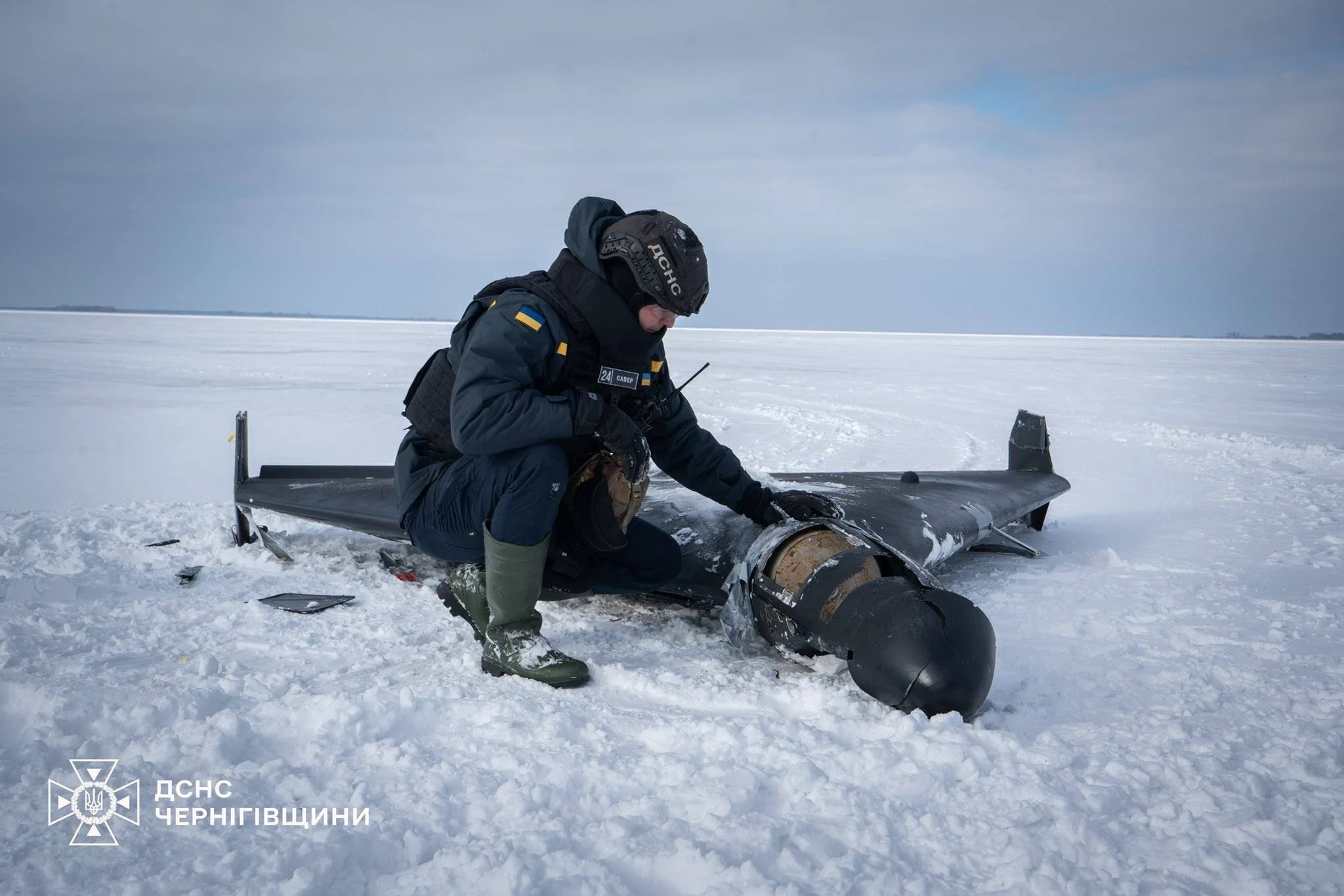
Dsns.gov.ua/wikimedia CC BY 4.0
Forecast
Short-term (Now - 3 months)
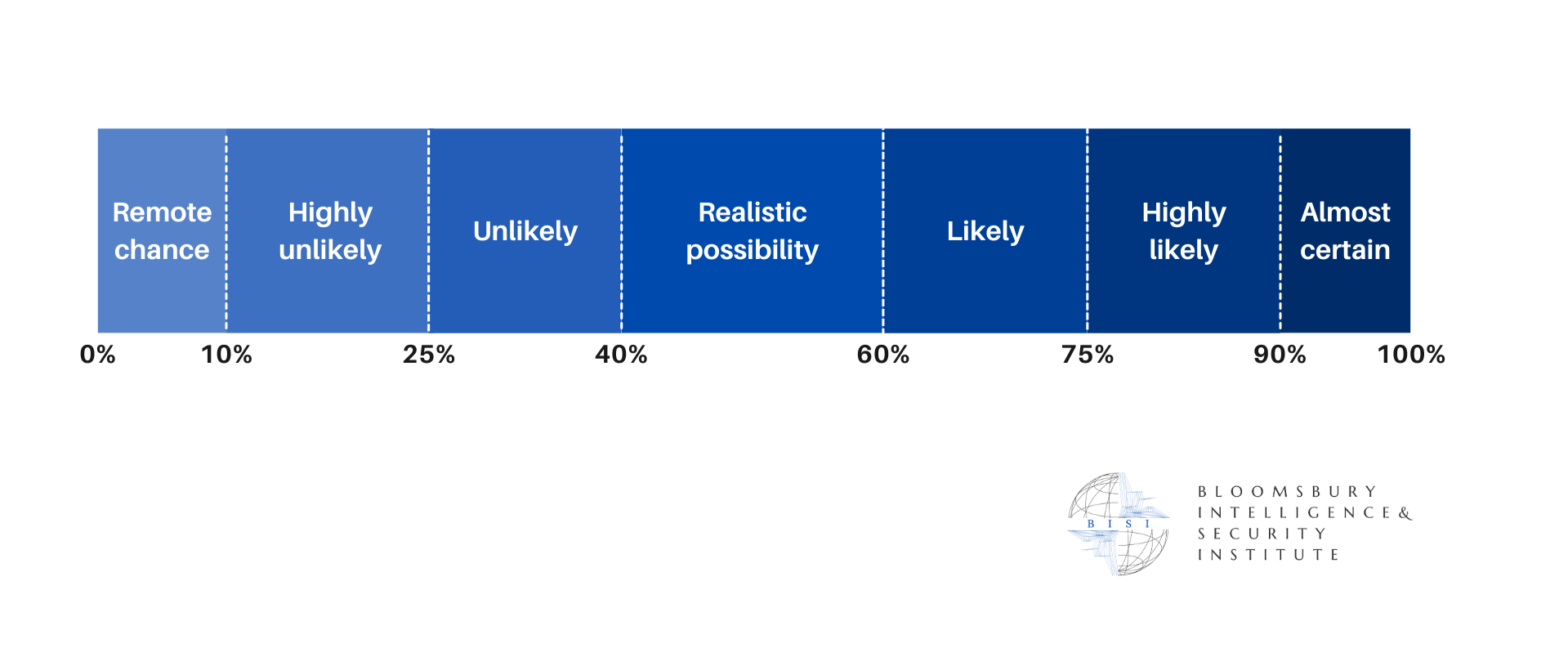
Russian strikes on Ukrainian energy infrastructure are almost certain to intensify through winter, making prolonged rolling blackouts and heating disruption highly likely in Kyiv and other major population clusters.
A comprehensive ceasefire before January 2027 is highly unlikely, though further US-mediated talks in October 2026 are likely to take place without a breakthrough.
Medium-term (3 - 12 months)
Ukraine’s Patriot interceptor shortage is likely to persist into spring 2027, forcing prioritisation of Kyiv and other large cities, as well as energy sites, increasing the likelihood of damage elsewhere.
Delays to European drone-based defence initiatives well into 2027 are also a realistic possibility, leaving eastern flank states reliant on manned interception.
Long-term (>1 year)
A negotiated ceasefire by end-2027 is unlikely, as Russia’s reported plans to scale drone production to around 500 per day may bolster its position enough to avoid entering into negotiations.