By Nicole Pitassi | 28 April 2026
Summary
South Korea is one of the most exposed developed countries to the closure of the Strait of Hormuz, with 70% of its crude supply cut off, its currency at a 17-year low, and its emergency response constrained by its US alliance.
North Korea is expanding its nuclear arsenal and increasing its missile tests under minimal international scrutiny, deliberately consolidating its self-defence capabilities and gaining international leverage.
The crisis exposes a structural paradox in the US-South Korea alliance as a structure built for the Cold War environment is now limiting South Korea’s ability to negotiate its own energy security, command its own forces, and shift its diplomatic alignment; and with a Taiwan Strait blockade a plausible event, South Korea’s exposure to allied-imposed constraints is a vulnerability that has yet to be addressed.
Context
South Korea is currently undergoing simultaneous economic and security crises of a severity that is rarely seen among US allies.
The trigger of the economic crisis was the closure of the Strait of Hormuz, as South Korea supplies 70% of its crude oil and 19.5% of its LNG from Middle Eastern countries, and 80% of its oil refinery structure is adapted to the crude oil imported from these countries. Due to the blockade, the Korea Composite Stock Price Index (KOSPI) has dropped by over 12% in a single day, the won hit a 17-year low, 26 vessels flagged South Korean remain stranded in the Persian Gulf, and the petroleum reserves will cover 26 days of consumption (the International Energy Agency (IEA) set the standard to 90 days of coverage). Furthermore, 35% of the naphtha supporting South Korea’s petrochemical industry and 64.7% of the helium, fundamental for the semiconductor industry, transit through the Persian Gulf.
The aforementioned economic situation is compounded by a rapidly deteriorating security environment on the Korean Peninsula. North Korea has conducted four missile launches in April alone and seven tests in 2026 so far, including multiple ballistic missiles fired on April 19th from the Sinpo area. The International Atomic Energy Agency (IAEA) confirmed that there has been a significant increase in Pyongyang’s nuclear weapons production at Yongbyon, and a new enrichment facility under construction; meanwhile, North Korea has rejected any potential dialogue with South Korea, declaring it its “most hostile enemy state”.
To offset the energy crisis, the South Korean government deployed a USD 17b emergency budget and mitigation, at the expense of undermining the administration’s social and environmental priorities, including plans to restart coal plants.
Implications
The most significant implication of the current South Korea crisis is the combination of the energy shock and the North Korean escalation that reveals the structural cost of full U.S. alliance dependency. South Korea cannot negotiate transit with Iran because any arrangement would risk triggering a tariff retaliation from the Trump administration, and Iran has limited Strait crossings to countries that have maintained greater foreign policy autonomy, such as Thailand, India, and Malaysia.
The U.S. is blocking South Korea from a defence perspective as well, as South Korea does not hold command authority over South Korean military forces, which rest with a US four-star general under the Combined Forces Command. The Lee government is accelerating the Operation Control (OPCON) transfer toward the 2028-2030 window, and both allies have taken concrete steps to facilitate the transition: last year’s Security Consultative Meeting saw defence chiefs agree to develop a road map to ease the conditions for the handover, in which the Korean military aims to complete Full Operational Capability verification by 2026; this year they also set the finalisation at Q1 in 2029. Nevertheless, the transition creates a degree of command ambiguity that risks being exploited by North Korea.
The current crisis is also accelerating South Korea’s push for greater security self-reliance, which is already visible in its defence export sector. South Korea signed a $13.7b deal with Poland in 2022 and concluded a $4b agreement for additional tanks in July 2025; overall, in 2025, it ranked as the tenth-largest defense exporter globally, and the second largest exporter to European NATO members. This export expansion both highlights South Korea’s domestic defence industrial base and builds bilateral security relationships that aim at reducing its dependence on the US.
The North Korean expansion of the enrichment facility, its increased capacity in reprocessing, and the intensified ballistic missile testing are likely intended to consolidate its deterrence capability and gain international leverage, especially exploiting US attention on Iran and the speculated US-North Korea talks at the Beijing summit in May.
President Lee entered 2026, willing to restore ties with China, as the latter supplies 50% of South Korea's rare earth minerals, imports a third of South Korea’s chips, and holds a meaningful influence over North Korea. The closure of the Strait of Hormuz added further leverage for China as it received transit exemptions from Iran, while South Korea did not because of its alliance with the US, pushing the South Korean policymakers and the public toward China. This creates an interest collision as the 2026 US National Defence Strategy (NDS) explicitly positioned South Korea as a regional partner, which set the expectation for South Korea to contribute to the deterrence toward China.
Overall, South Korea has the world’s fifth most powerful military, a top-ten global economy, and a government with a strong democratic agenda, and yet finds itself constrained in its ability to negotiate with a country blocking its oil supply, to command its own forces in wartime, or to publicly shift its strategic alignment without risking economic penalties from its main ally. This does not showcase a failure in the US alliance with South Korea, but solely the fact that it was created for a Cold War threat environment. The interests between the two countries are not aligning anymore, with the US enforcing a blockade that is costing billions to one of its main allies in East Asia, a Beijing summit that risks creating a deal negotiated without taking into consideration South Korea, and the NDS demanding South Korea's full responsibilities in containing China while risking its economic relationship that cannot be afforded to lose.
Forecast
Short-term (Now - 3 months)
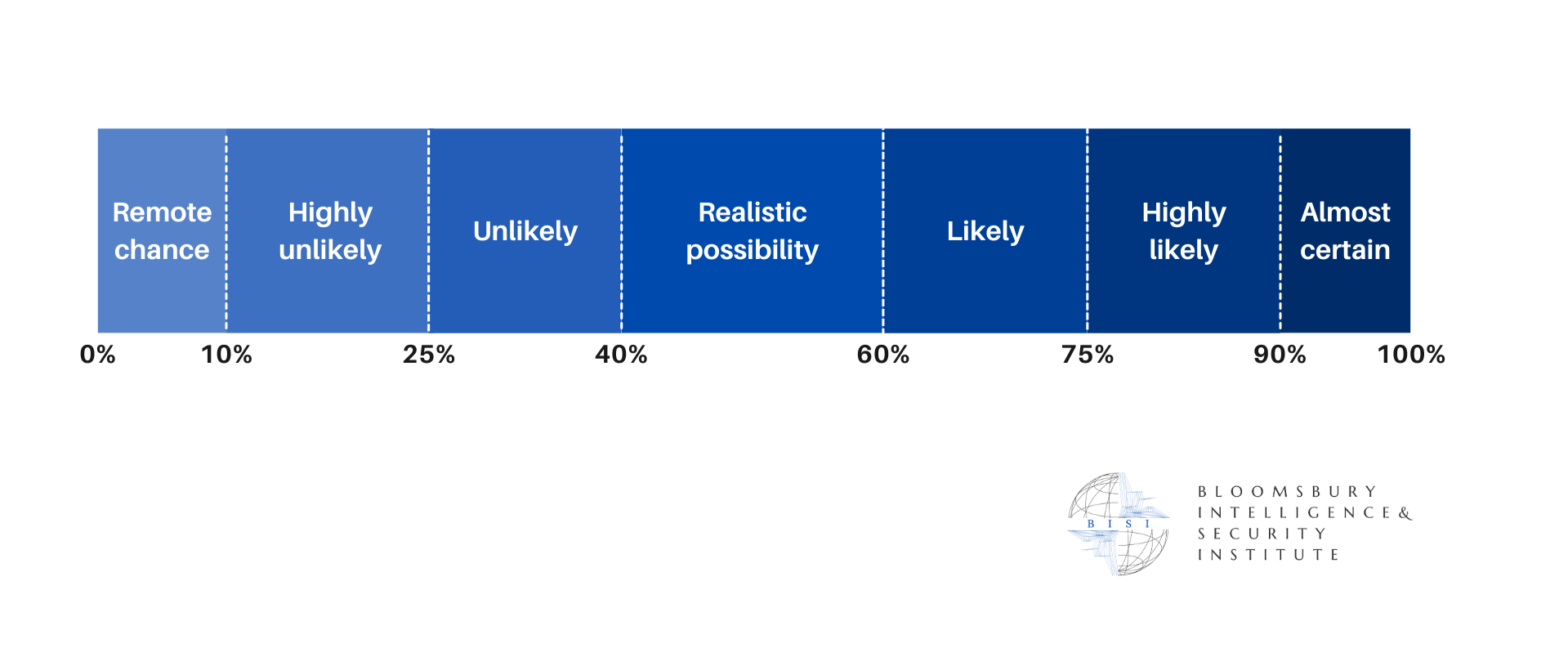
South Korea is highly likely to continue securing energy supplies through alternative routes, avoiding a full industrial crisis. Despite this, the underperformance of June’s local elections due to inflation and fiscal pressure is a realistic possibility.
It is likely that North Korea conducts at least one further weapon test before the Beijing summit.
Medium-term (3 - 12 months)
Growing public and political pressure is likely to push the South Korean government towards a strategic autonomy agenda and continue the acceleration of the POCON transfer timeline.
Trump resuming a diplomatic process with Kim Jon Un, bypassing South Korea’s input, and pushing the latter into a more reactive position on the inter-Korean policy is a realistic possibility.
Long-term (>1 year)
It is a realistic possibility that the South Korea-China economic relationship and the US-South Korea defense alliance will force the President of South Korea at that time to make an explicit strategic choice.
It is a realistic possibility that a Taiwan Strait crisis triggers another energy and supply chain shock similar to the one in Hormuz, which will catch South Korea with insufficient autonomous response capacity, despite the 2026 crisis.