By Trishnakhi Parashar | 28 April 2026
Summary
Yemen has evolved into a system of fragmented governance characterised by competitive overlap, where institutional control is geographically segregated among non-state actors.
In the absence of a unified governing structure, local actors, informal networks, and external support systems have collectively sustained basic governance and service delivery, amid a persistently weak and heavily aid-dependent economy.
This evolving structure reflects not a complete collapse, but a transition towards an adaptive model of governance, shaped by necessity and structural adjustments.
Context
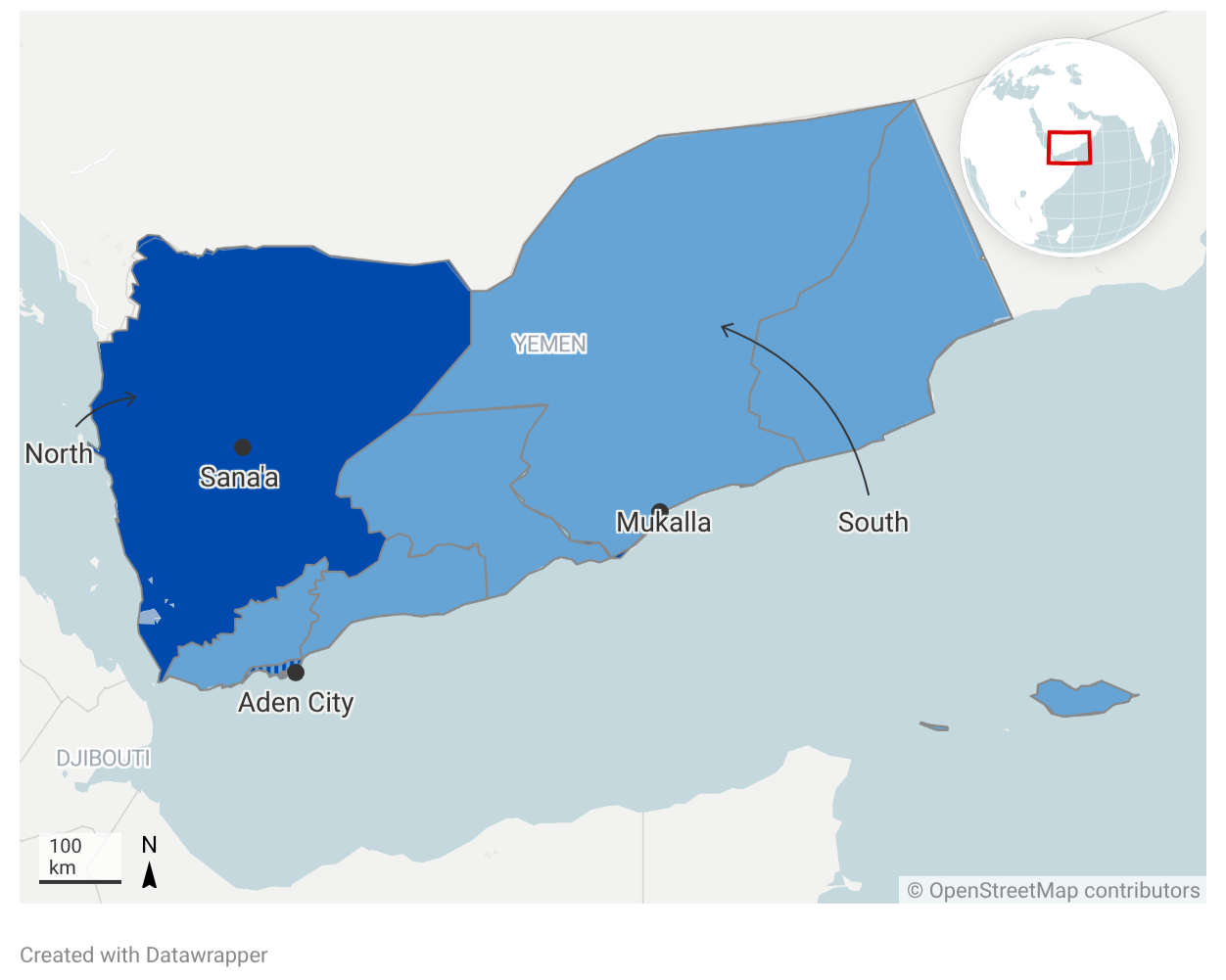
Yemen’s governance structure continues to reflect the cumulative effects of the Yemeni Civil War, with no meaningful re-centralisation of state authority as of early 2026. The internationally recognised government led by the Presidential Leadership Council (PLC) under Chairman Rashad al-Alimi, maintains a limited and fragmented administrative presence, with leadership frequently operating from outside the country, particularly from Saudi Arabia, due to security and political constraints. In practice, authority remains territorially divided, with multiple actors, most prominently, the Houthis (Ansar Allah) and the Southern Transitional Council (STC), exercising power across separate regions.
The Houthi movement, supported by Iran, continues to consolidate control across northern and western parts, including Sana’a. Its governance structures have expanded to include taxation, regulatory enforcement, and internal security mechanisms. While STC, backed by the United Arab Emirates, maintains significant influence in parts of the south and advocates for the establishment of an independent southern state.
This fragmentation has not only weakened national coherence but also paralysed both financial frameworks and long-term development planning. The resulting economic deterioration leads to significant income loss, rising unemployment, and worsening poverty. Following more than a decade of conflict, over half of the population is still heavily dependent on humanitarian aid to sustain their basic livelihoods. As expected, Yemen’s humanitarian condition continues to worsen in tandem.
The current landscape in Yemen reflects a system under strain but not entirely absent. Ongoing efforts by the new government to formulate reform policies and to stabilise the economy further indicate attempts to retain institutional relevance and coordinate governance. Meanwhile, other actors continue to function as de facto authorities, advancing their separatist agenda. For much of the population, access to basic services, economic stability, and a secure living environment remain the priority.
Implications
In the absence of a unified government, governance has become structurally fragmented. Geographical segregation has forced a radical adaptation in how basic services and social order are maintained, with local authorities developing parallel systems of governance to fill the institutional vacuum. At present, competing power-sharing arrangements weaken centralised decision-making and compromise political accountability. It also enhances persistent challenges related to legitimacy.
Yemen’s fragmented authority has significant operational implications, particularly in terms of coordination and implementation of public policies. Multiple authorities complicate decision-making processes. Humanitarian and development operations face setbacks and restrictions. These challenges are further compounded by maritime insecurity in the Red Sea, where Houthi activity has disrupted trade and supply routes. As a result, this fragmentation reduces the overall operational efficiency and capacity of the state.
The presence of multiple armed actors with competing interests sustains a volatile security environment. No unified command structure enables local armed groups, weakens border and maritime security, and creates space for transnational threats. Recently, security dynamics have shifted from an internal contest for authority to Iran’s broader war, with direct implications for civilian safety and security conditions.
Yemen’s economic fragmentation deepens due to divided monetary systems, declining state revenues, and disrupted trade flows. The situation reduces investors’ confidence and limits access to foreign exchange, thereby narrowing the inflow of external financial resources. Recent maritime disruptions have affected key import channels, contributing to rising costs and supply shortages. Currently, economic instability persists to such an extent that the country has become significantly dependent on humanitarian assistance and remittances.
Forecast
Short-term (Now - 3 months)
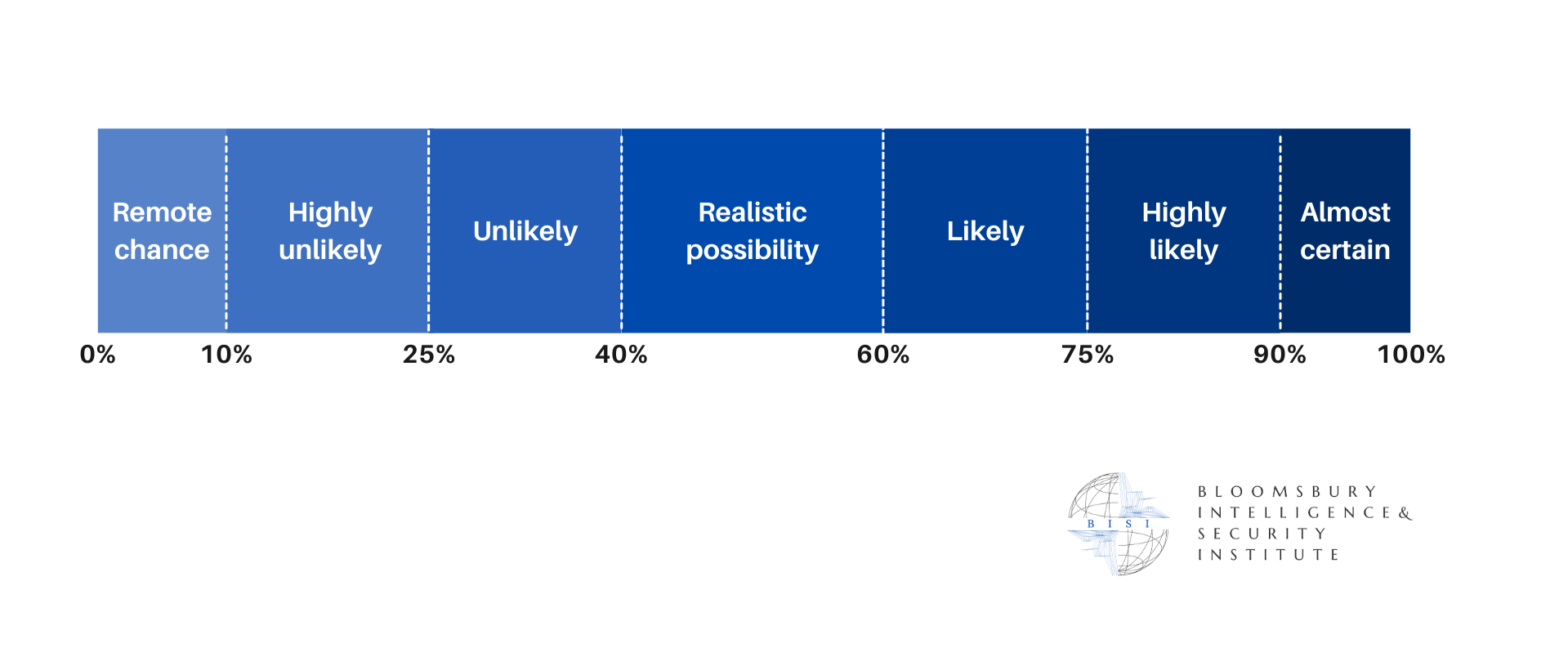
Governance will highly likely remain fragmented, with de facto authorities continuing to operate across divided regions.
The PLC is likely to face challenges in consolidating and integrating its newly recovered territories in southern and eastern Yemen.
Economic conditions may experience limited, short-term relief from the development package provided by Saudi Arabia; however, this is unlikely to significantly alter the broader structural weaknesses of the national economy.
Medium-term (3 - 12 months)
The PLC is likely to strengthen administrative and economic governance.
The PLC, potentially with the support of Saudi Arabia, may seek to facilitate or lead negotiations with the Houthis, which remains a realistic possibility. However, the productivity of such initiatives will largely depend on their willingness and their regional partners.
Long-term (>1 year)
With external powers continuing to shape the internal political sphere, the prospect of a unified political authority is likely to remain a complicated topic.