Taiwan’s 2026 Defence Budget
By Wen-Qing (Sarah) Jiang | 12 May 2026
Summary
Taiwan’s 2026 defence budget exceeds 3% of GDP, but remains inactive due to a Legislative Yuan budget blockade.
While a special defence budget is dedicated to focusing on resilience, asymmetric capabilities, and boosting the domestic defence industry’s outlook, the Chairwoman of the opposition party Kuomintang (KMT), Li-Wun Cheng, sought peace talks with China, prompting debate over implications on Taiwan’s political stances and strategic autonomy.
The upcoming local election in Taiwan is pivotal for informing future policy and narrative directions.
Context
The first quarter of 2026 marked a turbulent beginning for Taiwan, as the annual budgetary deadlock in the Legislative Yuan has persisted since December last year due to failure to reach consensus between the governing Democratic Progressive Party (DPP) and the opposition coalition, delaying the implementation of the 2026 defence budget.
The Executive Yuan, led by the DPP, released a special defence budget of NTD1.25t (USD 40b) in November 2025, aimed at strengthening defence resilience and asymmetric combat capacity. To enhance the detection of potential Chinese coercion or offensive intent in the purchase of unmanned aerial vehicles (UAVs), troop governance equipment, and the introduction of artificial intelligence, measures were in place to speed up intelligence flow whilst ensuring transparency of information.
In addition, the acquisition and optimisation of deterrence munitions are being prioritised, including the long-range MIM-104 Patriot missile system, M142 High Mobility Artillery Rocket System (HIMARS), extended range missile, Harpoon Coastal Defence System (HCDS), Advanced Anti-Tank Weapon System-Medium (AAWS-M), Anti-armour weapon system (TOW 2B), and Unmanned Combat Aerial Vehicle ( UCAV).
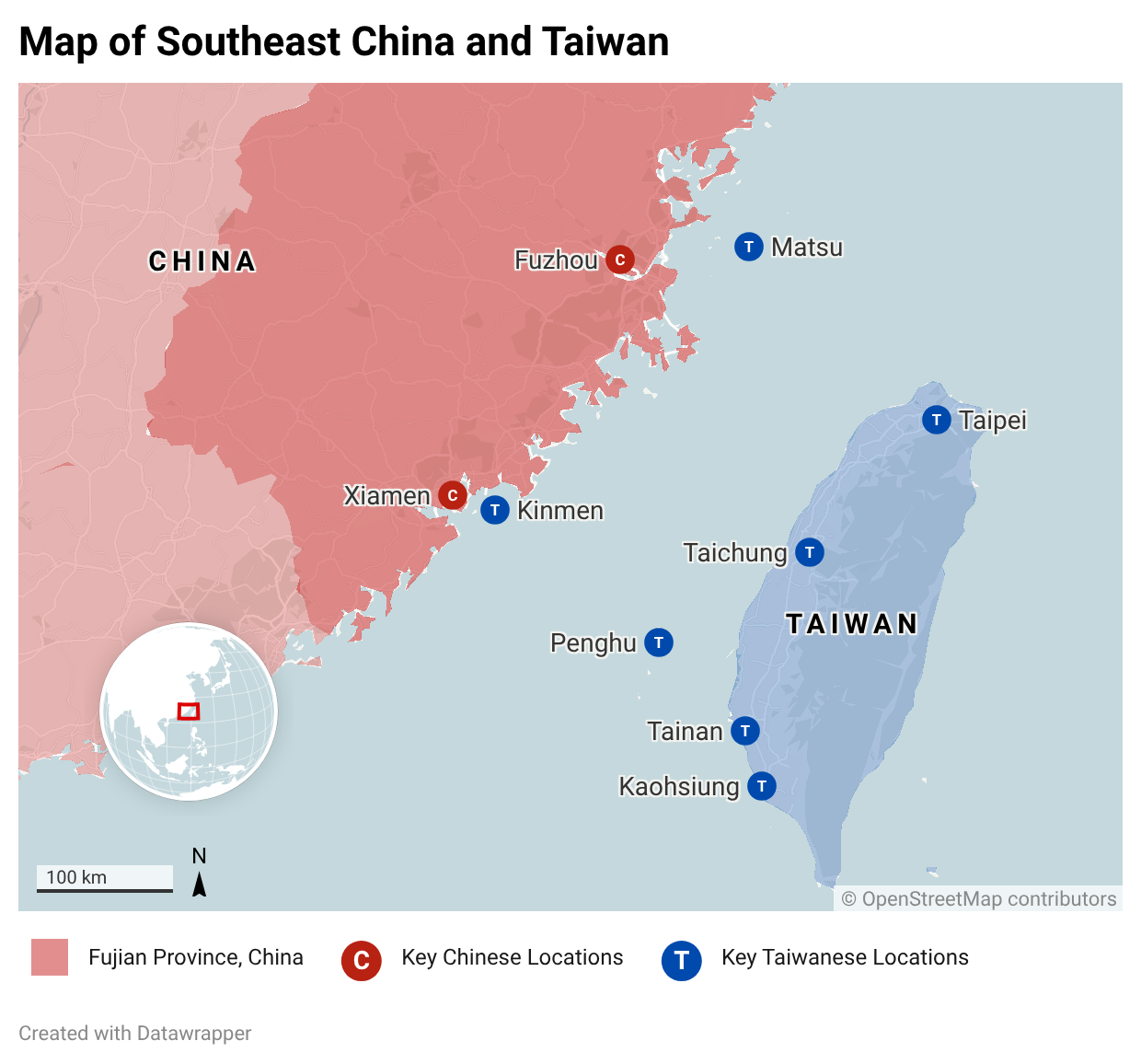
Apart from the special defence budget, the Chairwoman of the opposition party Kuomintang (KMT), Li-Wun Cheng’s visit to China aims for peaceful engagement across the Strait. The meeting has been regarded as an unprecedented breakthrough in cross-Strait relations since 2016, when Beijing ceased all official communication channels following the inauguration of former president Tsai Ing-Wen of the Democratic Progressive Party (DPP).
Implications
The special defence budget is a catalyst for the domestic defence sector and aligns with President Lai’s strategic narrative of consolidating a Taiwanese defence supply chain — “Taiwan Dome” (台灣之盾).
Companies such as Transcome, specialising in manufacturing microwave communication components (e.g. power amplifier), which suffered from low revenue due to the rising standards of military equipment inspection, were able to bounce back and aim high for upcoming batches of purchase orders thanks to a domestic normative shift towards a whole-of-society approach towards resilience and indigenous defence. The normative shift is evident not only within relevant industries but also among the Taiwanese public, where 62% support the special defence budget.
Nevertheless, market optimism doesn’t reflect reality, as the date of the annual budget's passage remains unknown and is estimated to be delayed to June. Citizen Congress Watch (CCW), a Taiwanese NGO that issues regular parliamentary assessments, warned that spiralling partisan rivalry and ongoing budgetary delays are highly likely to create a chilling effect on decision-making
While the island celebrated an increased defence budget and the Agreement on Reciprocal Trade (ART) with the U.S., Cheng’s rhetorical alignment with the CCP narrative during her visit sparked concerns about the erosion of Taiwan’s sovereignty. On the one hand, ART will reduce trade tariffs between Taiwan and the US by 99%. Notably, in terms of economic and national security cooperation, Taiwan will align its export control with the US Foreign Direct Product Rule on semiconductors without compromising the island’s development in AI, biotechnology, and quantum computing. On the other hand, Cheng’s redefinition of the 1992 consensus that highlighted ‘one China against independence’ contradicted the typical KMT’s narrative of respective interpretations (一中各表). The internal division within the KMT regarding the defence budget and narrative framework implies yet another hindrance to achieving legislative consensus.
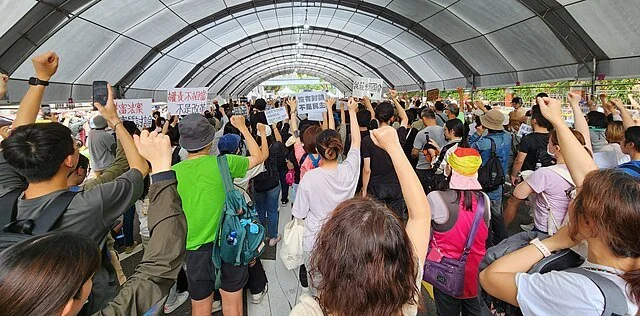
Kanshui0943/Wikimedia
Forecast
Short-term (Now - 3 months)
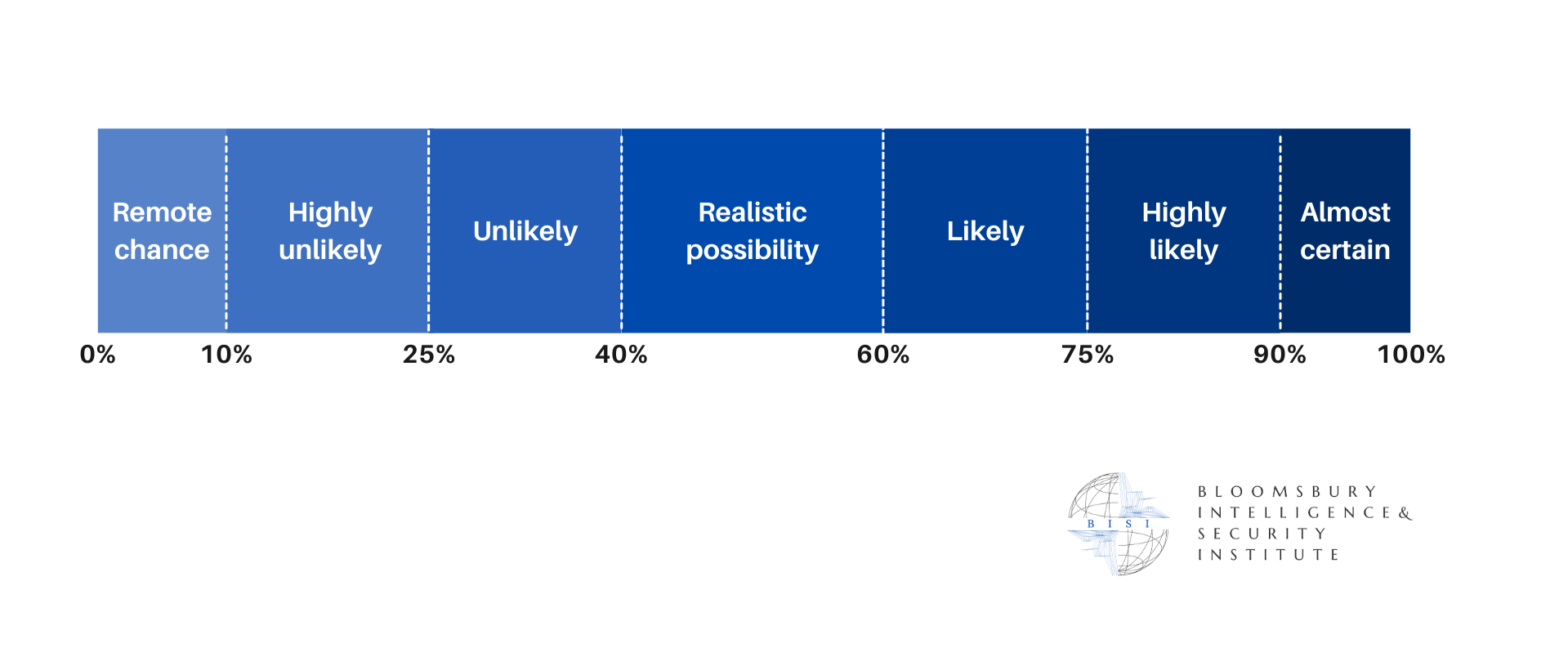
The Cheng-Xi meeting is highly likely to be used as a strategic tool by Xi to promote China’s peacemaker image in terms of cross-Strait tensions ahead of his meeting with Trump.
Medium-term (3 - 12 months)
China is highly likely to influence Taiwan’s local election results by deploying preferential treatment for specific industries (e.g., agriculture and fisheries).
The passage of the annual budget is likely to drive soaring defence industry stocks, boosting domestic industries and the economy.
Long-term (>1 year)
Taiwan is likely to become dependent on imported US liquefied natural gas due to energy insecurity.
Cheng is highly likely to take on the role of negotiator and mediator in cross-Strait official dialogue if the KMT wins the upcoming local election and the next presidential election.
If the KMT wins the upcoming local election and the next presidential election, Taiwan is almost certain to go back to being strategically ambiguous in cross-Strait dialogue. Moreover, a closer tie with China is likely to impact Taiwan’s relations with the U.S. and Japan.