
By Neil Robertson | 2 December 2025
Summary
Syria has launched the first trial of 14 defendants accused of involvement in sectarian violence on the Alawite-majority coast in March 2025.
Internal divisions within the new Syrian government’s support base are likely to deepen given the threat of prosecution, while hardline jihadist elements may increasingly resist cooperation and could resort to violence.
Expanded trials are likely if Western powers condition normalisation on reforms, but institutional fragility will likely slow progress. Transitional justice in the country will likely remain elusive.
Context
On 18 November 2025, Aleppo’s Palace of Justice hosted the first public trial over the March 2025 coastal violence in Syria, which left more than 1,400 people dead. The trial is the first of its kind in Syria since the new government took power and will see an even number of former Assad regime and members of the new security forces tried for their involvement in the violence.
The violence is widely believed to have erupted after pro-Assad armed groups carried out guerrilla-style attacks on the security forces of the new Syrian government after the latter’s takeover of the country in late 2024. These attacks then led to reprisals against Alawite-majority areas along Syria’s coast. Investigations have identified over 500 suspects, with charges ranging from sedition and inciting civil conflict to premeditated murder and participation in armed groups.
A total of 14 defendants are to stand trial over their participation in the unrest, with seven of the accused from the pro-Assad armed groups and a further seven from the new security forces. Rights groups, including the Syrian Network for Human Rights, described the trial as historically significant, noting that members of the security forces themselves are being prosecuted - something that was previously unthinkable under Assad.
Implications
The trials of the accused security members signal an attempt by the al-Sharaa’a government to demonstrate commitment to the rule of law and institutional reform. Questions remain, however, as to how deep this shift really runs. Critics argue that the even division of defendants between pro-Assad personnel and members of the new administration suggests a performative element, raising concerns that the process may function partly as a political show trial rather than a substantive accountability measure.
Al-Sharaa’s decision to pursue these trials risks further alienating parts of his armed support base. As previously highlighted by BISI, efforts to assert greater control over unruly factions, in particular internationally-oriented jihadist elements, have already generated resentment among some loyalists. While the trials could signal progress toward stronger institutions, they may also heighten the long-term risk of renewed violence, as many pro-regime fighters consider themselves beyond legal reproach, believing their role in bringing al-Shara’a to power grants them de facto immunity
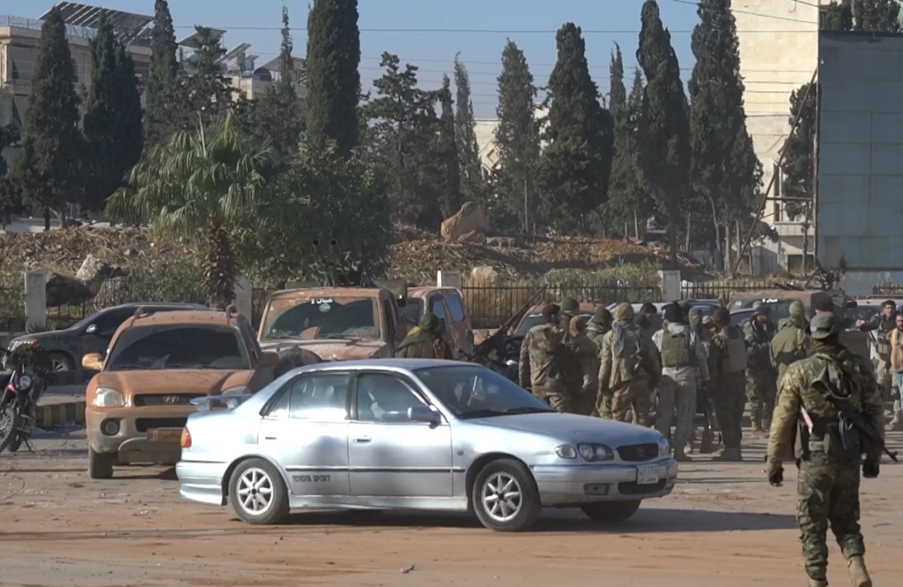
Ahmad Fallaha/Wikimedia
Forecast
Short-term (Now - 3 months)
It is a realistic possibility that the al-Shara’a government may use the trials to demonstrate increasing alignment with Western partners.
Given the fact that the next hearing has been postponed till December, public criticism will likely increase if proceedings appear slow or simply performative.
Medium-term (3-12 months)
The risk of division within the support base of the new Syrian government is likely to deepen, especially in the context of recent crackdowns on rogue elements.
There is a realistic possibility that hardline Jihadists, especially foreign elements within Syria, may become increasingly unwilling to cooperate in the new Syria and may choose violence if al-Shara’a continues to move against them.
Long-term (>1 year)
To gain further acceptance within the international community, the trials are likely to be expanded should Western powers choose to condition full normalisation and broader sanctions relief on sustained judicial reforms.
Institutional constraints owing to the fragility of the new government, in combination with political sensitivities will likely mean that progress will remain slow.
