Symbolism over Substance: Implications of the US-China Summit
By Max Brockdorff | 9 June 2026
Summary
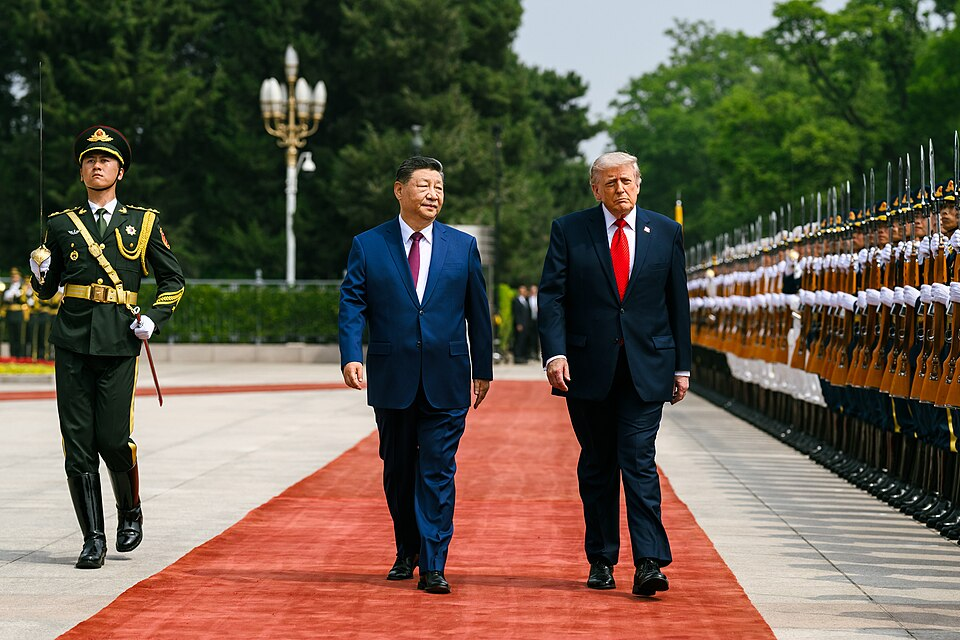
The recent 14-15 May 2026 Summit between General Secretary Xi Jinping of China and United States (US) President Donald Trump saw significant pageantry, but few substantive deals.
The summit ended with claimed deals on aerospace and farming for the US, but significant omissions and ambiguity on key issues such as Iran, Taiwan, and AI.
Despite warm rhetoric, key issues underpinning US-China tensions remain, and competition is highly likely to continue. Whether future summits will make further progress is uncertain.
Context
Between 14-15 May, President Trump visited China for the first time since October 2025, seeking to continue the thawing in relations initiated by his previous visit. Accompanied by key figures from US industry, including Tesla CEO Elon Musk, Apple CEO Tim Cook and Nvidia CEO Jensen Huang, prospects for a deal over AI chips were high.
Despite friendly rhetoric from both sides, the summit resulted in limited tangible outcomes. In a statement, the White House claimed a deal had been reached over China’s purchase of 200 Boeing planes, and that China had pledged to buy USD 17b worth of agricultural goods per annum until 2028, which is yet to be confirmed by China. The White House also stated the formation of 2 new institutions for managing economic relations with China: the Board of Trade and the Board of Investment. The Board of Trade is intended to regulate the trade of “non-sensitive” goods, including an immediate package worth USD 30b and potentially lower tariffs should this deal be successful. The Board of Investment is intended to regulate Chinese investment in nonstrategic and nonsensitive areas of the US economy. A shift from the previous US policy focused on reducing allied trade with China for national security reasons. Notably omitted were a deal on AI chips and guardrails, as well as solidifying Chinese policy over the Iranian conflict.
The Chinese statement was more rhetorical in focus, stating their commitment to “constructive strategic stability,” emphasising the maintenance of stable relations and managed competition. The statement also notably focused on Taiwan as a potential point of future conflict, stating it as the most important aspect of future relations. The US statement omitted all mention of Taiwan, with Trump refusing to speak publicly on the issue.
Implications
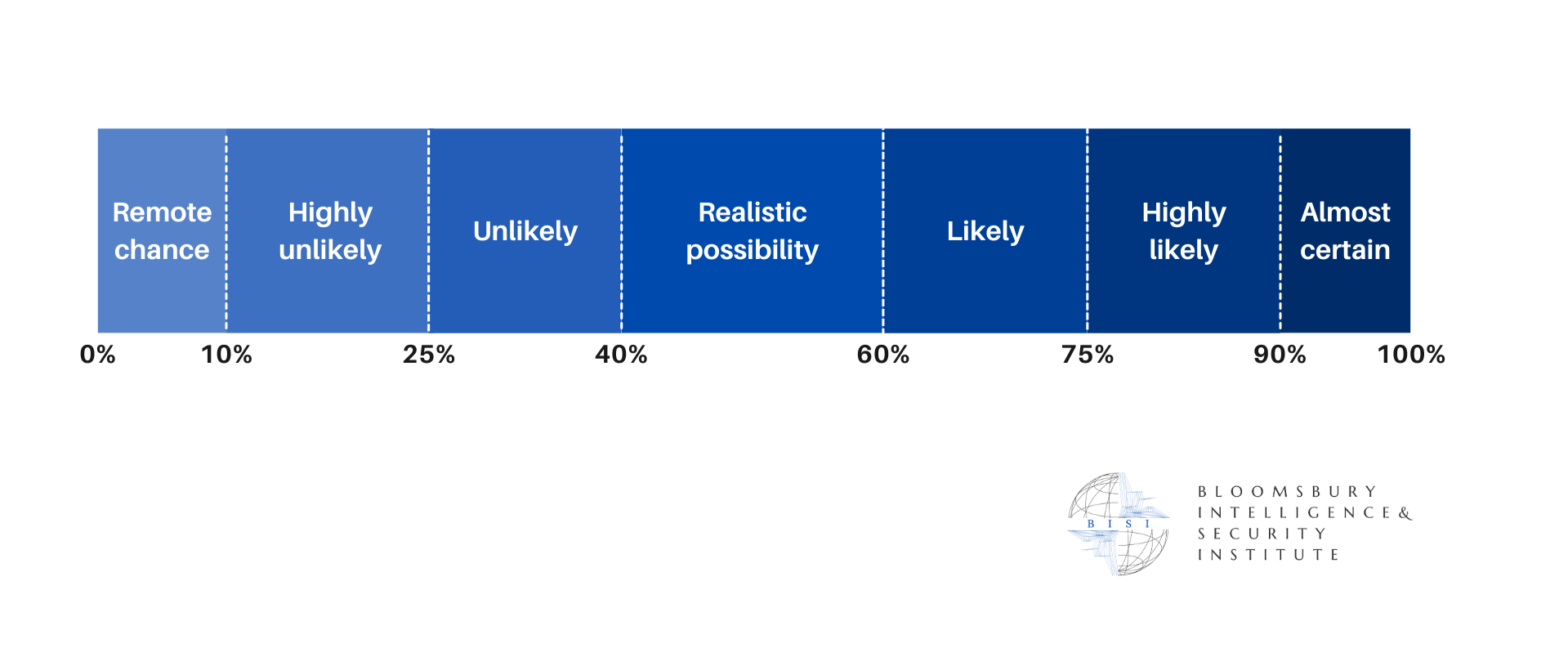
The summit represents a shift by both the US and China towards managing future conflict rather than mitigation. The Boards of Trade and Investment are intended as a mechanism for managing future crises, rather than as bureaucratic trade bodies. They will likely act as political channels through which leaders can manage shared issues and tensions. Future summits, such as in November in Washington, demonstrate how future management of US-Chinese tensions will likely be leadership-focused, bilateral and will highly likely exclude allies from discussions. Such summits will likely achieve limited tangible results, focused on defusing tensions and symbolic gestures.
Rhetoric from both sides suggests the acknowledgement of competition between the US and China as an international norm. The summit and future summits are highly likely to manage such issues rather than resolve them. Material differences between the states were not changed by the most recent meeting and are unlikely to be resolved in the near future. Whether this management of tensions will be successful is uncertain, with issues like Taiwan likely to remain a point of contention, preventing thawing in relations. Areas such as cyber-competition will likely remain, with efforts on both sides to attack critical infrastructure continuing. And a visit from Russian President Vladimir Putin to China between 19 and 20 May 2026 demonstrates the continuation of global political competition. However, trade conflicts such as those throughout 2025 are unlikely to return in the short to medium term, with neither side incentivised to engage in economic antagonisation due to the strains on both economies created by the Iran War.
The economic implications of the meeting are uncertain. The deals espoused by the Trump Administration in aerospace and agriculture are relatively minor in the larger US economy, and their lack of public acceptance in China casts doubt on their future. China is highly likely to remain an uncertain and volatile market for the US, yet it is undoubtedly still vital due to its critical material-refining capabilities. Trade reductions as seen since 2022 are likely to continue, even as political rhetoric may improve. The omission of a deal over AI suggests competition will likely continue between US and Chinese companies. Future deals will likely concern AI safety and guardrails, though the extent of cooperation on this remains uncertain due to US fears of Chinese technology theft.
The issue of Taiwanese independence remains a significant point of tension for US-China relations and is highly likely to remain so. The omission of Taiwan in US statements suggests a continuation of US strategic ambiguity regarding its military support for Taiwan. Trump will likely release a second shipment of weapons to Taiwan worth USD 14b, and US support is highly likely to continue. Trump’s refusal to make a deal over Taiwan demonstrates the US's unwillingness to back away from its Taiwan policy.
Impacts on the Iran War are likely to be negligible, with no deal emerging over Chinese support for American interests in the Middle East. China is highly likely to remain an external mediator, despite the negative impacts on its economy and energy security, and further involvement in the Middle East on its side is highly unlikely.
US-Chinese competition, therefore, remains the status quo after the summit, and future meetings are unlikely to change this. Material differences, such as competition over AI and trade and the issue of Taiwanese independence, remain and are unlikely to change significantly at future summits. Symbolic progress does represent progress, but key differences mean that US-China tensions will pervade.
Forecast
Short-term (Now - 3 months)
The US is highly likely to release a second shipment of weapons to Taiwan worth USD 14b.
US-Chinese cooperation over the Iran War is highly unlikely to occur, with Chinese lack of interest in full engagement in the conflict or its resolution process.
Medium-term (3 - 12 months)
A future deal on AI is likely to focus on issues of common interest, such as safety and guardrails, but cooperation beyond this is unlikely due to US concerns about Chinese technology theft.
Long-term (>1 year)
Future summits are likely to be the primary means of managing US-China political relations, conducted at the level of bilateral leadership.
Economic competition is likely to remain. The complexity of US-Chinese economic ties means that while trade volume will likely continue to decline, key sectors such as critical minerals and magnets will retain trade ties.