Supply Chain Vulnerabilities in Europe's Semiconductor Industry Amid the Iran Conflict
By Patricia Preller | 20 April 2026
Summary
Global and European semiconductor supply chains have been disrupted by drone strikes in the Middle East from the ongoing conflict in Iran.
Europe's semiconductor industry remains critically exposed to global supply chain disruptions due to its heavy reliance on foreign resources and manufacturing capacity.
EU legal and regulatory frameworks, with accompanying investments in the European semiconductor industry, introduced to tackle the dependencies, are insufficient to address systemic vulnerabilities.
Context
The ongoing conflict in Iran highlighted several choke points for the global semiconductor industry due to reduced raw material supply. Drone strikes, for example, have disrupted Qatari Helium and Aluminium supplies, which are essential to the manufacture of microchips, and are now threatening to increase production costs and cause shortages.
Europe is especially vulnerable with an overwhelming dependence on resource and chip imports. Almost 80% of suppliers to European firms are headquartered outside the EU, making Europe dependent on resources and on semiconductor imports. Semiconductor supply chains from Taiwan, China, South Korea, and Japan, however, have been disrupted due to closed air bases in the Middle East, reducing air cargo capacity and surging oil and insurance premiums. European companies are using backup stores or facing higher production costs. But while this has offset disruption so far, observers warn of serious shortages if blockades in the Strait of Hormuz continue for more than 56 days and will likely last beyond the current conflict due to the lack of domestic production capacity.
Implications
Because of the global interdependence of the semiconductor supply chain, the sector companies increasingly depend on the geopolitical implications of production.
The war simultaneously disrupts both ends of Europe's supply chain. With domestic production covering only around 10% of European semiconductor demand, with modest predicted increases, existing capacity is too limited to absorb shocks. Because of the double dependence on resource and semiconductor imports, European manufacturers will likely struggle to remain competitive as energy and import prices will drive up costs, should the conflict in Iran last for several months.
US-Chinese tensions, with both countries introducing legislation to heavily regulate exports and promote national production, add further urgency. Europe, dependent on Asian technology but politically aligned with the US, is being pulled in competing directions without the strategic autonomy to navigate either on its own terms. The ongoing conflict in Iran has now added urgency to this dilemma. As disruption in the Middle East affects Asian foundries supplying Europe, US-China tensions constrain Europe's ability to focus on trade with China to offset longer-term shortages through supply chain diversification or as a market for European manufacturers.
In 2023, Europe responded with the European Chips Act, which centred around strengthening the EU’s semiconductor production capacity, improving security of supply, and introducing monitoring and crisis-response mechanisms. In late 2025, the European Court of Auditors found that, despite reasonable progress, current efforts remain insufficient and fall short of the 20% target.
The dual-use of semiconductors in civilian and strategic military tech adds significant security implications to these shortcomings. Europe still largely relies on US suppliers and outsources manufacturing to Asian foundries, underscoring the urgency of an updated technology framework. But the defence sector could boost a European tech renewal as tech procurement can prioritise sovereignty over cost and generate predictable demand for European companies, not only improving security but also boosting European economies.
Europe has invested significantly and boasts several choke points, which the EU could leverage strategically to improve its position with an updated framework not just within the global semiconductor market but also to avoid being caught between the US and China. The Dutch company ASML has a global monopoly on extreme ultraviolet lithography machines, which are essential for manufacturing the most advanced semiconductors. ESMC, a coalition of TSMC, Infineon, Bosch, and NXP, has received EUR 5b German state aid and is set to open Europe’s largest semiconductor production facility, a fab, in late 2027, reaching full capacity in 2029. Construction for the expansion of the Global foundries fab in Dresden has also commenced with significant funding support through the Chips Act. Together, with their focus on automotive chips, they could enable Europe to take charge of supply chains, especially for China’s export-dependent automotive sector, thereby improving its strategic position in the global market.
Currently, however, the EU is failing to leverage its strengths to act independently. ASML has faced US pressure restricting its servicing and supplying systems to China. While the ESMC development in Dresden represents a significant step towards a more autonomous tech industry, initial European reactions to the project show how the continent struggles to leverage its strengths. Critique from smaller member states who lamented that major EU players like France and Germany could exploit the loosening of EU funding regulations to bolster national industries and fragment the internal market. Still, as the Taiwanese interest in developing the Czech-German region into a hub for semiconductor production shows, significant opportunities remain for Europe to move towards strategic autonomy if it can muster the necessary political will for coordination.
Forecast
Short-term (Now - 3 months)
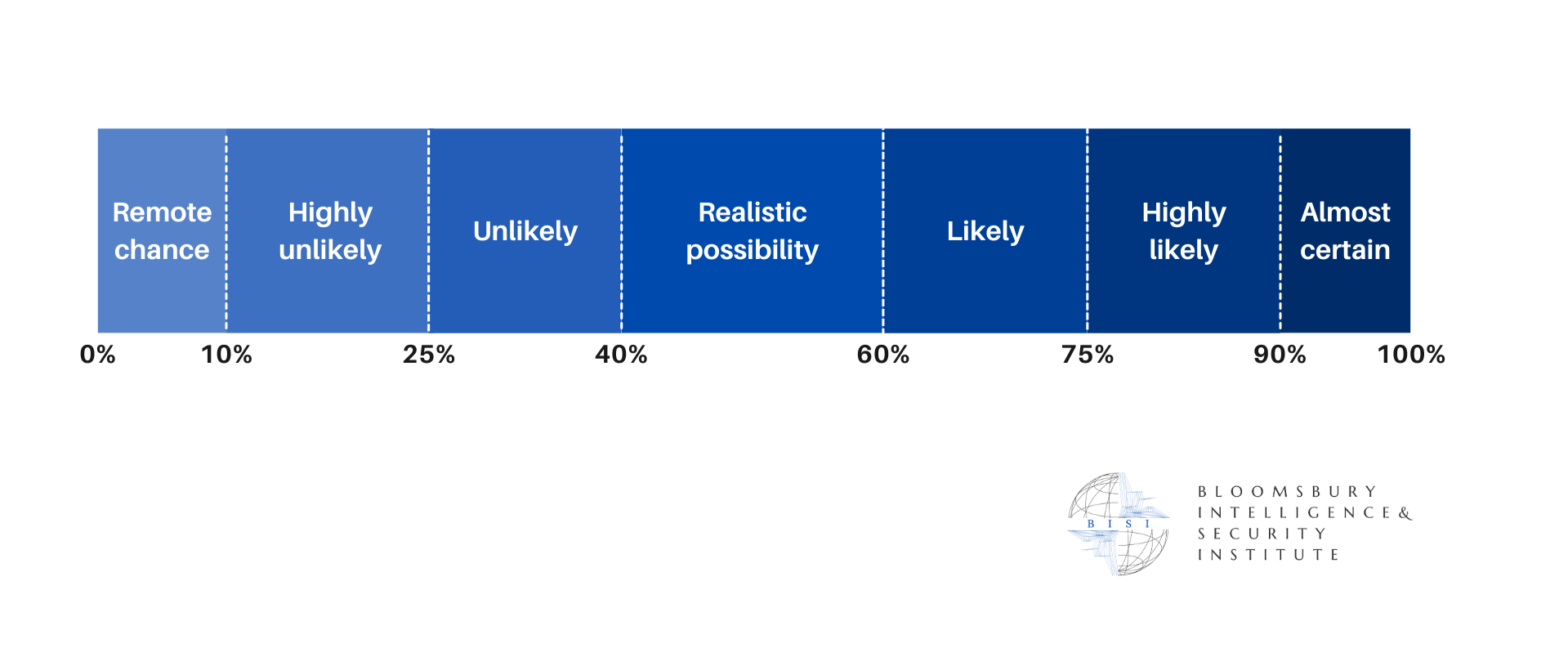
It is highly likely that disruption from the Iran War will cause as recent statements from the US and Iran suggest, there is currently no settlement for the Strait of Hormuz.
Medium-term (3 - 12 months)
It is highly likely that Taiwanese semiconductor giant TSMC will continue plans to expand operations in Germany, the Czech Republic, and Poland.
Long-term (>1 year)
On its current trajectory, it is almost certain that the EU will fail to meet the 20 per cent global market share target set in the EU Chips Act. There is a realistic possibility, however, that the Commission will re-evaluate and partly reform the current framework.
It is likely that the increasing fragmentation of the EU internal market will further strain relations between small member states and France and Germany, increasing pressure on the EU to reform the current framework.
It is highly likely that, without a holistic semiconductor framework addressing the full production cycle, European companies in the sector will remain exposed to input bottlenecks in raw materials and energy, consolidating the advantage of a small number of large enterprises at the expense of broader industrial development.
Despite the strong investment in semiconductor manufacturing, it is likely that fabs will face resource shortages without a holistic semiconductor framework, which tackles the whole production cycle.