Spectre of US-backed Regime Change in Cuba Grows
By Raphael McMahon | 1 April 2026
Summary
Since the capture of Venezuelan President and Cuban ally Nicolás Maduro by United States (U.S.) forces in early January 2026, tensions have escalated between Cuba and the US, with the latter imposing an oil blockade on the island and explicitly threatening regime change.
Cuba is facing a sanctions-induced humanitarian and economic crisis designed to pressure the Cuban government. There have been reports of covert negotiations between the CIA and the Cuban Government regarding a potential liberalisation of the Cuban economy.
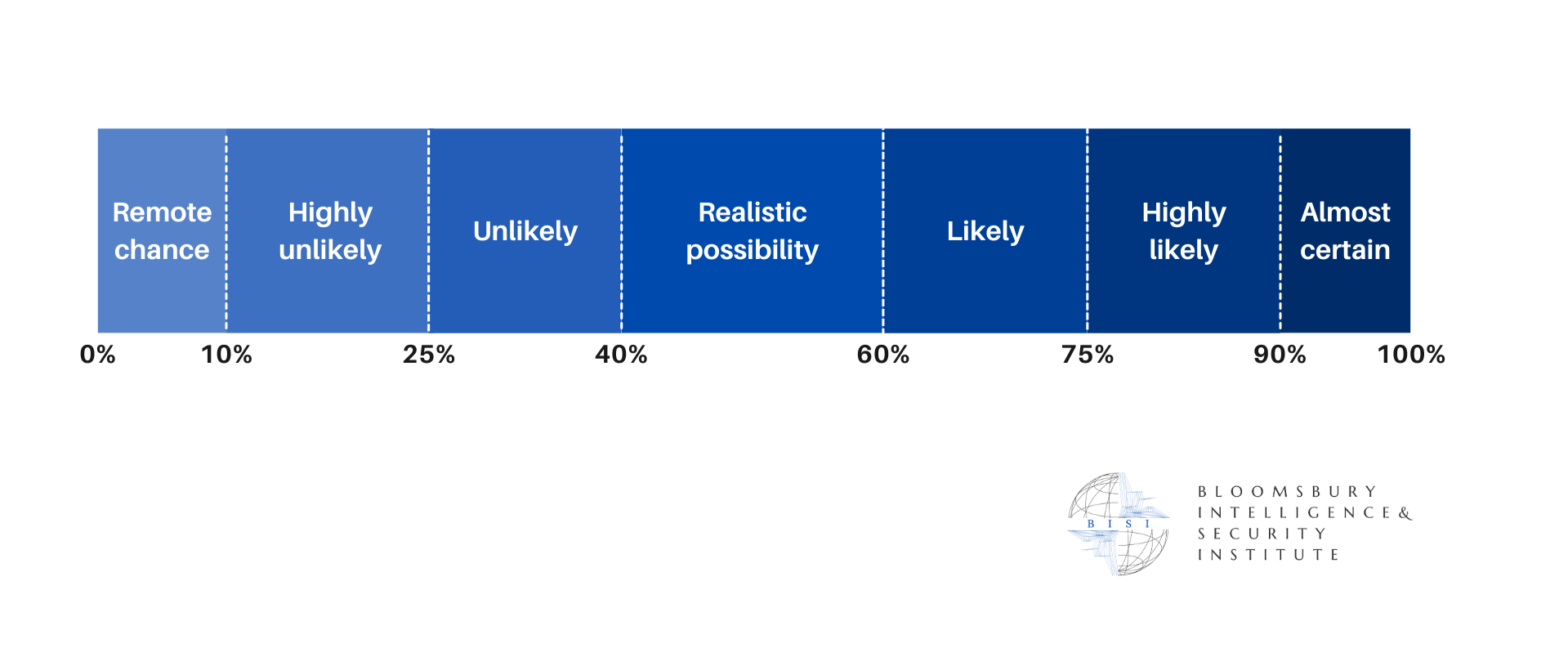
The U.S. attack against Iran, the recent infiltration of Cuban waters by a vessel carrying armed anti-government militants and the subsequent shootout indicate that a military confrontation is plausible. However, despite Cuban-American pressure, a negotiated solution remains plausible.
Context
Since the American military operation to capture Maduro, various high-ranking members of the Trump administration have engaged in (occasionally veiled) threats of regime change against the Cuban government. The U.S. has also imposed a comprehensive blockade on oil imports to the island and declared the Cuban Government a threat to US national security.
However, options for a peaceful transition on the island are also potentially being explored. There have been reports of agents of the American CIA negotiating with Colonel Alejandro Castro Espín, son of Raúl Castro and nephew of Fidel, over the potential liberalisation of the Cuban economy without political regime change. The proposal will provide American companies with preferential access to key sectors of the Cuban economy - energy, tourism, banking, etc. - for the U.S. to lift the decades-long economic embargo
There are other indicators recently that the U.S. may pursue this less militarised route - Trump recently slightly softened the oil blockade to allow U.S. businesses to send oil to private (non-state-affiliated) businesses in Cuba. The Trump administration also announced that it would allow the resale of Venezuelan oil, which the U.S. effectively controls, to Cuba “for commercial and humanitarian use”.
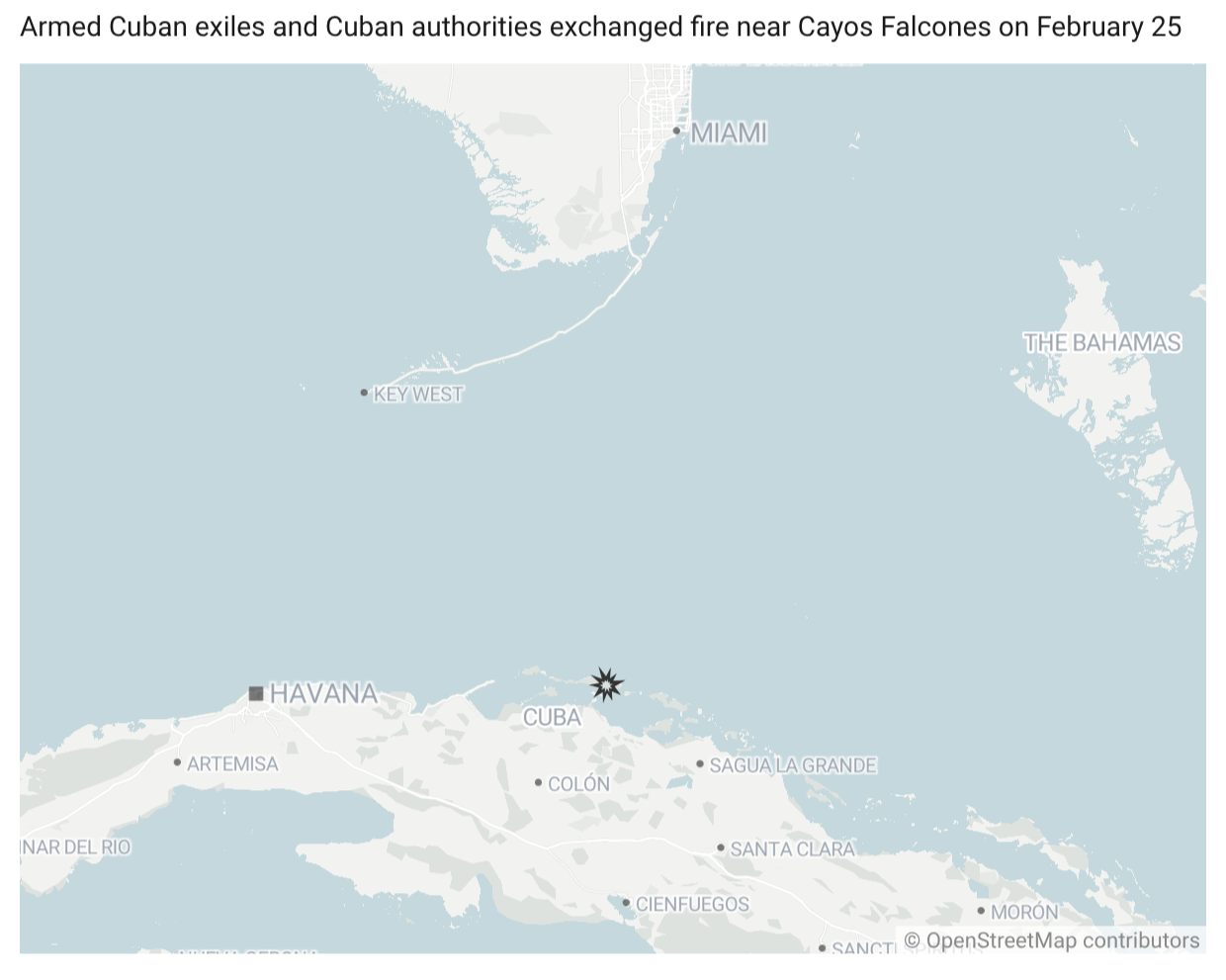
Nonetheless, the possibility of a more politically-motivated military regime change operation targeting the Cuban government and the ruling Cuban Communist Party remains. Earlier this week, various U.S.-based Cuban opposition groups united in Miami to sign the “Liberation Accord”, demanding the complete dismantling of the Cuban Communist Party and a transition to multiparty elections. Ten Cuban nationals residing in the U.S. also recently attempted to (allegedly) infiltrate Cuban territory, resulting in a shoot-out with Cuban authorities at sea.
Implications
It remains unclear which option the U.S. will pursue regarding Cuba. The recent actions by the U.S. in Iran and Venezuela demonstrated the willingness to use military force against its foreign adversaries over perceived failed negotiations.
If the U.S. opts for the military option, it could support an incursion of the island by Cuban exiles that resembles the Bay of Pigs Invasion or last month's incursion by boat. However, the U.S. denied any involvement in the latter incident. If not, an operation to remove the Cuban President, similar to the Venezuelan operation, is possible, given that the U.S. has already indicated that a prerequisite for a successful negotiation with the Cuban government is the removal of President Díaz-Canel.
If such a military operation were successful, this would represent a vindication of the so-called Donroe Doctrine - the Trump corollary to the 19th-Century era Monroe Policy of American hemispheric domination - through the removal of a decades-long ideological adversary. This could empower the U.S. to take further action against perceived unfriendly Latin American governments, such as Sheinbaum’s Mexico, Ortega’s Nicaragua or Lula’s Brazil. However, instability in Cuba could trigger a migration crisis, given the island's long history of exoduses.
Furthermore, the Cuban-American Rubio has historically been particularly vocal in his criticism of the Cuban regime and has a history of calling for the Cuban government’s end. He has called the Díaz-Canel government a “puppet for Communist China, Iran, and […] Russia” and had also explicitly stated in 2019 that a positive consequence of a Venezuelan regime change operation would be the subsequent debilitation of Cuba. The Cuban opposition’s unification and Rubio’s history of antagonism towards the Cuban regime mean that the powerful Cuban-American lobby - possibly spearheaded by Rubio - in the U.S. will likely be pushing Trump to discard the option of negotiation and instead force political regime change by any means necessary.
Trump’s assertion that, once the operation in Iran is finished, regime change in Cuba is a “question of time” and his declaration to Politico that “Cuba’s going to fall to” may suggest that he warms to the position of the Cuban-American lobby.
However, the U.S. and Cuba are currently engaged in negotiations to find a diplomatic solution to the escalation in tensions, with Trump having previously indicated his willingness to talk to the Cuban government. Trump’s conflicting statements on the matter, as well as his initial opposition to American regime-change operations, mean that peaceful negotiation may remain a viable option despite Cuban-American pressure. Regardless of whether the change is economic and negotiated or political and forced, it appears that some form of fundamental change on the island is imminent.
Forecast
Short-term (Now - 3 months)
Bilateral dialogue is highly likely to escalate into official negotiations, while military action remains a realistic possibility. If the Cuban government makes sufficient concessions in negotiations for Trump to claim a diplomatic victory, the current government will likely remain in power. If not, there will likely be a Maduro-style operation to remove the leadership and install a member of the opposition movement.
Medium-term (3 - 12 months)
A gradual liberalisation of the Cuban economy is almost certain in the medium term. The Cuban private sector will expand and, by the end of the year, American companies will likely play some role in the Cuban economy.
Long-term (>1 year)
It is highly likely that the U.S. embargo will be lifted in response to a liberalisation of the Cuban economy, which will result in a dramatic increase of movement of goods and people (tourists, families and businesspeople) between the two nations. Cuba will almost certainly, regardless of whether regime change is political or economic, fall within the U.S. diplomatic sphere of influence and distance itself from China and Russia