China's Energy Diplomacy Toward Taiwan: Its Strategic Advantage Amid Renewed Energy Instability
By Nicole Pitassi | 31 March 2026
Summary
China’s recent offer of energy stability to Taiwan in exchange for reunification is a continuation of its grey–zone coerciveness, using economic vulnerabilities to apply pressure while avoiding military escalation.
Taiwan’s dependence on imported energy, especially LNG, and the concentration of energy demand in the semiconductor sector, create systemic vulnerabilities that could affect the global tech supply chain and the domestic economic and political environment, opening other potential possibilities for China to exploit.
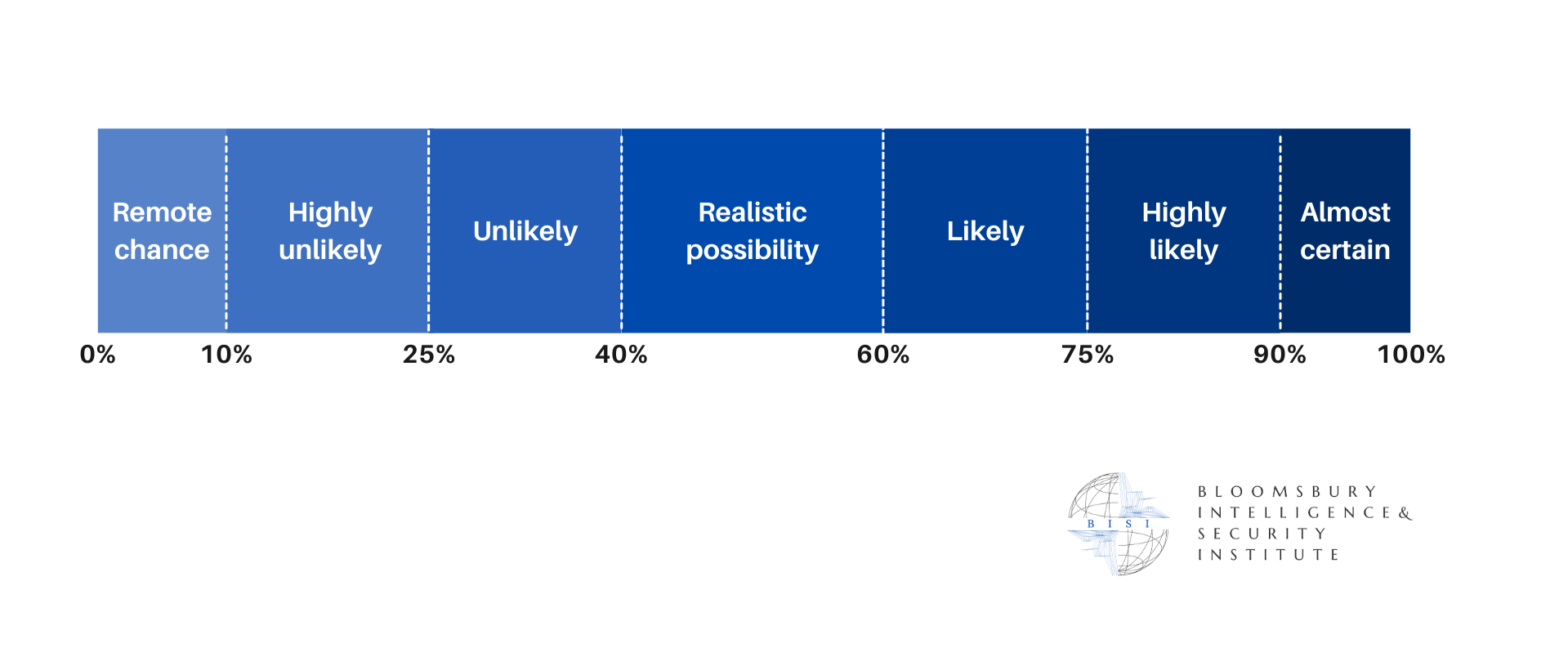
Within the next 12 months, Taiwan is likely to stabilise its energy supplies, accelerate renewable energy deployment, and begin reopening the nuclear plants closed in 2025. China is likely to continue with its coercive tactics to create the conditions for eventual unification, avoiding open armed conflict.
Context
Over the past decade, China has increasingly relied on grey-zone tactics to pressure Taiwan into agreeing to Beijing’s rule over the island. These efforts involve actions created to remain below the threshold of armed conflict while gradually increasing political and economic pressure. In this context, on 18 March, China offered Taiwan energy stability provided that it agreed to integrate with China. The proposal was made amid ongoing energy supply disruptions over the closure of the Strait of Hormuz due to the Middle East conflict, a key transit corridor for oil and liquefied natural gas (LNG) exports to Asian markets.
Taiwan rejected the offer, despite 98% of its total energy supply being via shipping, describing it as part of China’s “cognitive warfare” and stressing the island’s right to self-determination. President Lai Ching-te stated that Taiwan had already secured energy supplies for the next 2 months, and in June, additional gas will be imported from the United States (US).
In a broader context, China’s energy diplomatic offer can be interpreted as part of a grey-zone coercion strategy. Over the past decade, these strategies have included frequent air and naval patrols and large-scale military exercises near Taiwan, disinformation campaigns, cyber operations, and economic pressures. The latter have included bans on Taiwanese agricultural and aquatic products and sanctions on Taiwanese firms and industries connected to the Democratic Progressive Party or pro-independence initiatives
Implications
China’s energy diplomatic proposal emphasises how energy disruptions can be used as leverage within geopolitical affairs. 10% of Taiwan’s electricity is used by the semiconductor industry, which accounts for the world’s semiconductor production. At the same time, the industry accounts for 20.7% of Taiwan’s GDP and is responsible for producing 90% of the world’s leading-edge chip manufacturing. Taiwan’s energy, therefore, is not only supporting domestic economic growth but also 90% of global AI and advanced tech production.
In 2025, natural gas accounted for 47.8% of Taiwan’s electricity generation, and 33.7% of LNG imports were sourced from Qatar. On that basis, 15.8% of Taiwan’s electricity generation was indirectly linked to Qatar’s LNG before Taiwan took emergency diversifying measures. This does not indicate that disruptions would automatically impact that share of electricity generation, but it serves as a vulnerability metric for understanding Taiwan’s domestic energy system.
The disruption of Qatar’s LNG exports and shipping through the Strait of Hormuz places Taiwan’s LNG reserves, which under normal conditions are estimated to be around 10-14 days, under a short operational timeline. In practical terms, it shortens policymakers’ time to react and secure replacement LNG cargoes to avoid stressing the power sector.
The significance of Taiwan’s energy vulnerability extends beyond a potential chip shock. Prolonged supply disruptions would generate broader internal financial stress, where policymakers would prioritise energy allocation to strategic sectors, and the redistribution of energy might increase the political costs and create other potential opportunities for China to exploit. The political pressure will become particularly noticeable during the upcoming presidential impeachment trial that is scheduled for May, and energy shortages are a potential means to challenge and redirect the administration’s governance and policy decisions. The potential economic consequences of such disruptions could be seen during the COVID-19 semiconductor shortage, where supply constraints led to a loss of $110b within the global automotive production, and a loss of $240b in the U.S. economy.
Within this context, China’s leverage over Taiwan relies on exploiting Taiwan’s system vulnerabilities and continuing to apply pressure through grey-zone coercive measures, rather than moving to a full-scale military escalation. The 2026 U.S. Annual Threat Assessment states that Chinese officials view a full-scale invasion as high risk, yet they continue to create the conditions for eventual unification. In this sense, energy diplomacy can be interpreted as part of a broader “dual-track strategy” of economic integration and coercive pressure.

Forecast
Short-term (Now - 3 months)
It is highly likely that Taiwan will have sufficient supplies to maintain a stable energy supply to all its sectors; however, with the increasing uncertainty connected to the conflict in Iran, it is also highly likely that competition for available LNG shipments will increase among Asian imports, increasing overall energy costs
Medium-term (3 - 12 months)
It is highly likely that Taiwan will expand its LNG procurement agreements and storage capacity.
It is likely that the Taiwanese government will agree to accelerate renewable energy projects to reduce energy vulnerability and to restart the nuclear plants closed in 2025.
China is highly likely to continue its grey-zone tactics to change Taiwan’s political environment over time.
Long-term (>1 year)
Taiwan is likely to continue expanding LNG storage infrastructures, signing long-term supply contracts with diversified suppliers, and increasing the use of renewable energy.
China is likely to continue applying pressure through coercive measures, and it is a realistic possibility that the initiatives to source semiconductor manufacturing outside Taiwan will come close to completion, thereby reducing global dependence on TSMC.