Saudi Arabia’s Influence on US Foreign Policy Towards Iran
By Victoria Sainz | 24 March 2026
Summary
Saudi Arabia faces a strategic dilemma following the United States - Israel strikes on Iran, as reports of Riyadh's alleged communication with Washington encouraging the military action sit uneasily against its public commitment to diplomacy and the regional stability required for Vision 2030.
The strikes expose Saudi Arabia as such: Through association with an unpopular military, through vulnerability of critical infrastructure, through the risk of asymmetric Iranian retaliation, and through the threat to Vision 2030's foreign investment environment.
Saudi Arabia is expected to publicly distance itself from the strikes in the near term while quietly deepening US security ties, with proxy tensions likely to intensify across Yemen and Iraq before a longer-term cold war dynamic solidifies between Riyadh and a reconstituted Iranian leadership.
Context
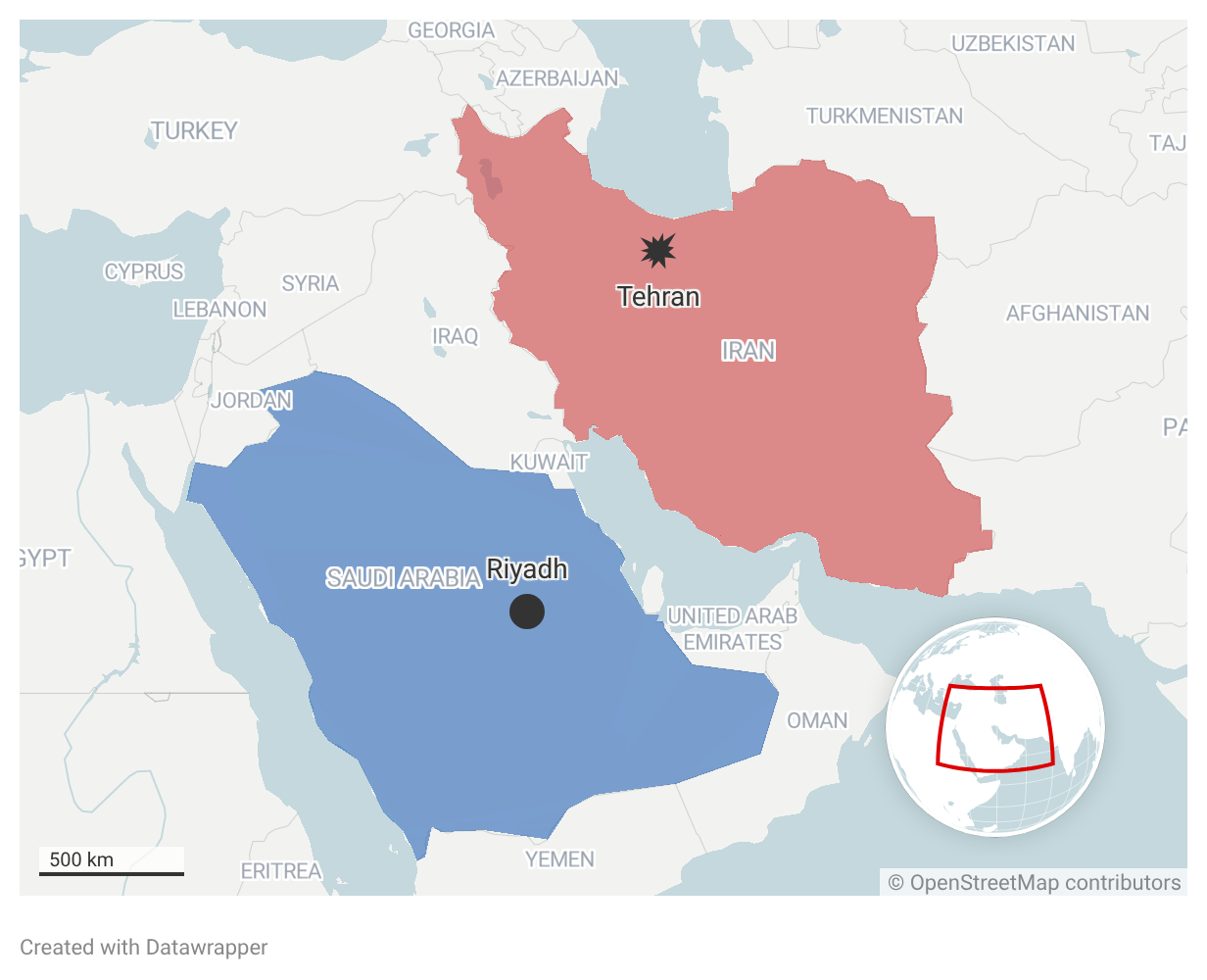
The recent strategic strikes carried out by the US and Israel on Iran have significantly worsened tensions in the Middle East. It has revived debates over the role of regional allies in shaping US foreign policy and, in this case, military actions. The strikes targeted Iranian leadership, killing the Supreme Leader Ayatollah Ali Khamenei and destroying military infrastructure.
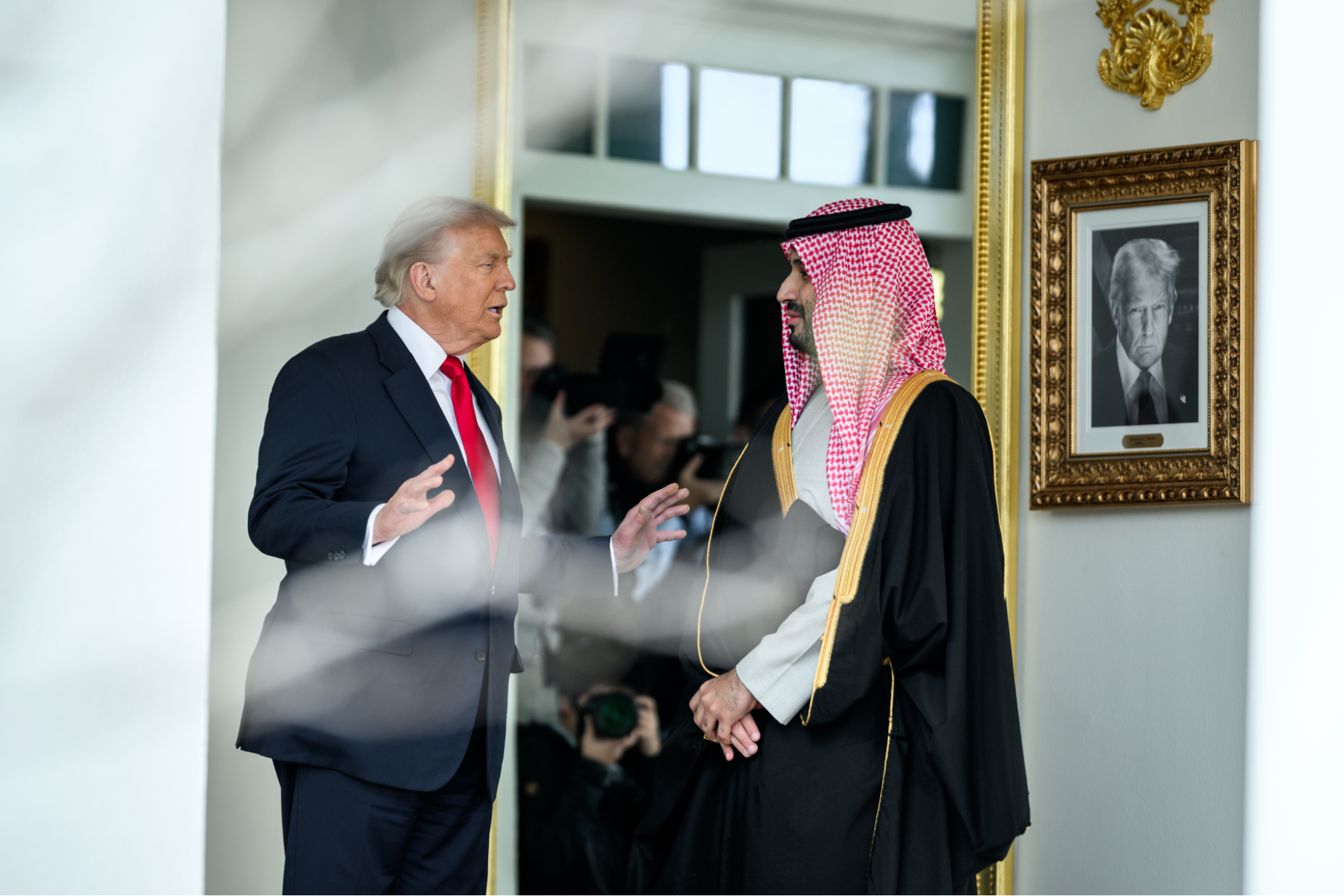
It has been reported that Saudi Arabia privately supported or encouraged stronger US actions against Iran. Saudi Crown Prince Mohammed bin Salman allegedly had multiple private phone calls with President Donald Trump to discuss military actions in the weeks preceding the strikes. On their end, Saudi officials have strongly denied these claims and have stated that Riyadh has consistently supported diplomatic engagement in the region.
Given these conflicting accounts, the key question is not necessarily whether Saudi Arabia directly lobbied the US to carry out these strikes. It is difficult to verify the extent of the lobbying happening, as different narratives keep emerging. Instead, the more relevant issue is understanding what these reports reveal about Saudi Arabia’s strategic motivations and its potential influence on the US. policy towards Iran.
For decades, Saudi Arabia has viewed Iran as its primary regional rival, competing for influence across the Middle East through political alliances, ideological competition, and proxy conflicts in Lebanon, Yemen, and Iraq. Riyadh has increasingly prioritised regional stability as it pursues its ambitious Vision 2030 strategy. These competing priorities create a strategic dilemma: weakening Iran’s influence may serve Saudi security interests, but large-scale escalation risks destabilising the peaceful environment necessary for the kingdom’s economic transformation.
Implications
The strikes place Saudi Arabia in a diplomatically risky position. Riyadh has invested heavily in repositioning itself as a regional mediator, most notably through the 2023 Saudi–Iran normalisation agreement, and any credible association with the current US-led military action in Iran directly undermines that posture. The elimination of Ali Khamenei creates a structurally ambiguous political vacuum in Iran: a weakened Tehran may reduce the proxy pressure on Saudi interests in Yemen and the Gulf, but political fragmentation or a more hostile successor’s leadership could generate unpredictable escalation dynamics that Saudi diplomacy is ill-positioned to manage on its own.
Saudi Arabia's critical infrastructure remains acutely exposed in any escalation scenario. Oil processing facilities at Abqaiq and Ras Tanura, desalination plants, and Persian Gulf maritime corridors represent high-value, time-sensitive targets, as demonstrated by the 2019 drone strikes. Operationally, disruption to Gulf shipping lanes through the Strait of Hormuz would affect not only Saudi export volumes but approximately 20% of global petroleum trade, amplifying international pressure on Riyadh to de-escalate. For Vision 2030, increased instability would equal increased contractor risk premiums, supply chain disruptions, and project delays across flagship developments such as the NEOM Line project.
From a security perspective, the threat of retaliation represents the most pressing concern for Saudi Arabia. In this regard, the Iranian military capabilities, including its missile arsenal and drone technology, as well as its network of allied groups in the region, pose a potential asymmetric retaliation against the strikes launched against Tehran. This retaliation could target Gulf infrastructure, maritime capabilities, or strategic facilities related to US partners in the region, potentially creating a situation of escalation, which might solidify Saudi Arabia’s reliance on US security guarantees and regional defence cooperation. While a more effective deterrence strategy might improve security guarantees, it might also contribute to the militarisation of Gulf security relations, undermining Saudi Arabia’s strategic autonomy.
Economically, geopolitical risks will likely elevate oil prices, providing a temporary fiscal benefit for Saudi Arabia. However, this windfall does not compensate for the medium-term structural damage to Vision 2030's foreign investment thesis. The plan depends on sustained inflows of foreign capital, technology, and skilled labour, all highly sensitive to regional risk perception. Prolonged instability will widen sovereign debt spreads, trigger capital reallocation by institutional investors, and undermine Saudi Arabia's carefully cultivated image as a stable, diversified investment nation, creating a fundamental tension between short-term energy gains and long-term economic transformation objectives
Forecast
Short-term (Now - 3 months)
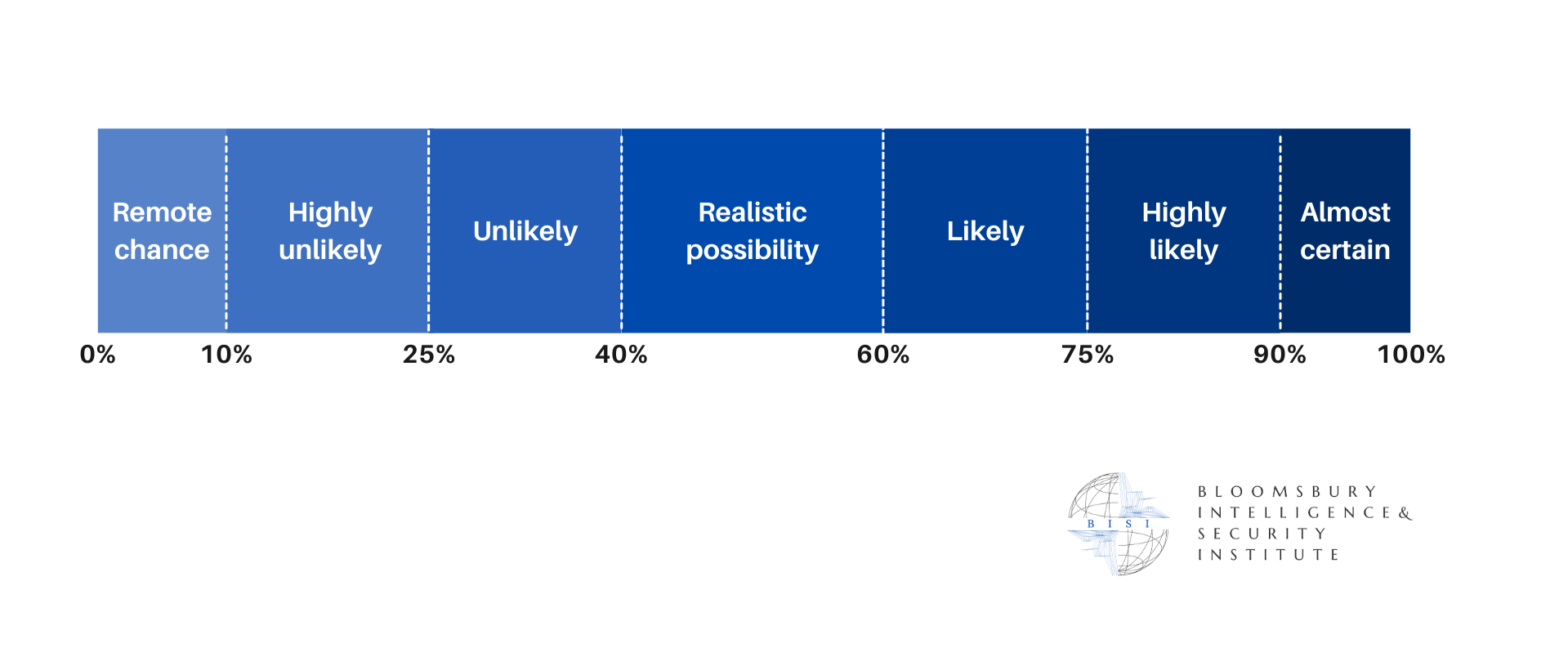
Following the US–Israel strikes, Saudi Arabia is highly likely to intensify public diplomatic distancing from the operation, issuing statements reaffirming its commitment to regional stability and non-interference to manage reputational exposure.
It is highly likely that Iranian proxy networks in Yemen and Iraq attempt limited retaliatory strikes against Gulf infrastructure, as seen with Hezbollah in Lebanon, while a sustained or coordinated Iranian military campaign against Saudi territory remains unlikely.
Medium-term (3 - 12 months)
It is likely that Saudi Arabia's strategic posture becomes more explicitly defensive, deepening security coordination with the U.S. while simultaneously pursuing back-channel engagement with Tehran to reduce direct retaliation incentives.
Vision 2030 investment timelines are likely to face measurable pressure as foreign partners reassess Gulf risk exposure, though wholesale capital withdrawal remains unlikely in this period.
Long-term (>1 year)
It is a realistic possibility that a more nationalist or hardline Tehran recalibrates its regional strategy in ways that increase asymmetric pressure on Saudi interests across multiple scenes.
Direct military confrontation between Saudi Arabia and Iran remains unlikely, as the political, economic, and strategic costs of open conflict continue to outweigh the benefits for both sides. Instead, competition is expected to persist below the threshold of open war, increasingly shaped by whoever consolidates power in Tehran.