Reshaping Zimbabwe's Government Structure: the Proposed Constitutional Amendment
By Sarah Ambrose | 22 April 2026
Summary
In the coming weeks, Zimbabwe’s parliament will vote on a proposed constitutional amendment that extends presidential terms and dissolves direct presidential elections.
Zimbabwe has a history of infringing upon the right of free speech of political opposition members, and activists speaking out against the amendment are facing increasing attacks.
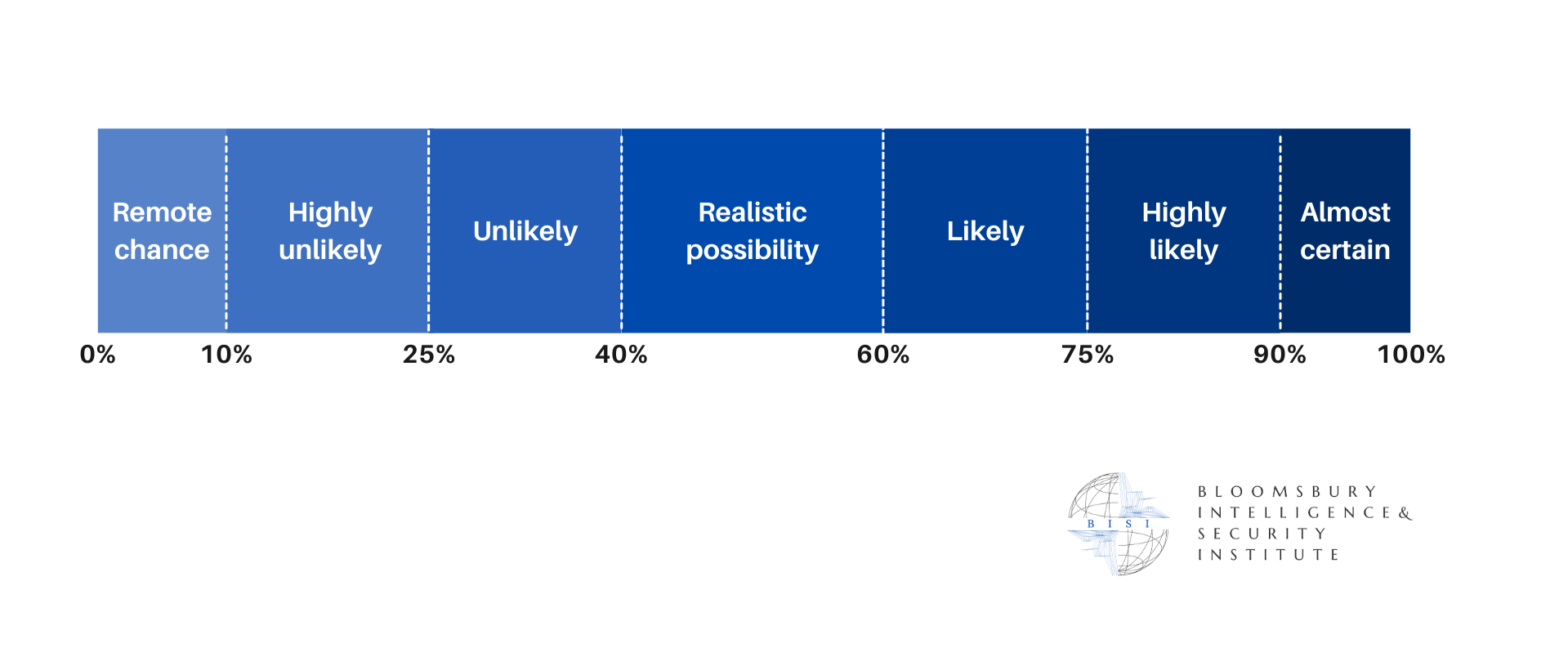
It is almost certain that the proposed amendment will pass in the next few weeks.
Context
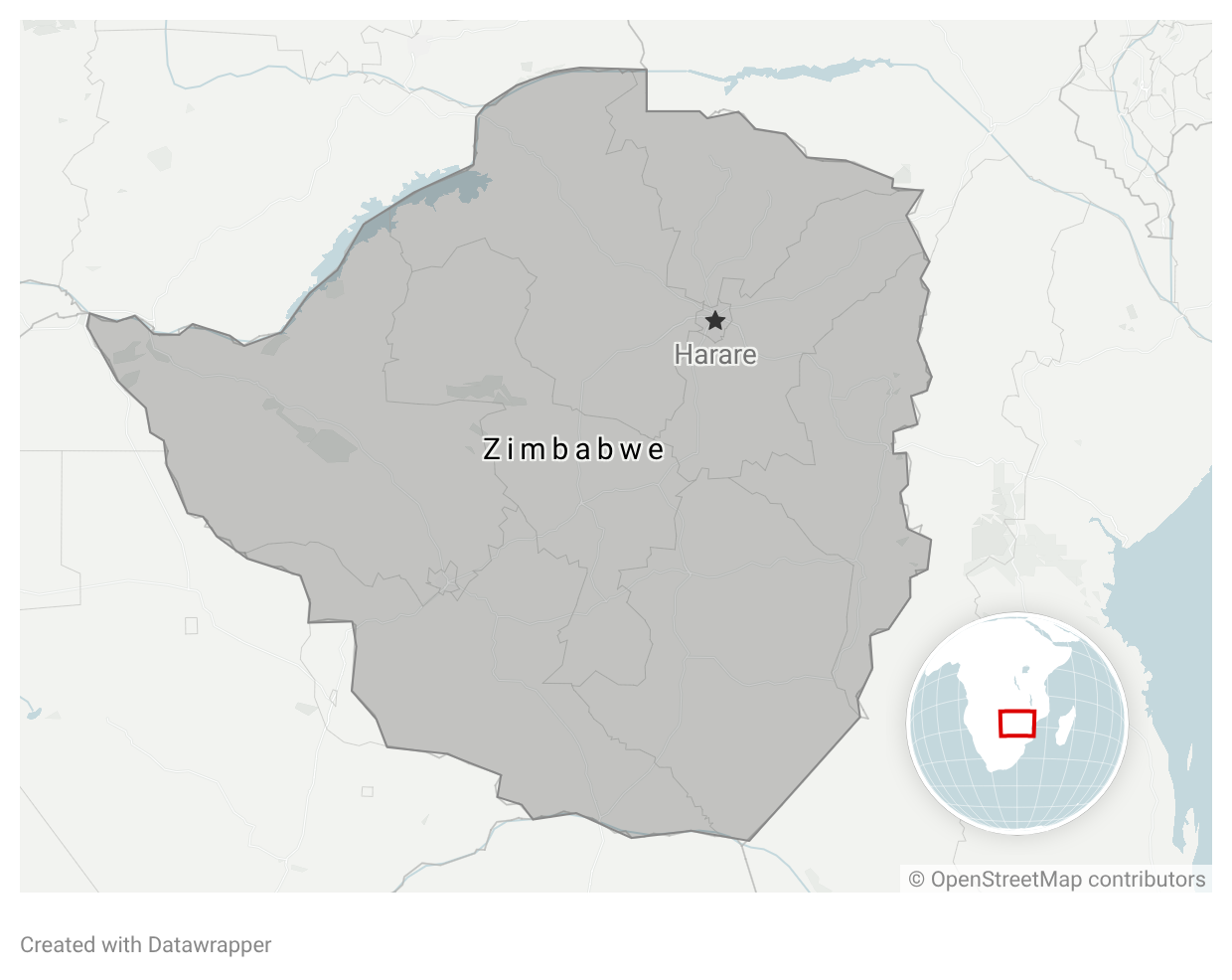
In February 2026, the government of Zimbabwe proposed the Constitution Amendment Bill No. 3 (CAB3), which aims to extend presidential and parliamentary terms from 5 to 7 years and dissolve direct presidential elections, instead giving Parliament the power to elect the president. If passed, current President Emmerson Mnangagwa, whose second term is currently set to expire in 2028, will be able to rule until 2030. Parliament hosted public hearings across Zimbabwe from 30 March to 2 April to collect views on the proposed changes, which critics say will hinder anyone outside of the ruling Zimbabwe African National Union – Patriotic Front (ZANU-PF) party from becoming president.
Implications
Parliament will vote on CAB3 in the coming weeks, and as ZANU-PF holds a majority, the bill is expected to pass. Supporters of the change say that indirect elections would address national concerns of election-related violence, as Zimbabwe has a history of political violence during presidential elections. However, opposition members fear that ZANU-PF is taking steps towards giving Mnangagwa unchecked powers similar to those of Robert Mugabe, his predecessor, who ruled Zimbabwe from its independence in 1980 until being removed in a 2017 coup. This amendment puts Zimbabwe at risk of further authoritarian rule and removing the people’s say in governance. If passed, Zimbabwe will likely see a continuation of the current political climate under Mnangagwa, with little opportunity for candidates from differing parties to make impactful changes in the government. This would facilitate future power consolidation should Mnangagwa choose to pursue it.
Following the proposal of CAB3, several opposition politicians and journalists were arrested without charges after denouncing the amendment. Additionally, several political activists were assaulted for opposing CAB3, in the presence of police officers who did not intervene. In the past, authorities have targeted political activists for speaking out against extending presidential term limits. In March 2025, over 90 political activists were arrested for allegedly intending to promote public violence after opposing term limit extensions. With the impending vote regarding CAB3, activists risk facing additional persecution and restrictions on their freedom of speech.
Despite the domestic backlash, international organisations have raised little concern regarding the amendment. The National Democratic Working Group (NDWG), a social justice group within Zimbabwe, petitioned for the African Union (AU) to suspend Zimbabwe as soon as CAB3 was announced. NDWG accused parliament of orchestrating a ‘coup in motion’ by attempting to extend Mnangagwa’s term. On 2 April 2026, members of the African Union met with lawmakers in Zimbabwe to discuss the constitutional reform process, while highlighting Zimbabwe’s sovereignty and right to determine their constitutional agenda. Additionally, the European Union (EU) Ambassador to Zimbabwe legitimised the restructuring of governance, arguing that Zimbabwe has a right to determine its government structure and the EU has no authority to intervene in legitimate domestic political discussions. These stances suggest that, should CAB3 be passed by parliament, the international community will take little issue with a political restructuring if it remains peaceful.
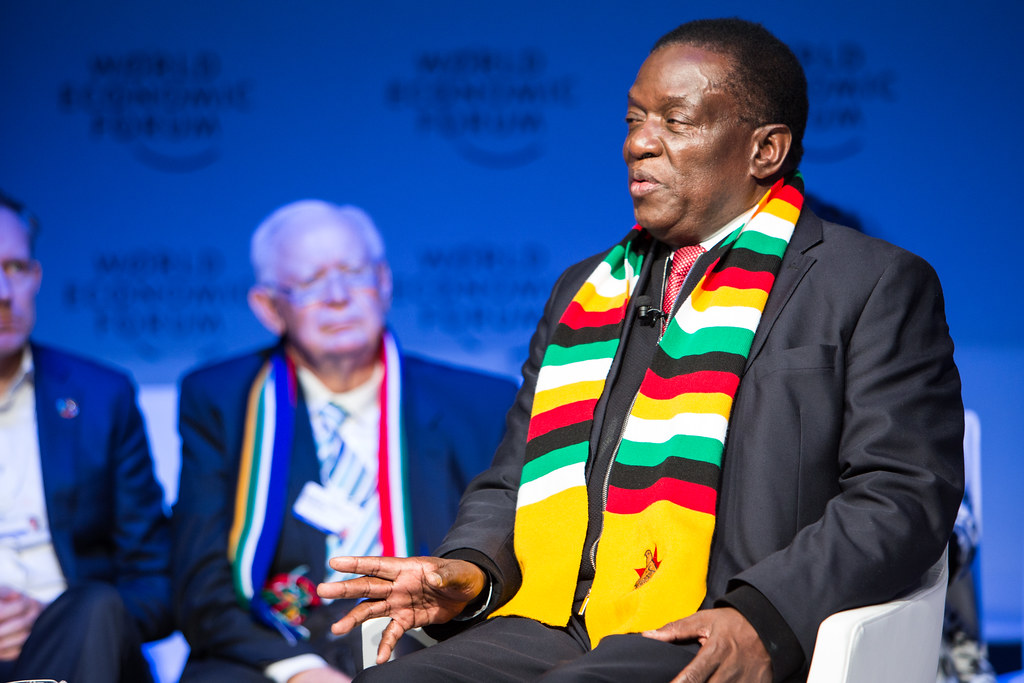
World Economic Forum/Flickr
Forecast
Short-term (Now - 3 months)
It is almost certain that Zimbabwe will pass CAB3 within the next few weeks.
Medium-term (3 - 12 months)
It is likely that protests against Mnangagwa and ZANU-PF will increase within the next year, and crackdown against the opposition will also increase.
Long-term (>1 year)
There is a realistic possibility that, prior to the completion of Mnangagwa’s term, additional efforts are taken to extend his rule beyond 2030.