By Anna T | 22 April 2026
Summary
Nuclear power generation is key to France’s domestic electricity independence and a significant source of its national export revenues.
Despite being a pillar of energy sovereignty, nuclear power generation created critical dependencies for France, especially regarding enriching reprocessed uranium.
Complete decoupling from Russia is unlikely to happen in the long term, unless the European Union (EU) and the Member States’ governments prioritise investing in additional capacity for reprocessed uranium enrichment.
Context
Cryptocurrency is a digital currency secured by cryptography and operates independently of central banks or governments. In the wake of the 2008 global financial crisis, the climate of mistrust in banks, traditional financial institutions and the government prompted unconventional financial methods to surge in popularity. One notable example is Bitcoin, which was launched as an alternative currency, providing a tool that could support peer-to-peer exchanges, without the need for intermediaries, through blockchain.
Implications
Economic implications
France is the world's largest net exporter of electricity, thanks to nuclear power’s relatively low generation costs. France earns over EUR 3b a year from nuclear-generated electricity exports and the French nuclear power industry employs around 200.000 skilled workers domestically. Despite its significance to the national economy, the industry is facing challenges, including obsolescence and shrinking profits. Namely, France’s nuclear power fleet dates mostly to the mid-1970s-90s. Additionally, EDF’s profits in 2025 fell by 19% due to declining electricity prices resulting from growing supply from renewable sources. Despite shrinking profits, EDF is planning to invest EUR 72.8b in 6 new reactors to support the ageing fleet.
On the other hand, France’s nuclear power industry is reliant on raw material imports. France discontinued all its domestic uranium mining sites. It is thus obliged to import the product from other international suppliers, mainly Niger, Kazakhstan, Australia and Canada. EDF imports roughly 7,000 tonnes of uranium annually, representing around 10% of international demand.
In 2023, Paris imported 410 tonnes of enriched uranium and plutonium from Russia, 54% of France’s total imports of these materials. Although France reduced its share of enriched uranium imports from Russia to 24% in 2024, Paris did not discontinue them, despite the European concerted efforts to sanction and halt trade relations with Moscow due to the invasion of Ukraine. Namely, 112 tonnes of Russian enriched uranium and derived products were still imported in 2025.
Moreover, the French company Framatome, owned by EDF with a majority share, renewed in 2021 a long-term partnership for expertise and technology sharing with Rosatom, the Russian state-owned corporation and global leader in nuclear power plant construction. Rosatom is not only crucial for developing strategic dual-use technology for Russia but also a critical node in the global supply chain for nuclear power generation. Rosatom is part of the Russian military establishment, contributing to the development of Russia’s nuclear weapons. At the same time, Tenex, a subsidiary of Rosatom specialised in recycling uranium, located in Seversk, Siberia, is the only plant capable of re-enriching processed uranium worldwide: a strategic monopoly. Rosatom’s subsidiary, Uranium One, is also a major foreign stakeholder controlling multiple uranium mining companies in Kazakhstan, the world’s largest producer of uranium (39% of global supply in 2024).
Political and social implications
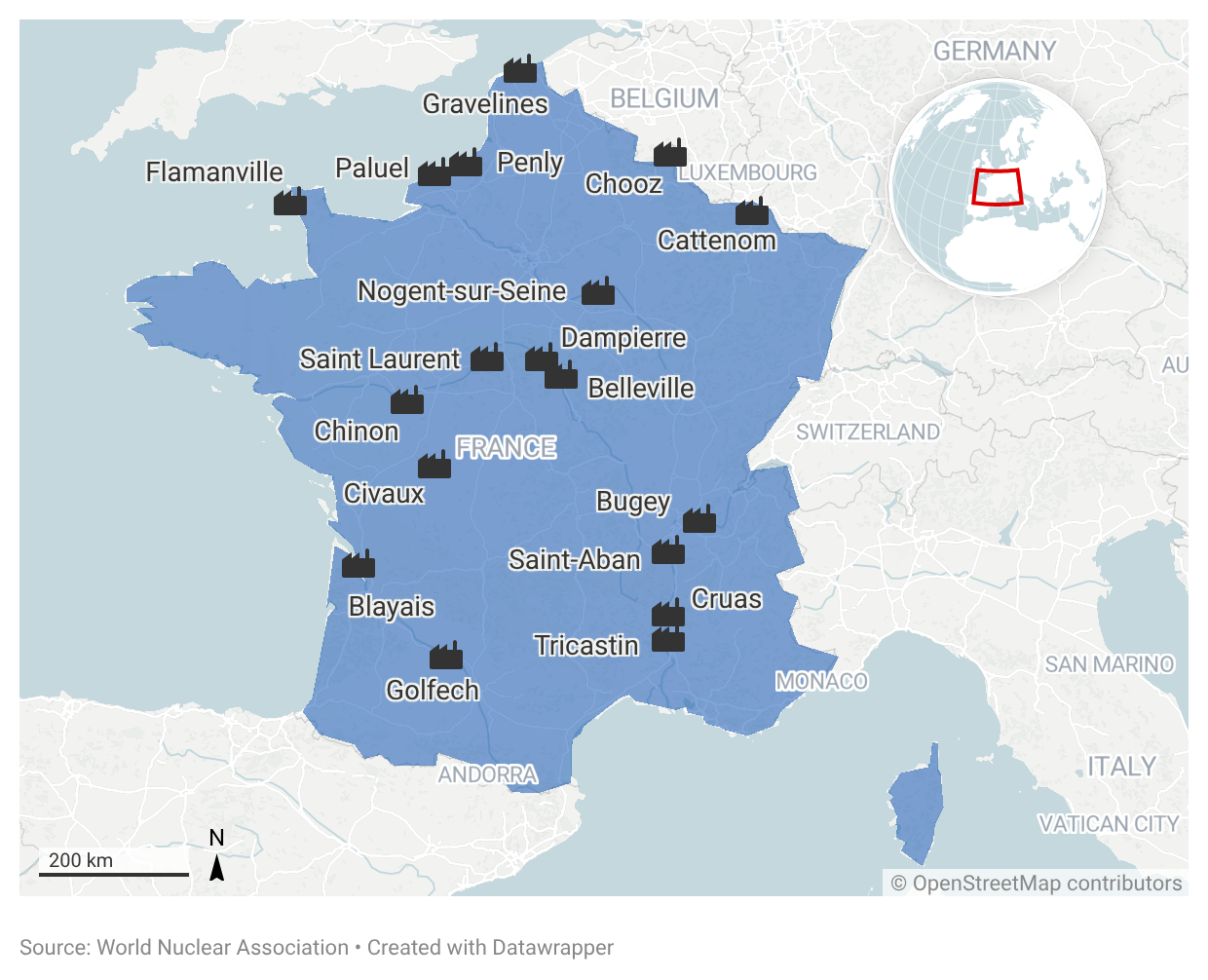
France maintained commercial relations with Moscow for uranium re-enrichment after the start of the Russian invasion of Ukraine. Private and institutional stakeholders in France and the European Union are investing to reduce such a critical dependence on Russia. The French multinational corporation Orano will invest EUR 1.7b to increase the enrichment capacity by 30% of its site in Tricastin, southern France. The project will also be partly funded by the European Investment Bank, which will contribute EUR 400m. Westinghouse and Cameco are assessing the construction of a new conversion facility at Springfields in the United Kingdom, which could also handle reprocessed uranium. Nonetheless, new uranium enrichment and conversion facilities in Western Europe will not be operational for at least 2 and 5 years, respectively. If the investment in Springfields’ site went through, it would enable an additional 2,000 tonnes of reprocessed uranium capacity by the early 2030s.
Additionally, enriching reprocessed uranium is a highly polluting operation. More broadly, nuclear power generation is linked to the moral issue and danger of storing radioactive waste in the long term. Therefore, environmentalist movements have already expressed dissatisfaction with France’s reliance on nuclear power plants. For example, 15 Greenpeace activists have occupied the stage during the global nuclear summit held in France on 10 March 2026. The campaigners criticised France’s purchases of uranium from Russia. For the same reason, 20 protestors blockaded the cargo ship Mikhail Dudin in the port of Dunkirk on 30 March 2026, to prevent it from unloading the enriched reprocessed uranium shipped from Russia to France.
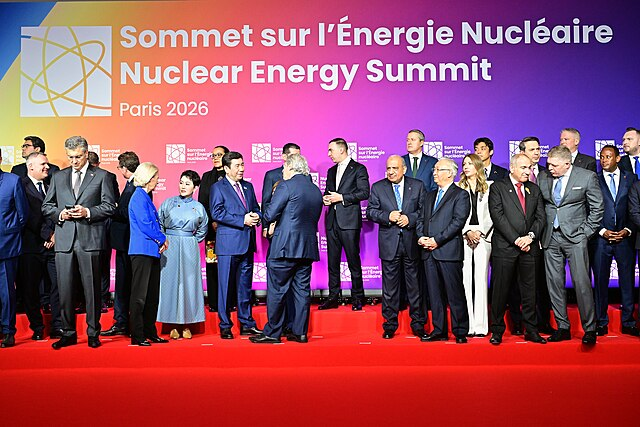
IAEA/Wikimedia
Forecast
Short-term (Now - 3 months)
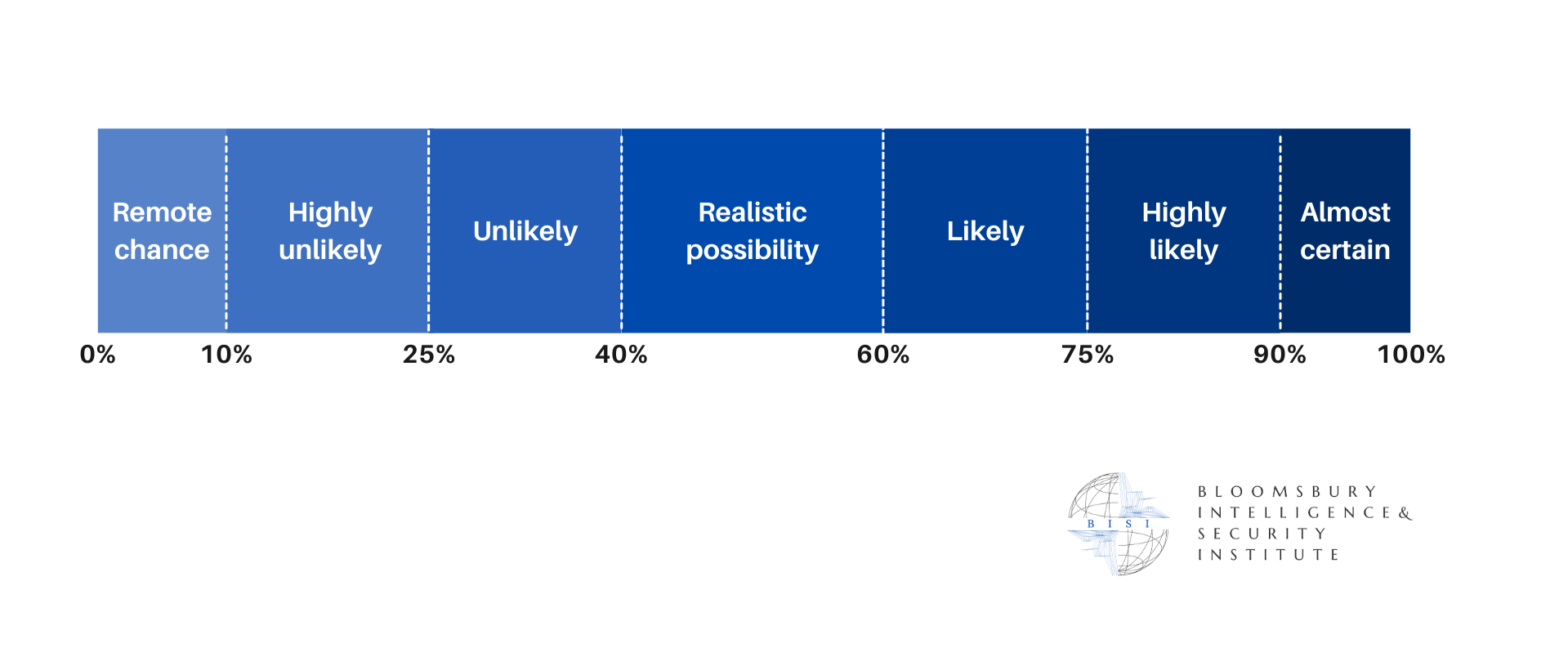
Despite diplomatic and social pressures against engaging in commerce with Russia, France is highly unlikely to change its policy on nuclear power generation in the short term, as it represents a crucial element in sustaining its energy mix and low electricity prices.
Medium-term (3 - 12 months)
Unless the decoupling process and sanctions against Russia become a formal, long-term strategic priority for the EU and national policymaking – rather than being limited to the ongoing war in Ukraine – private businesses are likely to remain reluctant to sign long-term contracts for more expensive, non-Russian uranium and its derivatives.
Long-term (>1 year)
France, and the EU are unlikely to achieve energy security and sovereignty unless significant investments in uranium enrichment and recycling are made, alongside efforts in raw material suppliers diversification.