By Abigail Darwish | 27 April 2026

Summary
Cryptocurrency has emerged as a tool to undermine democracy and democratic processes.
This concerns the deliberate use of cryptocurrency by states and political actors for malign financial purposes, enabling corruption and the covert funding of political activity, as well as its application by foreign actors to covertly influence the electoral processes of other states.
Whilst this exploitation is most visible in authoritarian states, it is not exclusive to them. Democratic backsliding has created a grey zone in which conduct once associated with authoritarian statecraft has become increasingly normalised within states that retain the formal structures of democracy.
Context
Cryptocurrency is a digital currency secured by cryptography and operates independently of central banks or governments. In the wake of the 2008 global financial crisis, the climate of mistrust in banks, traditional financial institutions and the government prompted unconventional financial methods to surge in popularity. One notable example is Bitcoin, which was launched as an alternative currency, providing a tool that could support peer-to-peer exchanges, without the need for intermediaries, through blockchain.
Impact on Democracy
Overlapping crises in recent years, such as COVID-19, global warming, wars and large-scale displacement of people, have created a precarious international environment. Within the context of this polycrisis, in which multiple and distinct crises occur simultaneously and interact to mutually reinforce one another, democratic institutions have come under increasing strain, contributing to the broader trend of democratic backsliding. Significantly, this political climate has produced conditions in which cryptocurrency, whose decentralised and largely unregulated nature makes it resistant to oversight, has become an increasingly attractive tool for those seeking to exploit its structural weaknesses for political and financial ends.
Cryptocurrency and financial misconduct
For governments, particularly those subject to sanctions, cryptocurrency's untraceability has proven a valuable asset, whether as a target for state-sponsored theft or as a tool for sanctions evasion. As a result, cryptocurrency has become a constitutive part of contemporary authoritarian policymaking, functioning both as a means to sustain autocracies and to enrich their leaders. One notable example of this is the Lazarus Group, a North Korean state-affiliated cybercrime group. Since its operations began in 2007, Lazarus has stolen at least ~USD 3.4b in cryptocurrencies. It has effectively conducted sustained campaigns of theft, targeting exchanges and financial institutions internationally to circumvent sanctions imposed in response to its nuclear programme and generate revenue outside the conventional international financial system.
Similarly, in an effort to evade sanctions, governments of other authoritarian states have introduced and promoted their own cryptocurrencies. In 2018, for instance, Venezuela’s government had launched ‘the petro’, a state-issued cryptocurrency backed by a ‘commodities basket’ of the country's oil reserves. Although Venezuela’s Congress outlawed the currency, stating that it had illegally mortgaged Venezuelan oil, its use subsisted and later became a mandatory method of payment for government document services and airplane fuel from 2020. When the scheme was liquidated in 2023, an estimated USD 3b was embezzled by government officials.
Most significantly, cryptocurrency as a tool for self-enrichment has been replicated in traditionally democratic countries. For example, the launch of the $TRUMP coin by a sitting president, accompanied by incentives such as offering private gala dinners to its largest buyers, represents a particularly salient case of a public office being used for private financial gain. A United States (US) House Judiciary Committee report claimed that Trump's crypto holdings had reached as much as USD 11.6b, with income of over USD 800m from the sale of crypto assets in the first half of 2025.
This grey zone, wherein trends in crypto exploitation are evident in both autocratic and traditionally democratic models of government, is likewise apparent in Argentina. In February 2025, President Javier Milei publicly promoted the cryptocurrency project $Libra on X, a coin that had just launched, featuring imagery associated with his political movement, La Libertad Avanza. Shortly after Milei's endorsement, the coin's price surged, then fell as the project's creators and a handful of insiders withdrew their holdings, causing the value to collapse and leaving over 70,000 investors empty-handed, with approximately USD 250m in investor funds lost. Recent findings by state investigators have suggested that payments of up to USD 5m were made to entities connected to Milei for promoting the currency, lending weight to the broader argument that democratic office is increasingly being leveraged for personal financial gain through cryptocurrency.
Cryptocurrency for political influence abroad
Cryptocurrency's untraceability also makes it an effective vehicle for foreign actors seeking to covertly influence the electoral processes of other states. Unlike conventional financial transfers, which are subject to regulatory scrutiny and disclosure requirements, cryptocurrency donations can cross borders pseudonymously and in fragmented amounts. This can enable donors to circumvent disclosure rules and make it exceptionally difficult for electoral authorities to identify their origin without significant investigative resources. For example, a 2022 US State Department intelligence report alleged that Russia spent more than USD 300m since 2014 directing funds to political parties, officials and politicians in over two dozen countries, using cryptocurrency alongside other tools, including electoral bribery and cyberattacks. Further, in Moldova alone, illegal Russian financing during its 2024 elections totalled over USD 100m, channelled through cryptocurrency and other covert means.
In response to the mounting threat cryptocurrency poses to the integrity of democratic elections, several countries have moved to ban its use in electoral financing altogether, including Brazil and Ireland, which introduced such bans in 2019 and 2022, respectively. In the United Kingdom, the government announced an urgent review into foreign financial interference in December 2025 and, in March 2026, implemented measures, including an annual cap on donations from overseas electors and a ban on cryptocurrency for political donations pending adequate regulation. Similarly, in March of this year, the Canadian government proposed a new bill to formally ban political donations made in crypto.
Implications
Of all the threats cryptocurrency poses to democracy and democratic processes examined in this analysis, foreign electoral interference has prompted the most decisive and pre-emptive regulatory responses, with a growing number of countries moving to ban cryptocurrency in political financing to protect democratic integrity. Where such regulation has been slower to emerge, this has a realistic possibility of reflecting the domestic political incentives of crypto-friendly leaders and political actors who have accumulated personal wealth through cryptocurrency. For those individuals, closing regulatory loopholes carries a direct personal cost, and, by extension, there is a weak incentive to introduce regulation.
More generally, the rise of cryptocurrency has reinforced, and in some cases worsened, pre-existing power imbalances. The targeting of Moldova, a small state with a population of under 3 million, by a technologically and financially advanced adversary illustrates how this asymmetry operates in practice. At the same time, cryptocurrency has arguably introduced a new dynamic, blurring the lines between authoritarian and traditionally democratic governance since political actors in both models have used crypto for state or personal financial gain. Admittedly, this could be owing to the wider trend of democratic backsliding than to the technology itself, suggesting that cryptocurrency is fuelling, or again reinforcing, existing trends.
Crucially, though, whether democratic institutions retain sufficient independence and political will to act remains uncertain, particularly as the broader polycrisis continues to generate the conditions under which such exploitation is most likely to intensify. That said, this does not mean that cryptocurrency is inherently corrosive to democracy. The most acute vulnerabilities examined here are products of structural weakness and inadequate governance, issues that appropriate regulation can seek to address.
Forecast
Short-term (Now - 3 months)
Medium-term (3 - 12 months)
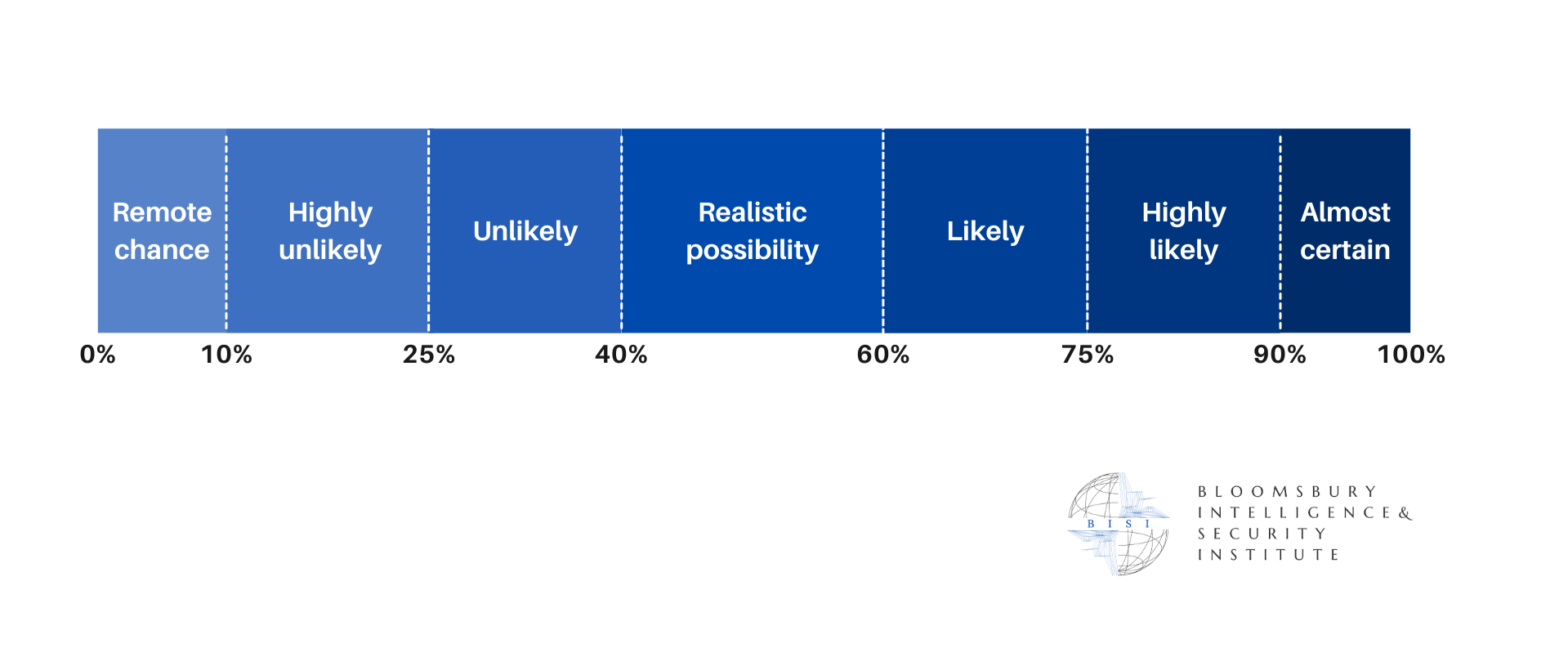
It is likely that self-enrichment in cryptocurrency by political leaders, such as in the US, will continue.
It is unlikely that the US will pass meaningful domestic crypto regulation in this period, given the conflict of interest inherent in a crypto-friendly administration overseeing its own regulation.
Long-term (>1 year)
It is highly likely that countries, particularly Russia, will continue to use crypto to influence foreign electoral outcomes.
It is highly likely that additional democracies will move to restrict or ban cryptocurrency in political financing, especially from abroad.
There is a realistic possibility that a crypto-based financial bloc could emerge, led by groupings such as BRICS, as part of a broader effort towards de-dollarisation.