By Trishnakhi Parashar | 22 June 2026
Summary
The crisis in Sudan has escalated beyond an internal civil war, with its location along the Red Sea corridor amplifying the global implications of its instability for maritime trade, regional power competition and international supply chains.
The war has drawn growing attention to the role of the United Arab Emirates (UAE) and other regional actors in competing for influence over maritime routes, ports, gold trade networks and regional connectivity.
Prolonged instability in Sudan risks intensifying regional insecurity, a catastrophic domino effect of unmanaged migration, weapon proliferation and cross-border militancy spanning from the Sahel to the Arabian Peninsula.
Context
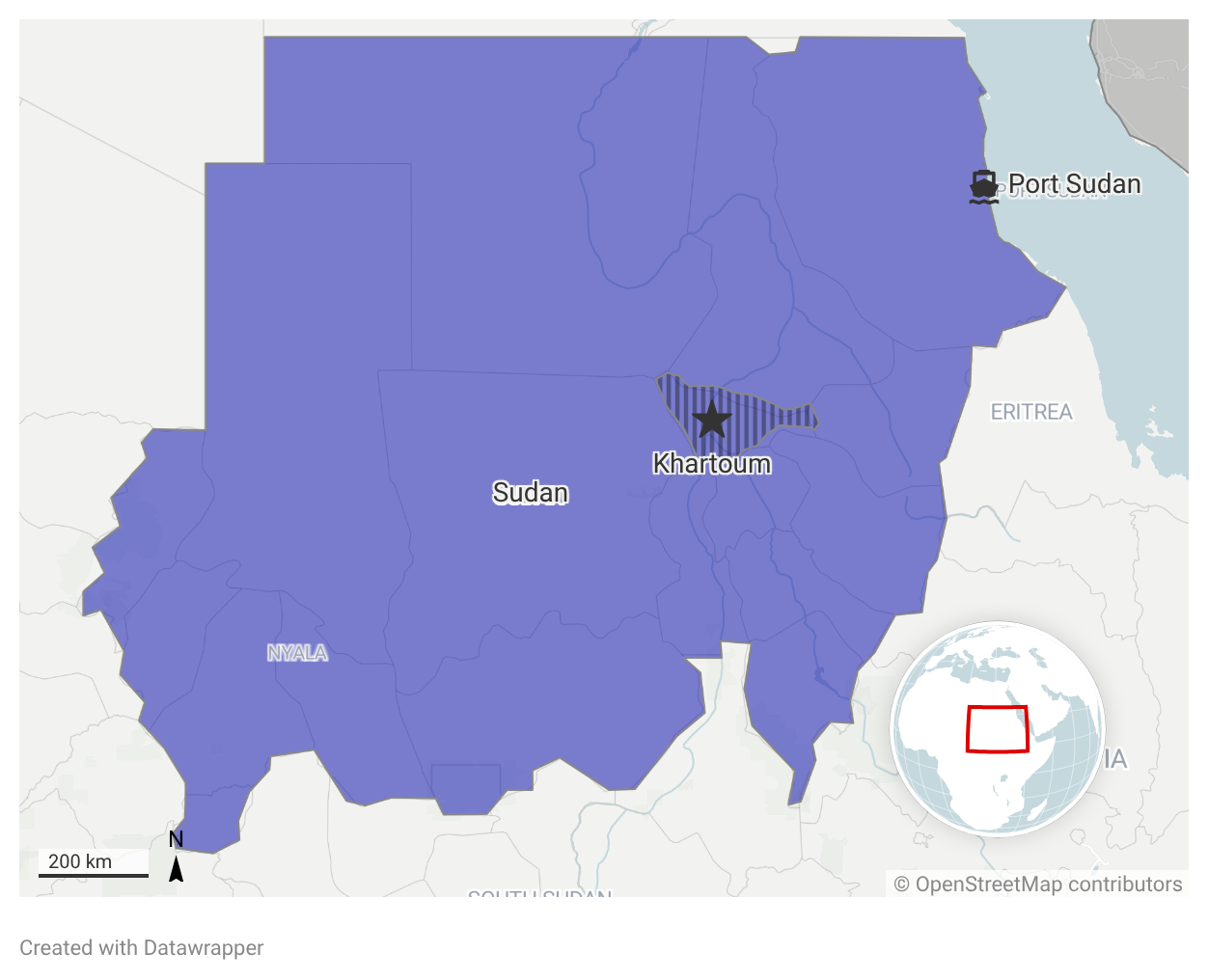
The conflict in Sudan has evolved from a domestic political and military confrontation into a crisis with wider regional and international implications. The war in Sudan was initially an internal power struggle between the Sudanese Armed Forces (SAF) under the leadership of General Abdel Fatah Al Burhan, controlling Khartoum and the eastern Sudan, and the paramilitary Rapid Support Forces (RSF), which emerged from the Janjaweed militias, led by General Mohamed Hamdan Dagalo, dominating much of the western Darfur region. Situated in a geographically sensitive corridor linking North Africa, the Sahel, the Horn of Africa and the Red Sea region, Sudan occupies a geopolitically significant position that magnifies the consequences of its instability far beyond its borders.
Persistent instability in Sudan is occurring against the backdrop of an increasingly contested Red Sea corridor, a region already experiencing escalating tensions. The growing contestation over ports, naval facilities and geostrategic influence has become tethered to the Sudan war. Regional and international powers, including the UAE, Saudi Arabia, Egypt, Russia, and Iran, are increasing their maritime and defence engagements in pursuit of strategic leverage across the Red Sea corridor.
International focus remains overwhelmingly centered on the humanitarian crisis unfolding across Sudan, marked by extensive civilian casualties, large-scale internal displacement, cross-border refugee flows, the deterioration of healthcare infrastructure, and intensifying food insecurity. Since the war intensified, roughly 14 million people have left Sudan in search of a safe environment. The war’s repercussions are gradually reverberating across neighbouring states, particularly Chad, South Sudan, Libya, Egypt, and Ethiopia, all of which are confronting mounting socio-economic and humanitarian pressures linked to refugee inflows.
Implications
Politically, the Sudan conflict is likely to intensify geopolitical competition across neighbouring regions. While the UAE has been accused of supporting the RSF, other regional and international actors, like Saudi Arabia and Egypt, continue to maintain support for the SAF. Such external support has consequently prompted growing characterisations of the conflict as a proxy confrontation shaped by competing regional interests. External powers may continue to back rival political and military actors in order to preserve influence over maritime access, economic corridors and future governance arrangements in Sudan. However, involvement of external powers is likely to diminish the prospects for a swift and unified political settlement, which could create a political vacuum and further deteriorate governance capacity in the state.
The prolonged crisis risks institutional and infrastructure collapse across Sudan, with potential disruptions to transport corridors, port operations, and the distribution of emergency supplies. Sudan’s ports are particularly coveted because they serve as hubs connecting interior African markets to Gulf economies and international maritime trade routes. Any disturbances in this region can pose a serious risk to operational and trade flows.
From the security perspective, instability in Sudan is creating a more volatile and fragmented environment by creating favourable conditions for weapon proliferation, organised criminal activity, and cross-border militant movement across poorly governed regions, challenges that many neighbouring states are already struggling to contain. If the war continues or remains unresolved, its effects may add fuel to regional insecurity, not only within Sudan but also across other parts of Africa.
Civilian populations continue to endure armed attacks, looting, sexual violence, and forced displacement on a large scale. Fragmented territorial control, coupled with the erosion of state organisations, is paving the way for weapon proliferation, different criminal activities, and above all, cross-border militant movement across fragile regions. Such dynamics have also contributed to the growing influence of non-state armed actors and militias, including the Sudan People's Liberation Movement-North and the Sudan Liberation Army - Mini Minawi (SLA-MM).
The war in Sudan poses a great economic threat to regional trade connectivity, maritime routes, and investment confidence throughout the Red Sea corridor. It is already causing damage to the state’s economy, with significantly undermined productive capacity and increasing food shortages. During the turmoil, substantial portions of gold production and trafficking have reportedly shifted into informal networks, such as the RSF-controlled mining operations and cross-border smuggling routes. Large-scale informal gold exports contribute to currency instability and financial outflows. The crisis is also exerting adverse effects on neighbouring states through disruptions to cross-border trade and regional economic activity. Continued instability may reduce commercial opportunities and constrain market growth in Sudan and its neighbouring states. For instance, in South Sudan, repeated disruptions to oil export pipelines running through Sudan have severely reduced its oil revenues. Moreover, refugee inflows into other states are placing additional pressure on government resources, labour markets and public services. Rising demand for housing, food, healthcare facilities, education and basic commodities increases fiscal burden, and may, over time, contribute to socio-economic struggle between host and refugee populations.
As Sudan’s war now enters its 4th consecutive year of conflict with no discernible resolution, the war has become increasingly intertwined with external economic and strategic interests, particularly surrounding its gold. A substantial proportion of Sudan’s gold is reportedly channelled towards the UAE, through both formal and informal trade networks, reinforcing broader patterns of regional influence and transactional engagement. The UAE’s role in this regard appears to be more than indirect commercial involvement, as multiple reports suggest that it has furnished support to the RSF, through financial assistance and advanced weaponry.
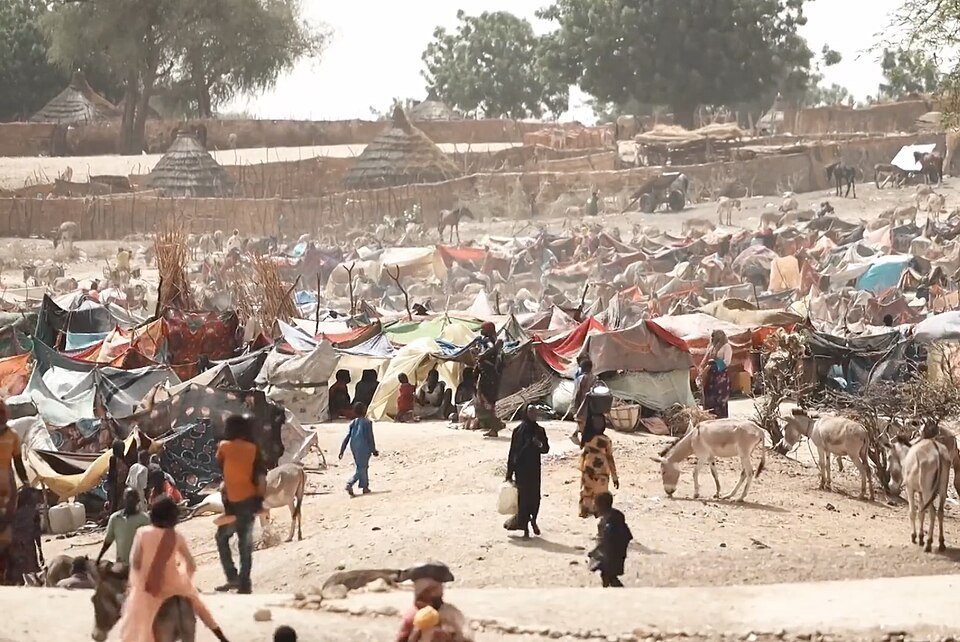
Henry Wilkins/Wikimedia
Forecast
Short-term (Now - 3 months)
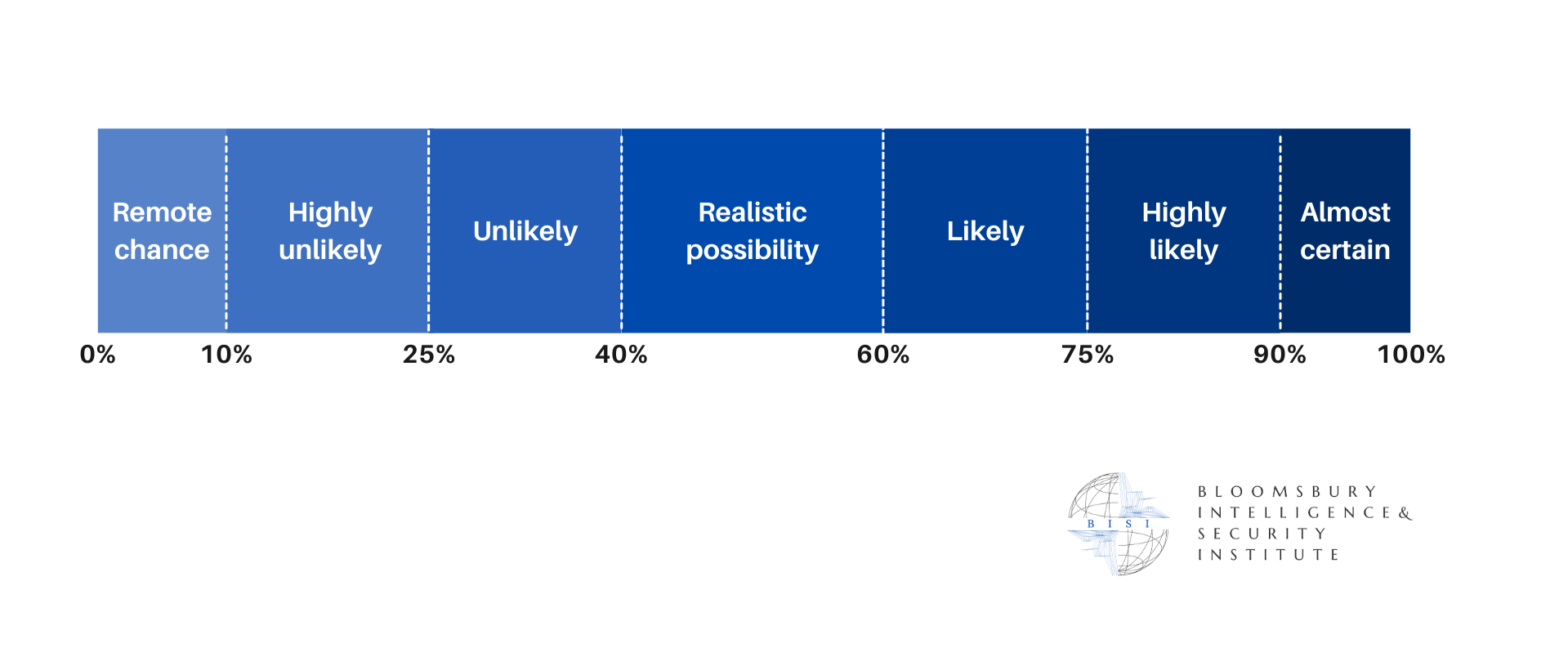
The SAF is likely to gain more formal diplomatic and state support globally.
Humanitarian conditions are unlikely to witness substantial improvement in the near future.
Economic conditions are likely to deteriorate further in Sudan and neighbouring states as conflict related disruptions continue to affect agriculture, trade and commercial networks.
Medium-term (3 - 12 months)
Regional and international actors, including the UAE, Saudi Arabia and Russia, are likely to extend diplomatic, logistical and strategic engagement in Sudan in pursuit of geopolitical influence and maritime control across the Red Sea corridor.
The SAF and RSF are likely to continue territorial control rather than moving towards meaningful political compromise.
There is a realistic possibility that cross-border instability will intensify as Sudanese militias and non-state armed actors increasingly strengthen support from neighbouring non-state actors.
Long-term (>1 year)
Despite holding diplomatic legitimacy, leadership disputes, fragmented governance structures and continued RSF resistance may continue to challenge the prospect for wider political consolidation and long-term stability.
There is a realistic possibility of negotiations between the two sides with mediatory involvement from regional and international actors, particularly the African Union, the United Nations, or through renewed diplomatic initiatives led by Saudi Arabia.