Political Crisis and Violent Protests in Somalia
By Sarah Ambrose | 22 June 2026
Summary
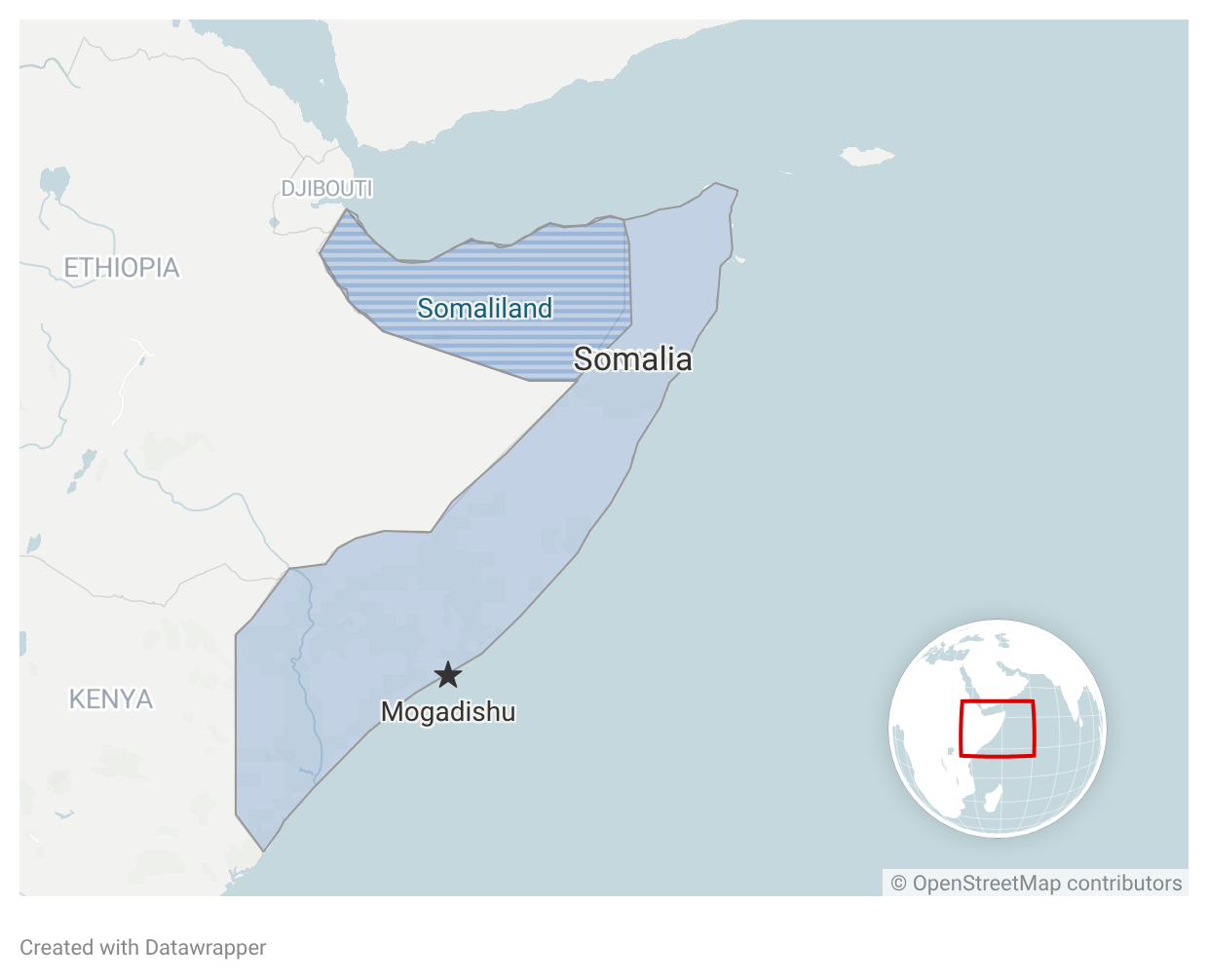
Following Somali President Hassan Sheikh Mohamud’s decision to extend his term for an extra year, violence broke out between rival political factions within the capital of Mogadishu, killing at least 13 over 2 days of fighting.
Somalia has a history of political instability that detracts from its ability to effectively combat the rising threat of Al-Shabaab.
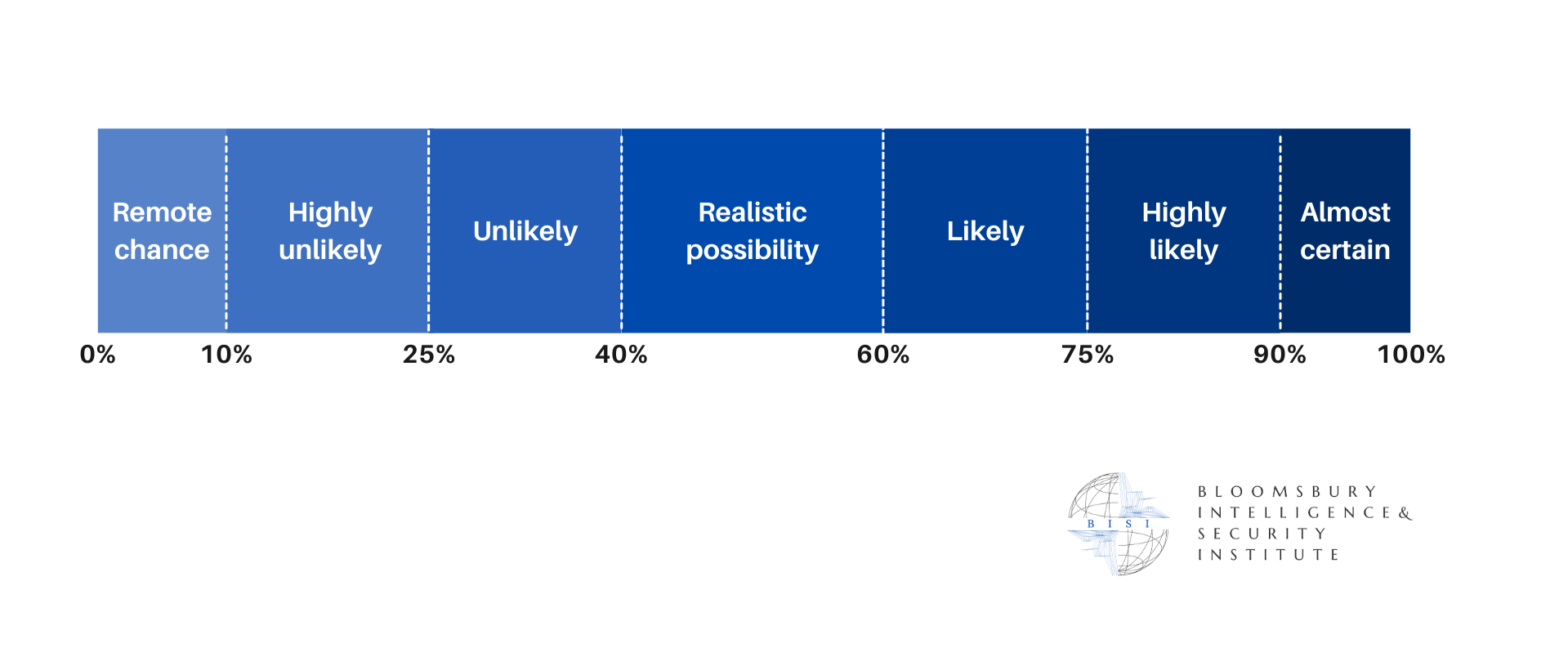
It is likely that further protests and violence will break out in the coming weeks as the government discusses institutional changes.
Context
Political turmoil reignited in Somalia in May 2026 after President Hassan Sheikh Mohamud announced a 1-year extension of his term, originally set to expire on 15 May. Throughout his term, Mohamud has advocated for direct elections within Somalia and argued that the extension of his term coincides with the recently passed parliamentary frameworks for democratic polls. Opposition parties declared this extension unconstitutional, calling for elections and planned protests on 4 June in Mogadishu. A day before the scheduled protests, violent clashes between government forces and opposition-affiliated militias broke out across the city before the government declared it had restored order on 5 June. According to estimates from the United Nations (UN) refugee agency, at least 13 people were killed, and 189 were wounded in the violence occurring over 3-5 June.
Implications
The recent violence follows a trend in election-related unrest in Somalia and mirrors violent protests in 2021 over similar election delays. The country last held democratic, multi-party elections in 1969, months before Siad Barre came to power in a military coup and ruled until 1991. Since the collapse of Barre’s government, Somalia has struggled to establish a functioning state, with rival factions and clan divisions fighting to fill the power vacuum. The current Federal Government of Somalia (FGS) was established in 2012, holding indirect elections in which clan elders select the members of parliament, who then select the president. Universal suffrage was not implemented despite years-long discussions due to political and logistical complications. Distribution of power between the FGS and its member states is not clearly defined in the Somali constitution, and population-based elections are a stark contrast from the existing clan-based power sharing. The current system of power sharing, known as the 4.5 system, gives equal representation to the 4 major clans and half representation to minority groups; political appointments are largely determined by clan affiliation, and effective governance is hindered by clan quotas. A system of population-based proportional representation would undermine the existing power of current clan elites and would require a broad sense of national identity among the population that is currently seen as secondary to clan identity. Previous attempts to implement direct elections were abandoned due to the failure to organise effective electoral structures within a limited budget and amid ongoing insurgencies against the government. As these issues have not been resolved in the years since, the current calls for direct elections are unlikely to succeed.
Violent outbreaks are common in Somalia, and political instability will highly likely further weaken the FGS’s regional authority. Territorial control of the government is currently contested by the Al-Qaeda-affiliated militant group Al-Shabaab and a separatist government in Somaliland. One of Al-Shabaab’s primary goals is to overthrow the FGS, and it exploits the government’s limited state capacity to carry out operations. Despite Mohamud’s declared war on Al-Shabaab at the beginning of his presidency, the group has continued to carry out numerous deadly operations, with targets including Somali soldiers, African Union (AU) forces, and soldiers from countries engaged in joint-counterterrorism operations such as the United States. While these counterterrorism operations have seen some past success in ousting Al-Shabaab from specific territories, a lack of coordination from international efforts and weakened government capacity fuels Al-Shabaab’s resilience and provide opportunities for the militant group to recapture territories. The violent protests in 2021 regarding election delays distracted the government from its other duties, such as the fight against Al-Shabaab; this fueled international distrust in the FGS’s ability to govern and manage the security situation, leading to limited funding and support for security efforts from international institutions. Similar political unrest has significant security implications for Somalia as it will likely weaken the FGS’s standing in Mogadishu and distract from ongoing counterterrorism efforts.
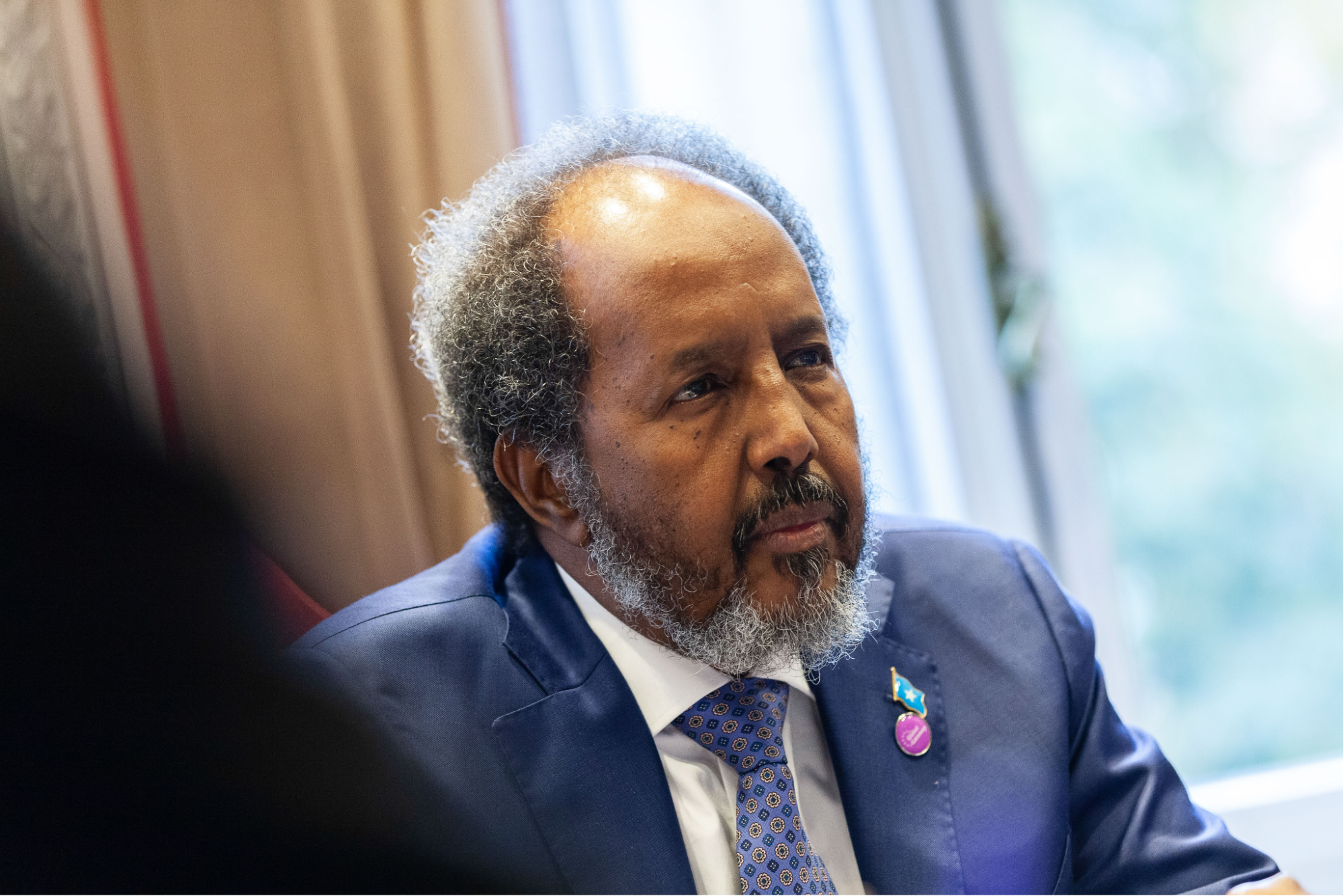
European Union/Wikimedia
Forecast
Short-term (Now - 3 months)
Although the government gained temporary control of the situation, it is likely that further protests will be planned and result in violent clashes within the next few weeks.
Medium-term (3 - 12 months)
It is highly likely that Al-Shabaab will capitalise on government weaknesses brought about by the political crisis to increase its attacks on FGS-related targets within the next few months.
Long-term (>1 year)
It is highly unlikely that Somalia will successfully adopt and implement a ‘one person, one vote’ election system within the next year.