Powering Industrialisation: Can Africa Balance Energy Transition Goals with Manufacturing Competitiveness
By Stephen Nkrumah | 25 May 2026
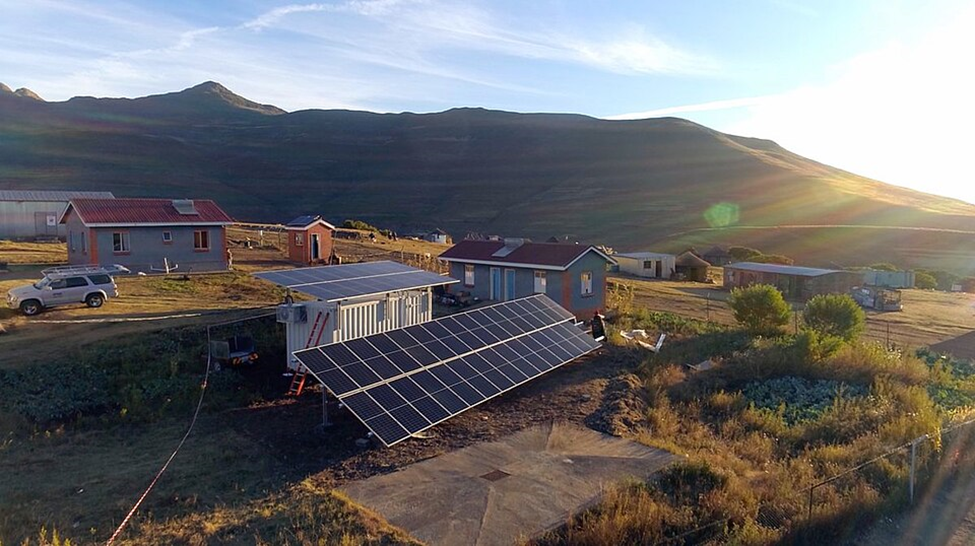
Minette Lontsie/Wikimedia
Summary
Africa’s industrial growth depends on expanding reliable power in a way that does not trap manufacturers in constantly high energy costs or unstable electricity supply.
Gas-to-power, distributed solar, utility-scale renewables, transmission investment, and regional power trade all provide benefits, but none of them is enough on its own to meet the needs of every market.
Hybrid transition models are likely to be the most practical and competitive option for manufacturers in the short to medium term, especially in countries like Ghana, Nigeria, and Ethiopia, where the grid is weak and also facing financial constraints.
Context
Africa’s manufacturing ambitions are increasingly facing energy constraints. Firms need electricity that is both reliable and affordable, but many power systems across the continent are still unstable and underinvested. Recent analysis by the International Energy Agency and the African Development Bank shows that there is still a large investment gap in generation, grid infrastructure, and industrial power access, even though clean-energy opportunities are growing.
Because of this, the real issue is not whether to move toward an energy transition, but how to do it in a way that does not reduce industrial competitiveness. This challenge can be seen in different ways across countries. For example, in South Africa, ongoing grid instability has affected production; in Nigeria, many firms depend heavily on self-generation; in Egypt, gas continues to play a central role in power supply; while in Morocco, renewable energy deployment has moved faster. In Ethiopia, hydro expansion is facing both grid and political challenges, and in Tanzania, gas-to-power potential is limited by financing gaps. Deployment has moved faster. In Ethiopia, hydro expansion is facing both grid and political challenges, and in Tanzania, gas-to-power potential is limited by financing gaps.
In Ghana, mini-grids and solar are growing, but tariffs are still high, while in Mozambique, security risks continue to threaten gas infrastructure. Senegal is also making progress with renewables, although industrial demand is still developing. Overall, while renewables are expanding across the continent, the main challenge now lies in system integration and strengthening transmission, which remain critical for long-term success.
Implications
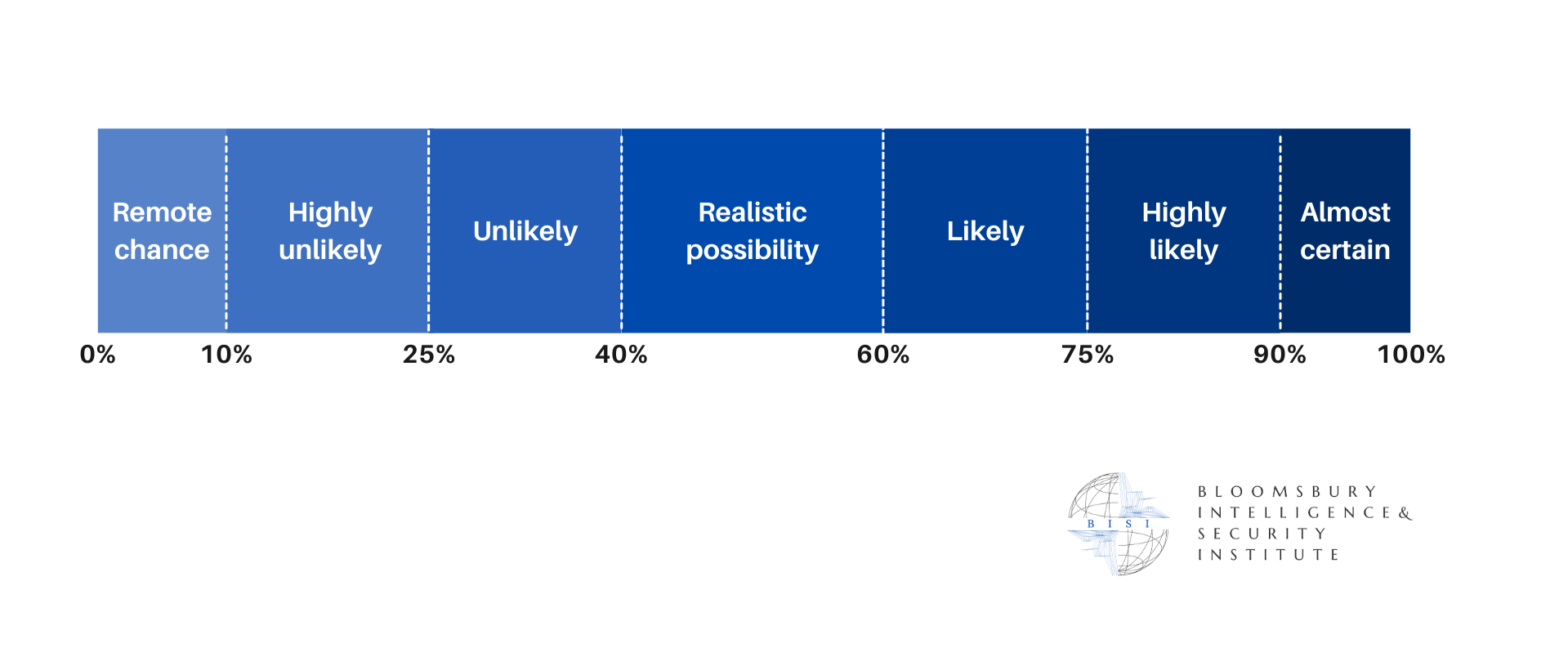
Economic risk remains a key issue, as power costs will continue to influence competitiveness across many markets. The reason is that large-scale renewable energy projects, such as solar farms and wind power plants connected to the national grid, can reduce electricity costs in the long run, but they require high upfront capital, storage, and stronger grids in order to be able to deliver a stable industrial supply. Although gas can support transition needs in countries with domestic reserves, import-dependent markets are likely (60-75%) to remain exposed to foreign exchange pressure and fuel price volatility. In Ghana, for instance, high tariffs and foreign exchange exposure are likely (60-75%) to constrain competitiveness. Again, even though there’s potential in Tanzania’s gas reserves, financing shortages make large-scale supply unlikely (25-40%) without external capital. In Ethiopia, hydro expansion creates a realistic possibility of uneven industrial benefits due to transmission gaps. As a result, hybrid energy systems are likely to be more commercially viable than single-source models because they allow manufacturers to balance reliability, cost management, and energy security in environments where power systems remain unstable and financially constrained.
On the operational risk front, grid instability, transmission bottlenecks, customs delays, and shortages of technical skills are likely (60-75%) to continue increasing operating costs for manufacturers. Even though distributed solar can help improve resilience for commercial users, it is nonetheless unlikely (25-40%) to meet the full baseload needs of energy-intensive sectors like steel, cement, and large-scale processing without support storage or backup generation. Also, gas-to-power can provide a more stable electricity supply, but constraints in feedstock and shipping disruptions can still affect equipment imports, fuel logistics, and maintenance schedules. For instance, in Mozambique, ongoing insurgency activity makes it likely (60-75%) that fuel logistics will face disruptions, while in Senegal, transmission bottlenecks mean that renewable integration is unlikely (25-40%) to fully stabilise electricity supply in the short term.
Forecast
Short-term (Now - 3 months)
More manufacturers are likely (60-75%) to continue using hybrid power solutions, combining grid electricity with diesel, gas, or solar backup, especially especially in countries where unstable electricity supply and frequent outages continue to affect industrial operations.
This approach is likely (60-75%) to remain a short-term response to unreliable supply and rising energy costs, and it is likely to keep operating pressure at a moderate level for firms.
Medium-term (3 - 12 months)
Governments and utilities are likely (60-75%) to prioritise transmission upgrades, wheeling reforms, and targeted industrial power deals rather than full system-wide transformation.
These focused interventions are likely (60-75%) to improve stability in some areas, but the overall impact on industrial reliability is likely to remain uneven and create high pressure on demand growth.
Long-term (>1 year)
The most competitive industrial markets in Africa are highly likely (75-90%) to be those that combine firm power, renewables, grid investment, and regional trade instead of relying on a single energy pathway.
This diversified approach is likely (60-75%) to strengthen long-term energy security, but failure to adopt it is likely to seriously limit industrial growth and competitiveness across the continent.