Amid Regional Tensions, NEOM Explores Alternative Shipping Corridors
By Trishnakhi Parashar | 25 May 2026
Summary
Saudi Arabia’s flagship megaproject, NEOM, is exploring alternative maritime and overland shipping routes to mitigate ongoing regional volatility.
The diversification of supply lines aims to mitigate the impact of regional maritime disruptions on the project's construction timelines and long-term operational viability.
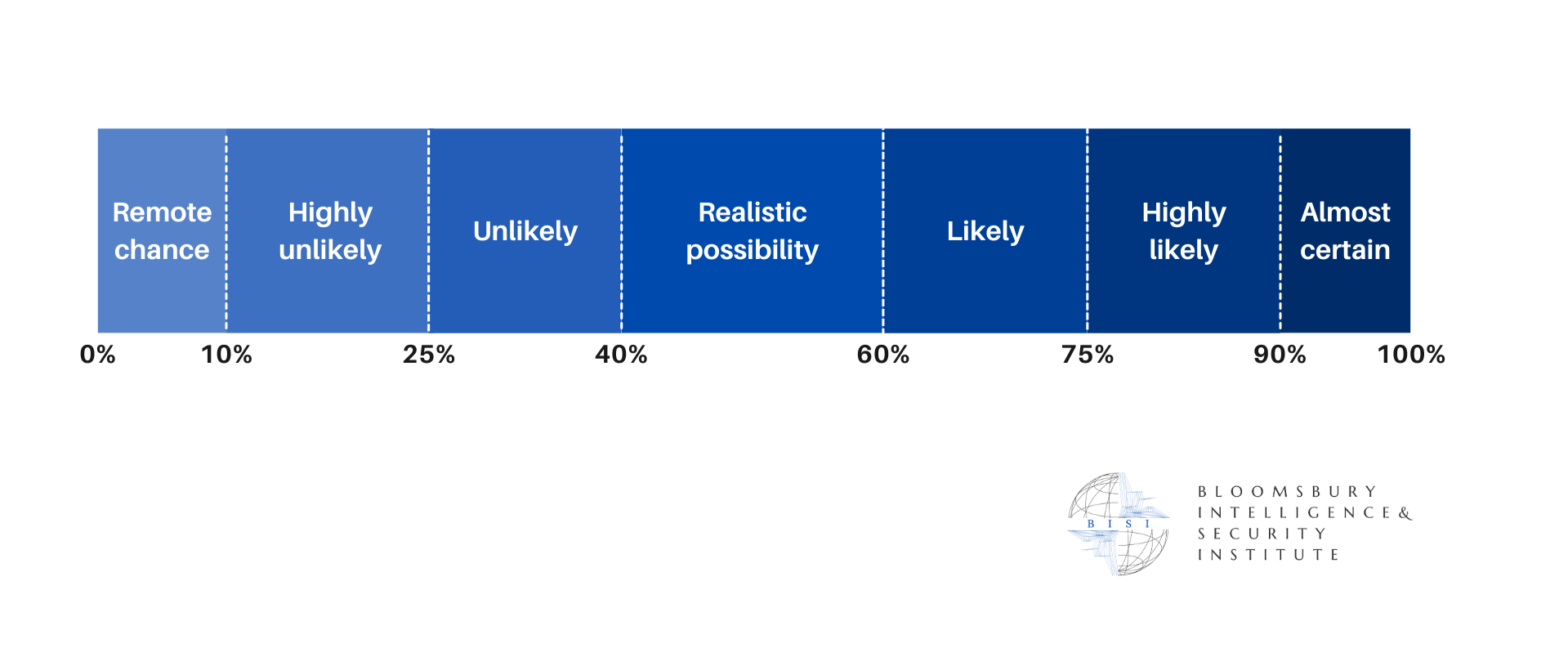
While current initiatives provide a degree of strategic flexibility, based on global precedents, the corridor is unlikely to alter structural dependencies on existing maritime routes in the near term or guarantee uninterrupted connectivity under prolonged regional instability.
Context
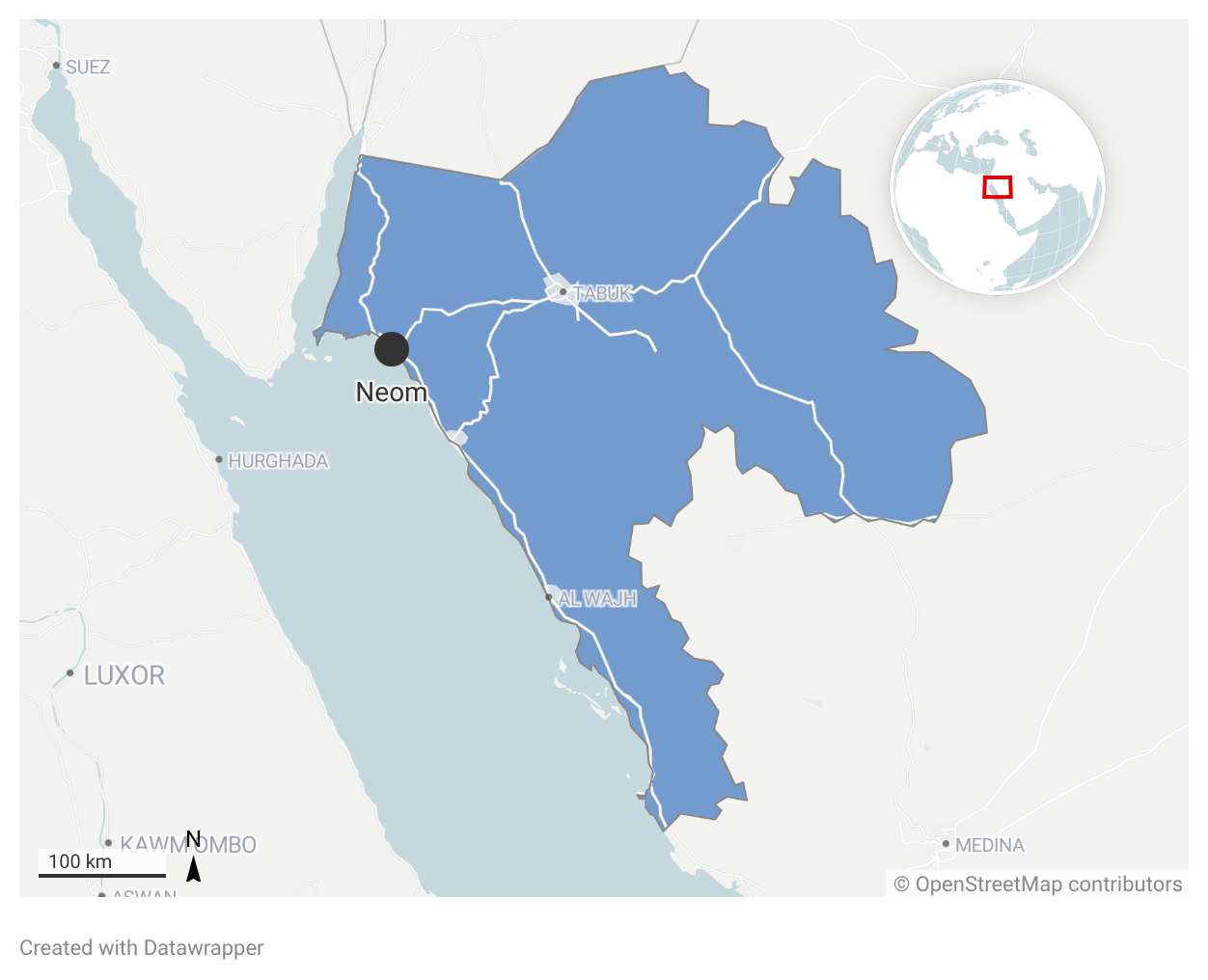
Located in northwest Saudi Arabia’s Tabuk province, NEOM is being developed as part of a broader initiative to function as a bypass node for global connectivity, estimated at over USD 500b across a planned area of NEOM is about 26,500 km2 (10,200 sq mi). Launched by Crown Prince Mohammed bin Salman under the framework of Saudi Vision 2030, it reflects the Kingdom’s long-term economic diversification strategy. It comprises a series of interconnected projects, such as Magna, Sindalah, Trojena, The Line, and Oxagon, that serve distinct purposes across different implementation phases. Amid persistent disruptions and security risks across important maritime routes, particularly around the Gulf Cooperation Council region, Saudi Arabia is advancing NEOM as a strategic and logistics hub on the Red Sea, intended to facilitate trade flows between Europe and the Middle East. The project complements existing major Saudi ports on the Red Sea coast, such as Jeddah Islamic Port, King Fahd Industrial Port (Yanbu), King Abdullah Port, and King Abdulaziz Port, King Fahd Industrial Port (Jubail), Ras Al-Khair Port on the Arabian Gulf coast, while also seeking to develop a more advanced industrial and transhipment corridor comparatively closer to emerging trade routes. Particularly, Oxagon, its industrial city, is designed to be a next-generation, highly automated port with integrated manufacturing and supply chains.
European importers are already leveraging this route to access countries like the UAE, Kuwait, Iraq, and Oman. These efforts involve bilateral discussions with regional partners to integrate NEOM into broader multi-modal transport networks. By reducing reliance on a single maritime artery, the system reflects a shift towards an interconnected network to ensure supply chain resilience against regional volatility.
However, large-scale projects such as the construction of the Suez and Panama Canals required sustained investment and lengthy timelines before becoming fully operational. Gwadar Port also demonstrates that even with modern technology and funding, achieving full operational integration can take years. NEOM’s corridor, combining multiple transport modes and jurisdictions, will likely follow a similar extended trajectory, particularly as Saudi Arabia has recently scaled back or reprioritised several major projects, including NEOM projects such as the Line and the Trojena mountain destination, amid rising costs, budgetary pressures and longer implementation timelines. Moreover, the structure of global maritime trade is largely anchored in established direct routes, limiting the likelihood of NEOM replacing existing systems in the near future. However, it may enhance resilience by offering a stable alternative during disruptions at critical chokepoints.
Implications
The corridor requires coordination between Saudi Arabia, Egypt, and other GCC states, placing it within the broader dynamics of regional politics. Disagreements in policy priorities, regulatory frameworks, or diplomatic relations will likely delay implementation or effectiveness. Therefore, the project’s success hinges on political cooperation among participating states.
Given the current regional changes, the NEOM project has operational potential to serve as a strategic buffer against maritime instability. The initiative aligns with a broader national strategy to transform Saudi Arabia into a global logistics hub. The exploration of these linkages is not merely a defensive measure against current instability, but it is also a protective attempt to enhance the project’s attractiveness to foreign investors by guaranteeing supply chain security. Saudi Arabia is simultaneously seeking to restore investor confidence through market liberalisation and foreign ownership reforms, while recently focusing more on its dominance in multimodal logistics and renewable energy to offer investors a secure, faster alternative to traditional shipping routes.
NEOM’s lower political risk comes with operational vulnerabilities. Cross-country rail and trucking corridors are susceptible to sabotage and disruptions, longer transit times, along with transportation costs, and the broader digital integration of port systems risks sophisticated cyberattacks targeting supply chains.
While disruptions around the Strait of Hormuz may generate some demands, transitioning to a vital global connectivity requires significant investment in infrastructure, technology and logistic support. But delayed timelines, high capital costs and incomplete infrastructure limit its ability to operate at full efficiency. NEOM’s infrastructure may increasingly need to demonstrate commercial viability to sustain its budget, particularly through stable demand and sustained investor confidence.
Forecast
Short-term (Now - 3 months)
As development remains in its early stages, limited near-term operational capacity is a realistic possibility. The corridor is therefore likely to function in a supplementary role rather than as a primary route.
It is likely that European importers will gradually adopt the NEOM-Egypt multimodal corridor to bypass the prevailing risk associated with the Strait of Hormuz.
Medium-term (3 - 12 months)
With incremental progress in port and logistics infrastructure, cautious market uptake of the corridor is likely.
Further delays are likely amid regional uncertainty and economic pressure, which may constrain implementation timelines and investors’ confidence.
Long-term (>1 year)
NEOM’s logistics ecosystem is likely to evolve into a permanent parallel trade route, reducing overdependence on chokepoints. However, it is unlikely to fully replace Hormuz.
If Hormuz remains periodically unstable with recurring disruptions, sanctions, or militarisation, then NEOM will likely gain strategic centrality.