PM Modi’s European Tour: Strategic Agreements with the Netherlands
By Anna Toso | 2 June 2026
Summary
The Indian Prime Minister, Narendra Modi, has visited the Netherlands as part of his diplomatic tour of several European countries to discuss, among other topics, economic, defence and strategic affairs.
The economic collaboration between India and the Netherlands is especially crucial for New Delhi in the semiconductor sector, due to the expertise and high-tech machinery that Dutch companies can provide to the nascent Indian chipmaking industry.
Despite the growing liberalisation of trade between India and the European Union’s states, New Delhi is unlikely to cut ties with Russia, its crucial historical economic and political partner.
Context
As part of his European diplomatic tour, Indian Prime Minister (PM) Narendra Modi visited the Netherlands on 16-17 May 2026, where he had talks with Dutch PM Rob Jetten, King Willem-Alexander, and major Dutch business representatives from diverse sectors, including technology, trade, energy, health, agriculture and more. For example, Modi met the CEOs of the semiconductor company ASML, the aviation firm KLM, healthcare-specialised Philips, and Power2X, working on clean energy transition. The relations between India and the Netherlands were upgraded to “Strategic Partnership” through the joint approval of a new roadmap. This roadmap underpins a cross-sectoral, structural cooperation, including 17 distinct agreements about, among others, the tech industry, renewable energy, and defence.
India is a net exporter towards the EU Member States, except for Germany and Switzerland. Namely, the Netherlands have a negative trade balance with India, amounting to USD -20.2b. The Netherlands is the third-largest importer of Indian goods, following the United States and the United Arab Emirates, with mineral fuels, oils, and derivatives being the most imported products.
Implications
Commerce and strategic industries
India is a strategic economic partner for the Netherlands and, more broadly, the European Union, given its demographic size and growing market. In fact, India is the state with the largest population worldwide and has a large, partially still untapped, pool for consumption, manufacturing, and labour force. Signed in January 2026, the India-EU Free Trade Agreement (FTA) underscores the importance of deepening the economic ties between the European bloc and New Delhi. The FTA eliminates all tariffs on 99% of Indian exports and 96.6% of its imports with the EU, including machinery and electrical equipment – the biggest share of European exports towards India, worth EUR 16.3b (USD 18.92b) in 2024. This provides India with a competitive advantage over its regional neighbours in trade with the EU.
Specifically, the Netherlands is a provider of expertise for Indian companies, especially in water management, sustainable agriculture, and smart cities. Furthermore, Dutch logistic hubs, such as Rotterdam’s port, represent strategic gateways for Indian exports to Europe. Similarly, India’s large, dynamic, business-friendly market and skilled talent pool offer advantageous opportunities to Dutch companies, for example, in the tech sector.
The cooperation on microchips
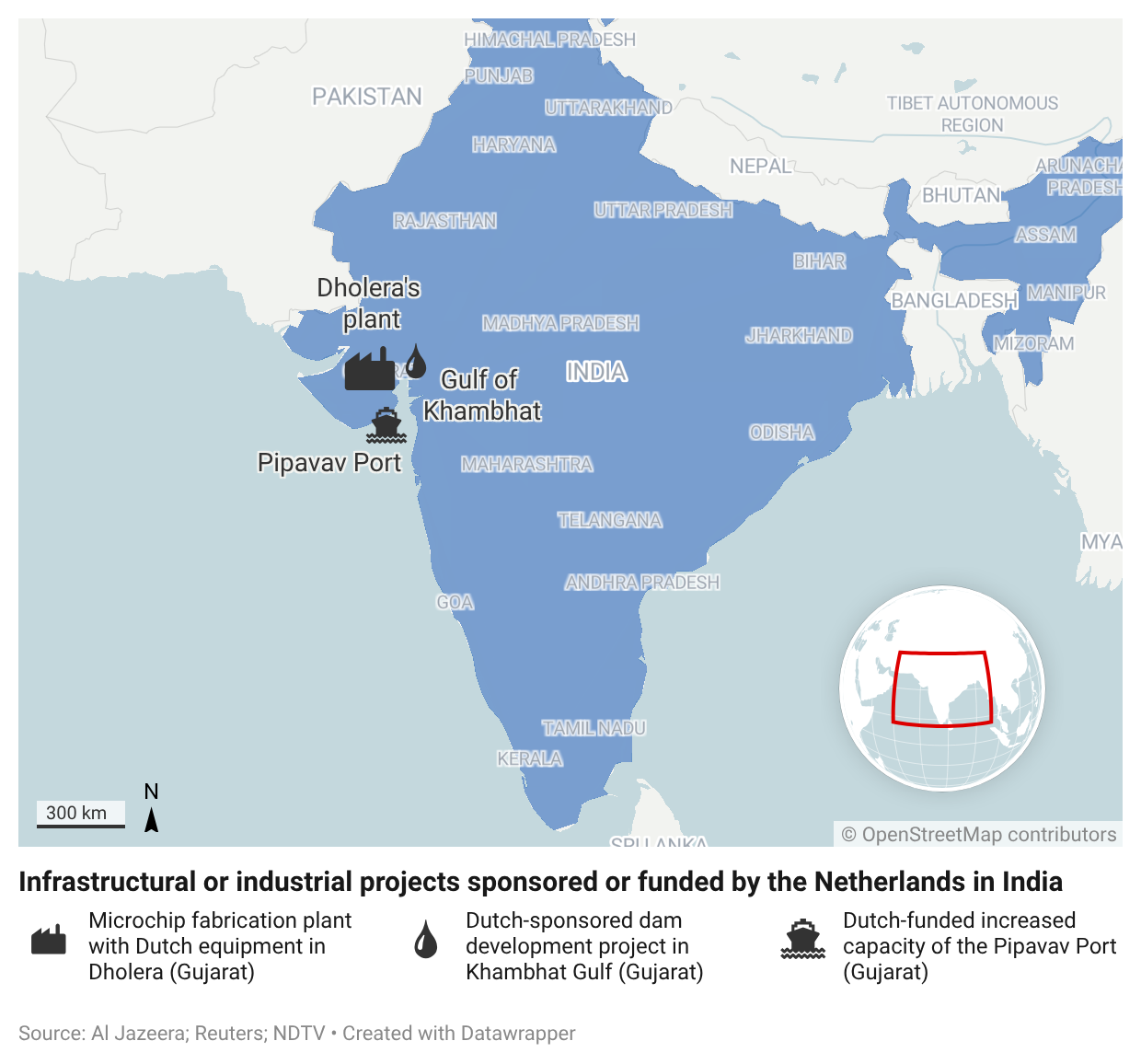
The Indian business Tata Electronics and the Dutch tech company Advanced Semiconductor Materials Lithography (ASML) agreed to establish a large semiconductor plant in the Western Indian state of Gujarat, Modi’s home state, which hosts most of the major industrial and infrastructural projects resulting from the multi-sectoral agreements with several Dutch companies. The decision was framed as a first step of a longer-term cooperation between the Netherlands and India in the latter’s growing semiconductor industry.
ASML is Europe’s largest tech company by market value, specialised in manufacturing highly sophisticated machinery for the production of microchips. Equipped with Dutch cutting-edge hardware and with a USD 11b investment from Tata, the Indian plant is expected to become operational by 2028. Moreover, in 2026, 4 semiconductor manufacturing plants are expected to become active in India, operated by Kaynes Semicon, CG Power, Micron Technology and Tata Electronics. This reflects the Indian government's commitment to ”building a robust, indigenous semiconductor design ecosystem.” These factories represent the first semiconductor fabrication facilities in India, moving away from the current overreliance on imports of foreign advanced microchips. These plans comply with New Delhi’s latest broader strategy in the tech sector, pursuing self-reliance and “made in India” policies.
Crucially, multiple industries employ these chips, ranging from AI development to mobile phone manufacturing and automotive. Prioritising industrial independence, New Delhi has also recently secured the collaboration of Taiwan’s chipmaker Powerchip Semiconductor Manufacturing Corporation to support setting up the Gujarat plant. Achieving greater self-reliance in chip-making would enable India to expand its presence in the AI sector beyond its current provision of software services and pool of AI-expert engineers, whose concentration in India is 2.5 times the global workforce’s average. India is thus set to become one of the most competitive players in this market dominated by the US and China.
Defence and Security
Beyond commerce, the Indian and Dutch PMs announced intentions to formulate an action plan for the defence industry, focused on space travel, maritime systems, and maritime security. The two countries agreed to strengthen the information and expertise exchange, as well as the industrial cooperation in the defence and security domain. Similarly, at the EU level, in January 2026, New Delhi endorsed a Security and Defence Partnership with the bloc, emphasising the opportunities to strengthen cooperation on maritime security, cyber, counterterrorism, and defence industry. Such an unprecedented strengthening of the diplomatic collaboration between India and the EU underscores the ongoing reconfiguration of New Delhi’s security alliances. Ties are shifting away from China and towards greater diversification in the pursuit of Indian strategic autonomy. This trend overlaps with the similar tendency among the EU Member States to push for “Made in Europe” and reduce critical overdependencies on Beijing. Thus, the closer India-EU relations fit in this big picture of bold attempts to reduce the Chinese control of supply chains in both regions.
Human rights and press freedom
Despite the positive exchange on economic and security affairs, the Dutch PM expressed long-standing concerns regarding the protection of human rights in India, especially concerning non-Hindu religions, Muslim communities, and other minorities, and press freedom. In 2026, India ranks 157th out of 180 according to the World Press Freedom Index. In the country, violence against journalists has been rising, and pluralism is declining across mainstream media outlets. These conditions shed light on a significant tradeoff between growing economic development and shrinking democratic accountability that has been characterising Modi’s presidency since its inception in 2014. On the one hand, in 2024, Modi’s party, the BJP, won the elections but lost the parliamentary supermajority that it had held for the previous decade. On the other hand, despite this weaker mandate, new hyper-wealthy elites have been benefiting from Modi’s policies thoughout its past 12 years of government. Therefore, these groups are likely to maintain strong support for the BJP. In other words, they would enable further democratic backsliding as long as such an erosion of rights for the general population is paired with economic and political advantages for the top-earning elites. In turn, this would fuel widening economic inequalities and polarisation in Indian society.
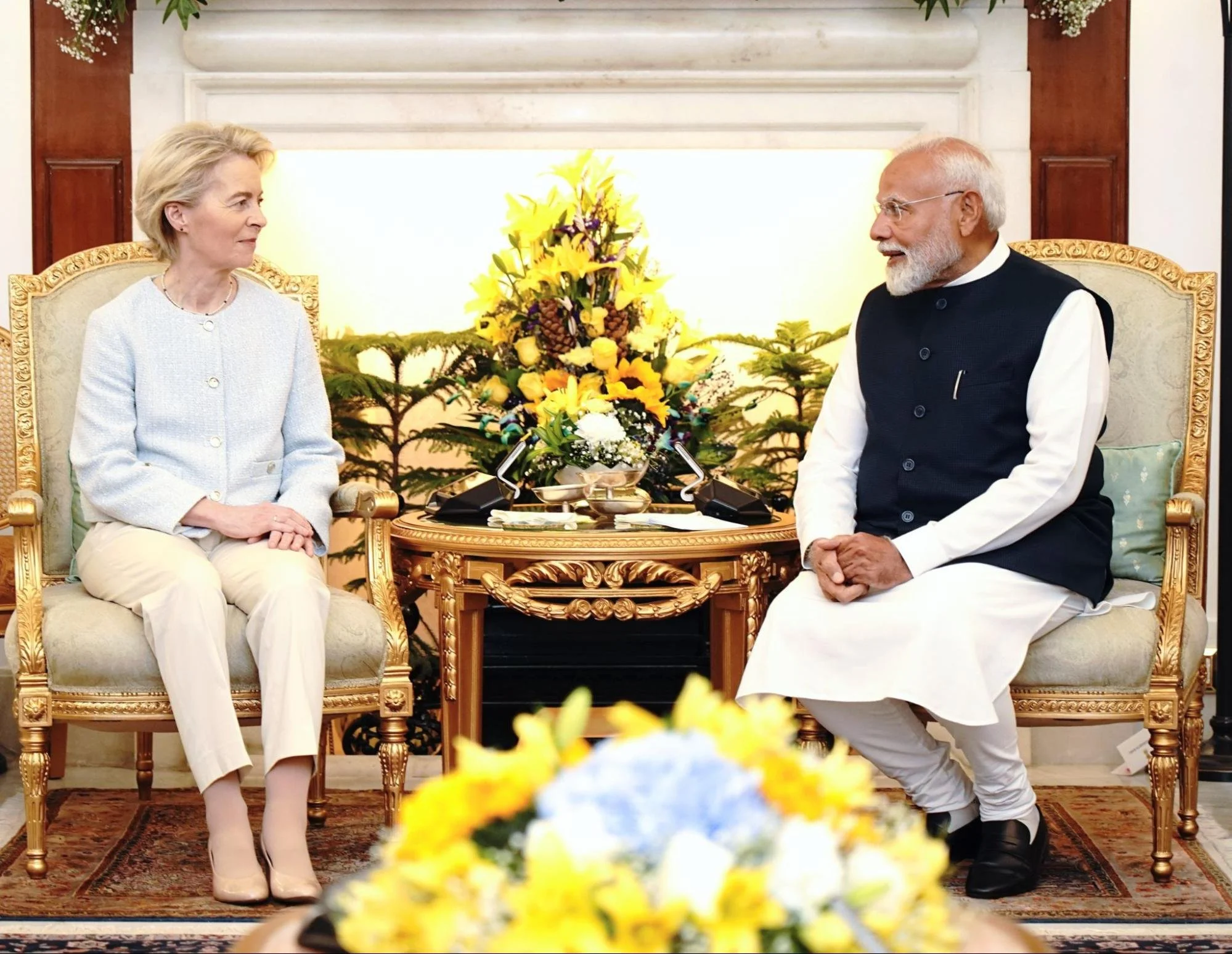
MEAphotogallery/Flickr
Forecast
Short-term (Now - 3 months)
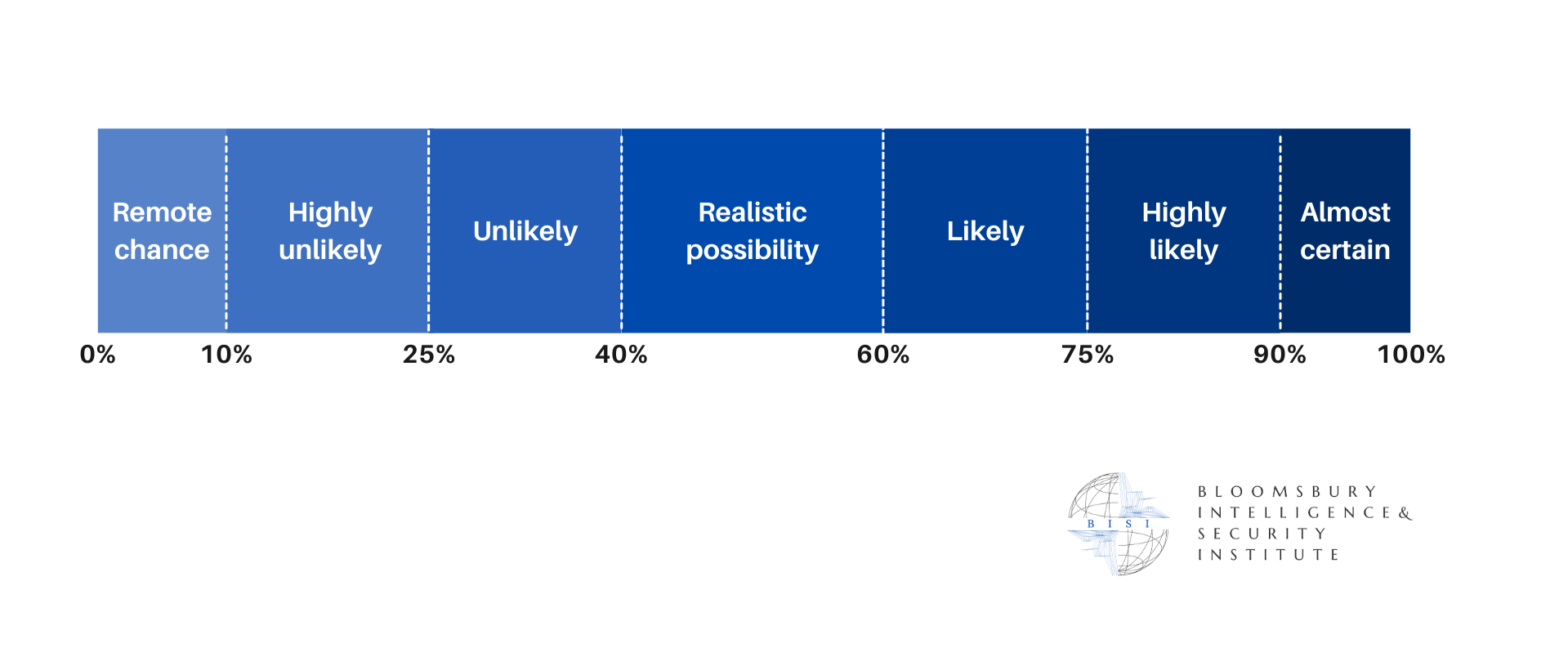
During the rest of Modi’s diplomatic tour through Europe, the governments of the EU democracies will likely further criticise the violations of human rights and repression of press freedom in India.
Medium-term (3 - 12 months)
The FTA between India and the EU is likely to harm the competitiveness of the other Southeast Asian economies, especially those reliant on exports of cheap textiles.
Long-term (>1 year)
In the next few years, despite the recent agreements with the Netherlands and the EU, India is unlikely to sever its positive diplomatic relations with Russia, both due to deep-rooted trade interdependence and the risk that cutting ties with Russia would leave the country more reliant on China, India’s geopolitical and economic competitor.