By Trishnakhi Parashar | 2 June 2026
Summary
Recently, Iranian foreign minister Abbas Araghchi visited Moscow for high level talks aimed at strengthening coordination between Tehran and Moscow.
Regional security pressures and continuing uncertainty surrounding maritime energy routes appear to be critical factors pushing both states towards closer tactical cooperation and policy coordination.
The discussions reflected the potential for broader efforts by Iran and Russia to expand economic engagement, support regional partnerships and reduce vulnerability to external political and financial pressures.
Context
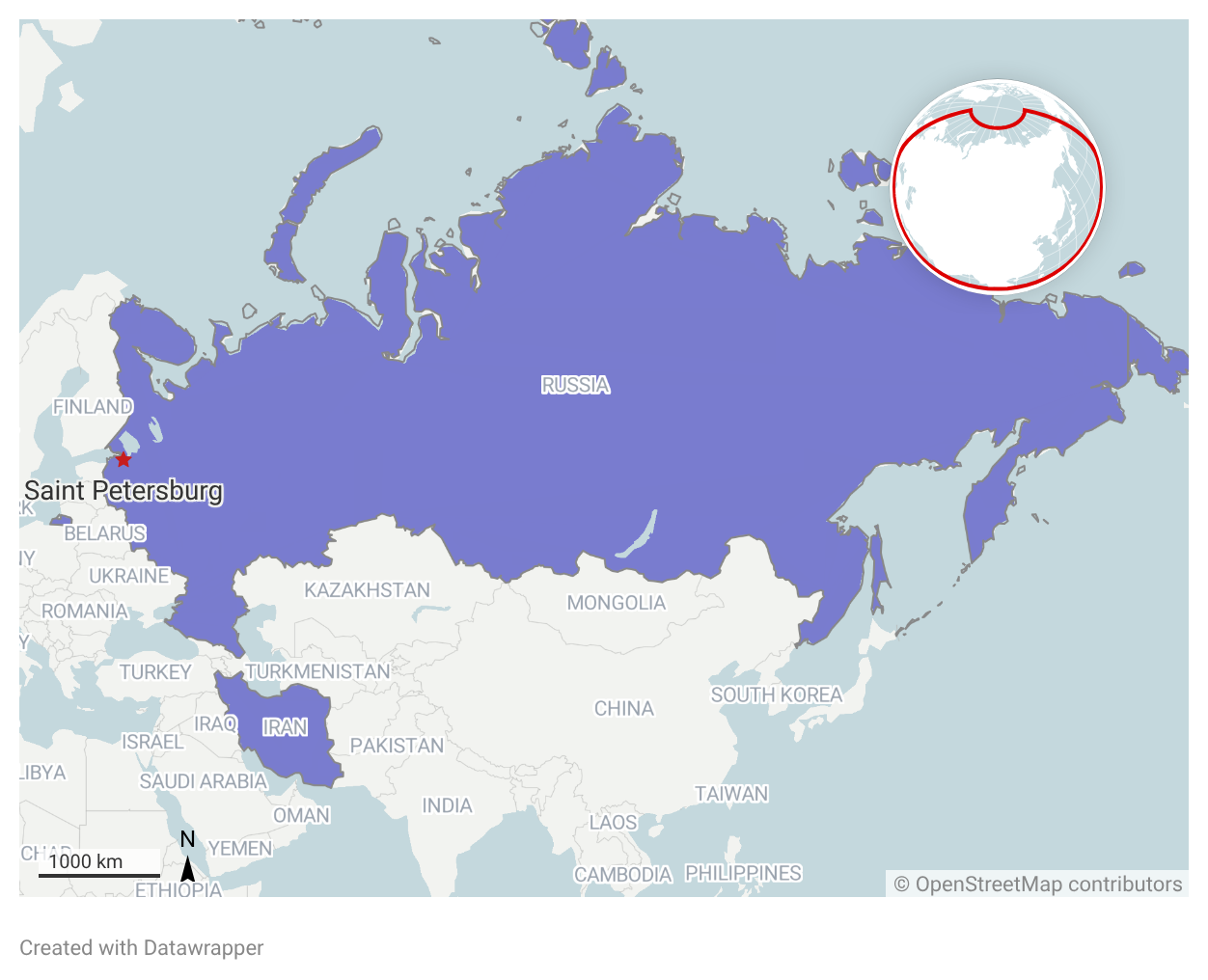
On 27 April 2026, Iranian Foreign Minister Abbas Araghchi visited St. Petersburg for high-level discussions with President Vladimir Putin, including senior representatives from Russia’s foreign and security establishment. The visit occurred against a backdrop of significant regional upheaval, following the February 2026 military strikes and the subsequent administrative and geopolitical shifts in the Middle East. It also came in the context of the 2025 Comprehensive Strategic Partnership Treaty signed between the two states, which aimed to deepen cooperation across multiple sectors, including energy, trade, and security. Beyond bilateral cooperation, the treaty also reflected a broader effort by both states to institutionalise long-term strategic partnership. However, the agreement is now becoming vital for Iran as it seeks stronger cooperation amid intensifying pressure.
The recent discussions primarily focused on regional security, economic cooperation, energy coordination and connectivity projects. Amid declining prospects for diplomacy aimed at ending the war with the United States and Israel, Iran is also attempting to secure Moscow’s support. Particular attention appears to have been given to maritime developments affecting the Strait of Hormuz, the Red Sea and adjacent shipping corridors. Meanwhile, Tehran has continued restricting maritime transit through the strait, while Washington has imposed a blockade on Iranian ports. Russia and Iran also indicate pursuing deeper engagement in intelligence sharing, technical-military coordination, and related operational exchanges. Putin echoed Moscow’s willingness to support Iran and help secure peace in the region, while criticising Washington’s approach.
Even prior to the talks, Russia consistently demonstrated support for Iran throughout the war. He also reportedly praised the Iranian people for fighting the ongoing crisis “courageously and heroically”. By framing Iran’s actions as a means to defend its sovereignty and independence, Putin seems to politically legitimise Tehran’s position in the war.
Araghchi reportedly delivered a personal message from Mojtaba Khamenei to Putin, which reflects the importance of Russia for Iran and its intention to preserve closer bilateral ties. The growing engagement between Moscow and Tehran has developed gradually over recent years as both states increasingly seek alternative political and economic partnerships beyond Western-led systems. Both parties reportedly explored ways to strengthen bilateral trade mechanisms, transportation links and financial cooperation in response to continuing sanctions-related restrictions and external pressure. Russia took this opportunity to reaffirm its commitment to closer ties with Iran, while the discussions also offered Iran an opportunity to evaluate recent developments in the war.
Implications
The latest talks highlight strengthening political partnership in a context of regional uncertainty. The meeting provided a degree of political counterweight for Iran. It points out Iran’s continued ability to sustain external networks and maintain active diplomatic engagement. Moreover, Russia and its allies may once again shield Iran from additional United Nations measures and mounting international pressure. While on the other side, for Russia, this engagement is embedded within a broader strategic framework through which it seeks to preserve its relevance in the Middle East. Simultaneously, expanding cooperation may generate greater political pushback from Western powers and regional rivalry.
The evolving interests may also contribute to a measured reshaping of diplomatic blocs. However, the durability of such alignments, to a large extent, will depend on how states balance constraints, external pressure and tactical gains.
The operational implications of the talks point towards enhanced alignment in logistics planning, maritime route management, and the development of energy infrastructure. Discussions surrounding trade and regional connectivity projects could get further momentum. Both states appear interested in energy coordination, potentially mitigating the oil market shockwaves triggered by the war. Moreover, Russia has offered to accept, store and process Iran’s enriched uranium.
The security landscape is currently going through a period of profound uncertainty and rapid strategic realignment. Greater alignment between Russia and Iran is likely to raise concerns among regional and mutual rivals regarding shifting security balances and competition. Even without direct involvement, Russia’s intelligence capabilities and logistical support provided Iran with greater strategic confidence during the peak of the war. Now, having Russia’s explicit support may further strengthen Iran’s strategic position and influence broader security calculations across the Middle East.
Parallel to this, Iran’s nuclear programme remains a topic of concern for regional and international powers, as it refuses to ship its remaining near-weapons-grade uranium stockpile abroad. At the same time, Russia’s Rosatom is reportedly deploying atomic specialists back to Iran's Bushehr Nuclear Power, reflecting a technical engagement on civilian infrastructure. From a security perspective, this development may reinforce perceptions and mistrust regarding Iran’s nuclear intentions.
The economic implications of the meeting may include wider economic alignment in areas such as long-term infrastructure and commercial investment, transport connectivity and, more importantly, trade facilitation. Enhanced cooperation involving regional connectivity projects and energy exports could create additional commercial opportunities and improve economic resilience for both countries.
Forecast
Short-term (Now - 3 months)
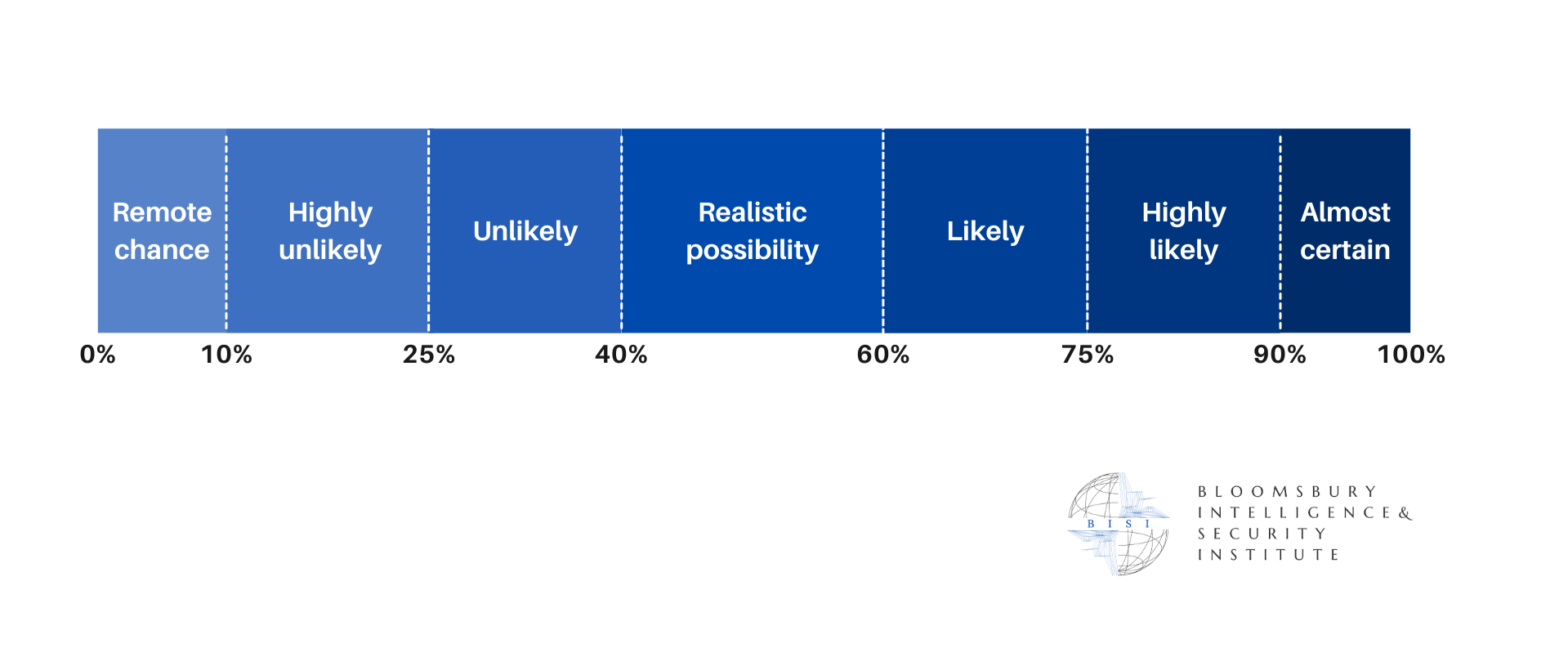
Russia and Iran are likely to intensify coordination in different domains amid continuing regional instability and uncertainty.
Russia is likely to leverage the regional instability to bolster its depreciating economic position, particularly through the oil and energy sectors.
Although Russia is highly likely to provide operational and logistical support, it is unlikely to engage directly in the war.
Medium-term (3 - 12 months)
There is a realistic possibility that the International North-South Transport Corridor and related Eurasian projects will gain more attention as both states look for alternatives to Western-led systems.
Long-term (>1 year)
Russia is likely to use its closeness with Iran as a form of strategic advantage to navigate and balance its position vis-a-vis Western powers