By Larissa Alves Lozano and Raphael McMahon | 23 February 2026
Summary
The military interventions in Panama in 1989-1990 and in Venezuela in 2026 by the United States (U.S.) both showcase parallels of gradual military buildup, targeting drug trafficking, restoration of democratic regimes, and securing strategic regional interests – from trade routes to oil reserves.
U.S.-induced regime changes in Latin America over the years have exposed the entanglement of narco states, oil politics, and authoritarianism, which threaten the Western Hemisphere sphere of influence.
As Russia and China continue extending their influence and strategic interests in Latin America, U.S. objectives have evolved beyond the War on Drugs to a geopolitical game of chess to secure strategic alliances, trade routes, and natural resources.
The Noriega–Maduro Parallels
In 1989, the United States conducted Operation Just Cause in Panama to depose the dictatorship led by General Manuel Noriega, who was deeply involved with narco-trafficking and money laundering and had close relations with the Soviet Union. That same year, Noriega annulled the results of an election where opposition candidate Guillermo Endara won by a large margin. Over 27,000 U.S. military personnel were deployed during December, 1989 and Noriega was captured by the U.S. Drug Enforcement Agency in January, 1990. He faced legal charges in Miami and in France, serving a total sentence of 24 years. The U.S. operated the Panama Canal until 1999, when it was returned to the local authorities.
In 2026, the United States conducted Operation Absolute Resolve in Venezuela to depose Nicolás Maduro, who was involved in narco-trafficking and money laundering and had close ties with Russia and China. Maduro annulled the results of the 2024 election, in which the opposition candidates Edmundo González and María Corina Machado won. Over 15,000 U.S. military personnel were deployed between November, 2025 and January, 2026 alongside numerous warships, attack submarines, fighter jets, and aircraft carriers across the Caribbean region. Maduro was captured by U.S. special forces and now faces legal charges in New York. The U.S. has since seized control of Venezuela’s oil enterprise, and whether domestic control will be restored remains to be seen.
Beyond Drugs and Oil: Latin America as a Sphere of Influence
The Venezuela invasion started under similar premises as Panama – restoring a democratically elected regime and combating a dictatorship on the pretext of counter-narcotics. Both leaders also had close relations with the then-Soviet Union and Russia, with China playing a growing role in Venezuela through oil trade. On a deeper level, it has signalled Latin America’s role as a trade and natural resource hub.
Venezuela is home to the largest crude oil reserves in the world and is a key member of OPEC, which has been a key Russian interest. Russia has invested millions in Venezuela’s state-owned firm PDVSA and imports about USD 2m in crude oil trade through state-owned enterprises such as Roszarubezhneft. Since January, these firms have been pushed out by the U.S.. Despite oil sanctions from the U.S., Russia has increased its use of shadow fleets under fraudulent flags to bypass restrictions. In comparison, China is the largest buyer of Venezuelan crude oil through shadow fleets and ship-to-ship oil transfers to minimise detection. Similar to Russia, Chinese state-owned oil firms have faced decreased shipments as U.S. control requires Venezuelan oil to flow through legitimate channels.
This has also impacted Cuba, a major U.S. adversary in the region and a nation with increasingly close ties to China and Russia. Cuba had long been heavily dependent on Venezuelan oil supplies before the Maduro operation. Since Maduro’s forcible removal from power, Cuban oil supplies have majorly dwindled. It is now speculated that this could oblige Cuba to negotiate with the United States and end its association with Russia and China and allow American commercial access to the Cuban market in exchange for a reduction of economic sanctions.
These power shifts in the regional oil trade away from Russia and China and towards the United States showcases not only the objectives of U.S. interventions, but also the constant struggle between these competing and overlapping spheres of influence. Latin America has become divided between East and West alignments, with some countries maintaining relations with both hemispheres.
With 21 Latin American countries supporting China’s Belt and Road Initiative (BRI), including Venezuela, and Russia remaining a long-lasting diplomatic and trade partner for various countries, the West’s sphere of influence has lost its unipolarity. While Russia and China adopt soft-power approaches, the U.S. has maintained a hard-power stance to ensure regional security, undermining the U.S.' improved soft-power image. This trend is key for the U.S. War on Drugs, which has now broadened to target authoritarianism and the funding sources of such narco states – drugs and now oil. Given Panama’s democratisation after the U.S. invasion and exit from the BRI in 2025, Latin America is seeing increased polarisation between Chinese and American spheres of influence.
The operation in Venezuela has put other Latin American nations on high-alert, as was criticised by Brazil, Colombia and Nicaragua, as U.S. President Donald Trump continuously speaks against the drug cartels in Colombia and Mexico. On a broader view, the Trump administration has heavily emphasised containing Russia and China’s presence in the Western Hemisphere and undermining left-wing governments such as Brazil, Colombia, and Nicaragua.
For example, despite historical ties to Maduro and Venezuela’s regime, Brazil’s President Lula has chosen diplomatic discourse in fear of military repercussions from the U.S. Cuba faces a similar dilemma. Although the island nation has recently deepened its ties to Russia and China in an attempt to ward off intensified U.S. pressure on the island and alleviate its current sanctions-induced economic and humanitarian crisis, Cuba will likely be forced to make a deal with the U.S. to prevent total collapse. Various high-ranking American officials, including U.S. Secretary of State Marco Rubio, have threatened the Cuban political establishment with regime change. Cuba seems, despite its defiant rhetoric, willing to negotiate a de-escalation of tensions by allowing more American influence on the island through economic liberalisation; Rubio and Raúl Castro’s grandson, Raúl Guillermo Rodríguez Castro, are reportedly in contact and discussing closer U.S.-Cuban cooperation.
Forecast
Short-term (Now - 3 months)
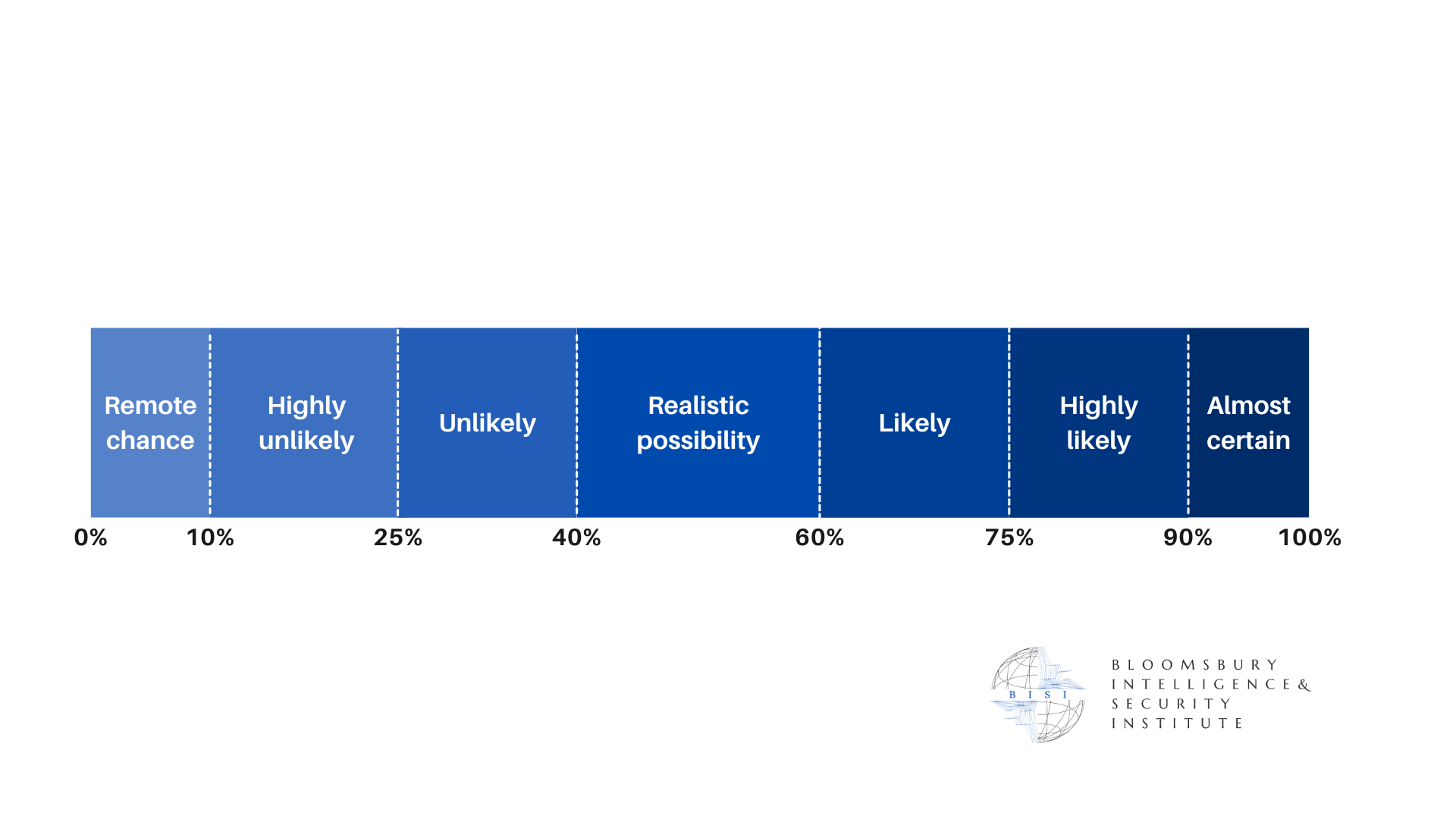
It is highly likely that neighbouring pro-Russia and pro-China Latin American countries will remain on high alert as Maduro faces legal charges in the United States and the War on Drugs in Latin America intensifies.
The Cuban regime remains in place but negotiates a détente in tensions and a gradual liberalisation of the economy.
Medium-term (3 - 12 months)
With Presidential elections coming up in Brazil, Colombia, and Peru in 2026, it is highly likely that Russia might engage in election meddling and disinformation campaigns as it did in 2022.
The U.S. uses its newfound position of power over Venezuelan oil to increase its influence in OPEC and thus better control global oil prices to serve American interests.
Long-term (>1 year)
It is highly likely that China will continue to challenge Russia’s influence in Latin America, primarily for trade and natural resources.
There is a realistic probability that the U.S. War on Drugs will continue in Latin America if narco states continue funding authoritarian regimes and pro-Maduro regimes remain in power after the 2026 elections.
Cuba and the U.S. become allies in spite of ideological differences, as the budding relationship between current Venezuelan President Delcy Rodríguez and U.S. President Donald Trump is replicated in Cuba.
There is a realistic probability that Venezuelan oil will remain under U.S. control throughout the Trump administration.