Munich Security Conference 2026: Outcomes and Geopolitical Implications
By Alexandra Bostenaru | 4 March 2026
Summary
The Munich Security Conference (MSC) 2026 revealed a consensus that the international order is being actively eroded, echoing the Conference’s own Munich Security Report 2026: Under Destruction. Debates reflected an increasing concern that geopolitical tensions such as transactional foreign policy and domestic democratic fragmentation are reshaping the global security environment.
European leaders stressed the urgency of further integrating and coordinating defence and industrial policy to strengthen Europe’s self-sufficiency. Discussions in Munich focused on expanding joint procurement mechanisms, addressing fragmentation in European defence markets, and boosting cross-border production of air defence systems, ammunition, cyber resilience tools, and space assets.
Ukraine remains the primary concern of European security, yet inconsistencies in the allied narrative can benefit Moscow's diplomatic position. In strategic terms, uncertainty among Western allies is likely to encourage Russia to continue hostilities, in the hope that Transatlantic unity will erode faster than Russia's ability to maintain military pressure.
Context
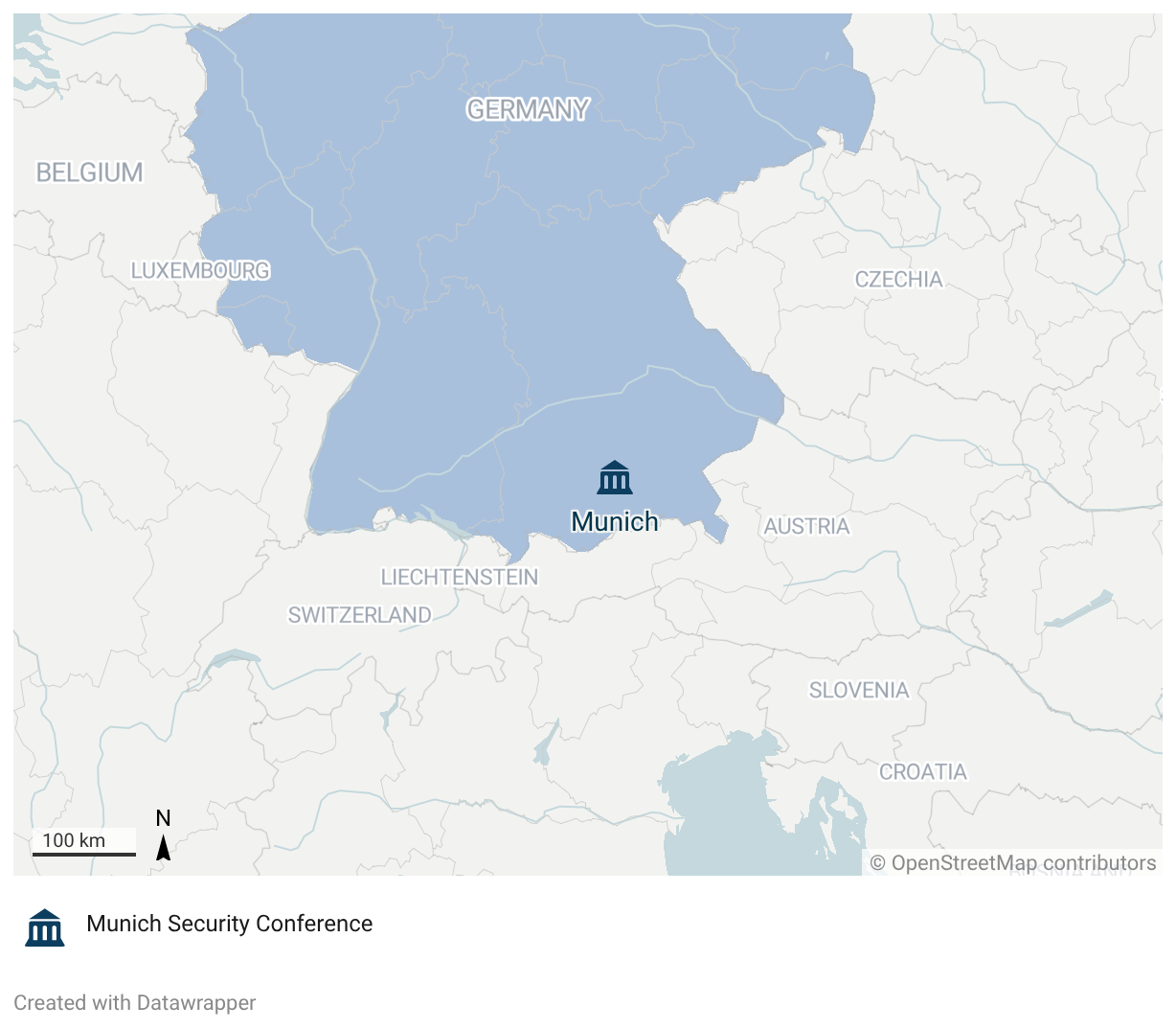
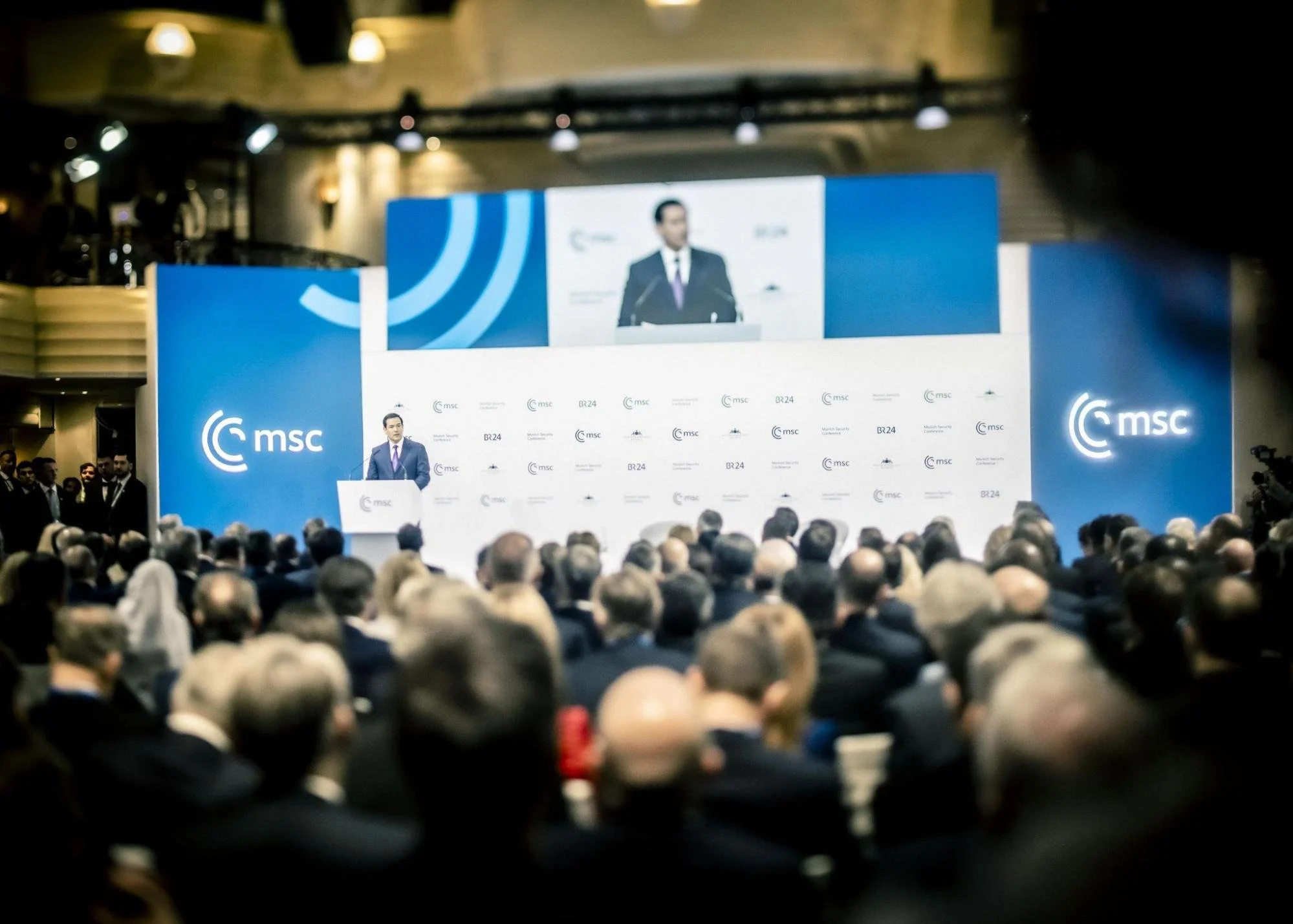
The 62nd Munich Security Conference was intended to demonstrate stability: Western support for Ukraine, stronger European defence commitments and Transatlantic ties. Instead, the conference's framework document, titled "Under Destruction", focused on the dismantling of the rule-based world order with the increasing multipolar world.
Ukraine remained the main focus of the summit and was underscored as a priority for European security. In this regard, European leaders reiterated their long-term military and financial support, withstanding calls for a hasty diplomatic solution that could reward Russia's aggression. On the other hand, Transatlantic ties are increasingly transactional under Donald Trump’s second presidency, leaving Europe to manage its own strategic independence amid uncertainty over the United States’ (US) foreign policy.
Implications
The conference highlighted an international order under constant pressure and in the midst of active reconfiguration. Support for Ukraine is expected to continue throughout 2026 from its European allies. Still, intense discussions about Ukraine-Russia negotiations, although conditional they may be, raise the possibility that if diplomatic efforts escalate, they will not only depend on territorial integrity, but also on lifting sanctions on Russia, freezing the front lines - especially Ukraine territories controlled by the Russian army -, broader security guarantees for Ukraine and NATO’s Eastern flank, or mutually agreeing on spheres of influence, as EU High Representative Kaja Kallas also stated. To this end, the battlefield and the negotiating table will be inseparable.
German Chancellor Friedrich Merz took a particularly firm tone on expanding German defence, signalling that Berlin would no longer treat rearmament as an obligation, but as a strategic necessity. Others signalled their support, including French President Emmanuel Macron, who stressed the need to reorganise Europe’s security architecture to meet today's challenges. At the same time, Commission President Ursula von der Leyen outlined plans for joint procurement, large-scale defence production, and stricter scrutiny of foreign investment in key sectors. Thus, an increase in EU defence spending and stronger investment screening systems will likely take place throughout 2026. While this opens up opportunities for the defence, aerospace, and advanced manufacturing sectors, it also increases fiscal pressure and domestic political concerns over its necessity.
Despite remaining firm in formal terms, Transatlantic unity appeared to have been realigned. US Secretary Marco Rubio reaffirmed NATO commitments and support for Kyiv, but stressed that European allies must increase defence spending and assume greater responsibility. European commentators framed these remarks as a shift from unconditional guarantee to conditional partnership, which may lead to occasional trade or regulatory disputes. Businesses facing export controls, border adjustments on carbon emissions, or competitive subsidies should expect continued turmoil.
US’s linking of military and economic security also complicates the Transatlantic relationship. Europe's focus on addressing exposure to China's economic influence was highlighted in the parallel discussions on China policy and aligned responses with like-minded partners. Participants examined how vulnerabilities in critical supply chains - such as raw materials, digital infrastructure, and advanced manufacturing - can lead to strategic shortcomings if left unresolved, leading to calls for more rigorous investment screening and diversification of supply chains.
Finally, Arctic geopolitics was another point of discussion at the conference, with particular focus on climate change, resource access, and ongoing tensions over the region more broadly. At the conference, NATO leaders agreed to increase collective defence awareness in the region by launching Arctic Sentry, an initiative that aims to coordinate exercises and strengthen defence in the High North, particularly in light of Russia's expanding military presence in the north and China's growing interests in the Arctic. Greenland's importance in bilateral discussions in Munich also emphasised how territorial sovereignty and alliance cohesion are increasingly interconnected, leading Denmark and its allies to seek stronger guarantees against external threats while deepening defence cooperation, including a new partnership between Canada and Denmark signed at the conference. To ensure training under the challenging conditions of the High North, NATO intends to increase exercises and investments in Arctic infrastructure over the next 24 months. This will enhance operational and geopolitical risks, as rival powers contest for influence and dominance in a rapidly changing environment.
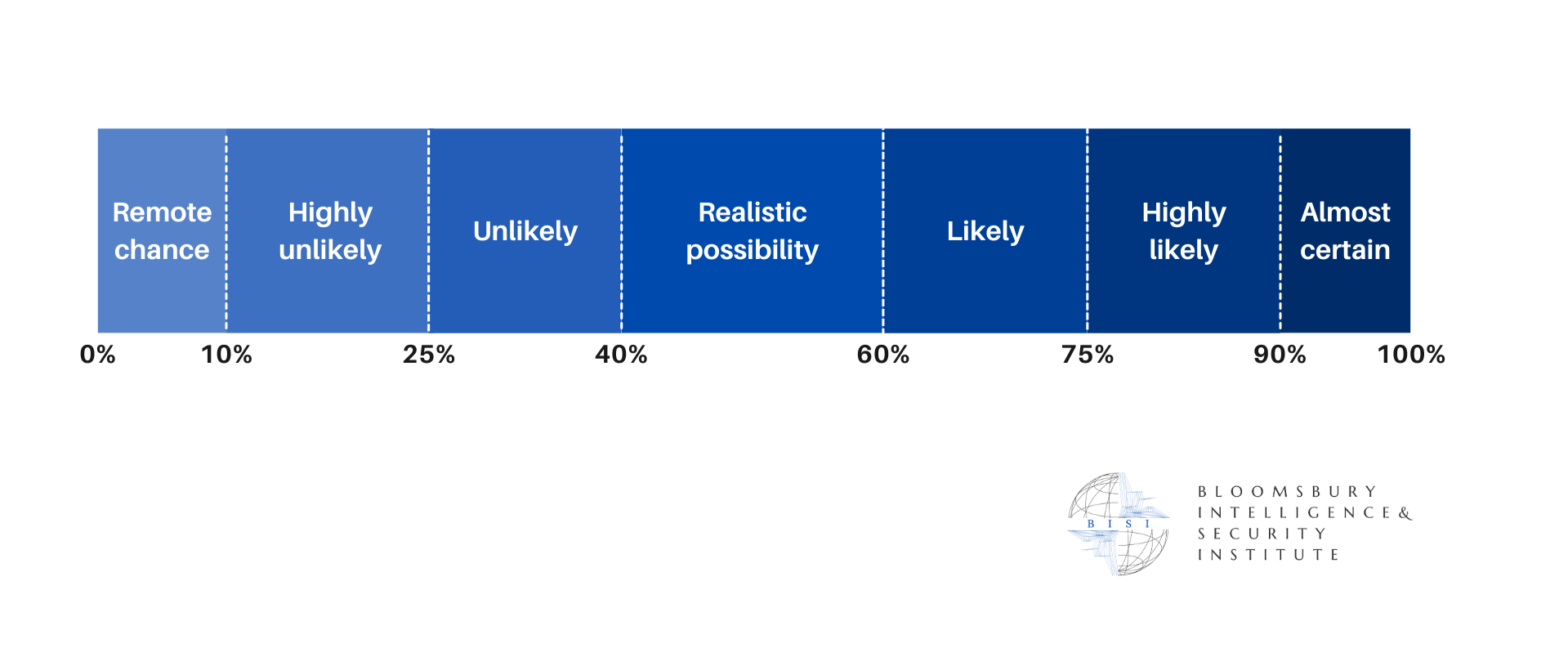
Overall, MSC 2026 outlined a high probability of persistent geopolitical tensions, further economic fragmentation, and a steady but significant strengthening of European defence. While Munich in previous decades symbolised Transatlantic unity, Munich in 2026 symbolises Transatlantic recalibration. The alliance is not collapsing, but adapting under pressure, yet, coming with risks - fiscal concerns could fuel populism in Europe, trade disputes could resurface among allies, negotiations with Moscow - however diplomatically framed - might undermine unity. The war in Ukraine remains the catalyst, but the ongoing systemic transformation extends far beyond it.
Forecast
Medium-term (3 - 12 months)
Sectors like defence, energy, critical raw materials and manufacturing will be subject to stricter regulations but will benefit from public investment, as the EU member states continue to deal with fiscal pressures. Countries must find a balance between strategic independence, economic security and transparent subsidy frameworks.
Long-term (>1 year)
The ongoing conflict in Ukraine and rivalries over the Arctic will likely increase geostrategic risks across Europe. Governments are likely to maintain high military expenditure, boost joint procurement, and prioritise infrastructure in both Eastern Europe and the High North.