
Military Takeover Amidst an Election in Guinea-Bissau
By Hossamaldeen Ibrahim | 9 December 2025
Summary
The Armed Forces suspended the presidential vote count and detained senior officials on 27 November 2025, interrupting a closely contested electoral process.
The intervention reflects the convergence of electoral tensions, entrenched criminal networks, weakened institutions, and shifting regional dynamics in West Africa and the Sahel.
Short-term political uncertainty is likely, with medium-term risks tied to organised crime, regional instability, and limited external leverage.
Context
The Armed Forces in Guinea-Bissau announced on 27 November 2025 that they had taken control of state institutions, suspended the presidential vote count, and detained President Umaro Sissoco Embaló alongside senior officials. The military leadership stated that the intervention sought to prevent manipulation of the electoral process and to disrupt a network involving political actors and a known narcotics trafficker. The takeover occurred one day before the publication of final presidential results, following a tightly contested race in which both Embaló and opposition candidate Fernando Dias claimed victory. Reports of gunfire near the presidential palace and electoral commission highlighted internal divisions within the security apparatus and raised concerns over competing influence among military factions.
Guinea-Bissau’s political environment has long been characterised by institutional fragility, elite rivalries, and intermittent military interference. The latest intervention marks the ninth coup or attempted coup since independence from Portugal in 1974, underscoring the limited consolidation of civilian authority and the persistent capacity of the Armed Forces to override electoral outcomes. Allegations of manipulation surrounding the vote reflect declining public confidence in state institutions and the absence of mechanisms capable of insulating electoral processes from elite interference
Implications
The suspension of the election indicates that electoral processes remain vulnerable to elite interference and competing power centres within the security establishment. The Armed Forces intervened at a moment when uncertainty over the results threatened to weaken existing patronage networks, suggesting that the election functioned both as a trigger and an opportunity for actors seeking to recalibrate political influence. This dynamic underscores the absence of institutional safeguards capable of shielding electoral procedures from securitised political competition.
Guinea-Bissau’s longstanding role as a transit hub for cocaine flows from Latin America to Europe continues to exert a significant influence on political behaviour. Revenues generated through trafficking have created overlapping interests among elements of the political leadership, sections of the military, and entrenched criminal networks. The military’s reference to “drug-linked actors” likely reflects internal competition over these revenue streams rather than a coherent anti-narcotics agenda. The persistence of illicit economies increases the likelihood that any political transition - military or civilian - will be shaped by informal incentives and the interests of actors seeking to preserve access to financial gains derived from trafficking.
Regionally, the coup aligns with a broader pattern of democratic backsliding and military assertiveness across West Africa and the Sahel. Declining state capacity, intensifying insurgent activity, and reduced engagement by external partners have weakened deterrence frameworks. France’s diminished influence following withdrawals from Mali, Burkina Faso, and Niger has created a strategic vacuum, reducing the ability of international actors to influence political outcomes in neighbouring states. The Economic Community of West African States ECOWAS and the African Union have condemned the takeover, but their enforcement capacity remains limited, increasing the likelihood of a protracted transition with minimal external leverage.
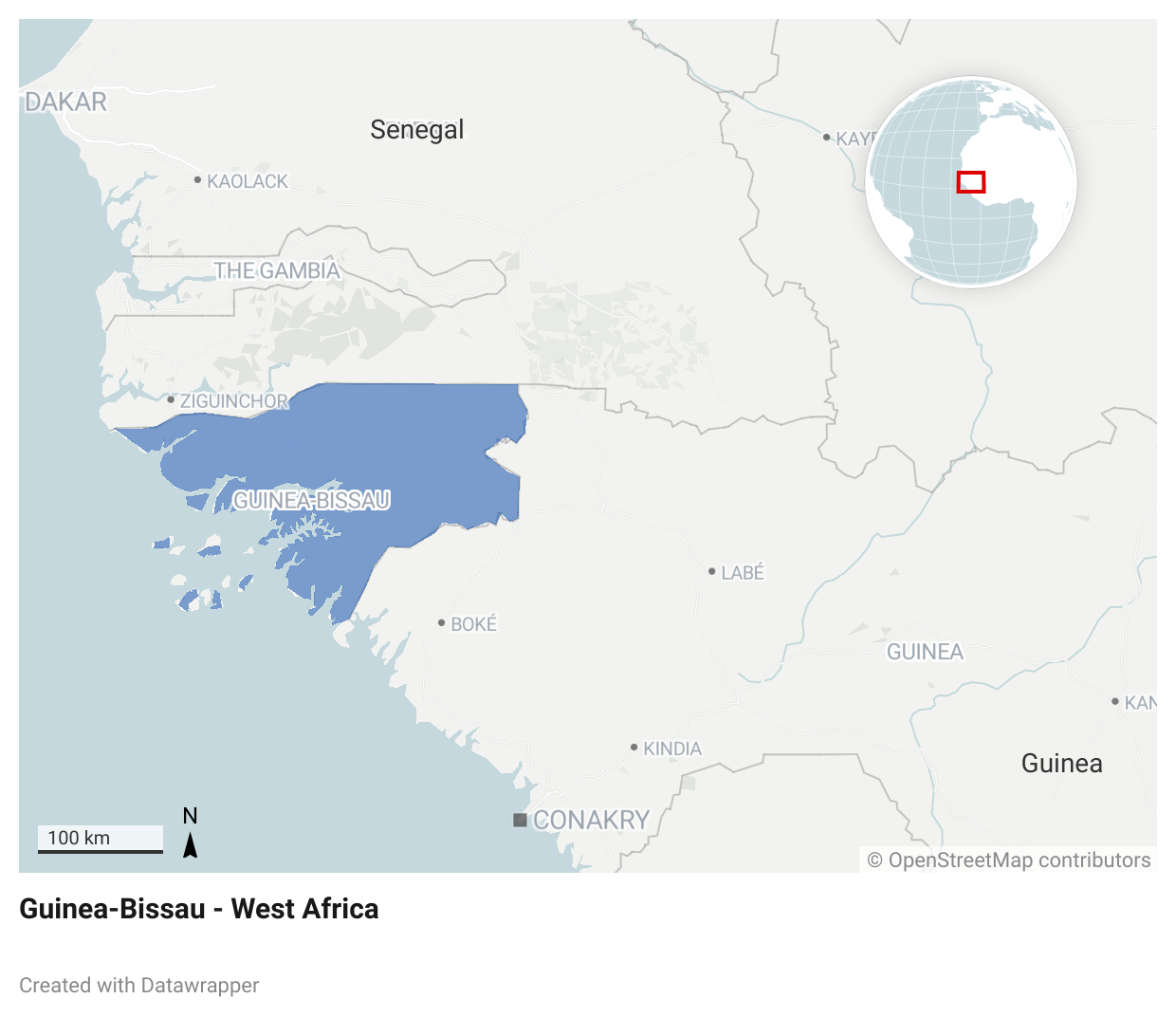
Operational implications include potential disruptions to border management, maritime monitoring, and counter-trafficking operations. Fragility within the security apparatus raises the risk of internal fragmentation, with rival factions potentially seeking to secure access to illicit revenue streams or political advantage. Localised unrest may arise include the country’s north-western coastal zones and the Bijagós archipelago, this locations historically linked to narcotics transit, while border regions adjacent to Senegal and Guinea may also become more exposed to cross-border trafficking and localised instability. if political constituencies perceive the military intervention as illegitimate or exclusionary. Weakening institutional oversight could create opportunities for organised crime to expand operations, increasing the likelihood of intensified trafficking, corruption, and transnational criminal activity.
These dynamics collectively indicate a period of heightened uncertainty in which political, security, and criminal economies are likely to intersect more closely. The absence of robust institutional frameworks increases the risk that the coup will entrench, not resolve, the structural drivers of instability.
Forecast
Short-term (Now - 3 months)
The military will highly likely consolidate its control over state institutions, maintain the suspension of the electoral process, and continue detaining key political actors.
International pressure from ECOWAS and the AU will likely increase but will have limited immediate impact, while narcotics-linked networks will likely exploit the temporary institutional paralysis to expand trafficking activities.
Medium-term (3-12 months)
A transitional framework will likely be announced but repeatedly delayed, as competing factions within the Armed Forces and political elite negotiate influence.
Organised crime groups will likely strengthen their penetration of political and military structures, while regional instability, particularly spillovers from the Sahel, will likely strain Guinea-Bissau’s already fragile security apparatus. External actors, including France and ECOWAS, will likely remain unable to enforce meaningful political change.
Long-term (>1 year)
A prolonged period of political uncertainty will be a realistic possibility, characterised by entrenched military authority and a persistent overlap between state actors and criminal economies.
Institutional fragmentation will likely deepen vulnerabilities to cross-border trafficking and regional insecurity, while prospects for credible elections and effective civilian governance will remain limited
