
Push towards Regional Solidarity: Outcomes of the 7th Consultative Meeting of the Heads of State in Central Asia
By Anna Belcikova | 9 December 2025
Summary
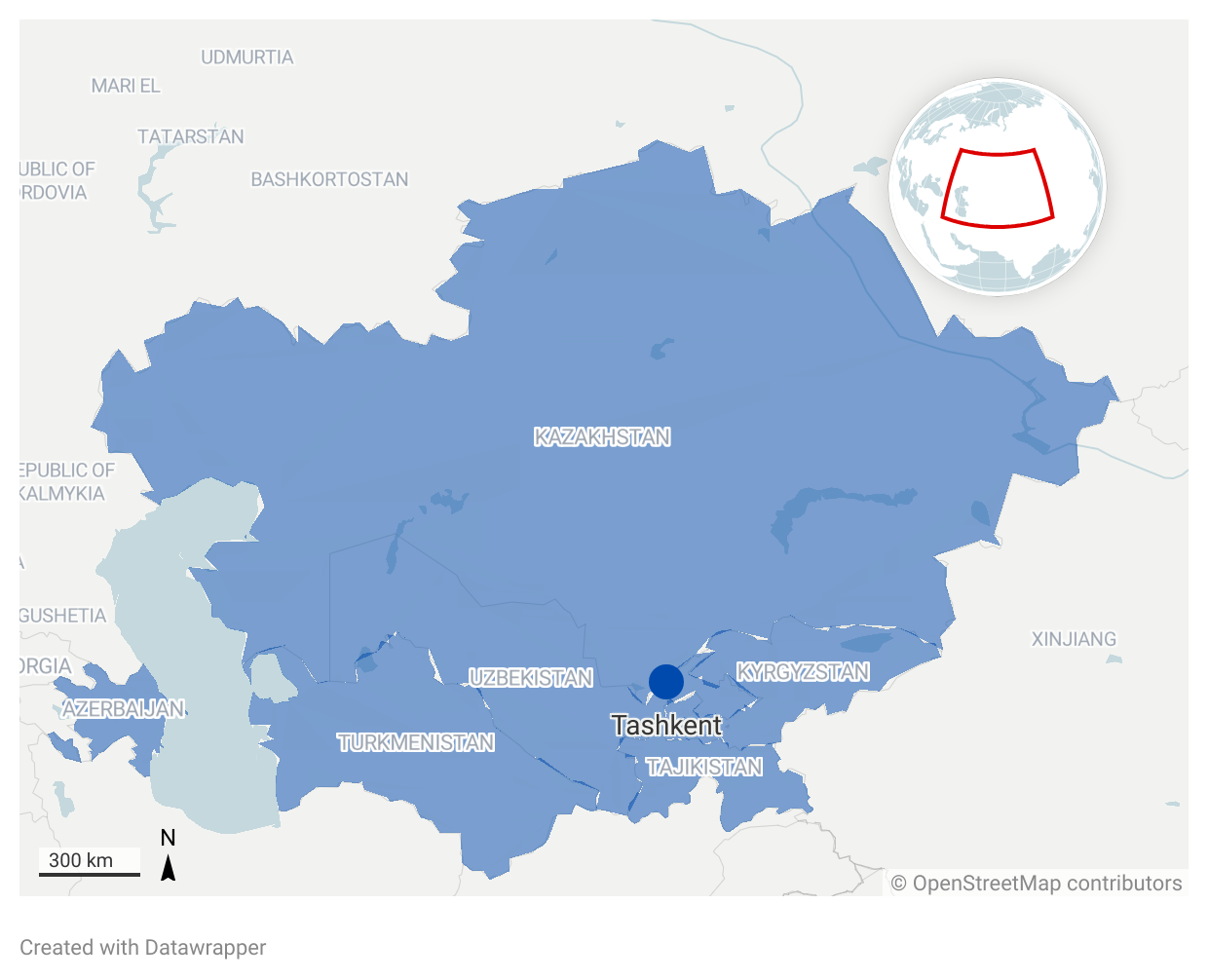
The 7th Consultative Meeting of the Heads of State of Central Asia was held in Uzbekistan. All five Central Asian leaders, also joined by Azerbaijan’s President, were present.
The outcomes of the summit hold significant geopolitical and economic implications due to Azerbaijan’s accession to the format, opening up new opportunities to deepen connectivity between Central Asia, the South Caucasus and international markets. The adoption of several regional security documents also highlights the aims of strengthening internal cohesion and regional strategic autonomy.
Central Asia is very likely to consolidate and further pursue regional cooperation, leveraging Azerbaijan’s accession and strengthened security frameworks to enhance its economic and strategic potential, as well as agency on the international stage.
Context
From the 15th to the 16th of November, Uzbekistan hosted the 7th Consultative Meeting of the Heads of State of Central Asia in its capital, Tashkent. The Presidents of Uzbekistan, Kazakhstan, Kyrgyzstan, Tajikistan and Turkmenistan were present, with Azerbaijan’s President also attending. The main agenda for the summit revolved around consolidating regional cooperation and implementing joint initiatives in key sectors such as trade, investment and security. The summit resulted in several notable decisions, including a consensus on Azerbaijan’s accession to the Consultative Meeting format and the adoption of new regional security frameworks. The summit highlights an increasingly cooperative attitude amongst Central Asian states, supporting a vision towards achieving collective stability and prosperity. The outcomes pose two major implications for the region: an expanded economic and geopolitical reach through Azerbaijan’s inclusion, as well as a gradual shift towards greater collective strategic autonomy.
Implications
Adding Azerbaijan to the format poses significant economic and geopolitical implications for Central Asian countries, with Uzbekistan’s President Shavkat Mirziyoyev emphasising that it will open up “new horizons” in terms of trade and investment. This is due to Azerbaijan’s strategic location on the Middle Corridor, with Central Asian leaders acknowledging the transit potential, with the cargo transportation along this route increasing by 90% in the last three years. Therefore, as demand increases, joining the C5 format could help develop the trade capacity and logistics of, for example, the Alat port complex. Increased cooperation will thus enhance regional connectivity and further contribute to the already high amounts of mutual trade between Azerbaijan and Central Asia, with the current sum reaching over USD 1b in 2025. Furthermore, increased cooperation with Azerbaijan expands the region’s access to European energy markets, transforming it into a more coordinated and influential oil and gas supplier. This aligns with Europe’s drive to diversify its energy supplies; the Southern Gas Corridor already supplies it with approximately 13b cubic metres of gas in 2024. Therefore, cooperation in this sector could lead to increased economic opportunities for the C5 and Azerbaijan. Consequently, as affirmed by Mirziyoyev, Azerbaijan’s accession represents a strategic bridging of Central Asia and the South Caucasus. This will be guided through the development of a Comprehensive Regional Program for Trade and Economic Cooperation.
Alongside this, the summit also carries significant security implications, notably in terms of Central Asia strengthening its collective strategic autonomy. This is seen through the adoption of two new documents: the Concept of regional security and stability in Central Asia and the Catalogue of security risks in Central Asia and measures to prevent them for 2026-2028. These documents signal a shift towards jointly identifying risks and coordinating responses on cross-border threats such as terrorism, extremism and water scarcity. Therefore, this contributes to the formation of a regional security framework, increasing solidarity, as well as reducing the reliance on traditional external security suppliers such as Russia and China. It aligns with the region’s multi-vector foreign policy, as building strategic cohesion from within enhances Central Asia’s regional autonomy and resilience to crises, aiming to reduce reliance on external partners. Furthermore, a shared agenda, focused on increasing stability, will also translate into positive economic implications through the creation of a more predictable environment for foreign investment. However, the effectiveness of these new documents will be contingent on their specific contents and whether the initiative will be treated more as rhetoric or meaningfully operationalised.
In conclusion, the summit represents Central Asia’s push towards regional solidarity. The increased cooperation reflects shared goals of strengthening both stability and security, which in turn will enhance the region’s cohesion and agency on the international stage.
Paul Teysen/Unsplash
Forecast
Short-term (Now - 3 months)
Central Asian states are highly likely to formalise the agreements and initiatives made during the summit, such as the Comprehensive Regional Program for Trade and Economic Cooperation, and hold follow-up events, such as state visits, to discuss bilateral specifics within sectors such as energy or trade.
Medium-term (3-12 months)
Central Asian states are highly likely to begin implementing the joint initiatives and projects agreed upon in the summit, aimed at increasing trade and connectivity, and in cooperation with Azerbaijan. There is also a realistic possibility that the impacts of the two new security documents will be felt, as the region should begin implementing coordinated approaches to shared security threats, ranging from water scarcity to transnational crime.
Long-term (>1 year)
Central Asia is highly likely to experience the economic benefits of its regional cooperation, including increased connectivity, trade and investment, while its strengthened strategic autonomy and collective security will increase its influence on the international stage.
