
The Malian Capital Is Not Under Siege, But Is Under Pressure
By Alex Blackburn | 15 December 2025
Summary
Bamako, the capital of Mali, is facing severe strain as Jama'at Nusrat ul-Islam wa al-Muslimin’s (JNIM) intensified operations and attacks on fuel convoys have sharply reduced fuel supplies, disrupted transport routes, and triggered widespread economic hardship.
Structural vulnerabilities, weakened foreign partnerships, renewed clashes with armed groups, and rising internal political tensions have compounded the crisis, limiting the state’s ability to stabilise conditions.
Despite partial improvements in fuel availability, persistent insecurity, political fragility, and regional spillover risks will continue to place sustained pressure on Bamako and the wider country.
Context
Bamako is experiencing one of its most severe periods of strain in over ten years, driven by a mixture of insurgent pressure, structural vulnerabilities, and internal political tensions. Since late 2025, the al-Qaida-linked group Jama’at Nusrat al-Islam wal-Muslimin (JNIM) has intensified operations throughout Mali and declared a blockade aimed at restricting fuel supplies to the capital. Through attacks on fuel convoys coming from Senegal, Guinea, Côte d’Ivoire, and Mauritania, the group disrupted overland transport routes and cut fuel deliveries by approximately 80%.
The decline in fuel availability caused noticeable effects: long queues at fuel stations, sharp rises in commodity prices, reduced transportation capacity, and the temporary closure of schools and universities to curb consumption. These changes occurred alongside ongoing conflict in northern and central areas, where armed groups have strengthened their influence over trade routes, markets, and local governance by imposing taxes and controlling mobility.
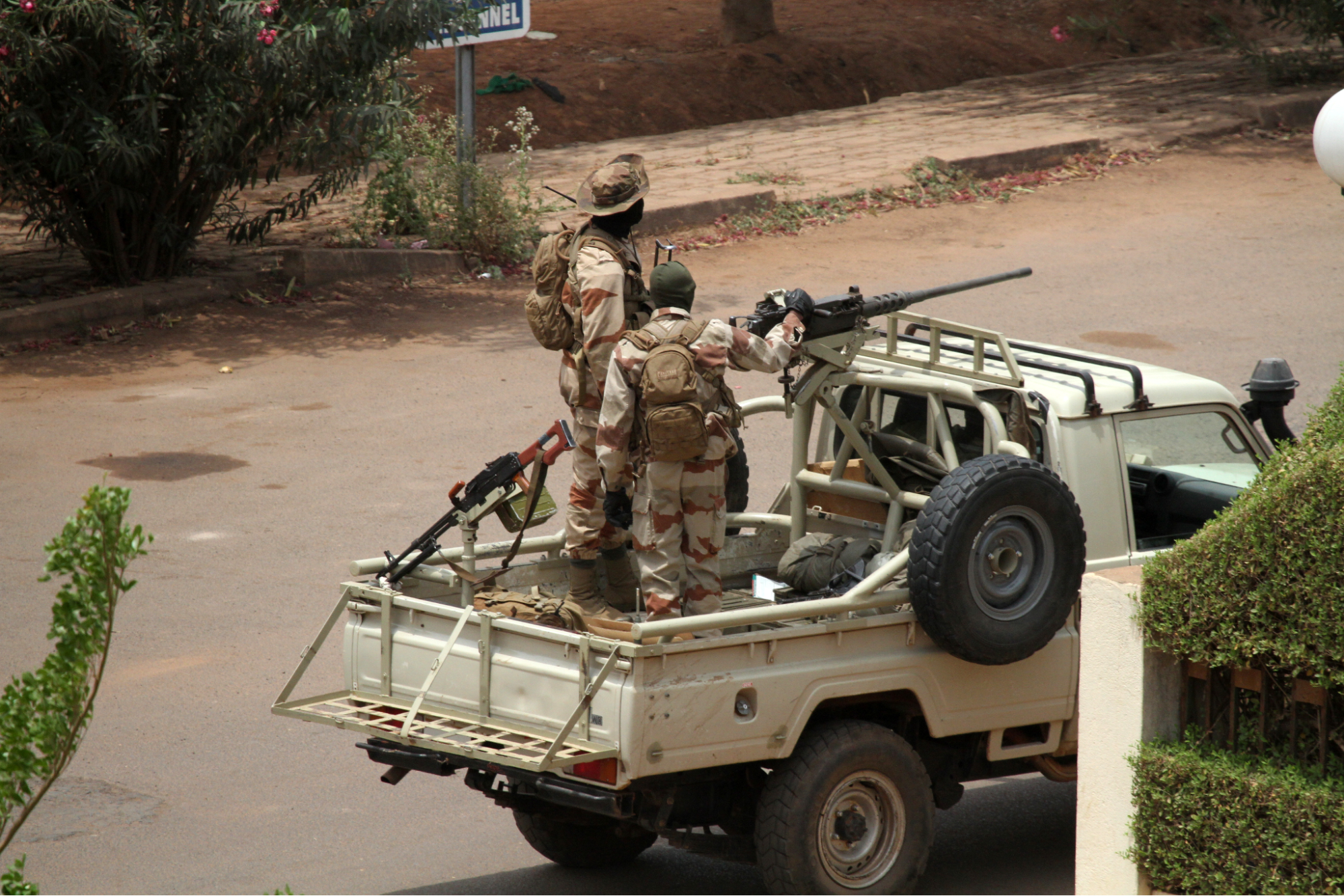
Despite these pressures, Bamako remains operational. Markets continue to function, traders and transporters have adjusted to supply difficulties, and residents depend on local solidarity to manage shortages. Government measures, including military escorts for supply convoys and modifications to distribution systems, have somewhat alleviated the disruption, though fuel shortages and economic hardships persist.
Implications
The situation around Bamako reveals several structural and political weaknesses in Mali. The country’s landlocked geography and reliance on energy imports make it vulnerable to disruptions along regional transport routes. Limited institutional capacity to manage fuel procurement and storage has worsened these vulnerabilities, rendering the capital particularly susceptible to economic pressures. Currently, Mali has outlined broad aims to strengthen supply-chain resilience, ranging from diversifying import routes to expanding domestic storage capacity and pursuing closer regional coordination, but these commitments remain mostly conceptual. Progress is hampered by ongoing insecurity along transport routes, fiscal limitations that restrict infrastructure investment, and dependence on external partners whose support has become more uncertain. Although some technical reforms are being discussed, Mali has not yet developed a clear, fully funded strategy capable of preventing similar disruptions in the long term, leaving its energy security vulnerable to renewed insurgent threats.
Security-related challenges have also grown more severe. JNIM has increased its operational capacity through ongoing attacks on military outposts, the acquisition of advanced weaponry, and revenue from kidnapping activities. The withdrawal or reduction of foreign military partners, particularly France and the Russian African Corps, has further constrained the state’s ability to tackle insurgent activity. Simultaneously, renewed clashes with Azawad movements have added complexity to the security landscape.
Political and institutional tensions within Mali are growing increasingly serious. Reports of a failed coup attempt, arrests within the security forces, and widespread dissatisfaction with the transitional authorities suggest rising internal instability. Foreign relations remain tense, with weakened links to traditional partners and uncertain cooperation frameworks with newer allies, such as Niger and Burkina Faso.
Although fuel supplies are gradually improving and schools have reopened, the root causes of instability remain unresolved. Insurgent groups continue to broaden their operational reach, extending activities into Mauritania and, in some cases, towards Nigeria. In northern and central Mali, the presence of armed groups within local economic systems shows no signs of diminishing.
These interconnected challenges, economic fragility, internal political tensions, and persistent insecurity indicate that pressure on Bamako is likely to persist. Although a direct military attack on the capital appears unlikely, the risks of political upheaval, further economic disruption, and regional spillover remain significant. Without lasting political stability and coordinated security and economic reforms, Mali is likely to experience recurring cycles of strain affecting both Bamako and the wider region.
Magharebia/Wikimedia
Forecast
Short-term (Now - 3 months)
Fuel availability will most likely stabilise at lower levels, with supply convoys partly protected by military escorts, enabling markets and transport to operate but maintaining high prices and significant economic pressure on households.
Security risks along major transport routes will undoubtedly continue to be considerable, as JNIM persists with selective attacks on convoys and infrastructure to maintain influence, hindering the complete revival of normal trade flows.
Political tensions within the state will likely escalate, with increasing signs of factional rivalry, public discontent, and possible efforts to tighten control amid limited external backing and strained international relations.
Long-term (>1 year)
Structural vulnerabilities in trade, energy reliance, and institutional capacity will continue, leaving Bamako and the broader economy vulnerable to ongoing supply disruptions and inflationary shocks.
Armed groups in northern and central Mali are anticipated to expand their local influence, maintaining control over movement and taxation systems, and restricting the state’s capacity to re-establish authority beyond the capital.
