
Escalating Tensions Between Ethiopia and Eritrea Over Red Sea Access
By Sarah Ambrose | 15 December 2025
Summary
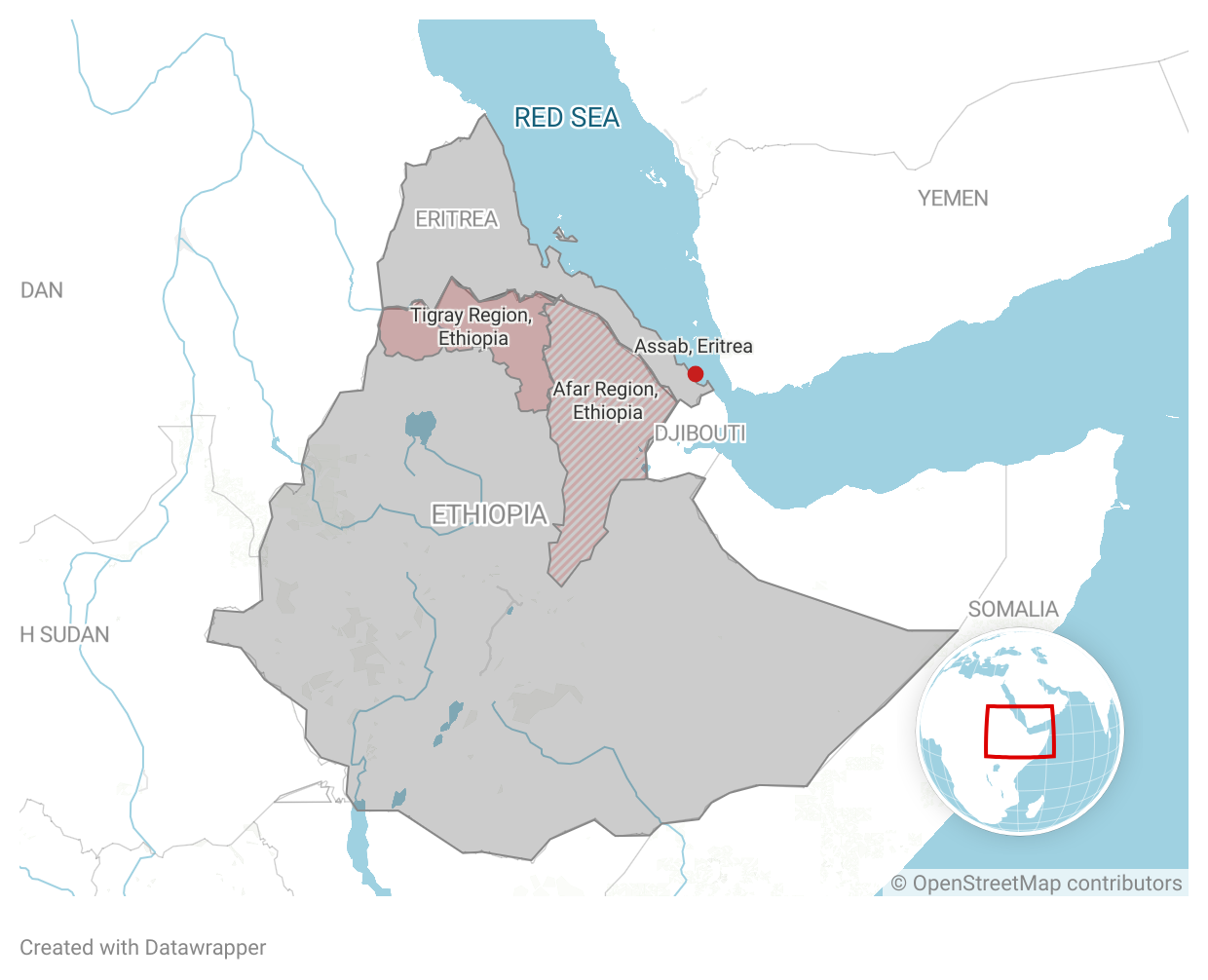
Hostilities are rising between Ethiopia and Eritrea as Ethiopia looks to regain access to the Red Sea lost following Eritrea’s independence in 1993.
In recent months, Ethiopia has seen an increase in violence in the Tigray region, accusing Eritrea of allying with the Tigray People’s Liberation Front.
A new war between Eritrea and Ethiopia would have a devastating impact on the region, and numerous international actors such as the United States are likely to deter Ethiopia’s threatened invasion.
Context
Tensions between Ethiopia and Eritrea have escalated since September 2025 due to land-locked Ethiopia’s frustration over a lack of access to the Red Sea. The two countries have a long history of hostility, with Eritrea fighting a 30 year civil war and gaining independence from Ethiopia in 1993. Ethiopian Prime Minister Abiy Ahmed Ali declared that losing access to the Red Sea following Eritrea’s independence was a mistake that needed to be corrected on 1 September 2025. Since then, Abiy has called for international mediation over coastal access and suggested that Ethiopia is willing to take the Eritrean port city of Assab by force. In a letter to United Nations (UN) Secretary-General António Guterres, Ethiopian officials accused Eritrea of supporting the Tigray People’s Liberation Front (TPLF), a paramilitary group that fought a civil war against Ethiopia until 2022. Eritrea has rejected these claims and warned against any further territorial aggression, declaring Ethiopia’s territorial expansion a red line.
Implications
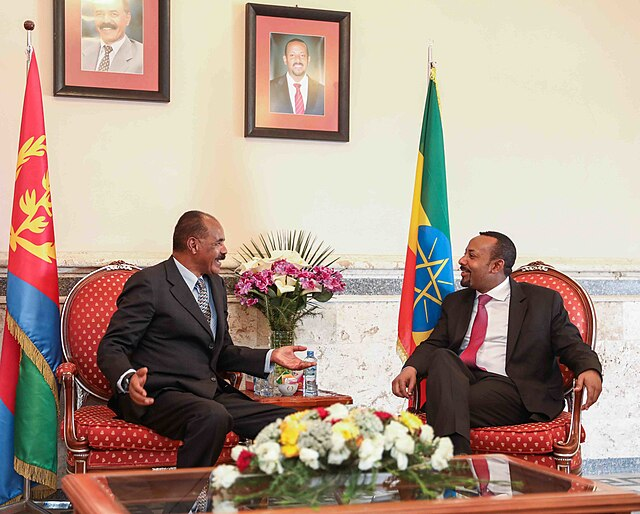
The rising tensions risk reigniting a long conflict between Ethiopia and Eritrea, breaking a fragile peace. Following Eritrea’s independence, the two countries fought the Eritrean-Ethiopian War from 1998-2000, resulting in nearly 100,000 casualties. The two countries officially ended hostilities with a 2018 peace deal and went on to ally in the 2020-2022 war against the TPLF. Relations have declined since 2022, as Eritrea continues to occupy territory along the Ethiopian border following the Tigray War, despite the UN’s call for withdrawal. If tensions continue to escalate on both sides, the region risks seeing a continuation of violent border disputes with the potential of spillover conflict.
Ethiopia faces the threat of another Tigray insurgency, as the TPLF reportedly raided the neighbouring Afar region of Ethiopia in early November 2025, seizing control of 6 villages and marking the expansion of TPLF’s presence outside of Tigray. While Eritrea was formerly an adversary of the TPLF, the government has worked on rapprochement with the insurgent group in recent months. The ongoing tensions between the Ethiopian government and Tigray largely stem from the region’s political ostracisation, with Tigray receiving no federal representation and the TPLF being deregistered as a political party. The previous Tigray War had a devastating impact on the region, with Amnesty International and Human Rights Watch accusing regional and federal forces of crimes against humanity and ethnic cleansing against Tigray civilians. If the conflict is not successfully de-escalated, the region may face another devastating humanitarian crisis.
Another war between Ethiopia and Eritrea would have significant implications for the whole region due to spillover violence and political alliances. Militarised conflict in Ethiopia risks aggravating the already contentious border between Ethiopia and Sudan, risking violence spreading outside of the Horn of Africa. Eritrea is partnered with Egypt, a long-time rival of Ethiopia, due to disputes over Ethiopia’s construction of the Renaissance Dam along the Nile River. In October 2025, Eritrean and Egyptian leaders met to reaffirm Egypt’s support for Eritrea’s territorial integrity. Conversely, Ethiopia has a strategic alliance with the United Arab Emirates (UAE), with the UAE looking to gain influence along the Red Sea corridor. A conflict between Ethiopia and Eritrea would inevitably involve numerous major global powers, making de-escalation an international priority. United States (US) officials are discouraging Ethiopia from pursuing Sea access by force, and Saudi Arabia has offered to mediate between Ethiopia and Eritrea.
Forecast
Short-term (Now - 3 months)
It is unlikely that Ethiopia and Eritrea will engage in a full-scale war in the short-term, as a violent clash would be costly for both sides.
Medium-term (3-12 months)
It is likely that, in the next year, the US, African Union, or another global power will attempt to negotiate a new peace agreement in the region to prevent further violence and deter Ethiopia’s threatened invasion of Assab.
Long-term (>1 year)
There is a realistic possibility that Ethiopia will face another civil war with the TPLF due to the peace agreement violations and Ethiopia’s fears of its adversaries supporting the TPLF.
