By Trishnakhi Parashar | 9 November 2026
Summary
French President Emmanuel Macron’s recent Middle East tour has centred on securing winter energy supply, amid rising living costs and domestic political pressure.
Discussions on defence, investment, and regional diplomacy highlighted France’s efforts to strengthen bilateral cooperation with Middle Eastern states.
The visit reflects France’s interest in pursuing energy security and strategic influence in the region. However, critics may question the timing of his overseas engagements as domestic protests continue to surge.
Context
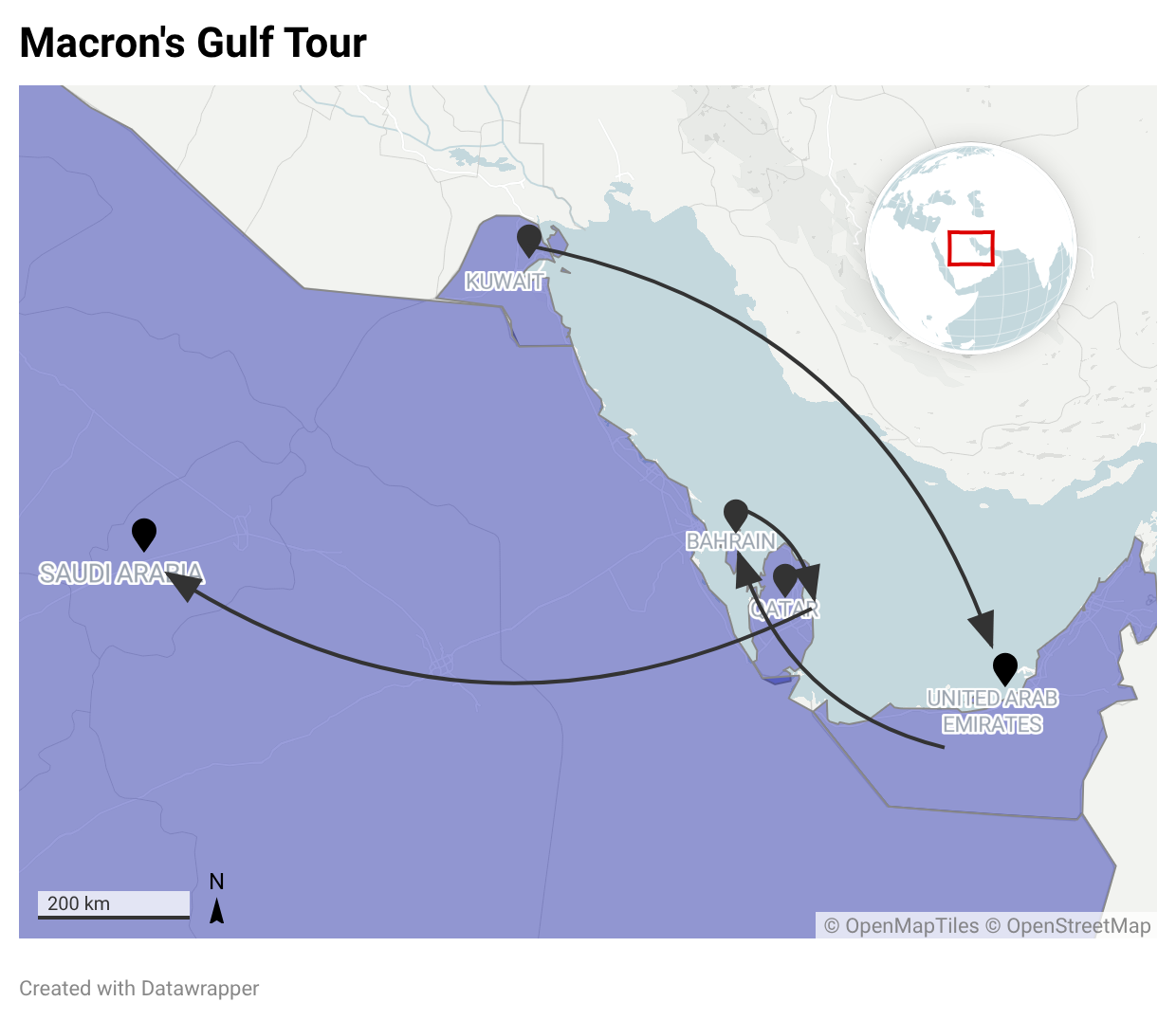
Macron’s Middle East tour from 19-21 October came at a critical juncture for France. He visited Kuwait, the United Arab Emirates (UAE), Bahrain and Qatar, alongside a surprise stop in Saudi Arabia. France has been going through a period of domestic political uncertainty, with rising living costs and public discontent placing more and more pressure on Macron’s government. Although the recent visit addressed a range of issues, energy security emerged as a central priority. Disruptions around the Strait of Hormuz have heightened concerns over fuel availability and transport costs, making Gulf producers increasingly important to France’s energy security. During his visit, he obtained commitments for an additional 100,000 tonnes of diesel per month each from the UAE and Bahrain, and 95,000 tonnes monthly from Saudi Arabia for October and November. This means they are collectively covering about 10% of France’s diesel consumption. Kuwait provided clear commitments to supply diesel and kerosene. From Qatar, he managed to secure a vital winter gas deal providing approximately two TWh of LNG per month. Taken together, these arrangements portray France's attempt to shore up its energy security as instability continues to unsettle supply chains and drive up costs.
Another key thread of discussion was about securing the delivery routes. What began as a concern around the Strait of Hormuz has gradually widened to the Red Sea, where the war has made shipping more uncertain. For France, diversifying suppliers is only half the job, the other half is ensuring that cargo and tankers actually reach European ports without fail.
Beyond energy, the visit sought to strengthen France’s bilateral cooperation with Gulf states across a range of strategic interests. In the current climate, regional diplomacy featured prominently, as the parties shared concerns over escalating tensions, maritime security and the stability of vital trade routes. Moreover, discussions on military capabilities, advanced technologies and commercial partnerships reflected Paris’s ambition to remain a consequential player in a region where economic interest and security concerns overlap.
The timing of the tour has nevertheless raised questions about Macron’s domestic priorities. Critics and political opponents argue that he left the state immediately after a weekend of extreme violence and over 2500 arrests, reinforcing a narrative that Macron is giving greater attention to foreign policy over urgent internal crises. For them, flying abroad at this moment displays a sense of domestic powerlessness. Conversely, the Elysee Palace and his supporters defend the visit, deeming it a necessary intervention to solve one of the root causes of the domestic unrest.
Implications
The visit lends fresh impetus to France’s diplomatic efforts to preserve its importance in the Middle East at a time of regional instability. Each Gulf state offers Paris distinct advantages, allowing it to reduce its dependence on individual partners to restore its energy security and geopolitical interests. Simultaneously, the timing of France’s engagement with Gulf governments invites domestic scrutiny. Macron’s political difficulties may increase the pressure to show quick and tangible gains from the Gulf partnerships. Opposition parties may portray the visit as a misplaced priority, arguing that the government’s attention should remain on France’s public unrest. While the energy commitments secured by Macron will cushion France from severe winter fuel shortages, they cannot by themselves pacify the widespread protests.
Macron’s growing connection with Gulf states has increased the need for practical coordination across energy supply chains, maritime transport, and defence arrangements. Additional diesel and LNG commitments must be translated into reliable deliveries, despite disruptions around important shipping routes with elevated shipping and insurance costs. For France, the priority will be to coordinate with Gulf suppliers, energy companies and domestic distributors to maintain supply continuity and limit delays as far as possible. Ultimately, these partnerships will be judged by what reaches the ground. For Gulf states, the priority will be to honour agreed export volumes while balancing domestic and regional requirements, existing contractual obligations and logistical constraints. If they can supply successfully, it may potentially restore their reputation and deepen their commercial ties with European markets. On the contrary, repeated delays or shortfalls could weaken buyer confidence.
The vulnerability of critical energy infrastructure has become a pressing security concern as regional hostilities threaten oil export facilities, shipping corridors, and alternative supply routes. Qatar and France condemned Iranian attacks on regional states and called for Hormuz to reopen ‘without constraints or fees’. Paris has backed this position by offering practical support. It bolsters long-term defence alignment with the UAE through joint development of the next-generation Dassault Rafale F5 fighter jet programme, while initiating upgrades to Qatar’s existing armoured vehicle and Rafale fleets. It is also supporting Saudi Arabia to protect its energy infrastructure through the deployment of immediate troops and advanced air defence systems. Such arrangements offer Gulf states access to European defence expertise and greater scope to safeguard vital assets; however, they may not fully insulate the region from the instability surrounding them.
The energy volume is meant to cover France’s winter needs and reduce price pressure. Whether that relief reaches households will depend on how quickly market-level savings find their way into household bills. Given that the deal is winter-focused, the benefit may be felt unevenly. The economic implications extend beyond fuel availability. With protests already fuelled by the cost of living, the gas secured from Gulf partners could potentially ease the pressure. Beyond energy, the visit may have laid the groundwork for broader economic cooperation in artificial intelligence, investment and advanced technology. Agreements with Kuwait and the UAE covered areas including AI, aviation, infrastructure, and industrial cooperation, while discussions with Qatar focused on investment, digital technologies, healthcare, and intellectual property, alongside other areas. Growing economic ties may give French companies greater access to Gulf investment and markets, potentially creating scope for innovation, job creation and sustained growth. Gulf economies, in turn, stand to benefit from specialised French expertise as they broaden their economic base.
Forecast
Short-term (Now - 3 months)
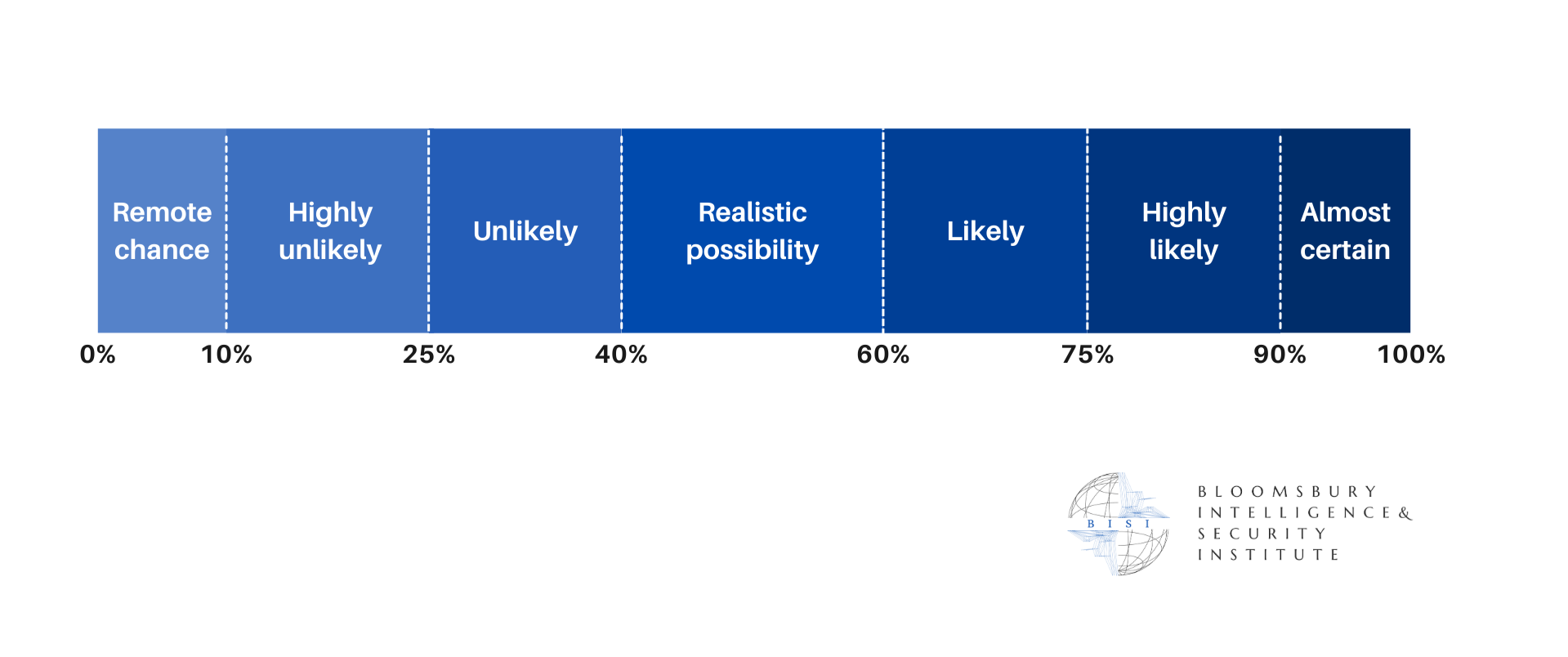
There is a realistic possibility that fuel price pressures in France will ease gradually from November if additional diesel and LNG deliveries proceed as planned.
France will highly likely continue coordinating with Gulf partners on energy deliveries and maritime security.
Medium-term (3 - 12 months)
France is likely to deepen its energy and defence relationship with Gulf states. Broader defence agreements could strengthen Paris’s position as a leading security partner less dependent on the US.
Participating companies and organisations are likely to expand their commercial presence across the Gulf, with AI, cybersecurity and strategic technology emerging as priority sectors for investment and bilateral cooperation.
Long-term (>1 year)
In the long term, infrastructure diversification to bypass vulnerable maritime chokepoints will be crucial. Given the persistent insecurities around these critical shipping routes, France and Gulf states are likely to place greater emphasis on alternative export routes and supply networks to reduce exposure to disruptions.