By Nicole Pitassi | 13 May 2026
Summary
On 21 April, Japan’s arms export revision abolished decades of restrictions that limited trade to non-lethal categories, and marked the most significant change of its post-WWII pacifist framework. The shift was driven by China’s military expansion, the Trump Administration’s transactional approach to alliances, and an unfavorable self-defense industrial model.
The decision reflected a structural break from the Yoshida Doctrine, with the Takaichi government converting Japan’s industrial capacity into means of exchange to meet the United States' new National Security Strategy (NSS) demands and position itself as a defense supplier to partners questioning their dependence on the US.
Japan’s entry into the Indo-Pacific security market is pressuring ASEAN states to make explicit alignment choices they have so far carefully avoided in the US-China rivalry.
Context
Since the end of the Second World War, Japan has acted as a pacifist nation, following the Yoshida Doctrine, which prioritised economic development while relying on the United States (US) for security. Essential to this stance were the Three Principles on Transfer of Defence Equipment and Technology, which, since 1976, had banned the export of lethal arms. However, on 21 April, 2026, Prime Minister Sanae Takaichi’s Cabinet formally revised the Three Principles, removing the restriction. The new revisions now allow Japan to export lethal weapons, including warships and combat drones, that are currently being sold to 17 countries, which signed defence equipment and technologies transfer agreements with Japan. Prime Minister Takaichi has made clear Japan’s intention to remain a pacifist nation, and the exports of lethal arms must be approved by the National Security Council, and their use will be monitored by the Japanese government. Furthermore, Japan stated that it will not trade with countries that are at war.
This decision was made following a broader increase in defence spending. Japan’s defence budget for the fiscal year 2026 was set at 9.04t yen (58b USD), up from 6.8t yen (43.4b USD) in 2023. In 2025, Japan spent 9.8t yen (62.2b USD) on defence, which was a 9.7% increase from 2024 and a 61% increase over the decade, positioning Japan as the tenth-largest defence spender globally.
On 28 April, the Takaichi government held an expert panel to revise Japan’s three core security documents: the National Security Strategy (NSS), the National Defence Strategy (NDS), and the Defence Buildup Program (DBP). The current revision is expected to bring the country to operational readiness through the deployment of long–range missiles, the refinement of strike systems, and the strengthening of command and control frameworks.
The increase in defense spending, the removal of the lethal arms exports ban, and the revisions of NSS, NDS, and DBP have been pushed by the changes in the international security setting that started with the Russian invasion of Ukraine, followed by China’s military expansion and increase in military exercises near Taiwan and in the South China Sea, North Korea's military expansion, and Trump Administration’s change to a transactional approach to alliances.
Implications
The economic logic behind the export ban lift is to boost production volumes, lower per-unit costs, and add manufacturing capacity that could be used in a potential military crisis. Japan’s major defence contractors—Mitsubishi Heavy Industries, Kawasaki Heavy Industries, Fujitsu, Mitsubishi Electric, and NEC—have historically relied on the Self-Defence Forces as their primary customer, resulting in sophisticated but high-cost systems due to limited scale.. With the removal of the ban, Japan is entering a substantial global market. World military expenditure reached $2.8t in 2025, growing 41% over the past decade. The current 17 accepted export partners include major defence spenders like the US, Germany, India, and Australia, with the latter having already signed a $6.5b fregate contract with Mitsubishi Heavy Industries. However, the economic benefits will be gradual as the companies will need to build export infrastructure, certification pipelines, and skilled labour capacity before being able to meet growing volumes.
A deeper implication concerns the US-Japan alliance. Japan’s postwar security strategy traded autonomy for security, restraining its military expansion under Article 9 of its constitution, in exchange for US protection under the Security Treaty. Japan interpreted the shift in US security posture as a break from this arrangement, replacing a values-based alliance with a transactional model based on tangible contribution. Therefore, arms export capacity is part of what Japan can now offer to the US and sustain its coalition. The Trump administration’s increasingly unpredictable approach toward longstanding partners has led many US arms importers to question their defence dependence on the US. Japan is likely positioning itself to serve that demand, attracting Southeast Asian (ASEAN) and European nations, including Poland and the United Kingdom, and building a network of security interdependence it believes necessary for deterrence in the 2030s.
Chinese Foreign Ministry spokesperson Guo Jiakun stated that China will resist Japan’s moves toward “a new type of militarism”. Its objections are rooted in the 20th-century events, where Japan acted as the aggressor, and claims that Japanese arms exports to ASEAN countries holding claims over the South China Sea would shift the regional military balance. Objections have also been found domestically, where over 36,000 protesters gathered outside the Diet to oppose both the arms export revision and the push for constitutional revision, and former Self-Defence Forces officer Makoto Konishi warned that these changes amount to “the gradual construction of a war–oriented framework” that will not only increase public anxiety but also “put Japan on a dangerous path”. Furthermore, the export revision coincided with Chinese naval activity near Japanese territory, reinforcing Japan’s perception of threats that are supporting its changes in the defence structure and risking a loop in which each side’s defensive measures register as offensive escalation to the other, supporting Konishi’s claims.
The most significant long-term constraint on Japan’s defence transformation is the structural fiscal context, as Japan’s government debt stood at 248.7% of GDP in 2025 and the Ministry of Finance projected that next year's interest payments on government bonds will reach 30t yen (202b USD).
Japan’s arms export revision is redefining the terms on which Japan participates in the Indo-Pacific security environment. By entering the global arms market, Japan is shifting its industrial capacity into a medium of exchange for alliances, it is diversifying its security partnerships, and gaining leverage in contingency planning that treaty commitments cannot provide anymore. These changes are also reshaping Japan’s stance as a regional actor, where it is no longer acting as a passive beneficiary of US deterrence but as an active deterrent stakeholder, which acts as an invitation for ASEAN nations to deepen security ties with Japan as an alternative or complement to both the US and China.
Forecast
Short-term (Now - 3 months)
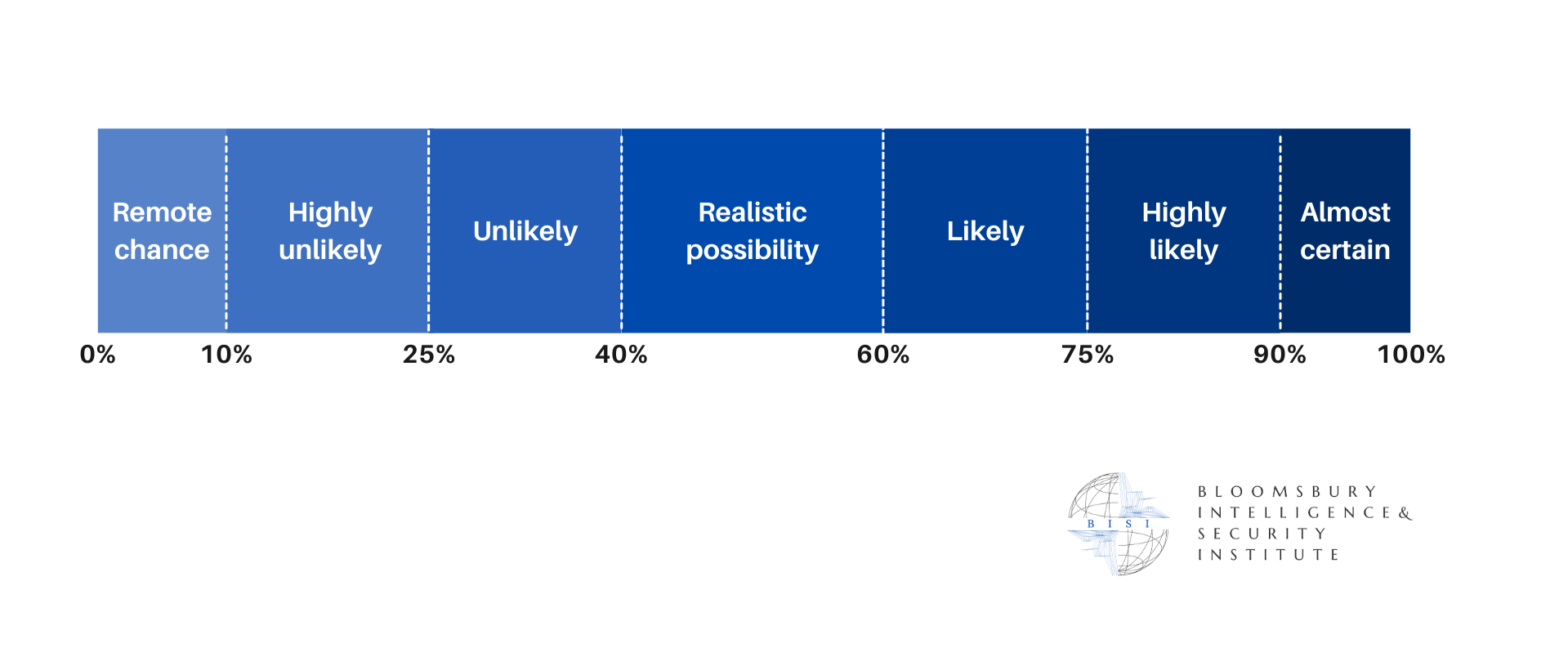
China is highly likely to conduct further naval activity near Japanese territory in direct response to the export revision.
It is a realistic possibility that at least one formal defence equipment agreement with an ASEAN state will be announced as Japan moves to demonstrate its export capacity.
Medium-term (3 - 12 months)
Domestic political resistance, amplified by fiscal pressures, will likely constrain (but not reverse) the rearmament shift and force the Takaichi government into selective budget concessions.
It is highly likely that ASEAN states will hold informal security consultations with Japan while formally maintaining the current stance.
It is a realistic possibility that at least one joint development programme with a European partner, likely the UK through the existing GCAP framework, will advance meaningfully, which will serve as an example for future cooperations.
Long-term (>1 year)
It is possible that Japan will establish itself as a second-tier arms exporter within the Indo-Pacific, with a functioning export pipeline but with volumes significantly below the initial political expectations due to fiscal and industrial capacity constraints.