By Trishnakhi Parashar | 9 March 2026

Summary
Israel’s security cabinet has approved measures to expand its administrative, legal, and enforcement over parts of the occupied West Bank.
The changes include easing restrictions on land purchases and opening previously inaccessible land registry records, facilitating settlement expansion.
The actions have drawn regional and international criticism and been labelled as de facto annexation and a violation of existing agreements.
Context
On 8 February 2026, the Israeli security cabinet approved a set of measures that increase Israel’s authority in several areas of the West Bank, including Areas A and B, which are fully or partially under the Palestine Authority’s (PA) control. The measures were announced by Finance Minister Bezalel Smotrich and Defence Minister Israel Katz to eliminate the existing legal constraints affecting settlers and accelerate settlement expansion. The decision was presented as a dramatic shift that will ease Israeli acquisition of property in the territory.
The measures substantially focused on regulations of land acquisition, access to ownership documentation, construction authorisation, and enforcement jurisdiction that affect both Israeli settlers and Palestinian residents. The cabinet has abolished Jordanian-era restrictions that had barred non-Palestinians and Israeli Jews from buying land in the West Bank directly; special transaction permits are required for property sales, and the authorities are directed to declassify or lift confidentiality on land registry records that had been inaccessible for years to add transparency.
Implications
The policy shift has elicited condemnations across the world, most notably from Arab and Muslim majority countries. Egypt, Jordan, Qatar, Turkey, Pakistan, the UAE, and Saudi Arabia issued condemnations, expressing their unequivocal rejection of the recent Israeli decisions. Critics, including Palestinian leaders and Israeli anti-occupation groups, describe the move as de facto annexation. The UK strongly condemned the policies for the occupied West Bank, underscoring their detrimental effects and calling for their reversal. The European Union also voiced concern, describing settlement activity in the West Bank as illegal under international law and undermining the two-state framework.
The policy in future might make territorial separation physically and legally hard to detect. By integrating the West Bank into Israeli authority, the government’s approach is interpreted as no longer considering negotiations necessary. As Israeli institutions assume greater control over the areas of the West Bank that were previously managed by the Palestinian Authority, its ability to present itself as a credible governing entity is likely to weaken, both domestically and internationally.
The expansion of Israeli authority is expected to alter enforcement and management across parts of the West Bank. Israeli officials argue that the measures will improve administrative efficiency and enable development, but Palestinians express concern that they might increase pressure on individuals to sell their land. The exposure of ownership records and the easing of transfers also create risks of forgery and deceptive practices. Reduced authority of Palestinian security forces could erode existing coordination mechanisms, potentially leading to a more unstable security environment. From a security perspective, the measures may trigger violence between Israeli settlers and Palestinians in the long run.
Israeli control in the area will likely undermine Palestinian access to land, natural resources, and development zones, which will limit the growth potential for local people. Furthermore, in the Hebron area, Israel’s plans to start offering municipal services to Jewish settlers may shift their economic dynamics. Palestinian dependence on the Israeli economy for employment, trade, and revenue flows develops economic vulnerabilities and restricts prospects for self-sufficiency.
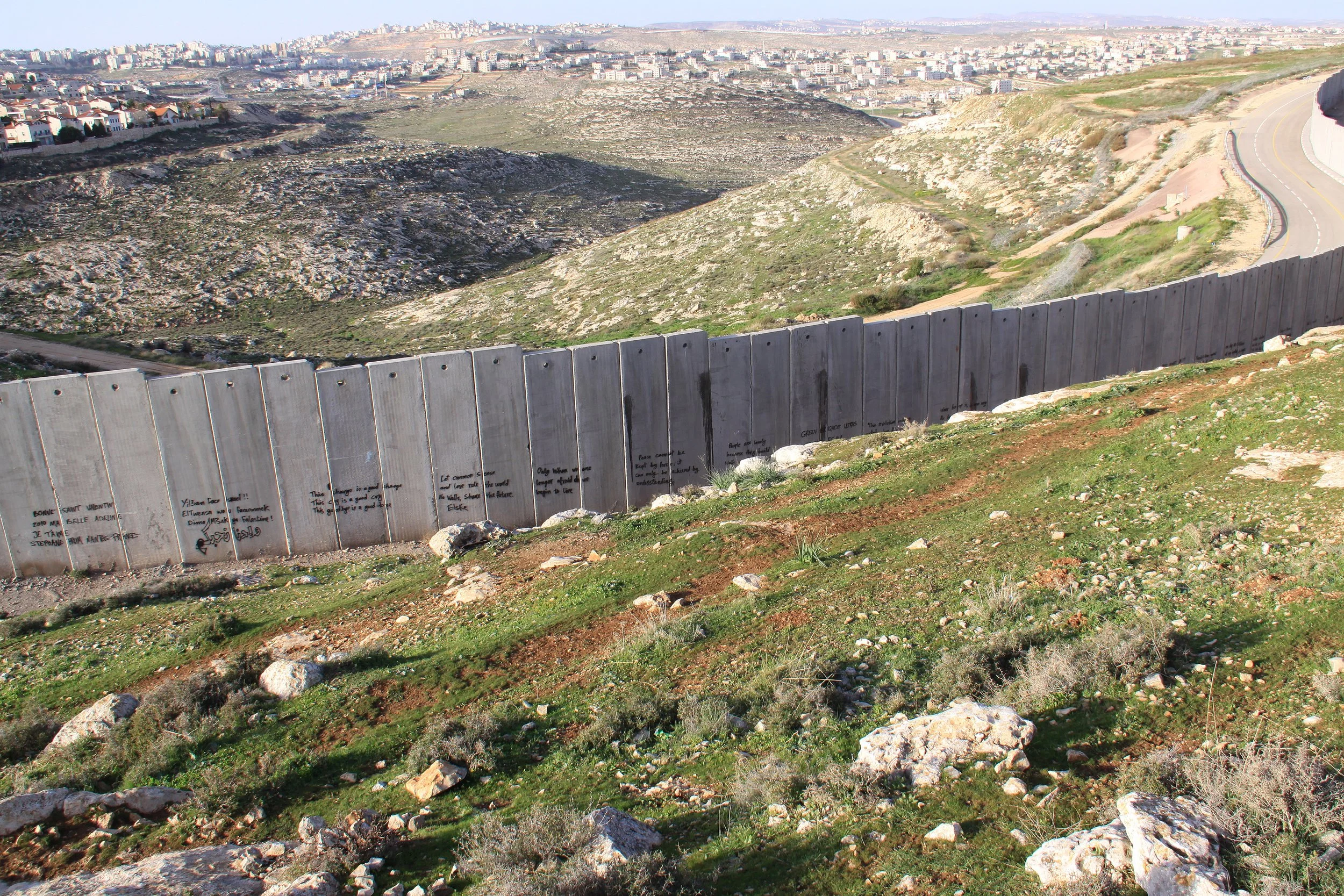
Israeli West-Bank barrier near Ramallah
W. Hagens/Wikimedia Commons
Forecast
Short-term (Now - 3 months)
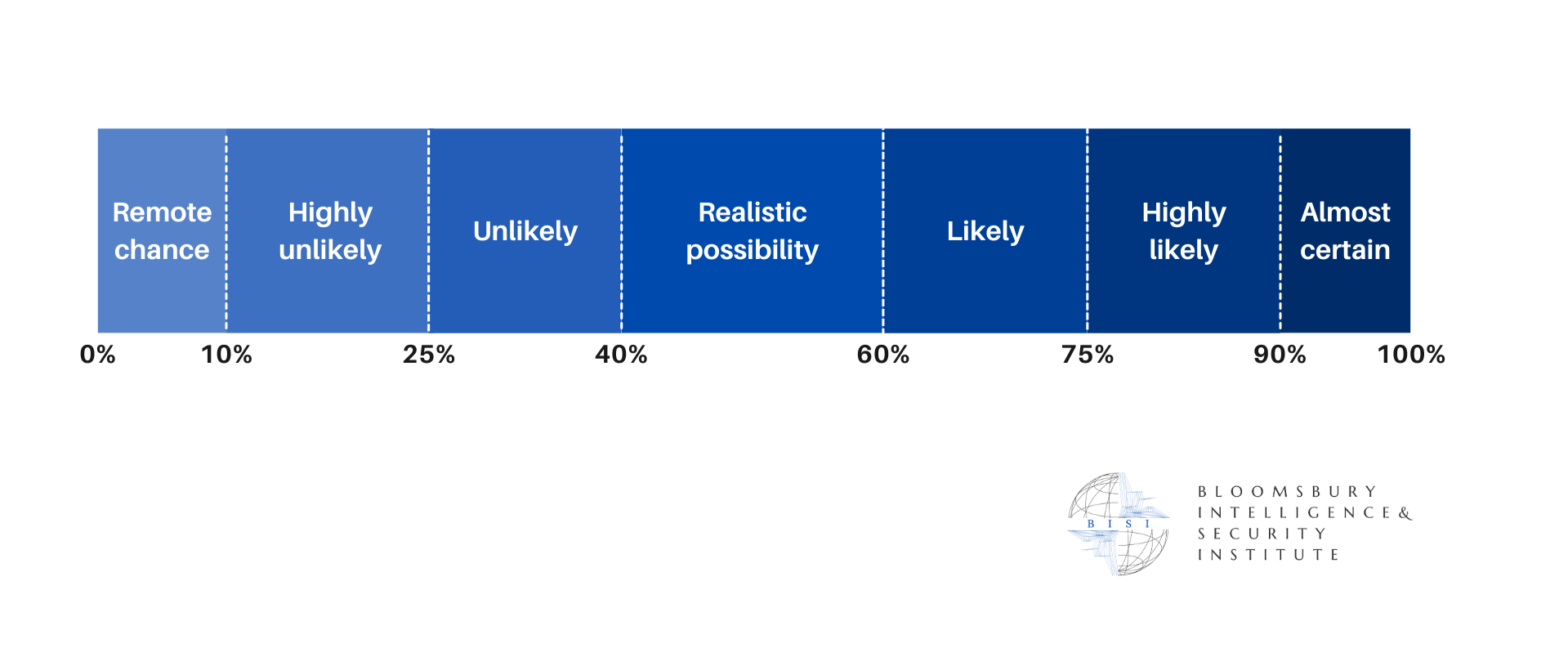
It is almost certain that the international community, particularly the Arab muslim majority and a few Western states, will strongly criticise the measures and are very likely to increase diplomatic pressure.
Despite ongoing condemnations, Israel is likely to expand civil authority in the West Bank.
Medium-term (3 - 12 months)
As Israel asserts control over archaeology, water, and construction in Areas A and B, the PA’s inability to provide sovereignty or protection will likely collapse.
There is a realistic possibility that Israel’s decision to release classified land registry records will heighten security risks to those Palestinians who earlier sold property secretly.
Public statements by Israeli officials supporting settlers’ rights and presence will likely increase tensions with Palestinian residents, potentially triggering unrest or protests.
Long-term (>1 year)
An expanded Israeli administrative presence across parts of the West Bank is a realistic possibility that will gradually reshape the ground realities of governance. In this manner, the Palestinian Authority is at risk of losing its grip on control over the long term.