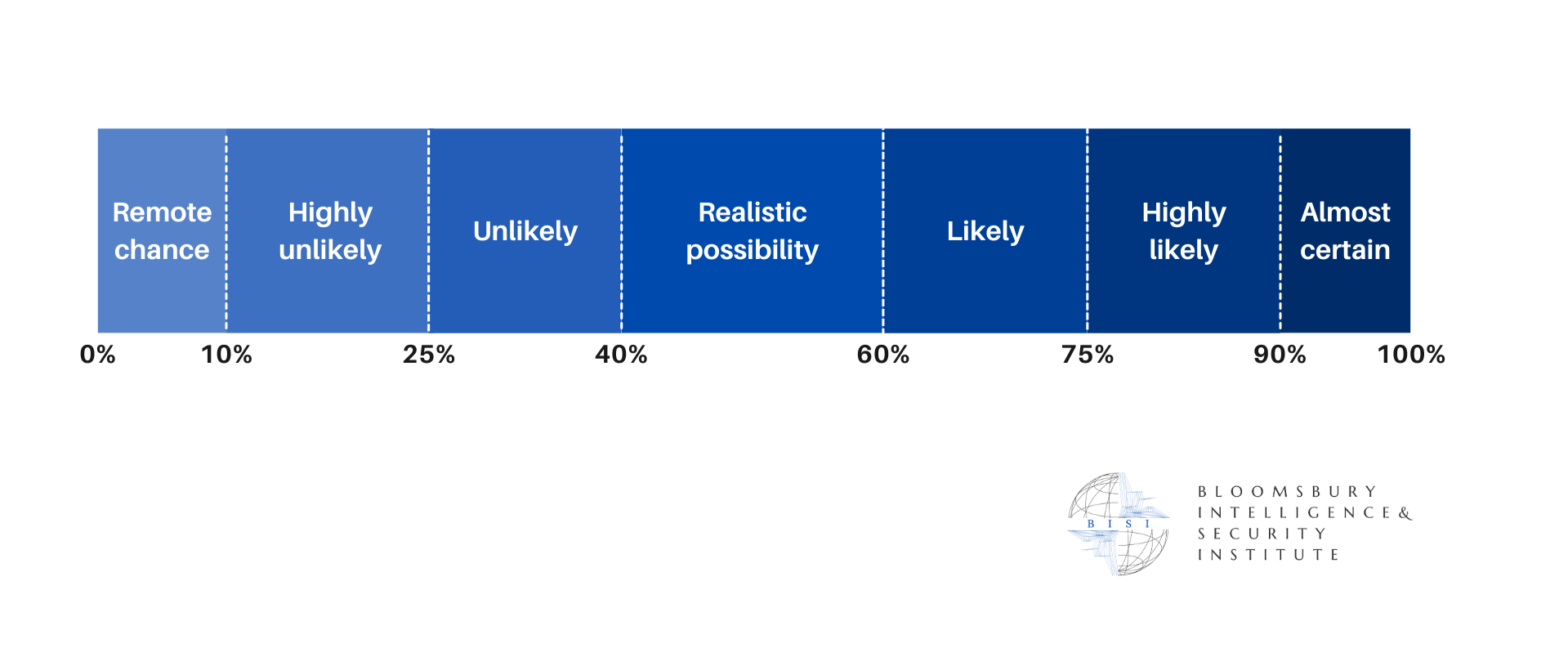
By Trishnakhi Parashar | 3 August 2026
Summary
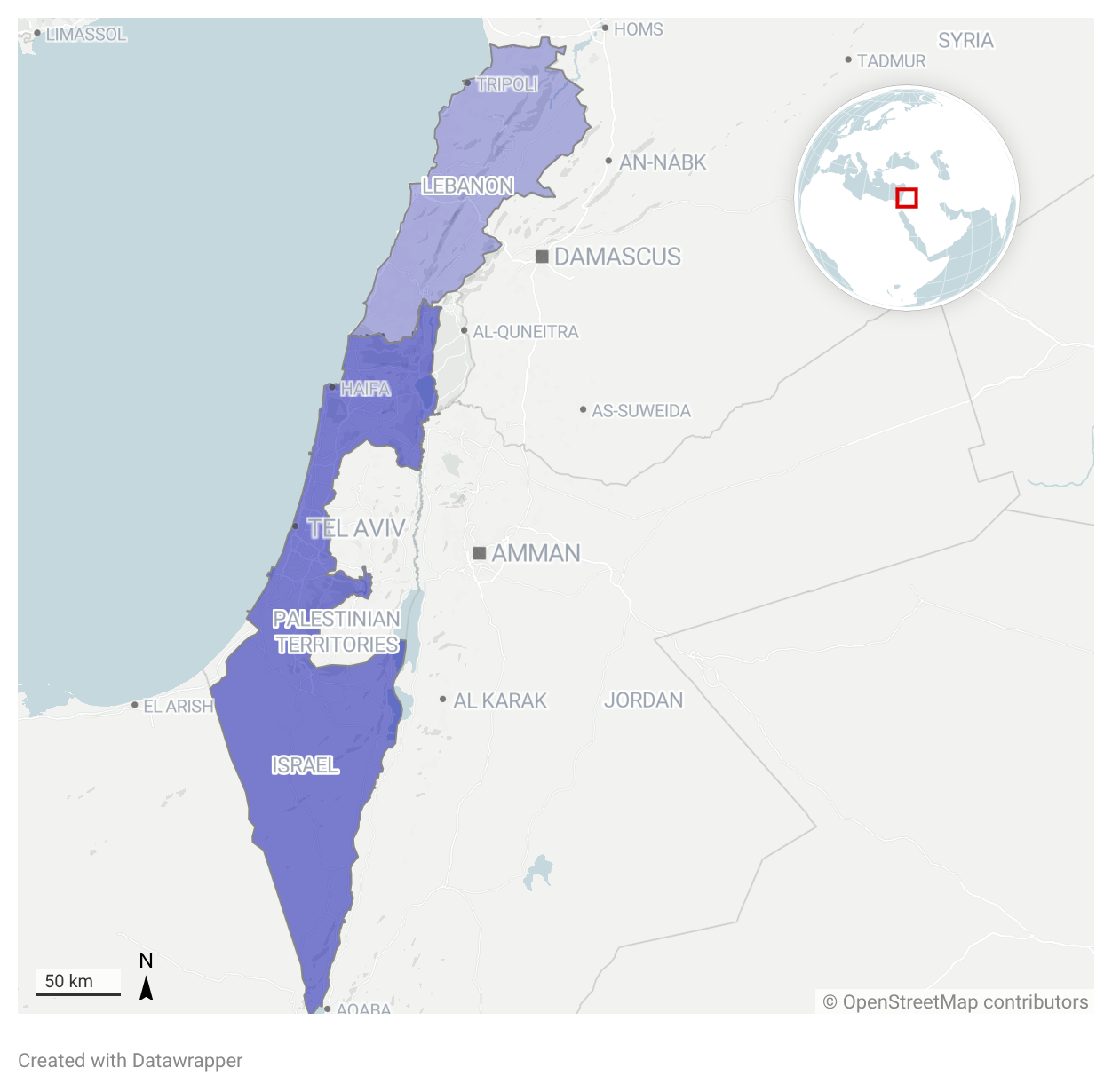
On 26 June 2026, the United States (US) brokered a Trilateral Framework Agreement between Israel and Lebanon that was designed to recalibrate the ceasefire in southern Lebanon into a more structured security arrangement.
The deal is expected to curb cross-border violence and strengthen Lebanese state control, but its implementation may face strong political resistance, particularly from Hezbollah, which has outright rejected the framework.
The framework’s trajectory will most likely be shaped by the effectiveness of verification measures, local security conditions, and the parties’ ability to avoid escalation.
Context
The Trilateral Framework Agreement is a US-sponsored arrangement, meant to reduce border conflict and create conditions for a phased Israeli withdrawal from parts of southern Lebanon. It was announced in Washington on 26 June 2026 after months of renewed tensions along the border, and it places the Lebanese Armed Forces (LAF) at the centre of implementation. The agreement was signed by Israel's ambassador to the US, Yechiel Leiter, Lebanon's ambassador to the US, Nada Hamadeh, and US State Department Chief Daniel Holler, in the presence of US Secretary of State Marco Rubio. Lebanese President Joseph Aoun describes the agreement as the first step towards restoring its sovereignty. Israeli Prime Minister Benjamin Netanyahu frames the agreement as historic, which could eventually lead to broader peace.
The framework is not a full peace treaty. Instead, it sets out a step-by-step process in which Lebanese forces expand control in designated areas, while Israeli withdrawal is tied to verified progress in the disarmament of non-state actors and enhanced border security. Another important part of the deal is the creation of pilot zones in southern Lebanon, starting in the South Litani sector. The deal also includes a coordination mechanism to monitor implementation, manage deconfliction, and support communication between the parties through US facilitation.
Hezbollah’s rejection of the framework is the major concern. The group has characterised it as an attack on Lebanese sovereignty and has made clear that it will not accept disarmament under the current terms. That makes the arrangement politically sensitive, particularly for Lebanon, and operationally difficult to enforce on the ground.
Implications
Politically, the framework gives each side something different. For Lebanon, it offers a chance to restore state authority in the southern part and also present the government as the only legitimate authority. Fundamentally, it strengthens the role of Lebanon and the LAF. For Israel, the framework provides diplomatic cover for a phased pullback by embedding its long-standing security demands, such as the disarmament and prevention of rearmament of non-state actors, particularly Hezbollah. The deal highlights the US role in enabling the talks. If implementation stalls, the US will be seen as a state sponsoring arrangements that reduced tensions. Moreover, for the US, the core geopolitical objective of this framework is to reduce Hezbollah’s integration within the Iranian proxy network and limit Tehran’s influence in Lebanon. On top of this deal, another round of planned talks in Rome in mid-July signals that the recent framework is still fragile and requires continued diplomatic engagement.
Recent Israeli and Hezbollah strikes demonstrated that the framework has not dispelled the risk of renewed military escalation. If hostilities continue, it would not only undermine confidence in the framework but also deepen doubts over the Lebanese state’s ability to assert authority over non-state actors. However, the framework will eventually require clearer chains of command between LAF and external monitors. In parallel, sustained coordination will be needed to manage conflicts, incident reporting, and rapid response, particularly if ground-level tensions or violations erupt.
The framework depends on close coordination organisationally. The LAF will need logistics, intelligence, and manpower to hold areas vacated by the Israeli forces. The verification demands a credible third-party mechanism and sustained monitoring. If either side sees the process as uneven or deliberately slow, the entire framework could falter at the implementation stage. International coordination mechanisms involving the US have become increasingly institutionalised to support implementation and crisis management. However, the framework will eventually require clearer chains of command between LAF and external monitors. In parallel, sustained coordination will be needed to manage conflicts, incident reporting, and rapid response, particularly if ground-level tensions or violations erupt.
Security conditions in these areas are very fragile. Hezbollah, which was not a party to the agreement, has rejected the deal, thereby very likely posing a major challenge to its implementation. Furthermore, this also renders Hezbollah’s withdrawal from southern Lebanon under the terms of the deal increasingly tenuous. The framework may still reduce large-scale aggression; however, long-term durability remains uncertain because Lebanon’s domestic response is divided over Hezbollah’s disarmament and Israel’s withdrawal. Meanwhile, Israeli withdrawal from the southern area largely depends on LAF’s ability to support the disarmament of Hezbollah and secure the area. Moreover, the deal does not remove the threat of escalations by non-state actors. Isolated incidents, retaliatory strikes, or accidental escalations could rapidly erode confidence in the framework. Any miscalculations or implementation failure could lead to significant security escalations. Adding another layer of complexity, broader regional tensions involving Iran and its allied networks could influence Hezbollah’s approach towards the agreement.
A stable security environment is essential for Lebanon’s economic recovery. Reduced conflict risk uplifts reconstruction, infrastructure rehabilitation, tourism, and foreign investment. The agreement creates a pathway for international assistance and financial inflows, contingent upon verifiable security progress and sustained implementation of the framework’s provisions. Economically, this deal may also ease Israel’s security-related spending by limiting the burden of expenditures it has been incurring over the past years.
Forecast
Short-term (Now - 3 months)
The framework is highly likely to put domestic pressure on the government to demonstrate progress in expanding state authority over southern Lebanon while handling Hezbollah.
Hezbollah is most likely to keep its hard line on disarmament while continuing calibrated military actions to demonstrate deterrence.
Israel will most likely continue targeted strikes against Hezbollah-linked sites.
There is a realistic possibility that the parties involved will push to operationalise the security mechanisms, such as enhanced LAF deployment, monitoring measures, and compliance with ceasefire obligations.
The implementation will likely focus on pilot zones and coordination; however, the process will be uneven.
Medium-term (3 - 12 months)
In the medium-term, implementation momentum is likely to slow down due to the state’s political constraints, socio-economic pressures, and complexity of integrating Hezbollah through state mechanisms.
The LAF is highly likely to expand its state presence, but forcibly dismantling Hezbollah is unlikely.
Long-term (>1 year)
Since there is no fixed timeline for a full withdrawal, the Israeli Defence Forces will likely maintain a long-term presence in southern Lebanon.