By Martyna Chmura | 3 August 2026
Summary
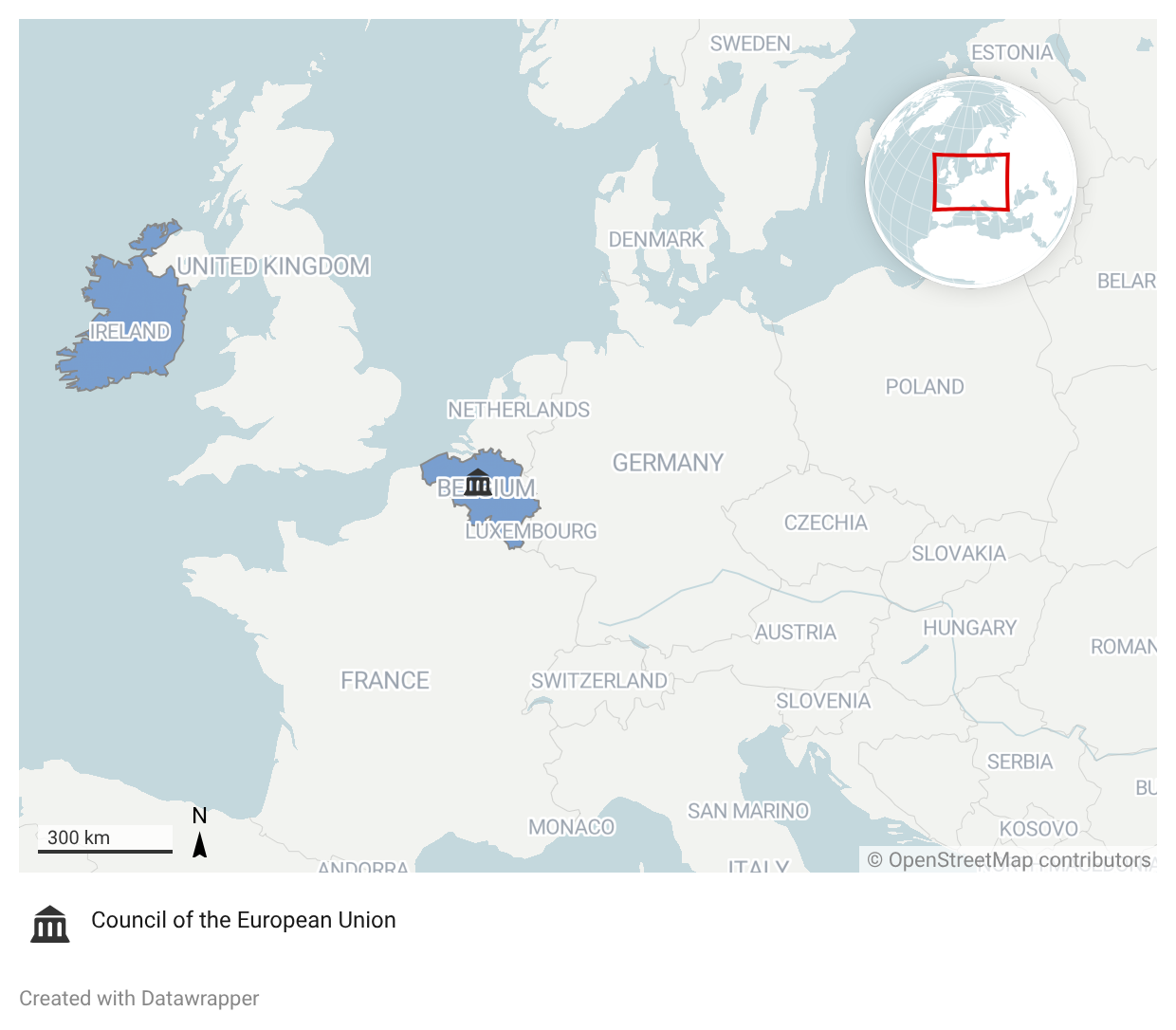
Ireland’s six-month Presidency of the Council of the European Union (EU) will influence the direction and pace of negotiations across the bloc’s digital, competitiveness and security agenda.
Ireland’s role as a major European technology hub has increased scrutiny over whether its economic dependence on multinational technology firms could affect its ability to act as an impartial broker.
The Presidency is expected to advance EU digital policy, although tensions between regulatory enforcement, market openness and strategic autonomy will remain central to negotiations.
Context
Ireland started its six-month Presidency of the Council of the EU on 1 July 2026, with competitiveness, values and security forming the main structure of its Policy Programme. Digital policy appears across all 3 priorities. The competitiveness agenda covers regulatory simplification, AI, cloud computing, digital networks and subsea telecoms connectivity. The values agenda includes online safety, child protection, age verification and Digital Services Act (DSA) implementation. The security agenda links cybersecurity and critical infrastructure resilience to wider EU preparedness.
The institutional importance of the Presidency lies in its control over the Council’s working process rather than in formal legislative authority. The presiding member state chairs most Council meetings, sets work programmes and agendas, and represents the Council during negotiations with other EU institutions. This gives Ireland influence over the sequencing of files, the drafting of compromise texts and the timing of escalation from technical working groups to ministerial negotiations.
Ireland’s Presidency is politically distinctive because the state is its role as a major base for multinational technology firms. 16 of the world’s top 20 technology companies operate hubs in Ireland, and the technology sector employs more than 100 000 people. This concentration places Dublin in a position of overlapping regulatory and economic interests, as Council negotiations concern firms that are central to Ireland’s tax base, employment model and foreign direct investment strategy.
Implications
Ireland’s Presidency places a national economic model with unusually high exposure to multinational technology firms at the centre of EU digital policymaking, which includes Digital Omnibus, Cloud and AI Development Act and Digital Networks Act. In 2024, corporation tax generated EUR 39b, equivalent to 36% of total Irish tax receipts. Excluding the one-off Apple state aid payment, foreign-owned multinationals contributed EUR 24.8b, or 88% of corporation tax receipts, while the top 10 corporate groups accounted for almost 59% of the total. The Irish Fiscal Advisory Council further estimated that 2 technology groups paid almost EUR 11b, close to 40% of total corporation tax revenue. This concentration shows a clear overlap between Ireland’s fiscal interests and Council negotiations affecting cloud services, platform regulation, data governance and corporate taxation.
The Presidency’s procedural authority makes this overlap relevant to legislative outcomes. Ireland cannot determine EU law independently, but it can allocate negotiating time, draft compromise texts and decide whether contested provisions remain at technical level or progress to ministerial agreement. These functions are particularly important for the Cloud and AI Development Act, the Digital Omnibus and the Digital Networks Act, where member states differ over the balance between competitiveness and digital sovereignty. Under the Cloud and AI Development Act, requirements based on EU ownership, third-country control or procurement restrictions would impose greater costs on US hyperscalers than provisions centred on certification, audit and operational resilience. The Digital Omnibus raises a related question over whether simplification removes regulatory duplication or weakens obligations under the AI Act, Data Act and wider digital rulebook. The treatment of these provisions will shape the balance between market openness, regulatory enforcement and strategic autonomy.
The lobbying environment adds a further source of scrutiny, with digital industry spending in Brussels reaching EUR 151m annually, including EUR 49m from the 10 largest technology companies. Industry priorities ahead of the Irish Presidency include digital simplification, legal certainty, open markets and opposition to broad restrictions on foreign technology providers. These positions overlap with elements of Ireland’s competitiveness agenda, particularly simplification and digital infrastructure rollout, raising questions about whether Council compromises will reduce duplication or weaken obligations before the EU’s digital rulebook is fully implemented.
The controversy has also developed into an institutional challenge following a letter from 60 academics calling on Ireland to recuse itself from tax and digital files. The signatories argue that Ireland’s dependence on major non-EU firms and its record on taxation and data protection create conflicts incompatible with the Presidency’s role as an impartial broker. The significance of the intervention lies in its demand for procedural exclusion rather than enhanced disclosure or oversight. Recusal would establish a precedent under which member states could be asked to relinquish responsibility for files linked to major domestic industries, despite the rotating Presidency being designed to distribute agenda-setting authority across all 27 member states. The central issue is therefore not the existence of national interests, which are inherent to the Council system, but whether existing transparency requirements and procedural safeguards are sufficient to prevent those interests from disproportionately shaping individual legislative provisions.
Ireland’s values agenda provides a less directly conflicted area for regulatory delivery. Online child safety, age verification and measures against child sexual abuse online affect large platforms, but they do not challenge Ireland’s headquarters model or cloud-market access in the same way as sovereignty-based procurement or ownership rules. Progress on these files would therefore allow the Presidency to demonstrate regulatory action while leaving the more economically sensitive questions of cloud dependence, platform power and corporate taxation unresolved.
Forecast
Short-term (Now - 3 months)
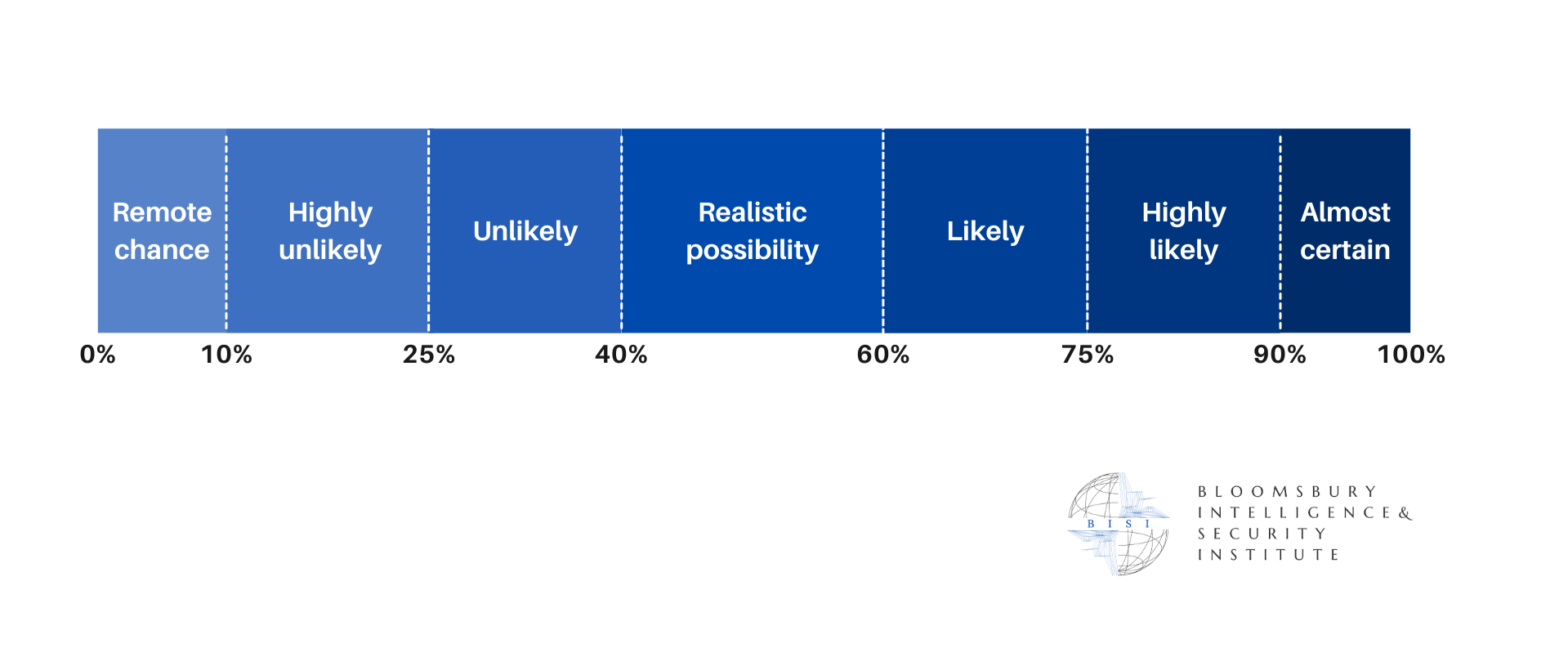
Ireland is highly likely to prioritise Council work on digital simplification, AI coordination and online safety, where its competitiveness and values agendas most closely converge.
Scrutiny of the Presidency’s impartiality is likely to continue during negotiations on the Digital and Tax Omnibus files, although formal recusal remains unlikely.
Medium-term (3 - 12 months)
There is a realistic possibility that contested cloud, AI and data-sovereignty provisions will be narrowed towards certification, transparency and risk-based safeguards rather than ownership or broad market-access restrictions.
Pressure for stronger disclosure of lobbying contacts and closer scrutiny of Council compromise texts is likely to increase, particularly if negotiated outcomes align closely with major technology firms’ stated priorities.
Long-term (>1 year)
Ireland’s Presidency is unlikely to produce a substantial reduction in EU dependence on US cloud, AI and platform providers, as infrastructure, procurement and market concentration remain structural constraints.
It is unlikely that the controversy will establish a formal precedent for excluding future Council Presidencies from files linked to national economic interests, although it may strengthen demands for greater transparency and scrutiny.