By Elisa Guillen | 26 October 2026
Summary
The transfer of ISIS detainees from Syria put a strain on the Iraqi justice system, which struggles to gather the necessary resources to prosecute both its nationals and foreigners.
The overcrowding resulting from the large number of pre-trial detentions creates risks to health and security. International inaction exacerbates the phenomenon.
Flawed prosecutions are likely to undermine Iraq’s counter-terrorism efforts, notably because of the lack of evidence and the risk of torture-obtained confessions leading to wrongful judgements and fueling grievances.
Context
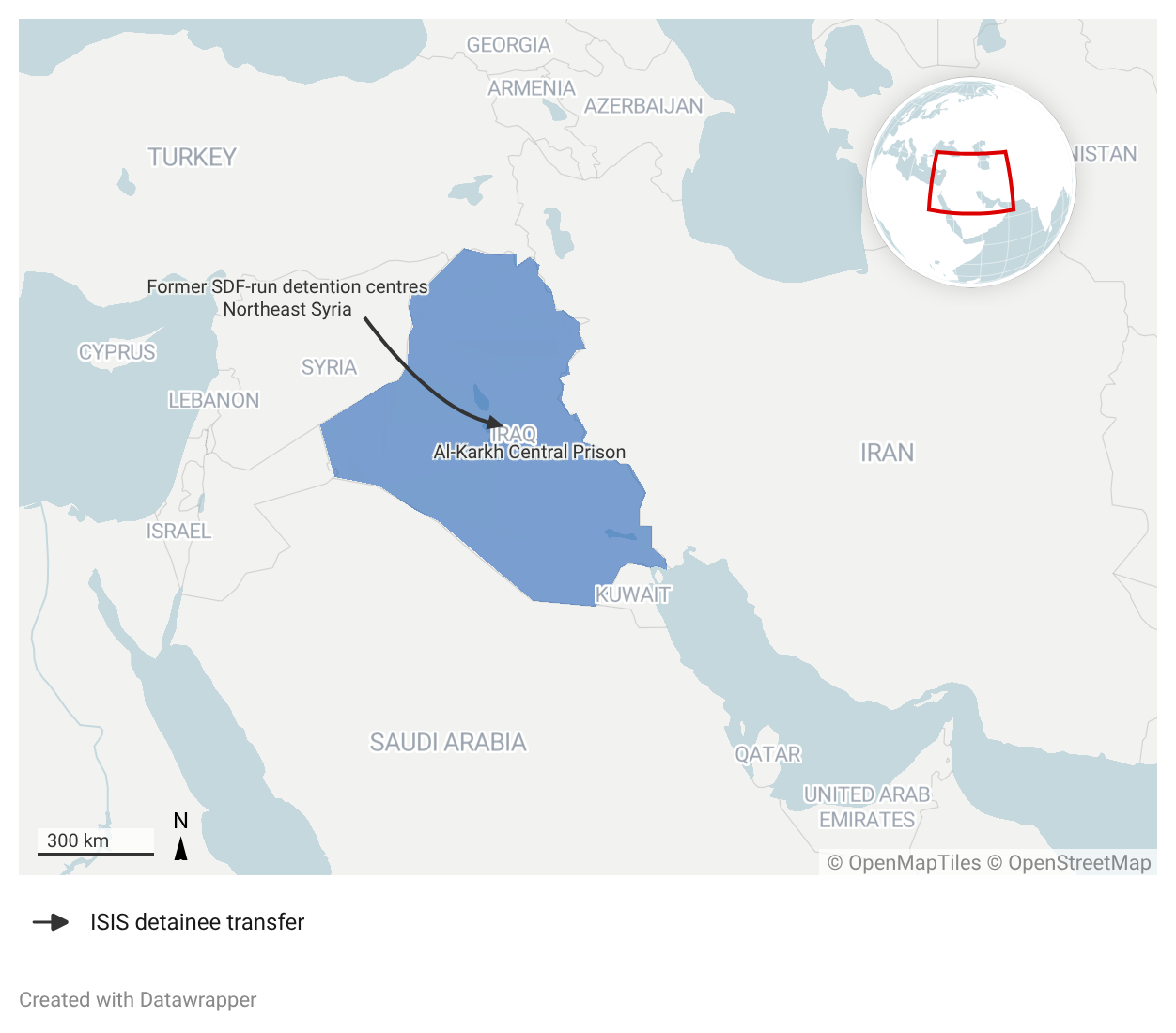
After the transfer of nearly 5704 detainees from northeast Syria to Iraq between January and February 2026, individuals affiliated with the Islamic State of Iraq and Syria (ISIS) have been prosecuted since August 2026. Fears of potential breakouts and mismanagement by the Syrian government led to the US transfer to Iraq. This included 3,497 Syrians, 470 Iraqis, 1690 foreign nationals, and 440 children, including 1100 individuals with serious contagious diseases such as tuberculosis. They were mainly taken to the Al Karkh Central Prison, where cell capacity is at 158%.
The detainees are being judged under the 2005 Anti-Terrorism Law, which provides the death penalty for terrorist-affiliated individuals or those guilty of terrorist acts. In light of previous reports of torture usage and unfair proceedings in Iraq, human rights organisations fear that the trials might be unfair or unlawful, particularly given the testimonies of torture-induced confessions.
Iraq indicated that it needed more resources to handle the trials and that repatriations of foreign detainees were desired. However, there has been little international engagement, with few repatriations and even less financial support. Additionally, because of the lack of case files, it will be challenging to establish the link between those prosecuted and the crimes committed. There is a possibility that non-ISIS related criminals, such as political prisoners under the Assad regime, and enemies of the Syrian Defence Forces (SDF), were also transferred.
Implications
First, the overcrowded prisons resulting from the transfer present a risk to public health and security. Detainees face inadequate sanitary conditions, exacerbated by the fact that more than a 1000 people arrived with serious illnesses like tuberculosis. Overcrowding often complicates access to healthcare for prisoners, and the lack of space increases the transmission rate of diseases. These conditions make it likely that the disease will spread beyond the detention facility and become a public health concern. Additionally, overcrowding gives rise to conflicts that undermine prison management and risk mixing low-level affiliates with high-profile ISIS members. For Iraq, which is already facing financial and administrative difficulties due to mass prosecutions, managing a sanitary crisis could further compromise its ability to maintain secure prisons, increasing the risk of unrest, escape and radicalisation.
Second, the possibility of flawed trials, involving torture-obtained confessions that led to the death penalty, is very likely to fragilize Iraq’s counter-terrorism efforts. First, the lack of reliable evidence and case files makes it harder to distinguish the individuals responsible for terrorist attacks from innocents and suspects of ISIS affiliation. Wrongful condemnation would undermine the legitimacy and public confidence in the Iraqi government, and that is particularly likely in a judicial system with documented torture-obtained confessions. Conversely, a wrongful acquittal will release dangerous individuals. Torture produces unreliable information, wasting investigators’ resources on false leads and undermining overall counter-terrorism efforts.
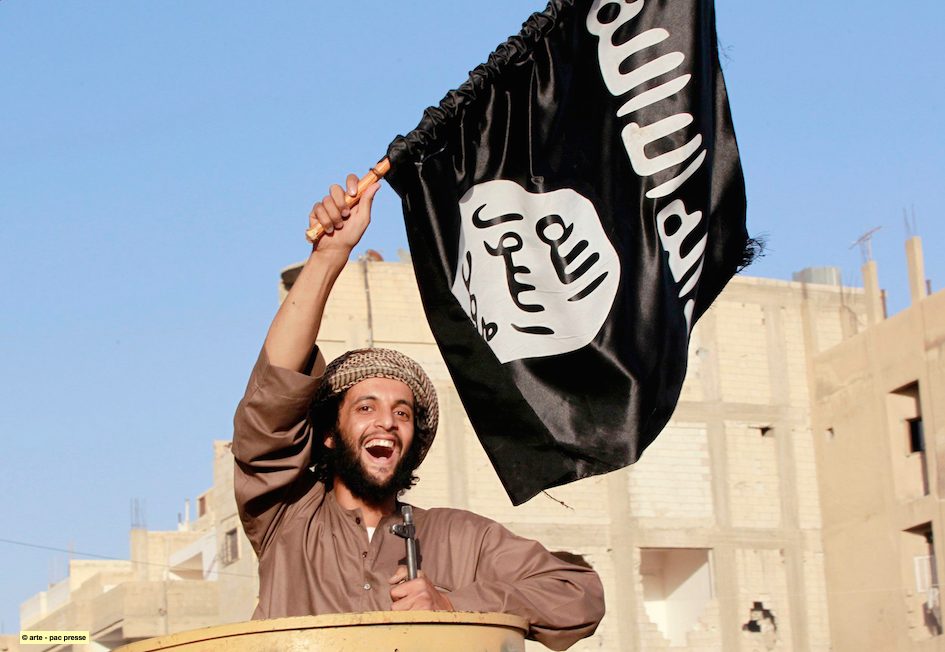
Moreover, perceived injustice can be exploited by ISIS as propaganda material. Torture allegations and prosecutions without sufficient evidence can be used to fuel martyrdom and persecution rhetoric. Notably, ISIS is likely to try to capitalise on grievances raised against the Iraqi government, resulting from the considered unfair prosecutions. ISIS has a history of recruiting from Iraqi detention centres. Regardless of whether the instrumentalisation of grievances is fruitful for ISIS recruitment, the distrust in the Iraqi judicial system among its citizens will likely impact the stability of Iraq.
Lastly, the non-repatriation of nationals in Iraq exacerbates these issues. This reluctance overburdens the Iraqi judicial system and prisons. However, ISIS terrorist attacks have been transnational crimes. Due to the lack of case files, it cannot be excluded that the detainees carried out or could carry out terrorist acts in their home countries. The externalisation of prosecution could backfire on those countries, particularly in case of wrongful acquittals. Taken together, overcrowding, flawed prosecutions and international inaction reinforce each other, creating a long-term source of insecurity for Iraq and countries susceptible to ISIS terrorist attacks.
Alatele fr/Flickr CC BY-SA 2.0
Forecast
Short-term (Now - 3 months)
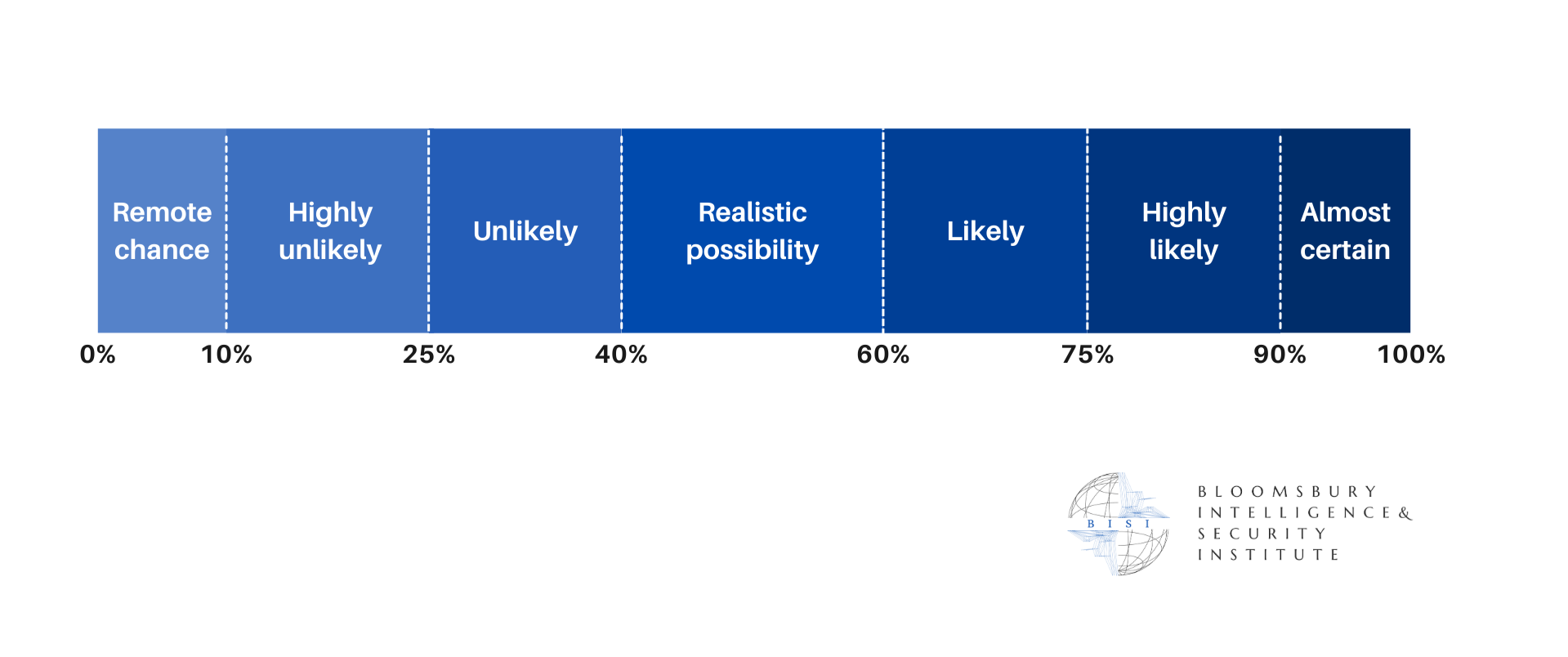
Iraq is highly unlikely to deliver fair trials, notably due to its limited resources, funding and evidence. The likely reliance on torture to obtain confessions would produce unreliable verdicts and weaken counter-terrorism efforts.
Medium-term (3 - 12 months)
Pre-trial detentions are highly likely to be lengthy, worsening the overcrowding issues. However, there is a realistic possibility of some repatriations, partly relieving the overburden.
Long-term (>1 year)
Chronic overcrowding, prosecution of unfair trials and funding issues are likely to gradually erode Iraqi credibility and fuel grievances, which would be likely to destabilise the country. Yet, given that ISIS is currently weak, crisis situations such as large-scale breakouts are unlikely.