By Aryamehr Fattahi | 26 October 2026
Summary
The United Kingdom (UK) launched the Artificial Intelligence (AI) Biosecurity Lab (AIBL) on 24 October 2026. The independent non-profit has GBP 100m of public money and, as a separate commitment, up to GBP 200m in model credits from OpenAI and Anthropic. It has no director, site or start date.
The design gives the lab immediate access to frontier models but places developers inside an institution meant to counter risks their products help create. Governance, not headline funding, will decide its credibility.
The strongest case for the lab lies in earlier threat detection and faster medical countermeasures, which pay off whether or not AI-enabled bioweapons materialise. Its dependence on United States (US) firms sits uneasily with the UK-led approach of Chancellor of the Exchequer John Healey.
AIBL is likely to confirm founding leadership and governance arrangements within 3-12 months. Sustaining its capability beyond the initial package without new public or philanthropic funding is unlikely.
Context
The Cabinet Office is establishing AIBL as the world’s first dedicated AI biosecurity organisation. It will be an independent non-profit, similar in form to the AI Security Institute (AISI), with GBP 100m of government funding. OpenAI will provide GBP 100m in compute and model credits, plus trusted access through its Rosalind Biodefense programme, which launched in May 2026 and includes a track for allied governments. Anthropic will provide up to GBP 100m in model credits, trusted model access and technical support. Google DeepMind will join research projects, and London based Basecamp Research will share its AI-biology models. Basecamp closed a USD 140m Series C in September 2026. The lab’s first priorities are earlier detection of biological threats and faster development of vaccines and treatments.
AIBL anchors a GBP 165m National AI Biosecurity Initiative, which adds GBP 65m for biological surveillance and countermeasures. The initiative links the lab with the UK Health Security Agency (UKHSA), the Animal and Plant Health Agency (APHA) and the Defence Science and Technology Laboratory (Dstl). The Medicines and Healthcare products Regulatory Agency (MHRA) will also work with AIBL on the regulation of AI-designed medicines. The initiative forms part of more than GBP 600m in AI security funding, which also gives the AISI an extra GBP 120m. The company credits sit outside that total. Details of a scientific advisory committee will follow later, and the government hopes to add philanthropic funding over time.
The launch follows a hardening of official threat assessments. For MI5 Director General Sir Ken McCallum, AI’s potential to change the stakes on bioweapons is “not yet realised” but remains “the misuse case to which I’d attach greatest weight”. MI5 is also opening an AI Threat Assessment Centre with the National Crime Agency and the National Cyber Security Centre. In September 2026, Anthropic shut down accounts behind instances of researchers using its models in ways that could support bioweapons development.
The timing carries political weight. The lab arrived days before Healey’s first Budget on 28 October 2026. Minister for Artificial Intelligence Kanishka Narayan presents AIBL as a “major new global institution”. For Conservative Shadow AI Minister Ben Spencer, the wider package is a “shopping list of projects” without a clear strategy, and one that sits awkwardly with the drive for European Union (EU) alignment under Prime Minister Andy Burnham. Particularly with legislation of the EU Biotech Act. The lab’s location remains undisclosed.
Implications and Analysis
AIBL’s design is both its main asset and its main exposure. The themes below examine the developer bargain, the threat case, delivery and the UK’s strategic position, and what each means for stakeholders.
Frontier Developers as Both Risk and Remedy
The arrangement gives AIBL capability the state could not build alone, at a cost to its perceived independence. GBP 100m cannot fund frontier model development, but trusted access to OpenAI, Anthropic and DeepMind models gives the lab working tools from its first day. For ministers, the company commitments triple the headline resources without adding to the Budget. The trade off is that its core instruments belong to the firms whose products create part of the risk.
The credit structure favours the developers more than the headline figures suggest. Credits are not cash: They are drawn only as the lab uses them, and they tie research workflows to particular model families. For OpenAI and Anthropic, the commitment secures a place inside UK safety infrastructure and early insight into how government frames biological risk, at a real cost well below face value. A lab dependent on 1 provider’s credits would have weak incentives to criticise that provider, which matters most if AIBL later evaluates the same models.
Trusted access raises information hazard questions that the published design does not yet answer. Defensive work on detection and countermeasures overlaps with the knowledge that misuse requires. Rules on publication, and on whether developers see findings about their own models’ weaknesses, will shape trust among scientists and allies. The unpublished governance documents are therefore the first test of independence, and a visible firewall would add to the reputational value of participation for developers.
A Threat Case Strong Enough for Preparation, Not Alarm
The evidence justifies investment in preparedness but does not show that AI has enabled a biological attack. The more defensible reading is that AI lowers barriers for already skilled actors rather than handing novices a working pathogen. Overstating the threat would give critics an easy argument and erode the trust AIBL needs from working scientists.
The lab’s strongest rationale is a public health dividend that accrues whether or not deliberate misuse occurs. Earlier detection helps against natural outbreaks and animal disease as much as attacks, which gives UKHSA and APHA a direct operational stake. For the MHRA, early work on AI-designed medicines offers a chance to set assessment standards before applications arrive at scale. For life sciences firms, a credible UK pathway for such medicines would be a commercial draw.
Stronger oversight carries its own costs for legitimate research. Additional checks on model access could slow beneficial projects and exclude smaller laboratories that lack compliance resources. AIBL’s standing with the research community will depend on whether controls scale with consequence and come with reasons and routes to appeal. Blanket restrictions risk pushing smaller groups towards less scrutinised tools.
An Institution of Intent, Not Yet a Laboratory
The gap between Narayan’s ambition and AIBL’s current form is its most immediate exposure. A “major new global institution” with no director, site, start date or published governance is open to the charge of announcement politics. The timing reinforces that perception: The lab arrived in a pre-Budget package shortly after a high-profile government cyber incident, which lends weight to Spencer’s “shopping list” critique. For ministers, the risk lies less in the concept than in a slow build that lets the criticism stick.
Talent is a tighter constraint than money. Specialists who combine frontier AI with virology or synthetic biology are scarce, and the lab’s own funders compete for them with far higher private-sector pay. The AISI shows the state can recruit such people when mission and access offset salary, but AIBL must do so in a narrower field where its partners are also its rivals. The founding director will be the clearest signal of whether it can recruit that cohort.
Funding beyond the initial package is uncertain, and the “up to” credits may not convert into lasting capability. The GBP 100m is finite, and philanthropic support is an intention rather than a pledge. If credits go undrawn because the lab lacks staff or technical integration, the GBP 200m will shrink in practice. Institutional coherence adds a further risk. AIBL, the expanded AISI, the GBP 65m surveillance stream and MI5’s new centre all touch AI-enabled biological risk. Without a published strategy linking them, duplication and gaps in threat sharing remain plausible.
Sovereignty, Dependence and the Bid to Lead
A UK-led approach that rests on US frontier models defines sovereignty through governance and expertise rather than ownership. OpenAI and Anthropic are US firms, and London based DeepMind has a US parent. Basecamp offers a domestic anchor, and its September fundraise signals investor confidence in that niche, but it cannot substitute for frontier compute. For UK ministers, the realistic claim is influence over how frontier tools are applied, not independence from their suppliers.
The EU alignment question adds political risk to this commercial dependence. Spencer’s challenge targets a genuine tension: Closer regulatory alignment with Brussels could complicate the trusted access to US models on which AIBL depends. Part of the UK’s appeal to US developers is state partnership without heavy regulation, and any shift would affect their willingness to extend generous access.
The UK’s bid for global leadership is credible but depends on allies choosing partnership over replication. Through Rosalind Biodefense’s government track, AIBL positions the UK as an early state partner of a US company programme. That same link means OpenAI, not the UK, sets the terms of that track. Allied governments face a choice between joining a UK hosted model with established access and building national equivalents that preserve their own leverage. Lasting leadership would rest on AIBL publishing useful defensive research and shared standards rather than on its launch claims.
Forecast
Short-term (Now - 3 months)
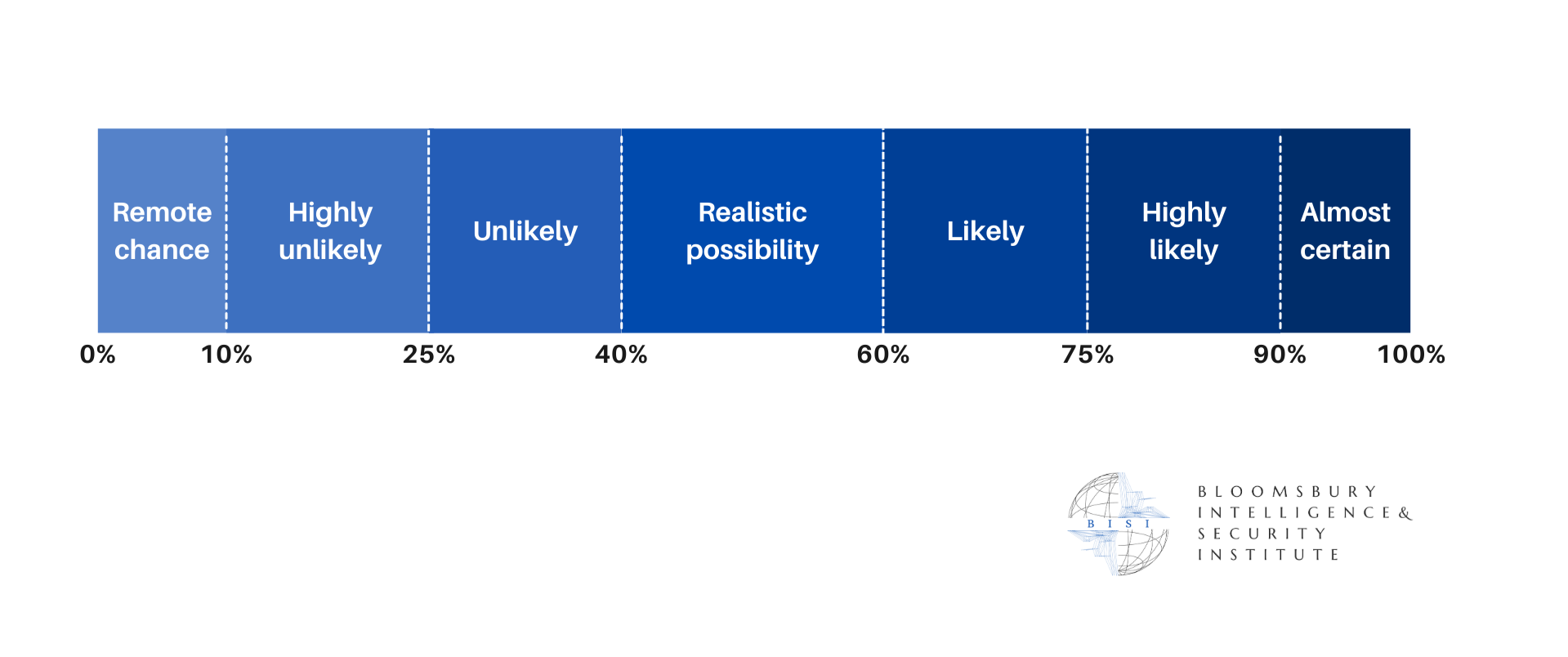
The Budget on 28 October 2026 is highly likely to confirm the public funding but unlikely to name a director or site. AIBL is highly likely to remain a statement of intent through January 2027.
Medium-term (3 - 12 months)
AIBL is likely to confirm founding leadership and governance arrangements within this period.
Confidence would rise if the government names an independent chair and publishes rules on information sharing with funders by Q2 2027.
It is unlikely that the lab draws down a substantial share of the GBP 200m in credits in its first year, given recruitment lead times.
Long-term (>1 year)
By 2028, it is a realistic possibility that an allied government partners with or replicates the AIBL model, most plausibly through the Rosalind Biodefense government track. MHRA guidance on AI-designed medicines that draws on AIBL work by 2028 is also a realistic possibility. Sustaining capability beyond the initial package without new public or philanthropic funding is unlikely, although a multi-year funding settlement or a major philanthropic pledge would change this judgement.