By Anna Toso | 6 April 2026
Summary
French President Emmanuel Macron publicly committed to scaling up the national nuclear arsenal to strengthen European defence autonomy and deterrence capabilities.
Although France’s initiative signals tangible progress for the strategic independence of European defence, there are economic limitations and political challenges.
In the next months, the French public opinion is likely to become more divided between supporting increased defence spending and avoiding public welfare budget cuts.
Context
On 2 March 2026, the French President Emmanuel Macron publicly announced intentions to enlarge the national nuclear arsenal. Such a commitment represents a first since 1992. France will also discontinue disclosing transparent information about its number of nuclear warheads, creating strategic ambiguity. Currently, France has the 4th biggest nuclear arsenal worldwide, with 290 warheads, after Russia (approx. 5,460 warheads), the United States (approx. 5,200 warheads), and China (approx. 600 warheads).
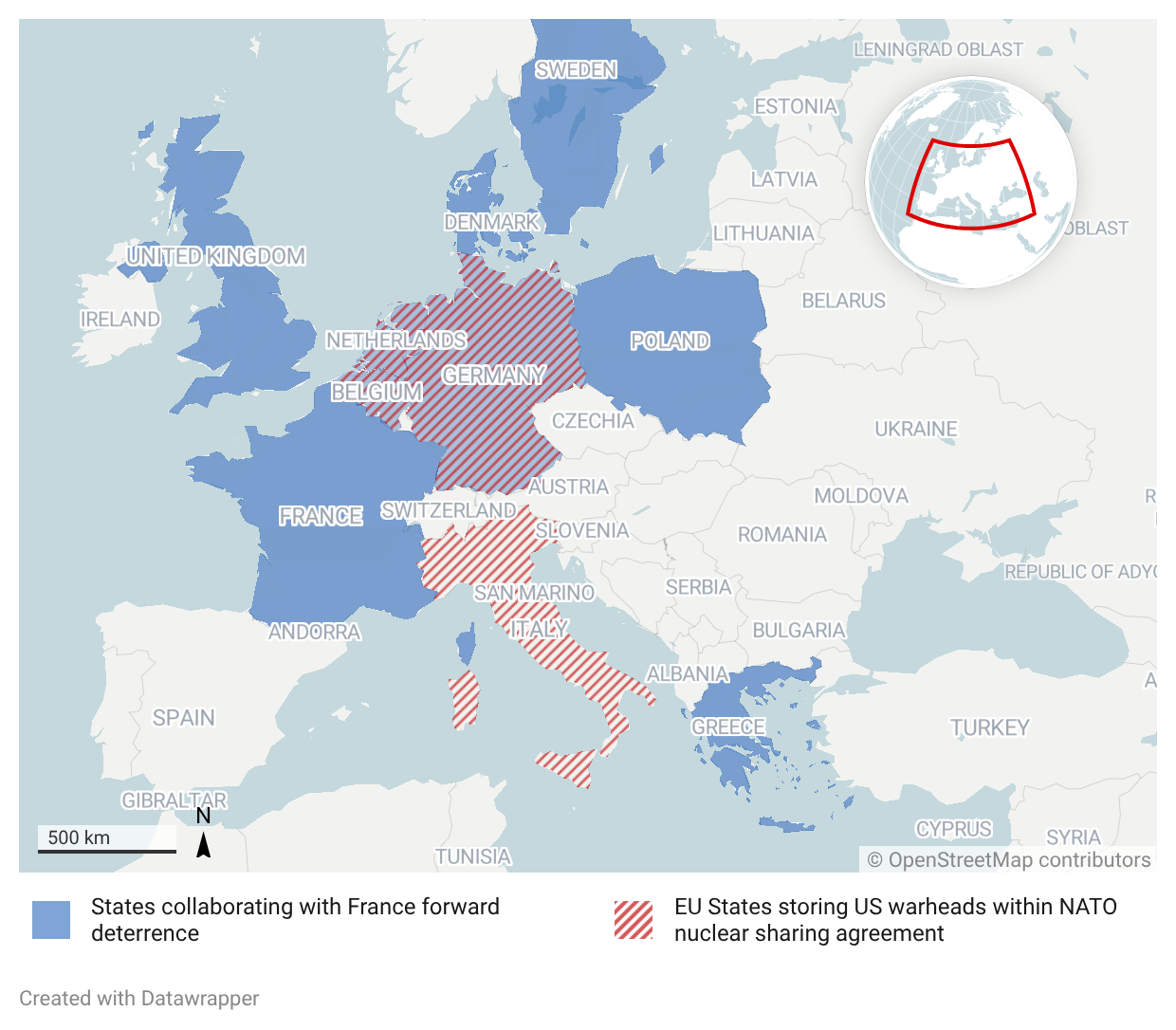
The French policy of forward deterrence (“dissuasion avancée”) foresees a structured security relationship with 8 other European countries: Germany, Poland, the Netherlands, Belgium, Greece, Sweden, Denmark, and the UK. France plans to conduct joint exercises and temporarily station French nuclear-armed aircraft strategically in the territory of the cooperating European states. This collaboration will be complementary to NATO’s nuclear sharing framework, which established the storage of American warheads in several EU Member States (MSs) – Belgium, Germany, Italy, and the Netherlands – while the United States (US) maintain the exclusive mandate to deploy the weapons.
Security implications
The French intentions underscore the European, rather than exclusively national, dimension of French nuclear policy. However, having been placed in foreign territory, and especially at the Eastern European frontier, French assets face higher risks of attack, raising France’s stakes in assuming a leading position in Europe’s defence.
France will maintain exclusive sovereignty over the deployment authority of its nuclear arsenal. Meanwhile, the collaborating states will support the development of secondary capacities, such as space-based alarm systems, air defence, and long-range missiles. Moreover, key partners in the forward deterrence project, Germany and France, have also established a bilateral high-ranking nuclear steering group. Though Germany is not allowed to develop its own nuclear weapons, its domestic policies and public opinion have become increasingly supportive of greater militarisation.
First, France’s forward deterrence initiative pushes Europe towards internalising responsibility for its security and pursuing strategic independence in defence. It responds to the growing uncertainty of the US nuclear umbrella and NATO’s weakened reliability since the second administration of President Donald Trump began.
However, nuclear rearmament is unlikely to deter Russia’s threats, a major strategic priority for European security. Russia possesses 10 times the combined Anglo-French nuclear stockpiles, alongside more advanced surveillance and intelligence capabilities. Despite this extremely asymmetrical strength, Macron emphasised that the nuclear stockpile’s size is irrelevant given the destructive power of the French arsenal in a hypothetical open confrontation with Russia.
Economic implications
Across the EU, defence expenditure surged from EUR 191b (USD 221b) in 2015 to EUR 381b (USD 441b) in 2025. Additionally, in 2025, NATO members committed to allocate 5% of their annual GDP to defence. Worldwide, countries such as India, Pakistan, and China are also increasingly investing in military arsenals and strategic forces.
In 2024, France spent approximately USD 6.9b to build and maintain its arsenal. Enhancing its nuclear capabilities will require significant long-term spending increases of at least EUR 100b more annually (USD 115b). Updating its Sub-surface Ballistic Nuclear fleet and M51 submarine-launched ballistic missiles by 2035, as planned, will require further investments.
Although 69% of the French public supports modernising the national atomic weapons, and 53% increasing military spending, funding such expenditures will be politically challenging. France has a high public debt, 116% of its GDP in 2025, expected to rise in the coming years. The EU Stability and Growth Pact budgetary thresholds require a debt-to-DGP ratio below 60% of GDP. Hence, funding defence through additional public debt is not viable. Meanwhile, decreasing other areas of public spending would very likely prompt strong domestic malcontent. Proposing cross-sectoral spending cuts and austerity measures has already produced nationwide protests and strikes in September 2025.
Political implications
Domestically, Macron has a weak mandate: his popularity rate stood at just 23% in January 2026. Therefore, turning the focus of his last months of presidency, ending in April 2027, towards international affairs is a strategic move to leave a political legacy. Namely, the agreements signed with international partners will lock in the EU dimension of French defence policy in the medium term, regardless of the stance of Macron’s successor.
At the European level, achieving strategic defence autonomy and strengthening deterrence against Russia clashes with the urgency to avoid a global escalation towards the proliferation of nuclear weapons. The EU needs to clarify how the bloc’s pursuit of peace, diplomacy, and disarmament can coexist with the political legitimisation of expanding nuclear arsenals.
Moreover, MSs are working to upscale Europe’s defence capabilities through channels that bypass the established EU institutions, opting for national initiatives, bilateral and multilateral ad-hoc coordination with selected countries. Moreover, the French forward deterrence project also includes the UK, underscoring that assets and stakeholders of European security go beyond the EU27 borders. Confirming this trend, in July 2025, the UK and France signed the Northwood Declaration, a bilateral agreement to deepen nuclear cooperation and establish a joint agency for coordinating nuclear policies and capabilities to defend Europe’s vital interests.
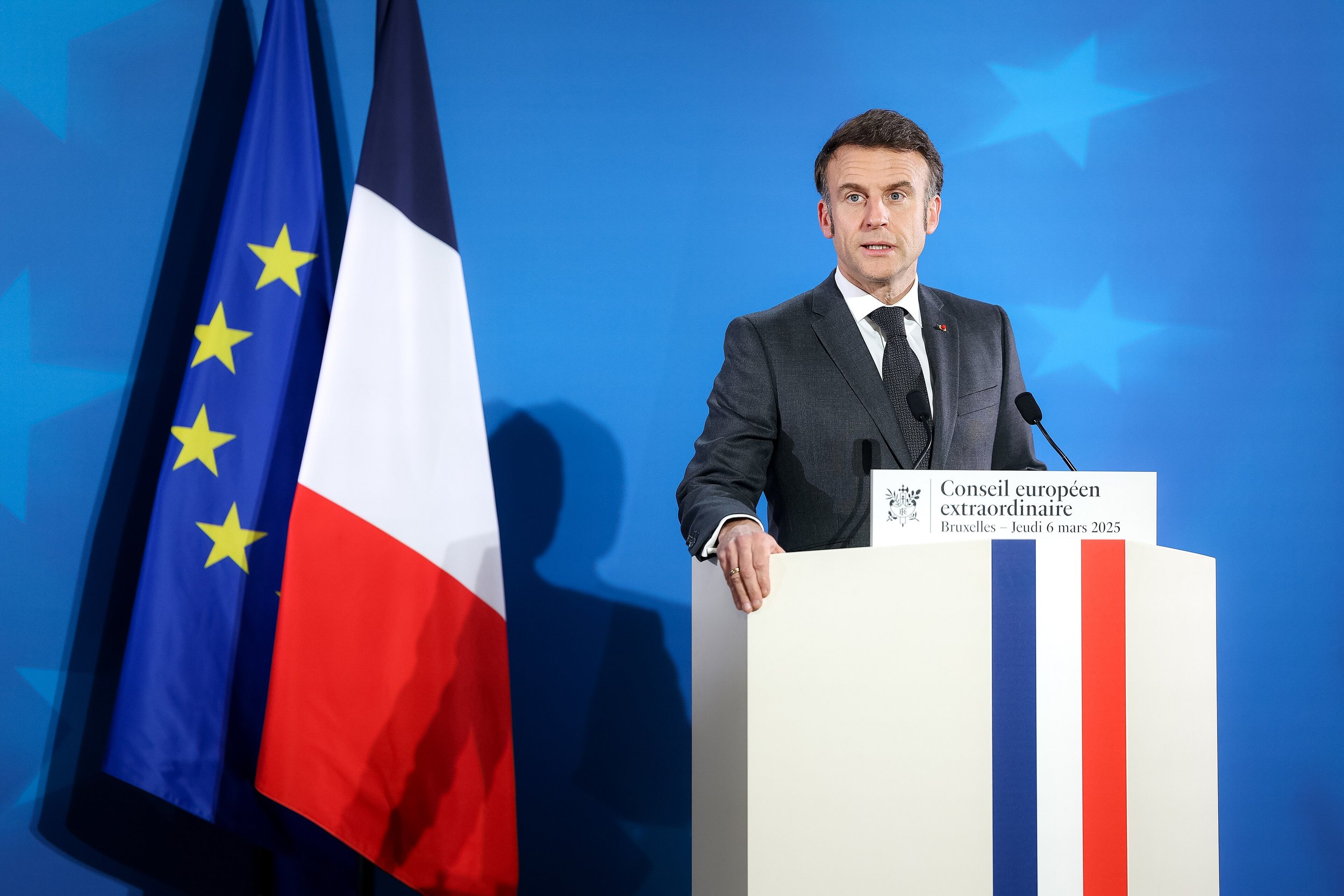
EU/Wikimedia
Forecast
Short-term (Now - 3 months)
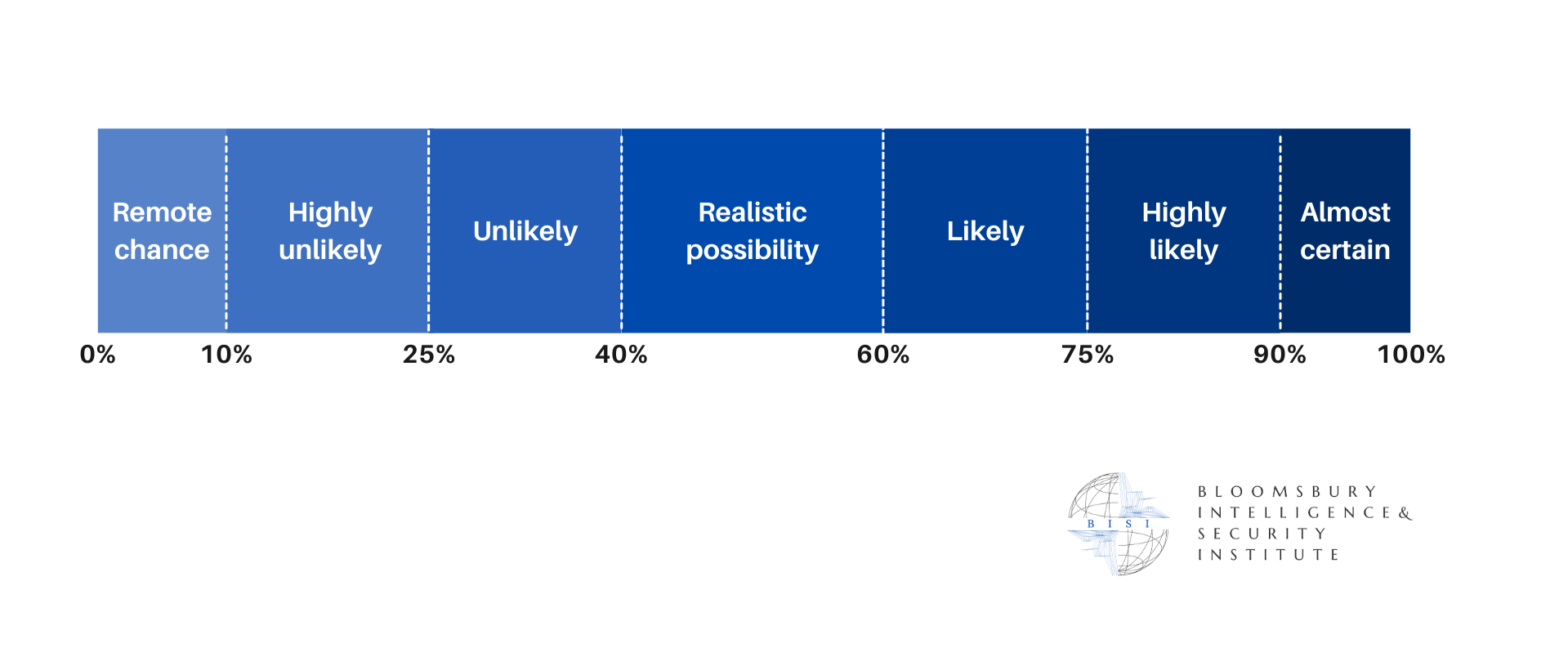
Russia will likely react negatively to the strengthened French nuclear policy.
The Russian foreign intelligence services are likely to intensify hostile acts targeting France, such as surveillance, data leaks, and cyberattacks against the French administration, the spread of disinformation to shape the French public opinion, and, in the longer term, political interference in the upcoming presidential campaigns and elections
Medium-term (3 - 12 months)
If the frontrunner of the nationalist party, National Rally, now leading the polls, won the next presidential elections in April 2027, France’s commitment to European defence cooperation and the Europeanisation of nuclear deterrence would risk downsizing and becoming more selective.
At the same time, if the leader of La France Insoumise, Jean-Luc Mélenchon, secured the presidential seat instead, there is a realistic possibility that France would opt out of the EU common defence programme entirely.
Heightened defence spending in France will likely induce public welfare budget cuts.
Protests and manifestations of social discontent are highly likely to ensue, especially if the recent volatility and increases in gas and energy prices become protracted.
Long-term (>1 year)
There is a realistic possibility that increased rearmament expenditure in the EU will fuel militarisation of political discourses without tangibly improving the credibility and autonomy of a common defence establishment.
The long-standing infrastructural deficiencies are unlikely to be resolved within a few years, and the EU's security is likely to remain dependent on the US and NATO.