By Wen-Qing (Sarah) Jiang | 6 April 2026
Summary
Amid growing geopolitical instability, Japan faces a shift in its role in the Indo-Pacific region amid uncertainty over alliances and escalating Sino-Japanese tensions.
Japan, under Prime Minister Sanae Takaichi, is moving towards a new trajectory, shifting from a facilitator of the rule-based order to a leading deterrence-oriented balancer in the region.
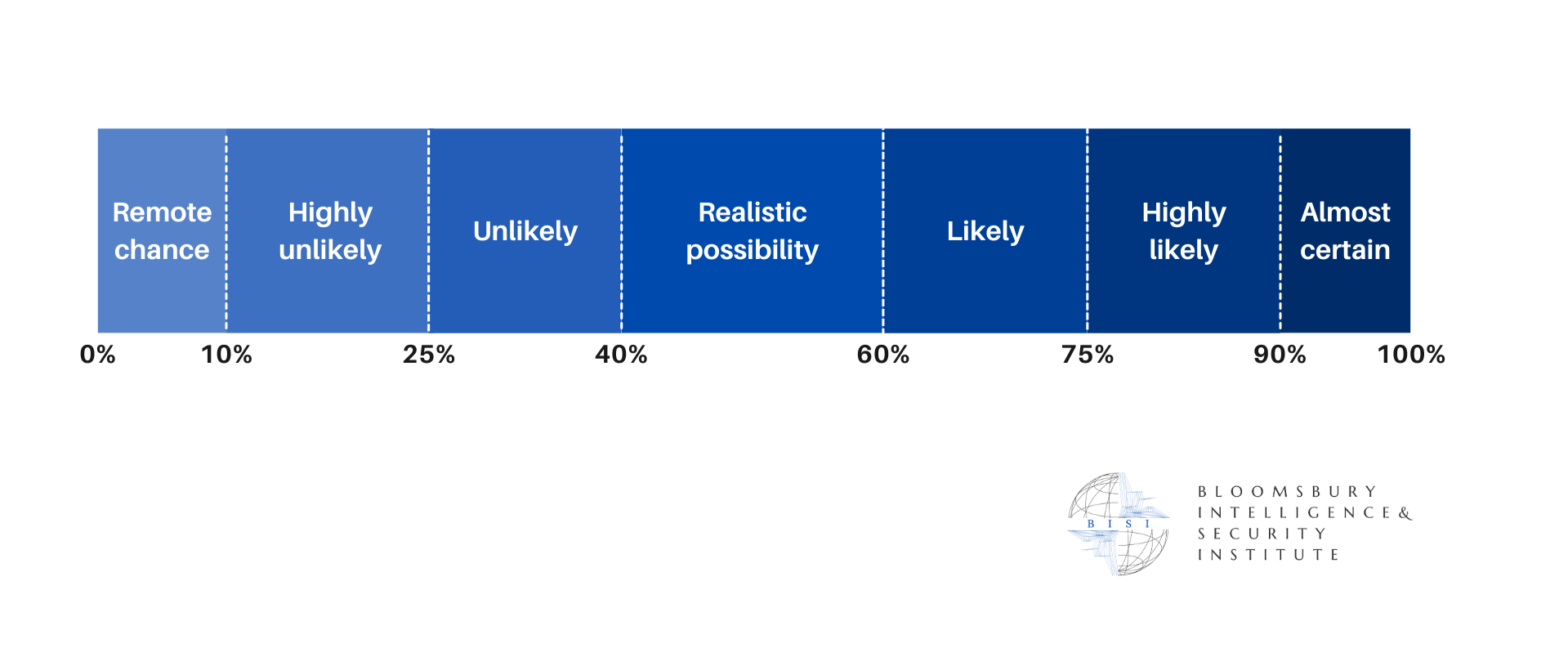
The U.S.-Japan alliance is highly likely to be the core pillar in securing stability in the Indo-Pacific region.
Context
The newly elected Prime Minister Sanae Takaichi and the Liberal Democratic Party (LDP) signal a likely change in Japan’s political landscape and its role in the Indo-Pacific region.
Before Takaichi’s administration, Japan had been a facilitator of a “free and open Indo-Pacific (FOIP).” It emphasised a rule-based International order and led regional infrastructure and transport projects to boost interconnectivity. Japan also valued collective regional defence, showing commitment by joining joint economic and security frameworks (e.g., the Quad foreign ministers’ meeting and US-Japan-South Korea trilateral cooperation).
Policies that made Takaichi stand out include a comprehensive structural reform of security and defence, which aligns with the PM’s vision of strengthening national resilience against external coercion and threats. Furthermore, Takaichi’s victory mirrors the Japanese public’s “demand for security in a neighbourhood.” In addition, there are high hopes for a rejuvenated domestic economy through a “responsible proactive fiscal policy,” which is significant for both geopolitical and economic security.
Implications
From a broader perspective, Takaichi’s victory signifies her ambition to elevate Japan’s role as a facilitator in the Indo-Pacific to that of a defensive leader in regional deterrence. Moreover, Takaichi’s ideological clarity accelerated the ongoing advocacy to increase Japan's defence budget, which accounts for 2% of Japan's GDP. The pro-national security sentiment can also be reflected in the re-emergence of the debate over rewriting Article 9 of the Constitution of Japan, which has deprived Japan of the agency to engage in warfare or settle disputes by force since the end of the Second World War. Additionally, Takaichi plans to reform and integrate Japan's intelligence service to improve Japan’s cybersecurity and its capabilities to counter hybrid warfare.
Japan’s intention to promote regional security was evidenced in a recent meeting between U.S. President Donald Trump and Takaichi. The talk paved the way for new investment opportunities in the nuclear sector in both Japan and the U.S. (e.g., Hitachi GE Vernova Nuclear Energy, Ltd.), as initiatives are expected to lead to the construction of small modular reactor power plants and natural gas generation facilities across various states. In terms of supply chain resilience and energy security, both countries are committed to hosting more joint dialogues and partnerships in critical materials, technologies, and the space industry.
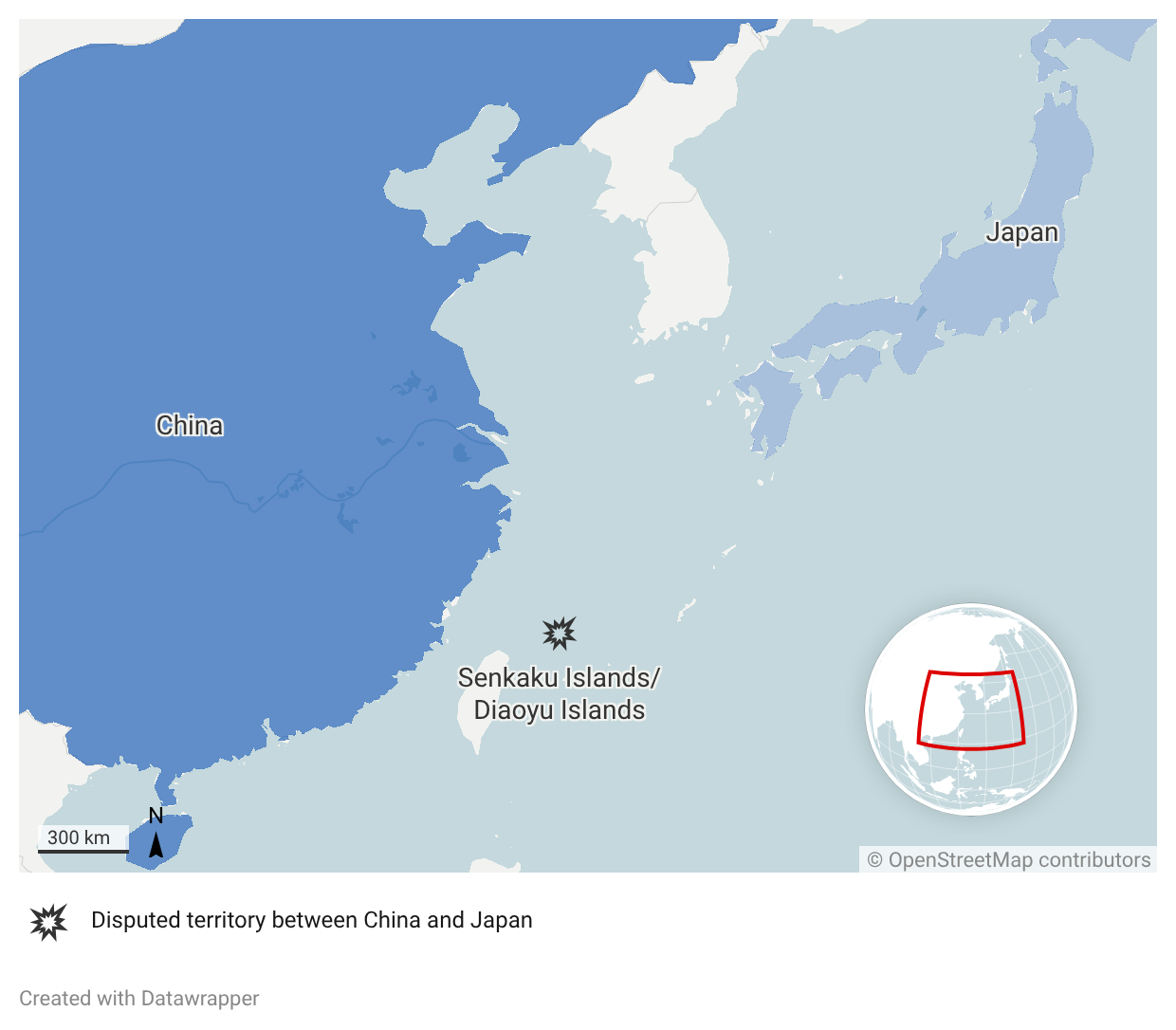
In terms of Sino-Japanese relations, bilateral relations remain strained due to unresolved territorial disputes (i.e., the Senkaku/Diaoyu Islands) and historical grievances, and have been exacerbated since Takaichi assumed premiership due to her hawkish stance. The worsening of Sino-Japanese relations before Takaichi’s premiership had been evidenced by the People’s Liberation Army Navy's (PLAN) increased military mobilisation. It pinpointed the ongoing and increased activities by the Chinese navy and aircraft around the Sea of Japan, Taiwan, and in the Pacific Ocean. To ensure the continuity of Indo-Pacific security, Japan, the Philippines, and the U.S. have also begun deploying advanced missile systems around Taiwan and along the first island chain, enhancing deterrence capabilities in the event of conflict. Since Takaichi came into power, she stated in an address in 2025 that a Taiwan contingency and regional disruption would constitute an existential crisis for Japan. If the “worst-case scenario” did occur, Japan could then initiate countermeasures under existing security legislation for the purpose of collective self-defence. Consequently, Takaichi’s political agenda and remarks led to official condemnation from the Chinese officials, in which heavy suggestion claiming that Japan is reviving its tendency towards “neo-militarism” through military expansion while referencing historical casualties during the Second World War.
China’s narrative manipulation does not stop at suggesting the resurgence of neo-militarism in Japan. Despite Japan’s commitment to non-proliferation and its being part of the Nuclear Non-Proliferation Treaty (NPT) since 1976, China remains doubtful and said that Japan’s current plutonium stockpile is sufficient for the manufacture of 5500 nuclear warheads. Examining the statistics, while Japan does own roughly 44.4 tons of plutonium, only 8.6 tons were held domestically, with the legally binding NPT restricting Japan to purely peaceful activities. Japan also reiterated in official reports that it will “ actively participate in the development of international systems and training related to arms control, disarmament and non-proliferation.” China, however, has been expanding its nuclear capabilities despite being bound by the NPT. Since 2022, China’s plutonium holdings have remained roughly 2.9 tons, give or take; however, there is no updated data for 2025. Nevertheless, it was calculated that the plutonium holdings held domestically in China as of 2025 accounted for 600 nuclear warheads. Moreover, it was estimated that 57 nuclear power reactors were operating in China, compared with 15 in Japan.
Forecast
Short-term (Now - 12 months)
Japan is likely to remain neutral towards the U.S. and Israel's attack on Iran, prioritising its alliance with the U.S. to maintain regional deterrence capabilities and benefit economically from investment deals with the U.S.
The deterrence cooperation between the U.S. and Japan is highly likely to trigger retaliatory measures from China, including economic sanctions, deliberate negative framing of Japan, and cognitive/cyber domain warfare.
It is highly likely that the PLA Navy and Air Force will enhance their military exercises in Japan’s Exclusive Economic Zone and the wider Pacific waters in light of the U.S.-Japan alliance.
Long-term (>1 year)
Due to Japan’s support for Taiwan, it is highly likely that China will increasingly resort to political (e.g., sovereignty disputes over Senkaku/Diaoyu Island) and economic coercion (e.g., tightened control over rare-earth elements).
The reactivation of the Kashiwazaki-Kariwa nuclear power plant is unlikely to alter Japan’s commitment to the Non-Nuclear-Principle, despite the dual-use features of nuclear energy.