Case of Egypt's AI Infrastructure Bid and the Geopolitics of Sovereign AI
By Ipek Kara | 04 September 2026

Summary
On August 26, Huawei submitted a proposal to build Artificial Intelligence (AI) data centres for the Egyptian government. The United States (US) Department of State is reportedly working on forming a competing consortium to make a counteroffer.
Countries pursuing sovereign AI face the risk of creating long-term dependence on foreign technology ecosystems while aiming to increase autonomy with domestic computing capacity. Reliance on various ecosystems across the world is likely to complicate cross-border AI deployment and cause fragmentation.
The Egyptian case is likely to become one of the initial steps to a broader third-country AI infrastructure competition between leading companies, mainly from the US and China. This is highly likely to make infrastructure procurement an increasingly important part of technology and geopolitical competition.
Context
On August 26, Huawei submitted a proposal to build Artificial Intelligence (AI) data centres for the Egyptian government. The proposal consists of 1,408 Ascend 950-series processors for an AI training cloud, alongside an additional 600 chips to be used for two inference clusters. Huawei has proposed to complete the infrastructure in 12 months. Following the announcement of the proposal, the United States (US) Department of State reportedly approached Nvidia, AMD, and Microsoft to form a competing consortium to make a counter-offer.
Egypt has been actively improving its AI capabilities as part of its 2025-2030 National AI Strategy. The current strategy identifies infrastructure, data, research, skills and international cooperation as key priorities and aims to increase AI's contribution to GDP to 7.7% by 2030. In June 2026, Egypt announced a national data-centre strategy aimed at strengthening infrastructure and attracting investment to make Egypt a major regional digital services hub. Although the number of processors in the proposal is modest, it arrives at a moment when there is increased national effort to expand AI capabilities. Therefore, the choice of infrastructure provider will be a strategically significant decision.
This development makes Egypt an important case to observe implications of sovereign AI developments. The concept of sovereign AI refers to a state’s ability to develop and deploy AI while retaining significant control over the technological capabilities, such as infrastructure and data, on which the systems depend. Sovereign AI does not require every component to be produced domestically, but it concerns the strategic control of a state over its AI ecosystem.
Implications
The case of Egypt highlights a change in the AI competition. The question is moving from who produces the most advanced chip to who builds the infrastructure on which other countries' AI capabilities will depend. Large-scale AI infrastructures are complex systems including parts such as servers, cloud platforms, software, and technical expertise. This differentiates AI infrastructure from conventional technology exports, as they are long-term and expensive investments.
This shift is also changing how power is exercised. The US and China are increasingly competing not only in innovation but also to shape international adoption of technologies. The US government has historically relied on export controls over Chinese companies to restrict their access to the market. But the Egyptian case implies that preventing Chinese expansion will likely require a different and more proactive approach in the future. US restrictions have accelerated Huawei's efforts to develop alternatives to Nvidia within China, but those alternatives become strategically significant internationally only if they can gain adoption in third countries. Egypt therefore represents an early test of whether Huawei’s Ascend platform can establish a presence outside China and become a viable international AI infrastructure alternative.
Egypt’s choice between Huawei and a US coalition alternative brings a central challenge about sovereign AI. Building domestic infrastructure can reduce reliance on foreign cloud and AI services. However, Egypt cannot build this infrastructure itself; it must rely on a chosen external supplier. This creates a hidden layer of dependency. While Egypt gains control over servers and computing capacity, it becomes tied to another country’s technological ecosystem. The choice will shape not only the cost and performance of Egypt's immediate AI capabilities, but also its future access to upgrades, technical expertise, compatible hardware and software. Sovereign AI may therefore require states not to eliminate technological dependence, but to ensure that the dependencies created by their infrastructure choices remain manageable.
The Egyptian case is unlikely to remain isolated. Many states pursuing sovereign AI strategies will likely build their capabilities around either US- or China-led ecosystems. This is likely to cause greater fragmentation in the global AI landscape not only in technology, but also in the standards and institutions in the coming years. China’s recent establishment of the World Artificial Intelligence Cooperation Organisation (WAICO) shows the competition extending into technology governance. Although WAICO reportedly supports the UN playing the central role, the establishment of multiple international organisations could contribute to greater fragmentation in AI governance. In the long term, divergent standards and regulatory approaches could make cross-border AI deployment more complex and create additional friction in international economic relations.
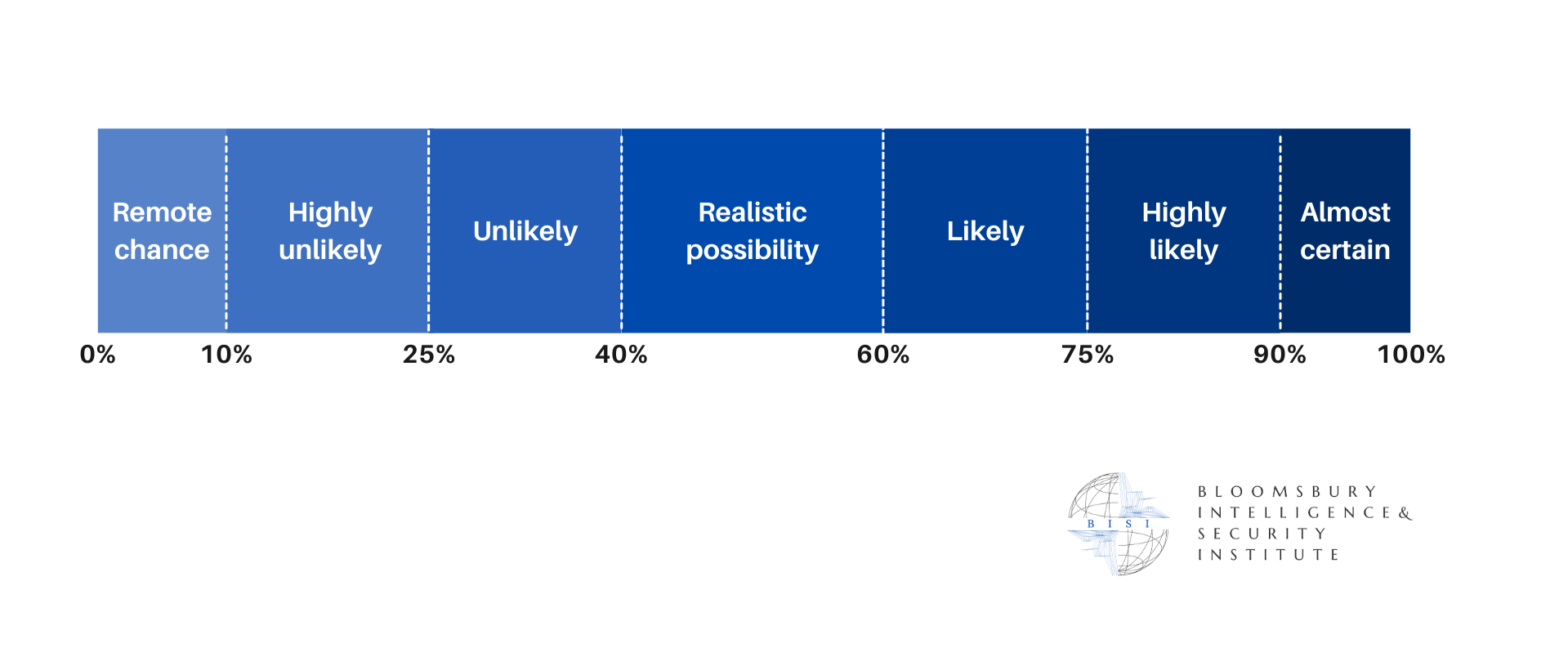
Forecast
Short-term (Now - 3 months)
The US is highly likely to come up with a counter-offer in the following weeks. In the case Egypt proceeds with the Chinese offer, the US is likely to use export controls as leverage
Medium-term (3 - 12 months)
As more countries develop their AI strategies, third-country infrastructure is likely to become a major area of US-China tech competition.
Long-term (>1 year)
Foreign infrastructure-dependent national strategies are likely to create fragmented technology and governance ecosystems, resulting in cross border economic friction and interoperability problems.