By Erlan Benedis-Grab | 30 March 2026
Summary
Iranian drones struck Azerbaijan’s Nakhchivan exclave on 5 March 2026, prompting protests and regional condemnation. The crisis de-escalated quickly, with cargo traffic and bilateral contacts resuming within days.
The incident showed Azerbaijan’s growing strategic importance to Central Asia because the Middle Corridor’s westbound route runs across the Caspian into Azerbaijan before continuing toward Europe, making Azerbaijani stability and transit infrastructure central to many. This incident was relevant to Central Asia because it involved 2 states that are important to the region’s external connectivity, with Azerbaijan central to westbound Middle Corridor trade and Iran important for southbound access to Gulf routes.
Central Asian states will almost certainly keep a neutral stance and preserve ties with both Azerbaijan and Iran, making further major escalation unlikely in the near term.
Context
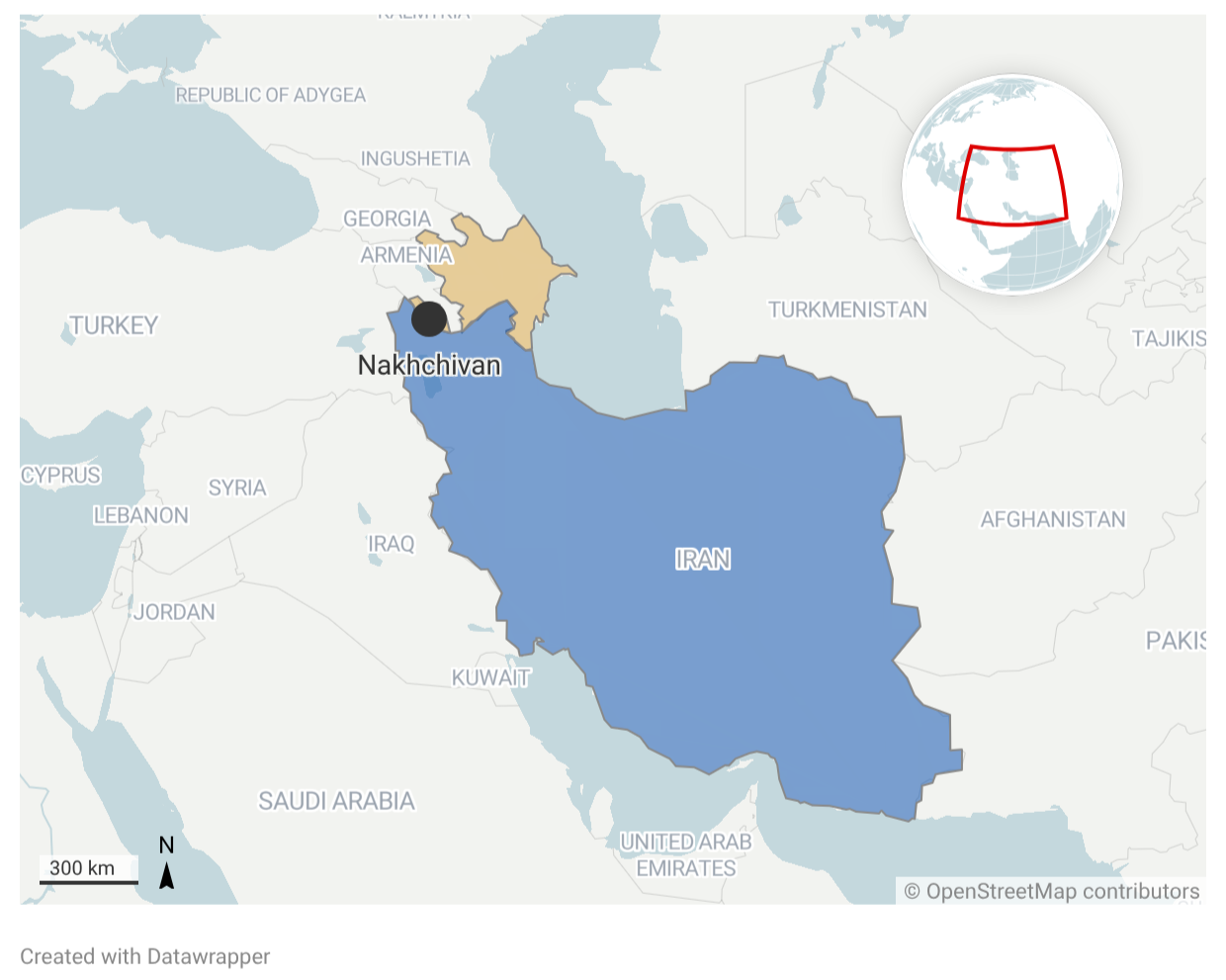
On 5 March 2026, Iranian suicide drones struck the Azerbaijani exclave of Nakhchivan, hitting civilian targets including Nakhchivan International Airport and injuring four people. The location made the incident especially sensitive, as Nakhchivan occupies an important symbolic and strategic place in Azerbaijani sovereignty.
As a result, Azerbaijan summoned the Iranian ambassador, delivering a formal letter of protest and vowing military retaliation.
Several Central Asian states condemned the Iranian strikes on Azerbaijan. Kazakhstan, Uzbekistan, and Kyrgyzstan joined Türkiye and the Organisation of Turkic States (OTS) in an informal OTS Council of Foreign Ministers meeting in Istanbul on 7 March 2026.
However, the incident did not lead to further escalation. On 8 March 2026, President of Iran Masoud Pezeshkian and President of Azerbaijan Ilham Aliyev held a phone call during which Pezeshkian denied Iranian responsibility and promised a full investigation.
Implications
Despite the severity of the incident, it does not appear to have had major long-term implications for bilateral relations. Azerbaijan reopened its border crossings with Iran for cargo traffic on 9 March 2026, just days after the strike. Azerbaijan later sent humanitarian aid to Iran, including a further shipment ahead of Nowruz. Most importantly, Azerbaijan did not invoke its right to respond militarily to Iran.
Despite the incident, Central Asian states have sought to keep relations with Iran stable and predictable. Although several governments initially condemned the strike in support of Baku, Tajikistan, Turkmenistan, and Uzbekistan later sent humanitarian aid to Iran, highlighting the region’s preference for preserving practical ties with Tehran.
For countries such as Turkmenistan and Uzbekistan, southbound rail routes through Iran provide one of the shortest overland links to maritime trade in the southbound direction, particularly via Chabahar Port. As a result, Iran remains strategically important not only to Turkmenistan and Uzbekistan, but to Central Asia more broadly.
The initial condemnation of the Iranian attacks showed that Azerbaijan has become strategically important to Central Asian states, but their broader response also reflected a balancing act rather than a dramatic break with Tehran. Central Asian governments signalled support for Azerbaijan because it is now firmly embedded in the C6 format, which refers to the emerging regional framework that brings together the 5 Central Asian states and Azerbaijan.
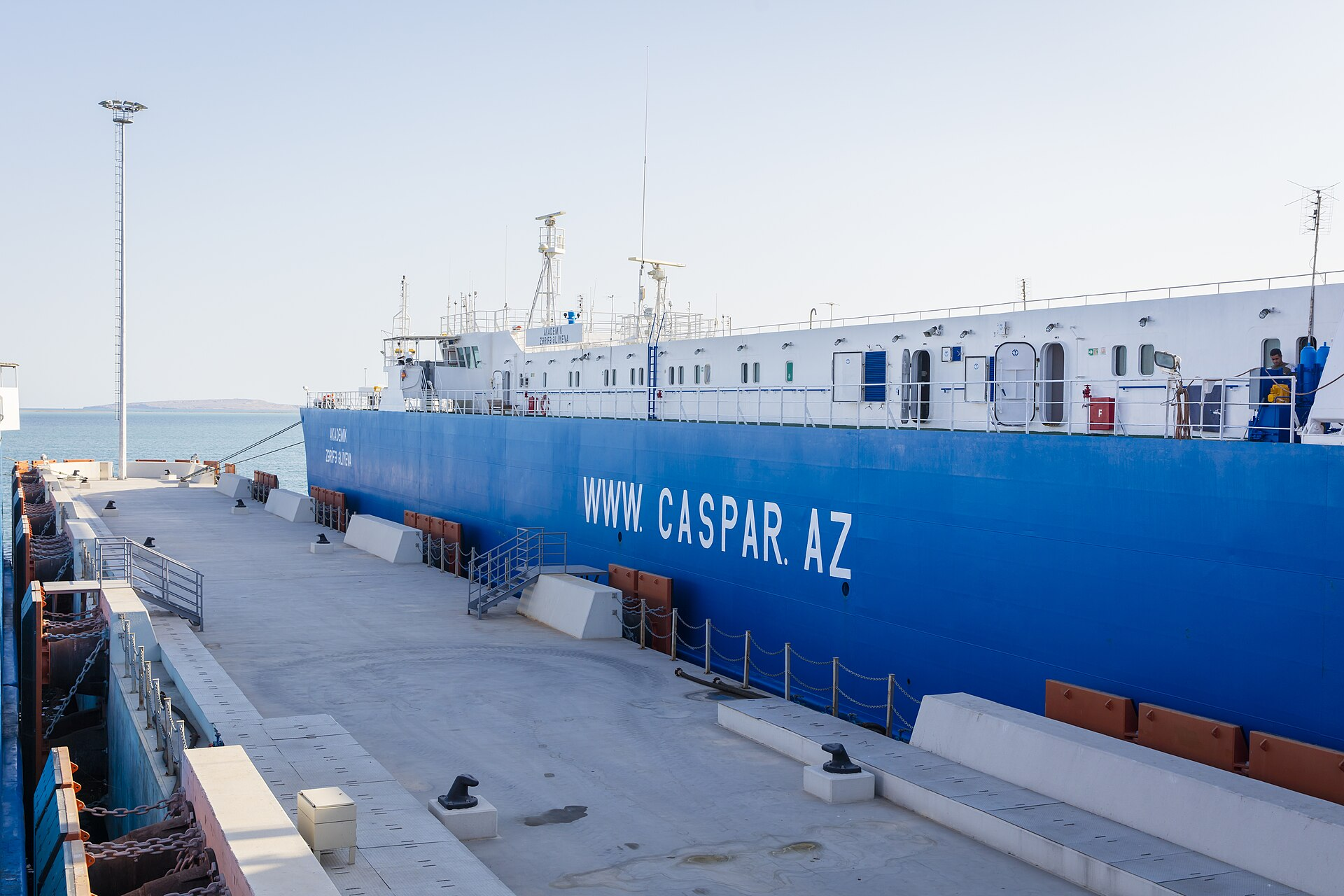
Azerbaijan’s infrastructure, notably the Port of Alat in Baku, is central to the Middle Corridor and links Central Asia to Europe. Central Asia has a desire to avoid making a choice between the two states that are both important to its external connectivity.
While President Pezeshikian denied their involvement in the attack, an Islamic Revolutionary Guard Corps (IRGC)-affiliated Telegram channel claimed responsibility for the attack in Azerbaijan. The IRGC’s concern is not only Azerbaijan itself, but Azerbaijan’s deepening strategic and defence relationship with Israel, which the IRGC can view as an Israeli foothold on Iran’s northern frontier. This suggests the IRGC may have acted with considerable autonomy. Following US-Israeli decapitation strikes, it appears to be operating in a more decentralised manner.
Overall, the incident demonstrated that Central Asian states increasingly regard Azerbaijan as strategically important, though not to the extent of jeopardising their pragmatic relations with Iran.
Forecast
Short-term (Now - 3 months)
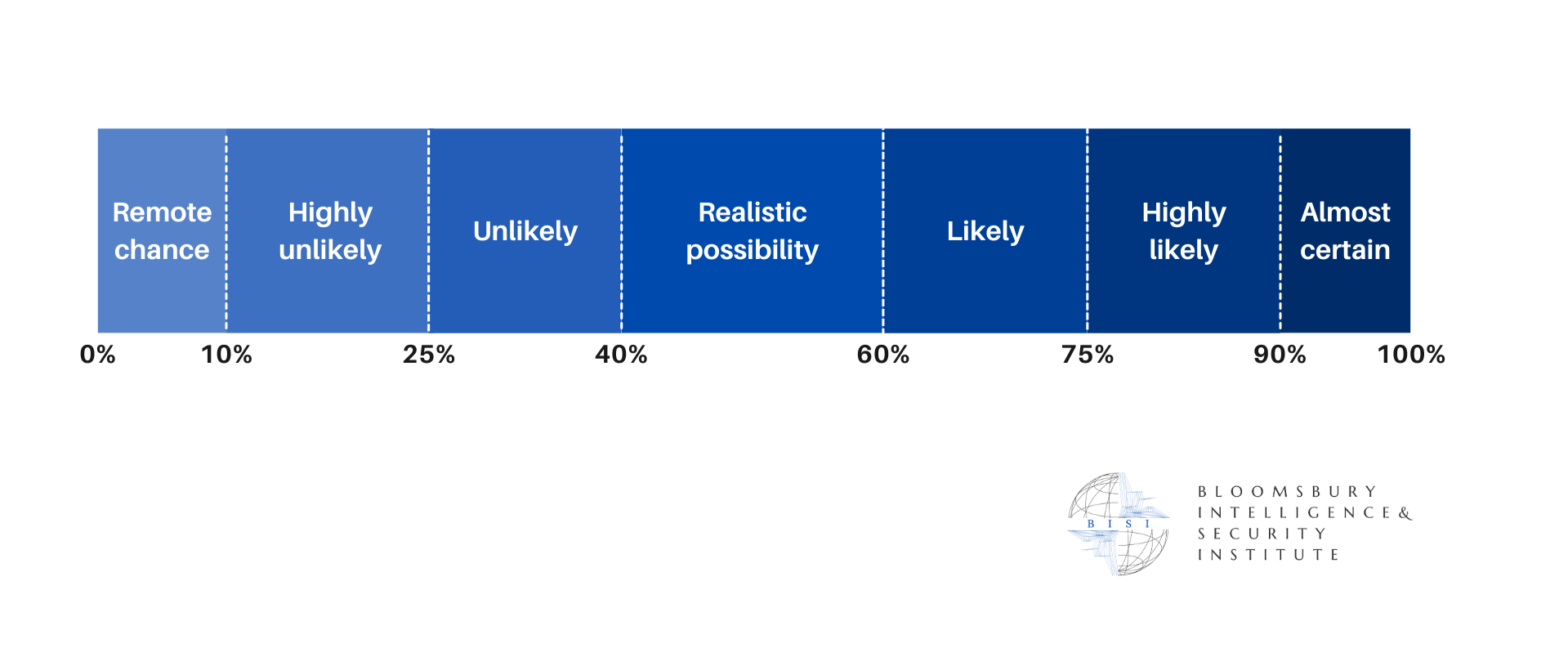
It is highly likely that Azerbaijan and Iran will keep the crisis contained through official channels, even as the US–Iran conflict continues, as neither side appears willing to risk a broader confrontation that would disrupt trade, transit, and regional diplomacy.
It is likely that Azerbaijan and nearby partners will tighten monitoring around key transport and logistics infrastructure, especially in areas tied to the Middle Corridor, to guard against possible future incidents.
Medium-term (3 - 12 months)
Azerbaijan will almost certainly continue to deepen security coordination with partners such as Türkiye and Israel, reinforcing Iranian threat perceptions.
Long-term (>1 year)
It is likely that Central Asian states will preserve working ties with Iran, but planners and investors will increasingly view Iranian routes as more vulnerable to sudden security shocks and internal factional behaviour.