Inaugural Kyrgyz–Tajik Intergovernmental Council Aims to Deepen Regional Trade Links
By Erlan Benedis-Grab | 23 March 2026
Summary
The first Kyrgyz–Tajik Intergovernmental Council meeting in Bishkek marked a step forward in post-conflict normalisation, with both sides pairing political rapprochement with a USD 500 m 2026 trade target and plans to modernise border and customs infrastructure.
Kyrgyzstan aims to turn its Eurasian Economic Union (EAEU) membership into a strategic advantage for Tajikistan by positioning itself as a gateway for Tajik goods into EAEU markets, though border and regulatory constraints remain.
If implementation continues, Kyrgyz–Tajik cooperation will likely deepen through trade and border coordination, but progress will likely remain limited by regulatory frictions and technical gaps.
Context
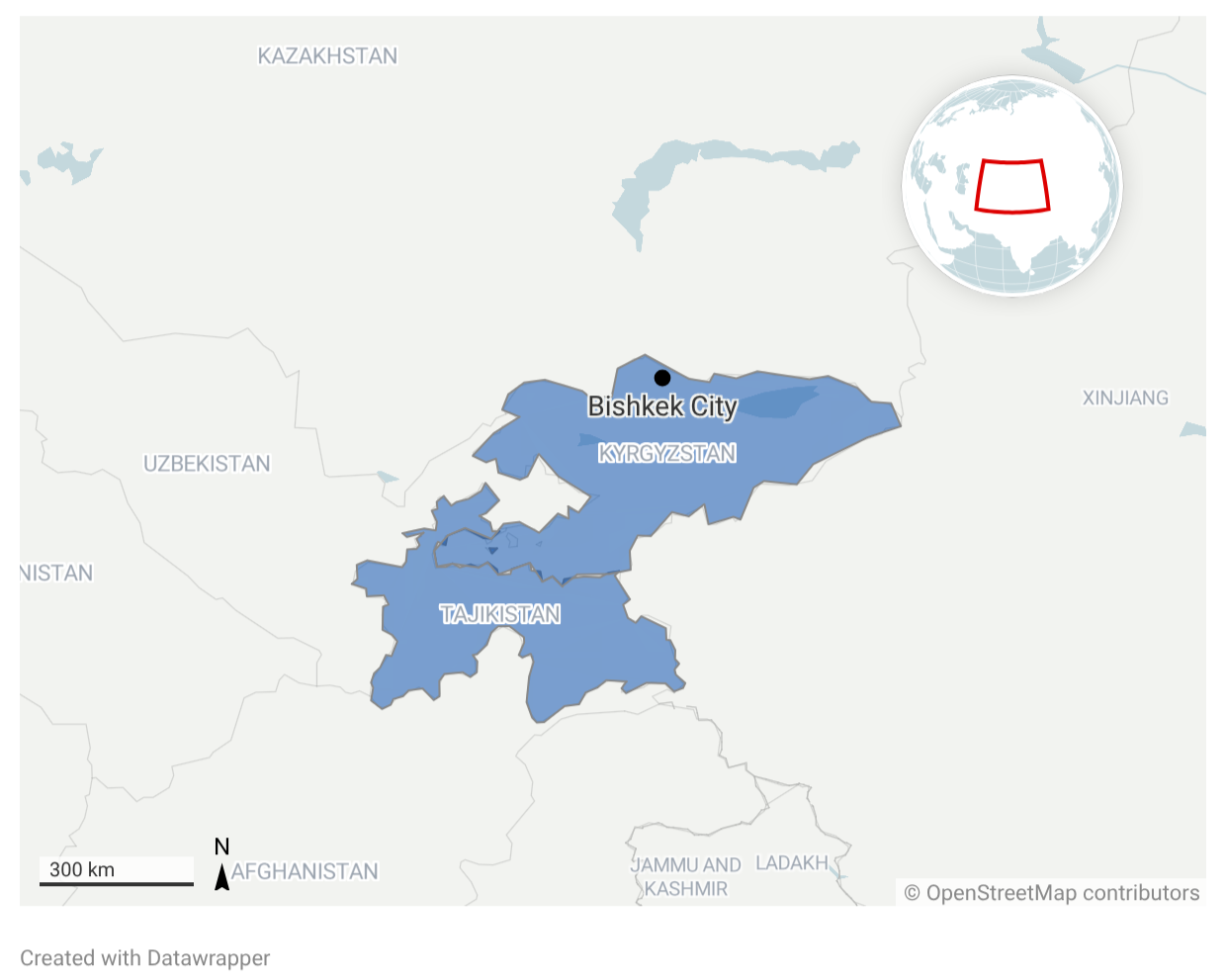
On 13 February 2026, Chairman of the Cabinet of Ministers Adylbek Kasymaliev met Tajik Prime Minister Kokhir Rasulzoda to attend the first meeting of the Kyrgyz–Tajik Intergovernmental Council in Bishkek.
While the Tajik–Uzbek intergovernmental commission is meeting for its 13th session, the Kyrgyz–Tajik intergovernmental council is new—a reflection of how long-standing historic border tensions have constrained formal economic coordination between Kyrgyzstan and Tajikistan, including border disputes and clashes in recent years.
Both parties cited the intention of improving border infrastructure and efficiency to facilitate personnel and cargo movement, as bilateral trade reached USD 36m in 2025 with a target of USD 500m for this year. The meeting also addressed the Eurasian Economic Union (EAEU) dimension: Kyrgyzstan is a member of the EAEU, while Tajikistan is not. The Kyrgyz Export Development Centre and Tajikistan’s Chamber of Commerce and Industry signed a memorandum of understanding following the meeting to facilitate cross-border trade.
Implications
Although there were doubts about the durability of the Kyrgyz-Tajik peace, this first meeting showed that bilateral cooperation is moving forward on practical day-to-day issues, marking a modest sign of progress for regional stability in Central Asia. The trade increase (from 2025) appears to be concentrated in practical, high-frequency sectors such as food products and basic industrial materials rather than in capital-intensive products. Kyrgyzstan’s main exports to Tajikistan included chocolate/cocoa and coal totaling 3.66m, while Tajikistan’s exports were led by aluminium and fruits and vegetables, totalling 2.25m.
Since the trade increase is concentrated in basic products, it is more likely to boost investment in logistics, warehousing, and wholesale and retail trade than to generate major industrial projects.
Kyrgyzstan is seeking to turn its EAEU membership into a strategic advantage by positioning itself as a route for Tajik goods to reach EAEU markets that Tajikistan cannot access as easily on its own. The EAEU’s external policies make it harder for countries outside the bloc, such as Tajikistan and Uzbekistan, to trade with other Central Asian states and Russia.
Furthermore, Kyrgyzstan’s deeper trade coordination with Tajikistan also reflects frustration with barriers inside the EAEU. On 2 March 2026, members of Kyrgyzstan’s parliament said domestic producers still face export obstacles in other EAEU states, including long truck queues at the Kyrgyz–Kazakh border. This suggests that Kyrgyzstan is seeking stronger trade links with Tajikistan, amid ongoing problems within the EAEU. At the same time, bottlenecks on Kyrgyz exports show that its potential gateway role will still depend on border management and transit conditions it cannot fully control.
That momentum, however, now faces an external shock: Operation Epic Fury. For both countries, the most immediate risk is rising fuel prices. Kyrgyzstan’s net energy imports were equal to 33.8% of energy use in 2022, while Tajikistan’s were 28.0%, underscoring both economies’ exposure to external energy shocks. Therefore, cooperation between these two states—both characterised by high remittance rates and import vulnerability—is increasingly important.
Forecast
Short-term (Now - 3 months)
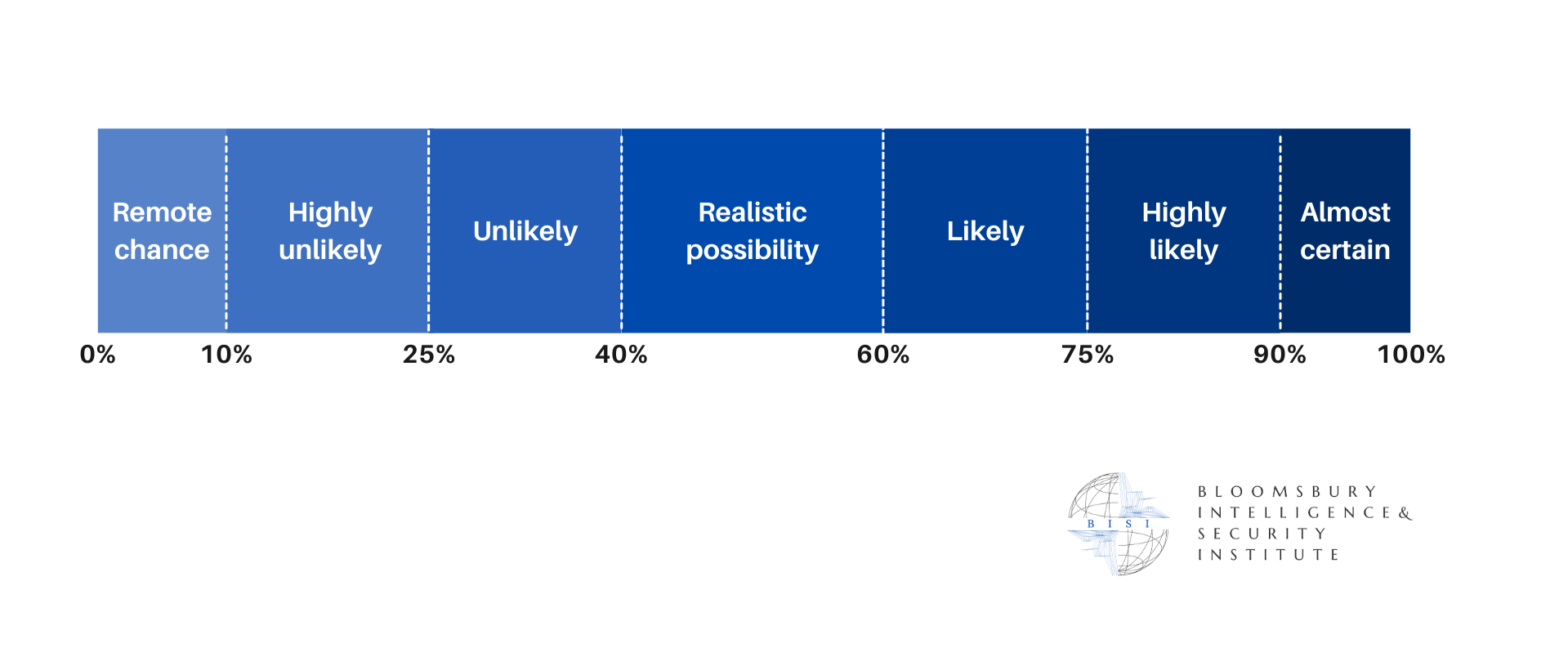
Kyrgyzstan and Tajikistan will likely deepen trade as the Iran war raises fuel and import costs, making faster border management and customs processing more urgent.
Medium-term (3 - 12 months)
There is a realistic possibility that Kyrgyzstan and Tajikistan will convert recent political normalisation into modest institutional gains, especially through new trade procedures and working-level coordination, but progress will likely remain limited by regulatory frictions and technical gaps.