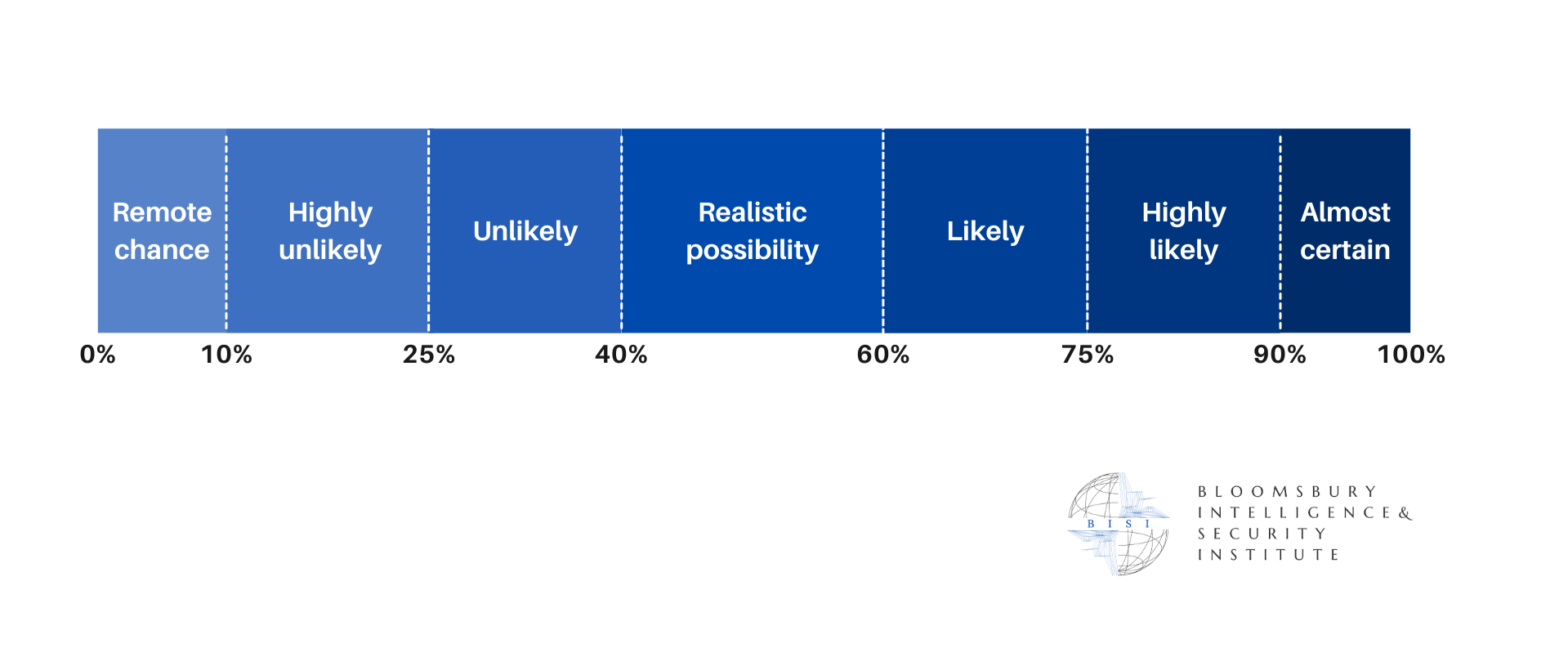
By Stephen Nkrumah | 17 March 2026
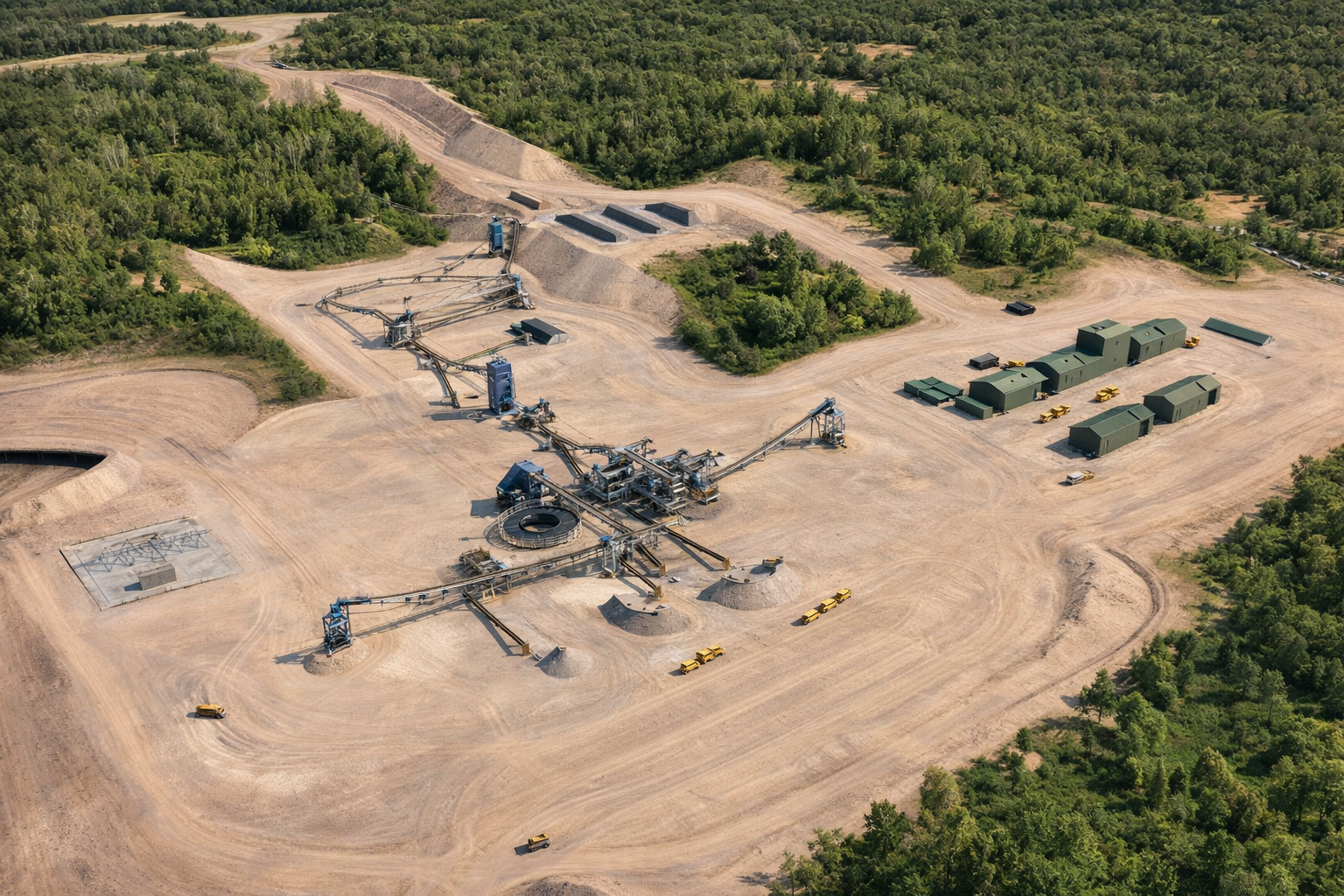
Atlantic Lithium Ltd
Summary
Ghana is seeking to increase local value addition in lithium while at the same time maintaining investor confidence in a fast-growing global market, which is expected to rise sharply from USD37.4b in 2024 to USD96.53b by 2030.
The Ewoyaa Lithium Project in Ghana’s Central Region, led by Atlantic Lithium, is the country’s first major lithium mining development and is central to this strategy. However, the project faces several risks, including governance credibility concerns, infrastructure gaps, and fluctuations in the global lithium market.
If Ghana ensures stable fiscal terms, transparent licensing, and phased value-add requirements supported by clear infrastructure plans, local value addition can be achieved without significantly reducing investment. However, the likelihood of meeting these conditions remains uncertain, and policy or infrastructure constraints could delay investment.
Context
In 2018, Ghana discovered commercially viable lithium deposits at Ewoyaa in the Central Region, placing the country in the fast-growing global market for critical minerals. The strategic importance of the discovery was further reinforced in October 2023 when the government granted a 15-year mining lease to Barari DV Ghana Limited, a subsidiary of Atlantic Lithium, enabling the transition from exploration to commercial lithium production. The lease covers estimated reserves of about 35.3m tonnes of ore with an average grade of 1.25% lithium oxide (Li₂O). Over a projected 12-year mine life, the project is expected to produce about 3.6 million tonnes of spodumene concentrate. This concentrate is an important intermediate product used to produce lithium chemicals needed for battery manufacturing.
State participation has been formalised through a 6% equity stake acquired by the Minerals Income Investment Fund, forming part of a two-part capital investment of USD 32.9m in Ghana’s first lithium mine, strengthening government involvement in the project. In the same year, the Green Minerals Policy was approved to limit the export of raw lithium and promote domestic processing, possibly into lithium carbonate for battery supply chains. These steps show a clear policy shift toward value addition instead of relying mainly on raw mineral exports, intending to increase domestic economic benefits through job creation, higher export revenues, and the development of local processing industries in Ghana.
Implications
From a political risk perspective, Transparency International’s Corruption Perceptions Index (2025) gives Ghana a score of 43 out of 100, ranking 76th out of 182 countries, showing that public sector integrity challenges still exist. The 2025 National Service Scheme “ghost names” payroll fraud scandal, where tens of thousands of fictitious names were placed on the payroll, causing significant losses, illustrates governance vulnerabilities that are likely to affect investor confidence. While Ghana has taken steps to prosecute those implicated, it remains uncertain whether such reforms will significantly reduce political risk in the near term. In the context of lithium development, this suggests that governance risks remain a concern for investors, which may affect investor confidence and long-term investment decisions. Such perceptions can lead to higher compliance costs, uncertainty in contract enforcement, and possibly higher financing premiums for large, long-term projects.
Policy credibility also influences investment decisions in the lithium sector. In capital-intensive sectors like lithium, where projects require high upfront investment and long gestation periods, regulatory instability may discourage patient capital and technology partners. However, Ghana is generally considered to have moderate policy stability in the mining sector, suggesting that regulatory instability is possible but not highly likely, provided existing investment frameworks are maintained. Although Ghana’s value-addition strategy has broad support, implementation gaps, like infrastructure delays and regulatory bottlenecks, are likely to affect outcomes. Hence, maintaining policy consistency, strengthening institutions, and ensuring transparent enforcement will be critical for investor confidence.
On the economic front, value addition in Ghana’s lithium sector has the potential to strengthen domestic industrial capacity and create stronger linkages with manufacturing. However, setting up processing facilities requires substantial upfront capital. For instance, Atlantic Lithium’s Ewoyaa project is projected to require USD185m in development expenditure before spodumene concentrate production can begin. Refining activities also depend heavily on reliable and competitively priced electricity, which remains a challenge in Ghana. Despite improvements in electricity supply, intermittent outages and relatively high energy costs have persisted, forcing many firms to rely on backup generation and raising operational costs for energy-intensive industries. Given the country’s constrained fiscal space after recent debt restructuring and ongoing inflationary pressures, large-scale government subsidies or infrastructure guarantees are very likely to remain limited. Also, lithium prices have been volatile since 2023, increasing commercial uncertainty. If domestic processing results in higher operating costs relative to established global hubs, investors are likely to delay expansion or shift to jurisdictions with lower above-ground and regulatory risk, which will make it harder to balance competitiveness with industrial policy goals.
Forecast
Short-term (Now - 3 months)
Government emphasis on local value addition without consistently implemented supporting policies is likely to create short-term uncertainty for investors and mining companies, which will almost certainly influence investment decisions because of regulatory and infrastructure constraints.
As a result, the wider investment climate, including infrastructure, logistics, and financial services, may become more cautious in the short term, with impacts likely to be moderate and visible within the next three months.
Medium-term (3 - 12 months)
Investment flows and key project milestones are likely to slow down if value-add requirements are introduced without a clear phased implementation plan, posing serious risks for mining and processing projects.
Industrial supply chains, contractors, and local communities expecting job opportunities may face delays in expected benefits, with noticeable impacts likely within one year.
Long-term (>1 year)
It is a realistic possibility that a viable domestic value-add industry could develop if Ghana maintains stable regulations, improves transparency, and continues investing in infrastructure.
If this happens, sectors such as manufacturing, energy, and transport could benefit. However, corruption risks or inconsistent policies may slow down progress and reduce the expected benefits, with moderate impacts likely between 2027 and 2030.