By Rakotoarimanga Tinah | 28 April 2026

Summary
US intelligence indicates that China has transferred YLC-8B anti-stealth radar systems to Iran following the outbreak of the US–Israel–Iran conflict in March 2026, introducing long range UHF detection capabilities that undermine US and allied low observable air operations in the Gulf.
The radar transfer forms part of a broader Chinese effort to expand Iran’s sensor and ISR ecosystem, including BeiDou satellite navigation, commercial imagery and dual use drone components, enabling more persistent detection and data sharing across Iranian air defence networks.
The transfer reflects a pattern in Chinese defence exports that allows Beijing to challenge Western airpower indirectly while gaining exposure to real world performance data against advanced platforms, a model that is likely to be replicated in other partner states as the Gulf conflict evolves.
Context
China’s transfer of radar systems to Iran reflects an acceleration in military technical cooperation following successive Iranian battlefield losses. Israeli strikes in October 2024 significantly degraded Iran’s missile infrastructure, reportedly reducing production capacity by up to 93%, prompting external support efforts. By July 2025, after a second Israeli campaign known as the 12 Day War, Iran had received Chinese HQ-9B long range surface to air missile (SAM) systems, reportedly facilitated through an oil-for-weapons barter arrangement to circumvent US sanctions.
The YLC-8B, developed by China’s Nanjing Research Institute of Electronics Technology, operates in the UHF band and is intended to improve detection of low observable platforms, including the F-35 and B-2 Spirit, at extended ranges reportedly reaching up to 700 kilometres under optimal conditions. Several units have reportedly been integrated into Iran’s layered air defence network alongside Russian supplied S-300PMU-2 systems and domestically produced Bavar-373 interceptors, supporting earlier warning and cueing functions as opposed to standalone targeting. Iran is also reportedly seeking additional systems such as the JY-27A, a VHF active phased-array radar, suggesting a broader effort to diversify long-range detection capabilities against stealth aircraft.
Radar transfers reflect a broader Chinese approach centred on enabling capabilities rather than direct force projection. China granted Iran access to its BeiDou navigation system in 2021, which has since been used to support operational resilience, while reported transfers of reconnaissance assets and growing ties between Chinese commercial satellite firms and the Islamic Revolutionary Guard Corps (IRGC) point to deeper integration. Those patterns are visible in Ukraine, where Chinese-origin components and satellite imagery have supported Russian operations without formal attribution.
Implications
Stealth advantage under pressure
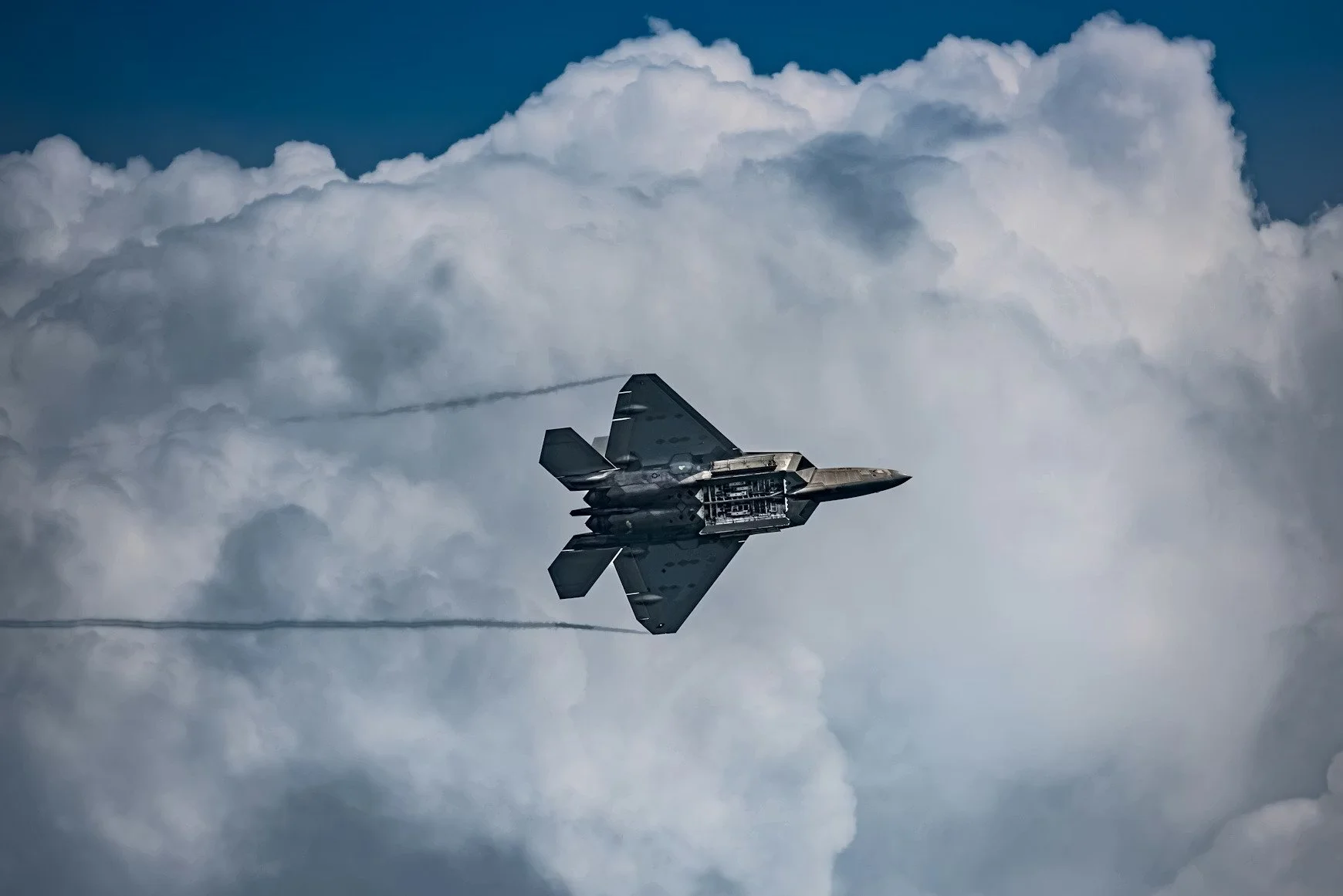
US and allied air campaign planning in the Gulf has historically relied on stealth platforms, including the F-35A, F-35B, and B-2 Spirit, to penetrate contested airspace with limited exposure. The introduction of systems such as the YLC-8B undermines this model by extending detection timelines against low-observable aircraft. Earlier detection reduces reaction margins, supports more responsive interceptor cueing and increases mission risk for deep strike operations targeting hardened Iranian facilities.
The YLC-8B’s anti stealth credentials are contested, noting that UHF detection alone does not ensure reliable tracking or fire control against low observable targets. US electronic warfare assets, including the EA-18G Growler, are specifically designed to suppress radar systems operating in these bands. This shift implicates how it must be deployed as operations in the Gulf are likely to require more sustained electronic warfare support, placing additional pressure on sortie generation, tanker availability and overall force posture.
Indirect proliferation, direct effects
China has developed a transfer model that generates strategic impact and limits direct attribution. Air defence components are routed through intermediary states; commercial satellite links with the Islamic Revolutionary Guard Corps (IRGC) are structured through front companies; and dual-use drone components move through civilian trading networks. In February 2025, the US Treasury sanctioned Chinese entities supplying navigation components to Iranian UAV manufacturers, followed by the exposure of additional procurement networks in November 2025 linked to Iran’s Aircraft Manufacturing Industrial Company. Existing export control mechanisms have struggled to adapt to this level of dispersion.
Beijing does not rely on formal alliances to produce operational effects, it provides enabling layers like sensors, navigation, and ISR, while partners absorb the risks of deployment. In return, China gains indirect access to real world performance data against Western systems, including how its radar technologies interact with low observable aircraft in contested electromagnetic environments. This feedback loop supports both People’s Liberation Army (PLA) modernisation and the refinement of Chinese defence exports.
A Distributed ISR Architecture
The trend that is emerging in the Gulf is a more distributed ISR architecture combining Chinese origin ground radars, BeiDou enabled navigation, commercial satellite imagery, Russian Khayyam satellite data, and Iranian coastal radar systems. These elements can support detection, tracking, and strike cueing against US naval assets operating around the Strait of Hormuz without requiring continuous Chinese operational involvement.
Although this architecture remains uneven in its integration, the US intelligence community’s Annual Threat Assessment advanced that China has achieved near-global coverage across parts of its ISR constellation. Combined with advances in data processing and planned low-Earth-orbit SATCOM expansion, this is likely to improve “find-fix” functions over time rather than enabling a fully seamless targeting capability in the near term.
Alliance exposure
The F-35 underpins NATO airpower across multiple European states, including the UK, the Netherlands, Norway, Italy, Belgium, and Denmark. Systems such as Chinese anti-stealth radars, if they demonstrate even partial effectiveness under operational conditions in the Gulf, are likely to gain traction as export offerings among states seeking to challenge Alliance air operations. Most significantly, adaptations driven by exposure in the Gulf are likely to inform planning assumptions in other theatres, including Europe.
Forecast
Short-term (Now - 3 months)
US and allied air operations over Iran are likely to operate under revised electronic warfare postures, with increased EA-18G and electronic attack support to compensate for the degraded stealth margin.
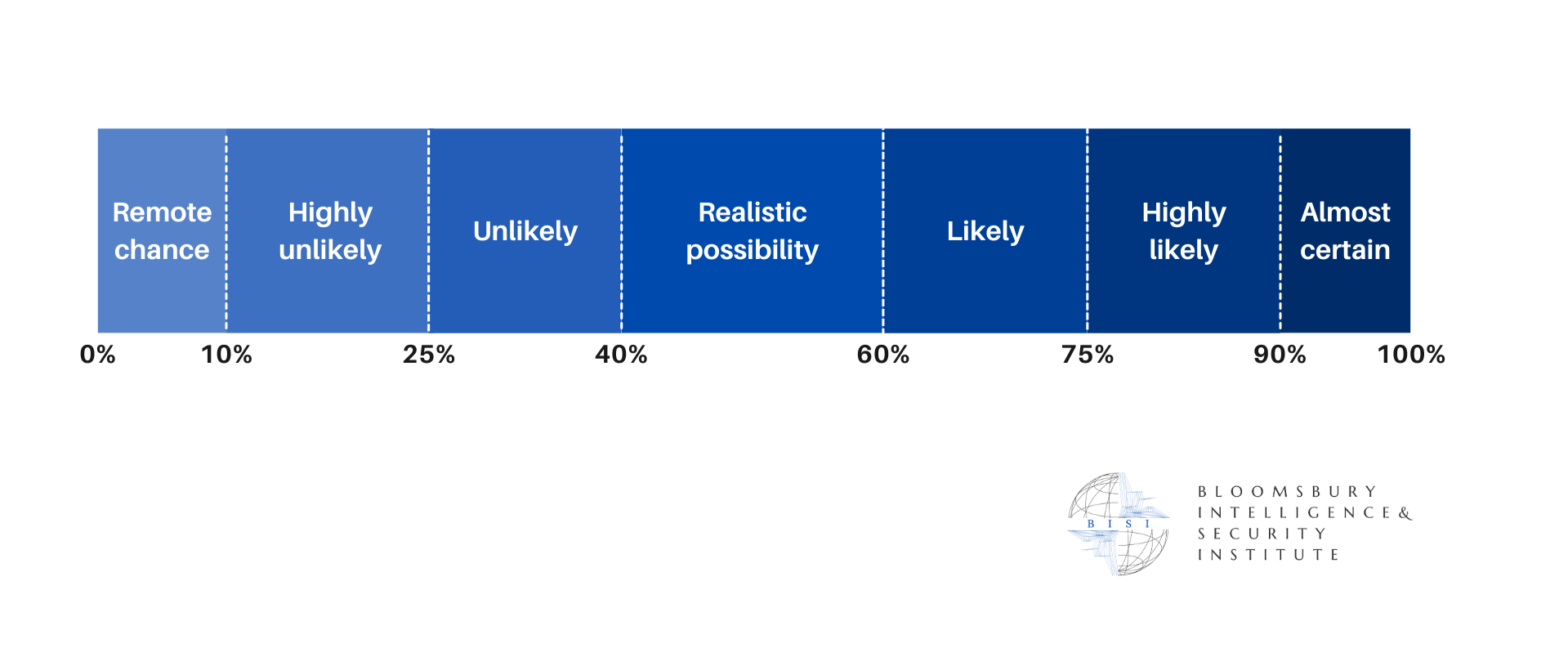
Disruption to Chinese front company supply chains is a realistic possibility but highly unlikely to halt the transfer architecture given established routing through third countries and commercial intermediaries.
Medium-term (3 - 12 months)
China is highly likely to continue supplying enabling ISR and air defence architecture to Iran, with additional radar transfers, potentially including the JY-27, a likely contingent on how the YLC-8B performs in active conflict conditions.
Western export control frameworks are likely to face increasing pressure for redesign to close dual use and third country routing gaps that the current conflict has exposed.
Long-term (>1 year)
The proxy proliferation model is highly likely to become a durable feature of Chinese strategic competition, with Gulf combat data accelerating Chinese anti-stealth radar exports to third states.
NATO planners face a structural problem as the operational advantage of fifth generation platforms is progressively contested across multiple theatres rather than a single conflict zone and Alliance wide SEAD and electronic warfare doctrine is almost certain to require revision within the next 2–3 years.