AI Chip Smuggling: The Limits of US Export Controls
By Carlotta Kozlowskyj | 6 April 2026
Hyins/Wikimedia
Summary
In March 2026, two unrelated smuggling cases involving American-made artificial intelligence (AI) chips exposed the limitations of US AI chip export control, which have been systematically evaded despite being in place since 2022.
The cases demonstrate that restricting chip exports does not prevent actors from obtaining US hardware through shell companies, fake compliance audits and Southeast Asian intermediaries.
In response, the US Congress approved the Chip Security Act on 26 March 2026, which would directly embed tracking technology into chips, potentially reshaping the global AI chip supply chain.
Context
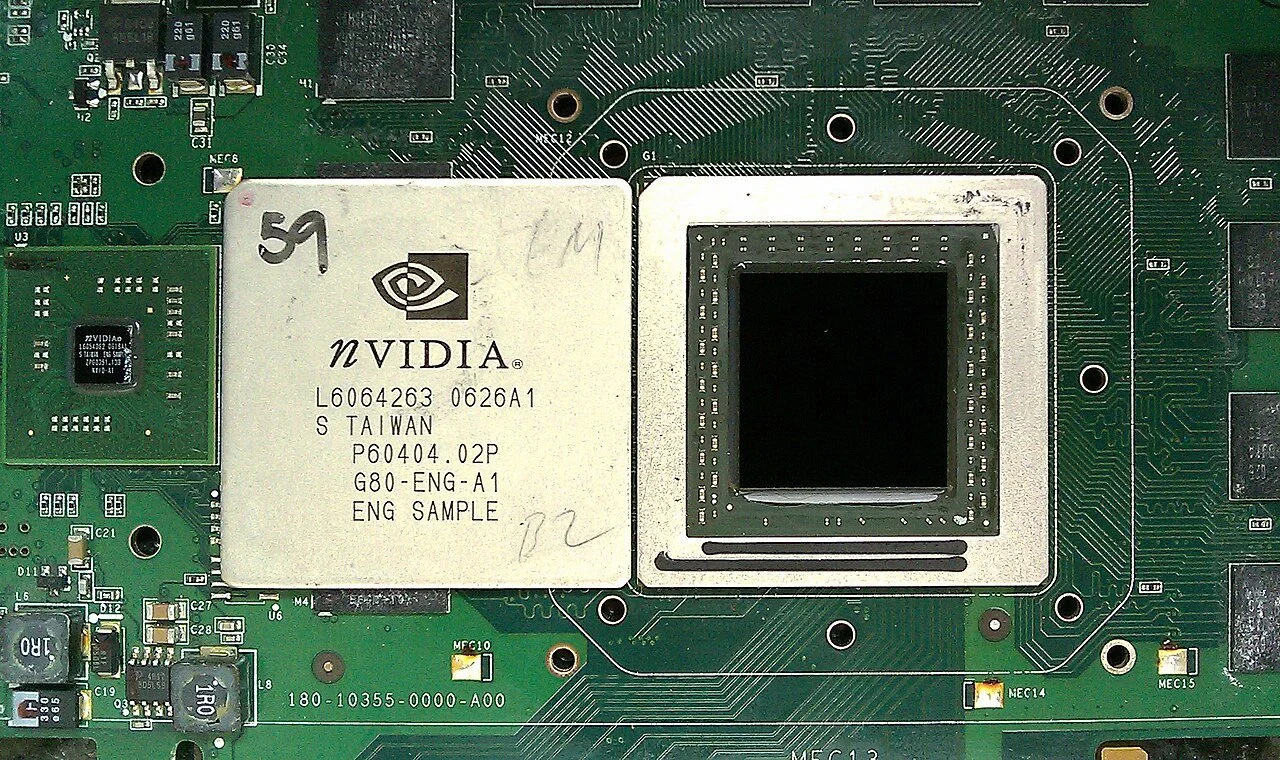
Since October 2022, the United States (US) has continuously banned Chinese firms from accessing and buying its most advanced chips, especially Nvidia’s GPUs or equivalent. The US aims strategically to restrict China’s access to the chips required for advanced AI models to preserve its technological advantage. However, in December 2025, the US government announced that it would allow US companies to export some of their chips to China, including Nvidia’s H200 chips. It is even estimated that, without US chip exports to China, the US would have a 21-to-49-fold advantage in AI computing capacity. Nevertheless, two recent federal cases in March 2026 highlight the limitations of chip export control, which is being systematically circumvented.
Case 1: The Super Micro Scheme (USD 2.5b)
On 19 March 2026, Yih-Shyan Liaw, the co-founder of Super Micro Computer, was arrested, along with two colleagues, for conspiring to violate US export controls on AI chips. Allegedly, between 2024 and 2025, they diverted Nvidia chip-equipped servers to China via Taiwan and other south-east Asian intermediaries, such as Malaysia, by faking documents and using dummy equipment to pass audits.
Case 2: The “GPU partnership” scheme (USD 170m)
On 22-25 March 2026, one Hong Kong and two US citizens were arrested after an FBI investigation for ordering 750 servers worth approximately USD 170m and signing false certifications stating that the equipment was not destined for China.
Implications
These two cases are not isolated incidents, but part of a broader trend of AI chip smuggling from the US to China, which highlights China’s effort to circumvent US export controls on key AI components. Since November 2025, the Department of Justice has uncovered multiple hardware-smuggling cases, including a Florida company that received a USD 4m transfer to purchase and export Nvidia chips to Chinese firms. This suggests that chip-smuggling networks are not opportunistic individual actors but rather a well-organised and adaptive ecosystem that responds to tightening export controls.
This exposes four key loopholes and vulnerabilities in the current US export policy controls. First, the system relies on auditors independently verifying that end-user certificates match their destinations, creating a gap that can be exploited through document falsification, as both cases demonstrate. Second, most US chip companies, such as Nvidia, produce and ship through Taiwan and multiple Southeast Asian intermediaries before chips reach customers, increasing the risk of diversion at each stage. Third, while US firms are banned from exporting certain advanced chips without a license from the Commerce Department, Chinese firms operating in the US are allowed to purchase the same US advanced chips domestically. Fourth, actors can pass audits and divert the real advanced chips elsewhere by using non-functional replica servers for compliance inspections.
On 26 March 2026, the US Congress responded by approving the Chip Security Act for a full House vote. If passed, it would represent a fundamental legislative shift for the US, as enforcement would no longer rely on export licensing paperwork but on trackers located directly on advanced chips capable of tracking their physical location. This bill would grant the Secretary of Commerce the authority to verify the location and ownership of exported chips to prevent smuggling.
Strategically, these cases reveal the strong demand from Chinese firms for US AI components. Although the US partially relaxed its tariffs and export restrictions on China from December 2025, these smuggling cases suggest that the legal framework alone is insufficient to meet Chinese demand. The scale and organisation of these networks might also encourage the US to reconsider and reinforce its restrictions on China.
Forecast
Short-term (Now - 12 months)
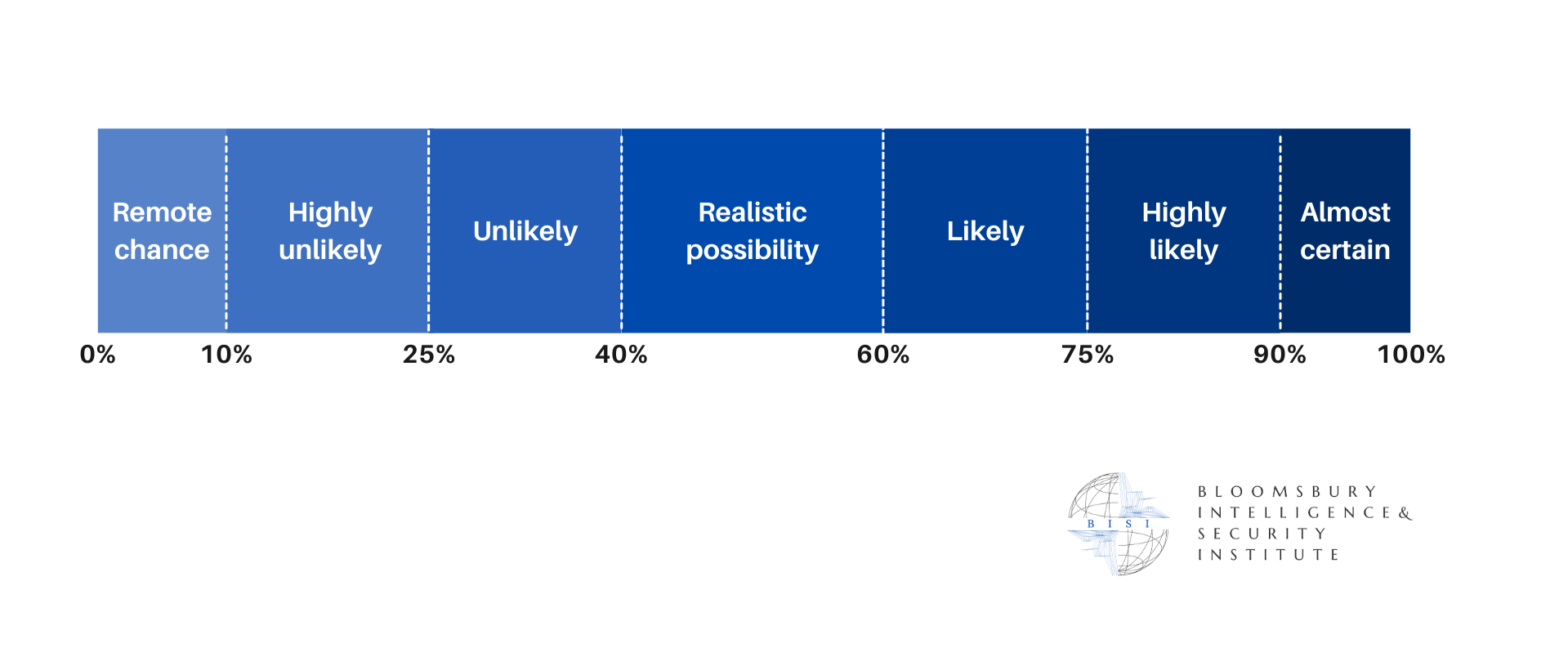
It is very likely that there will be similar federal cases, as the Department of Justice has signalled AI chip control enforcement as a strategic priority for the US.
It is likely that the Chip Security Act will face industry resistance due to the cost and complexity of embedding location verification into chips.
It is likely that the US will tighten and reinforce its export control on advanced AI chips to China as a response to these cases, potentially reversing the December 2025 relaxations.
Long-term (>1 year)
There is a realistic possibility that chip tracking will become the new global standard for chip export controls to prevent smuggling.
It is likely that smuggling networks will adapt to new jurisdictions and employ new strategies, such as routing components rather than finished hardware, to avoid detection.
It is very likely that AI chip smuggling will remain a defining feature of US-China technology strategic competition.