Helium Supply Shock and Semiconductor Volatility in the Context of the Iran War
By Ipek Kara | 9 June 2026
Summary
As of late May 2026, the 60-to-90-day emergency safety buffers held by East Asian semiconductor factories have almost fully depleted since the Iran Conflict in March 2026.
Due to the maritime bottleneck at the Strait of Hormuz, stranded liquid helium inventory has exceeded container holding times, triggering safety valves to vent the boiled-off gas before reaching Asian destination ports.
With roughly one-third of the global helium supply offline due to strikes in Qatar, industrial gas majors have triggered Force Majeure clauses.
Over the next 90 days, chipmakers will be forced to implement strict “allocation tiers” to prioritise ultra-high-margin AI server hardware, causing cascading lead-time extensions for enterprise storage and consumer electronics pipelines.
Context
Semiconductor manufacturing consumes approximately 24% of global helium production. The element is completely non-substitutable due to its unique atomic size and cryogenic properties. It acts as a critical cooling agent for Extreme Ultraviolet (EUV) lithography systems, a thermal stabiliser during wafer manufacturing, and the optimal carrier gas during Chemical Vapour Deposition (CVD). Helium cannot be artificially synthesised and needs to be captured exclusively as a trace byproduct of Liquefied Natural Gas (LNG) processing, making its availability entirely dependent on macro-energy operations.
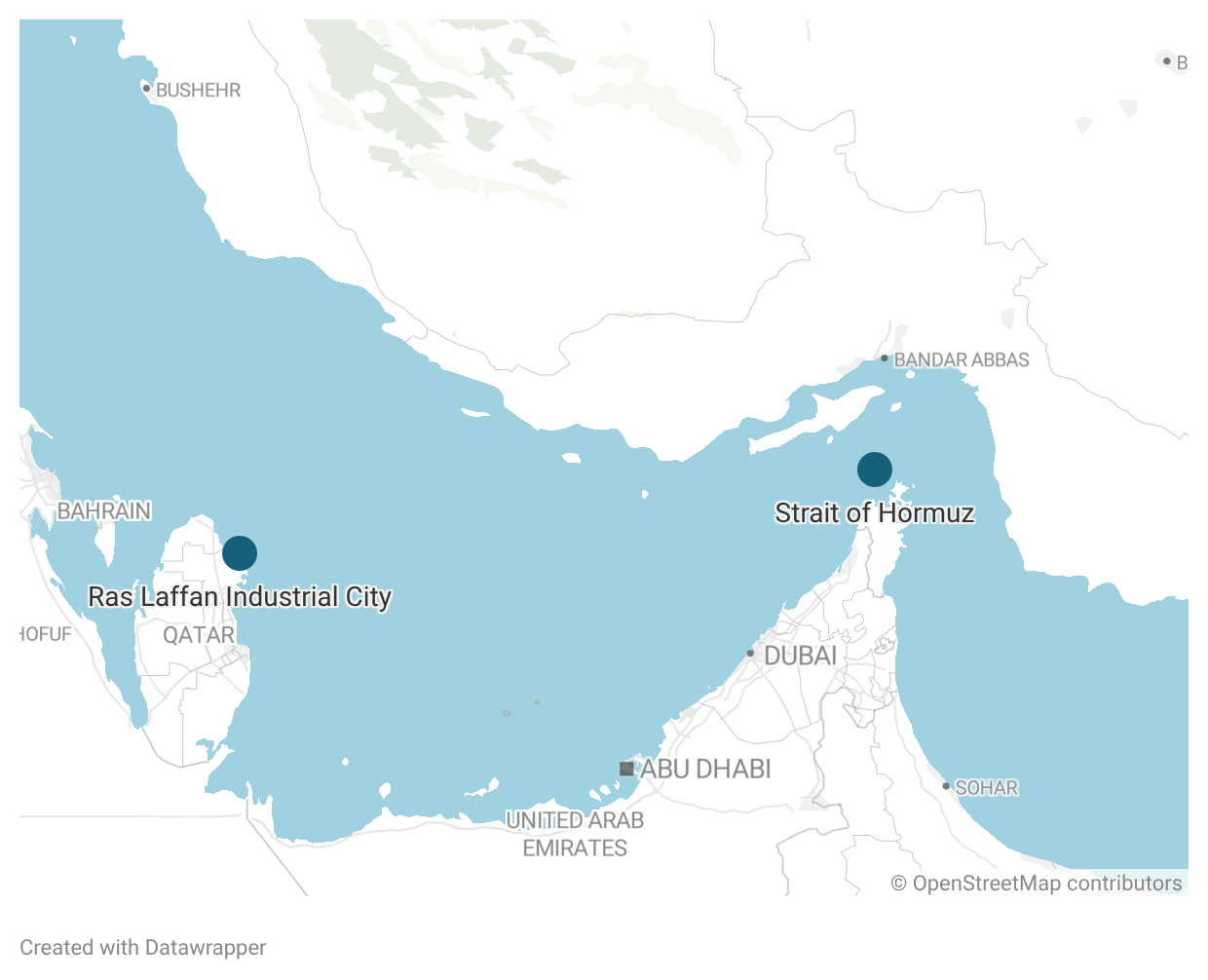
On 2 March 2026, Iranian drone and missile strikes targeted Qatar’s Ras Laffan Industrial City (the largest helium production complex in the world), damaging key processing trains and removing 30% to 38% of the global helium supply overnight. Following the attacks, QatarEnergy declared Force Majeure, shutting down its refinery facilities and announcing that full-capacity restoration will take 3-5 years.
As the Strait of Hormuz remains closed to Western commercial shipping, carriers have attempted to transport specialised cryogenic ISO containers around Africa’s Cape of Good Hope– a detour which adds 3,500 nautical miles and 10 to 14 days of transit time. Since liquid helium must be maintained at extremely low temperatures, this extended journey breaches the 40 to 60 day holding-time margins of vacuum-insulated containers, thus resulting in heat ingress, which drives up its internal pressure and triggers the mandatory safety valves to vent the gas into the atmosphere. Significantly, this transit boil-off is causing a considerable reduction in delivered volumes, resulting in a physical deficit at receiving ports.
Helium is critical to advanced semiconductor manufacturing because it functions as the definitive thermodynamic stabiliser for extreme ultraviolet (EUV) lithography sub-systems and silicon wafer fabrication lines. Without helium, advanced fabrication facilities cannot maintain the thermal baselines required to operate high-density lithography machinery without causing structural degradation to nanoscale components. This logistical failure directly links the Middle Eastern energy conflict to downstream microelectronics supply chains. Because helium’s thermodynamic volatility precludes strategic stockpiling at scale, the supply disruption at Qatari refineries disrupts international fabrication lines, transforming a local conflict into an absolute, physical boundary on global technology infrastructure.
Implications
The exhaustion of global helium buffers has altered the economics of high-tech manufacturing, demonstrating that the primary constraint on the artificial intelligence (AI) boom is material constraints resulting from geopolitical crises. This supply shock is compounding the pre-existing structural crisis in the global memory market, where manufacturers have reallocated wafer capacity away from Dynamic Random Access Memory (DRAM) to High-Bandwidth Memory (HBM) to satisfy exponential AI demand. Because each gigabyte of HBM consumes roughly three times the wafer capacity of standard DDR5, this capacity migration has triggered a historic scarcity premium. 6N-grade helium and wafer allocation have thus emerged as non-substitutable points of failure within advanced hardware supply chains. The current convergence illustrates that while capital allocations and algorithmic designs are infinitely scalable, the foundational layers of physical computation remain bound to semiconductor manufacturing capacities and global supply chains affected by the war in Iran.
There is an immediate manufacturing bottleneck for advanced hardware architectures. To build high-density AI accelerators, logic processors must be paired with HBM stacks. While logic foundries have partially buffered their lines through US gas imports, their HBM manufacturers in South Korea (who import 64.7% of their helium from Qatar) face severe supply cuts. Delays in South Korean wafer production are therefore highly likely to cause a bottleneck in the volume of AI modules to be assembled worldwide.
Conversely, this dynamic presents a market advantage for Micron Technology. With a large, expanding production base in the US, Micron can draw helium directly from stable domestic pipelines, insulating its profit from the market spikes currently affecting its Asian competitors.
This deficit has triggered a major secondary shock to cloud data storage systems. As industrial gas majors are prioritising advanced logic chips and healthcare infrastructure under their Force Majeure allocation frameworks, helium shipments to storage manufacturers have been heavily cut down and increased prices for high-capacity drives (such as the Seagate Exos and WD Ultrastar series) by 20% to 50%.
Forecast
Short-term (Now - 3 months)
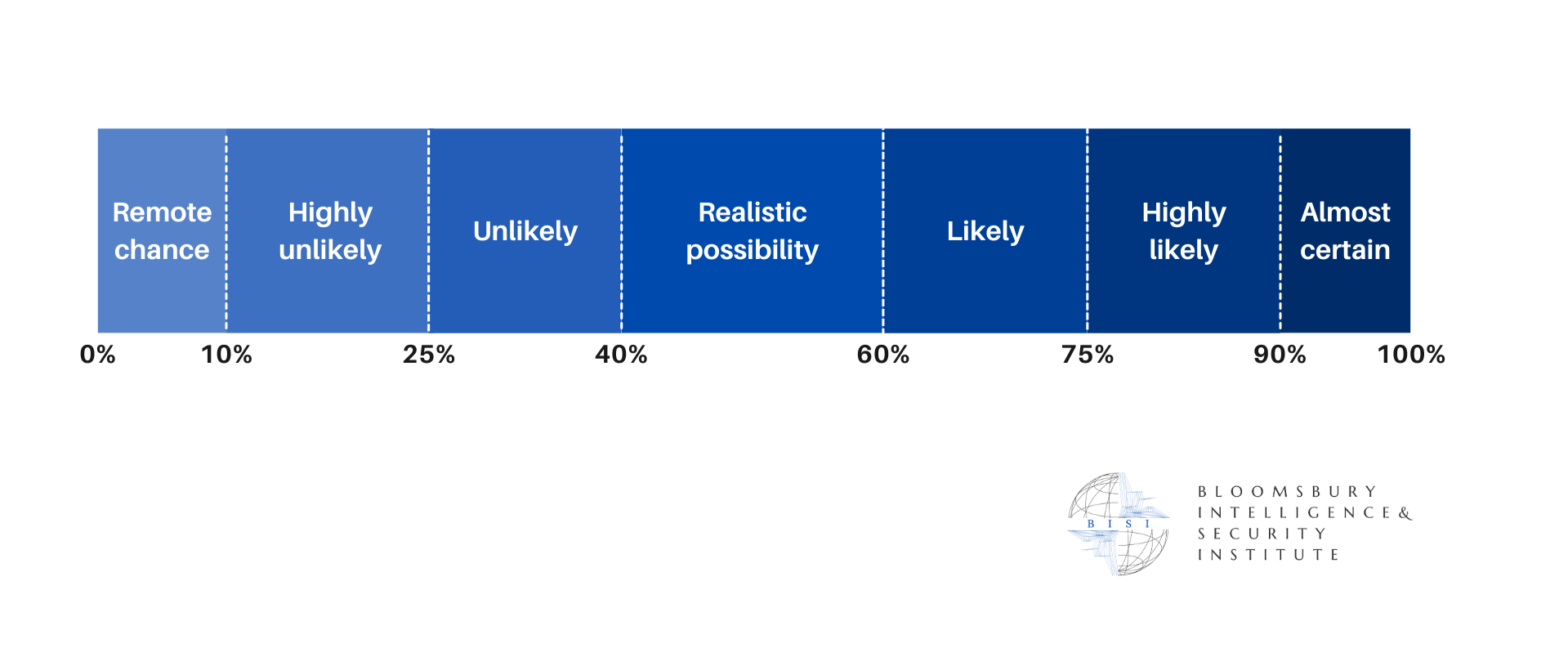
Delivery windows for non-prioritised consumer electronics chips are highly likely to slip past 52 weeks in the third quarter of 2026, causing consumer product delays.
Data centre operators are highly likely to face a prolonged deficit of high-capacity helium-filled HDDs, artificially limiting the current physical expansion rate of global cloud storage networks.
Medium-term (3 - 12 months)
Persistent wafer-start constraints in memory packaging facilities are likely to become a physical market deficit of completed AI accelerators, triggering a price spike for enterprise AI hardware.
Government trade bodies are likely to mandate a permanent structural exit from Middle Eastern raw material agreements, forcing global tech giants to sign long-term and high-cost supply contracts with the US.
Long-term (>1 year)
Countries possessing domestic pipeline access to natural gas processing and helium reserves are highly likely to secure a permanent operational and financial advantage over geographic hubs dependent on vulnerable maritime shipping lanes, altering the map of technology infrastructure investment at the global level.