By Dorota Vandakova | 18 May 2026
Summary
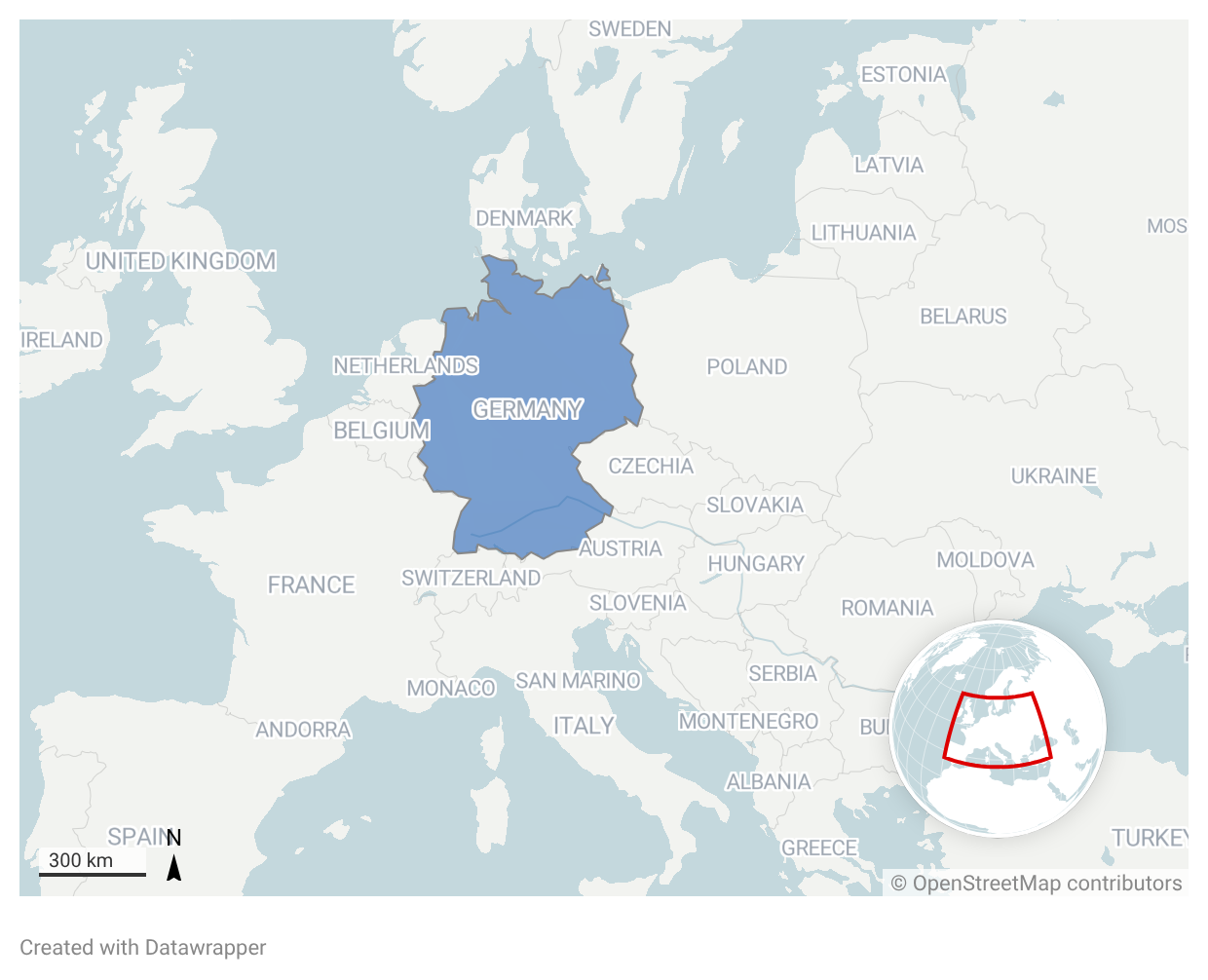
Germany has introduced its first formal military strategy, prioritising European defence autonomy and deterrence against Russia.
The strategy reflects a shift away from reliance on the United States (US) and signals increased German defence spending and operational readiness.
This development is likely to strengthen NATO’s European pillar but may face domestic, logistical, and capability constraints.
Context
On 22 April, the German defence minister presented a new defence strategy aiming to reduce reliance on the US and increase reliance on Europe to deter the Russian threat. This marks the first time that the German Bundeswehr has adopted an official military strategy, reflecting shifts in the European security environment following Russia’s invasion of Ukraine.
The strategy prioritises collective defence within Europe, with Germany seeking a greater leadership role in regional security. It emphasises readiness, rapid deployment, deep strikes, and increased defence spending, aligning with broader NATO requirements. The policy builds on Germany’s earlier “Zeitenwende” shift, which committed significant financial resources to modernising the Bundeswehr. The new doctrine gives that commitment formal strategic expression, translating political intent into institutional guidance for the armed forces.
Implications
Germany’s new strategy signals a structural shift in European defence, with Berlin positioned to assume greater institutional and operational responsibility with NATO. Increased defence spending and accelerated capability development, particularly in armoured forces, air defence, and long-range fires, will meaningfully enhance deterrence against Russian aggression, especially for Allies on NATO’s eastern flank who have called for a stronger German commitment. For states such as Poland and the Baltic nations, a more capable and strategically engaged Germany offers both practical reassurance and political credibility.
However, the Bundeswehr continues to face substantial readiness challenges that risk undermining the strategy’s ambitions in the near term. Although former Chancellor Olaf Scholz announced a EUR 100b ($113–$114 billion USD) Zeitenwende special fund in 2022 to modernise the Bundeswehr, progress after four years has been uneven and slower than initially anticipated. Some major procurement milestones have been achieved, including commitments to acquire Lockheed Martin F-35 Lightning II fighter jets, CH-47F Chinook helicopters, expanded air-defence systems, and ammunition stockpiles, yet much of the fund remains tied up in long-term procurement programmes that have not yet translated into substantially improved operational readiness. Persistent equipment shortages, protracted procurement delays, and difficulties in personnel recruitment and retention remain unresolved. The gap between declared intent and actual operational capacity is significant, and translating increased funding into deployable capability will take years. Institutional and bureaucratic obstacles within the defence acquisition system have historically slowed delivery, and there is limited evidence that these structural issues have yet been fully addressed. Moreover, the long-term strategic impact of the spending programme remains uncertain given mounting domestic fiscal pressures, competing social and economic priorities, and Germany’s increasingly fragmented political environment, all of which may complicate sustained defence investment and policy continuity in the years ahead.
The strategy’s emphasis on European strategic autonomy carries implications for transatlantic relations that extend beyond the immediate NATO context. While the doctrine explicitly situates Germany within the Alliance framework, a sustained move toward reduced dependence on the US generates friction if divergences in threat assessment, operational priorities, or burden-sharing expectations emerge. Managing this tension will require sustained diplomatic efforts alongside military investment.
At the same time, a more assertive German military posture can produce a positive spillover effect across the continent. Berlin’s willingness to lead lowers the political threshold for other European countries to expand their own defence contributions, reinforcing a broader trend toward greater regional self-sufficiency. This dynamic proves particularly consequential for the EU’s nascent defence initiatives, where German engagement has often been seen as a prerequisite for meaningful progress. Recent efforts to revitalise the Weimar Triangle, involving closer defence coordination between Germany, France, and Poland, further illustrate how Berlin could anchor a more cohesive European security framework. The initiative has already produced commitments toward joint military exercises, expanded military mobility cooperation, and closer coordination on support for Ukraine, potentially creating a stronger European defence core centred on the continent’s largest military and industrial powers.
Germany’s growing military role is also increasingly reflected in spending trends and strategic ambitions. In 2025, Germany became the largest military spender among European NATO members, increasing defence expenditure by 24% year-on-year to approximately USD 114b and exceeding NATO’s 2% GDP benchmark for the first time since reunification. German leaders have since articulated ambitions to build the “strongest conventional army in Europe,” while NATO planning targets may require the Bundeswehr to expand by an additional 50,000–60,000 troops in the coming years. If sustained, these trends could significantly reshape Europe’s defence balance by positioning Germany not merely as an economic leader, but increasingly as a central military actor within both NATO and emerging European defence structures. At the same time, however, whether Germany can maintain this trajectory will depend heavily on domestic political consensus, fiscal sustainability, and the government’s ability to overcome longstanding procurement and recruitment constraints.
Operationally, Germany’s role as the primary logistics and reinforcement hub for NATO’s eastern flank will become more demanding. Infrastructure networks, rail and road mobility corridors, fuel and ammunition supply chains, and host nation support arrangements will all face heightened pressure as Alliance force generation requirements grow. Germany has committed to providing 35,000 troops and substantial air and naval assets within 30 days under NATO’s new force model, while also acting as a key transit corridor for reinforcements into Poland and the Baltic states. Gaps in military mobility, including legal, infrastructural, and interoperability barriers, remain only partially resolved across Europe. A 2022 assessment found that 23% of German rail track and nearly half of signalling infrastructure were in poor condition, highlighting the scale of existing logistical vulnerabilities. Any significant delays in modernisation, coordination, or infrastructure investment could materially limit the strategy’s effectiveness in a crisis scenario, particularly one requiring rapid reinforcement at scale.
Forecast
Short-term (Now - 3 months)
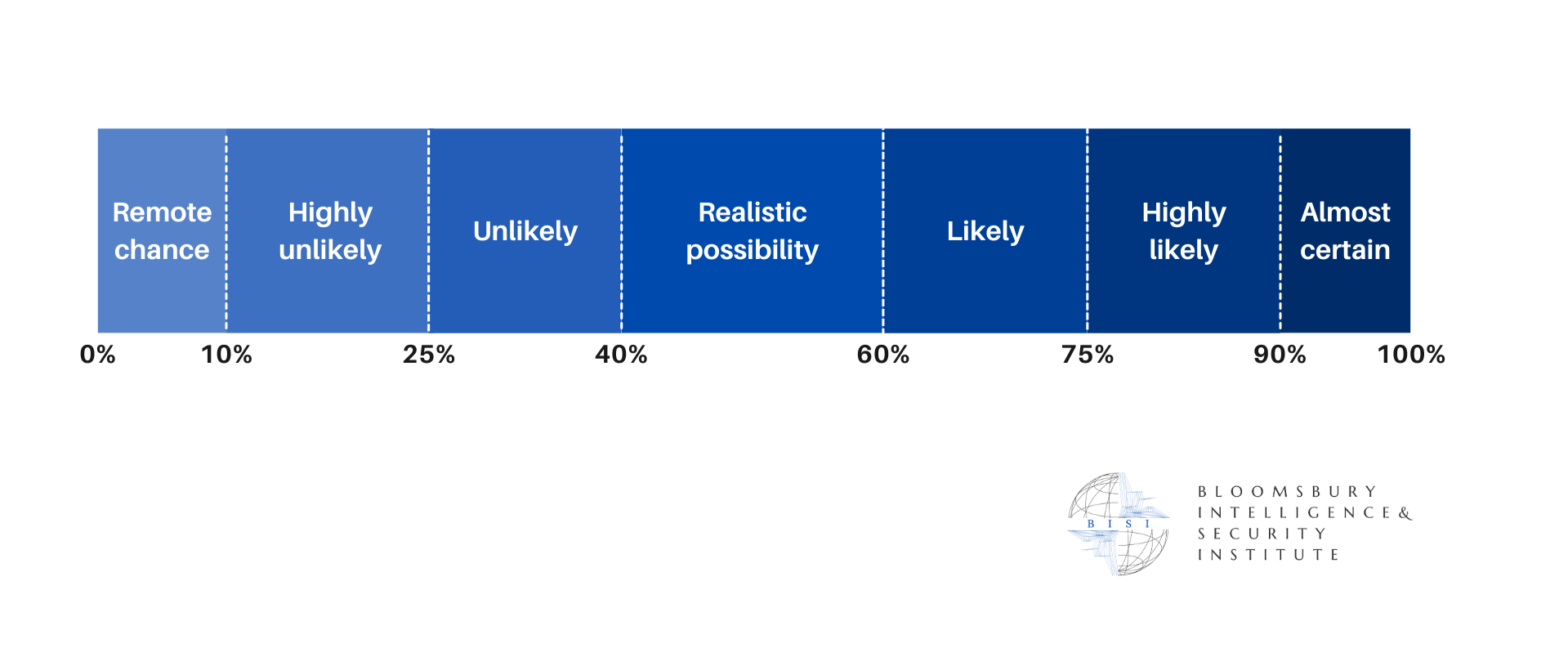
Germany is highly likely to increase defence planning and coordination within NATO, with limited immediate operational changes.
Medium-term (3 - 12 months)
Defence spending and procurement efforts are likely to accelerate, though capability improvements may remain constrained by structural inefficiencies.
Long-term (>1 year)
Germany is highly likely to play a more central role in European defence, strengthening NATO’s European pillar, though gaps in readiness may persist. The war in Ukraine has accelerated European rearmament and reinforced expectations that European states will assume greater responsibility for regional security, particularly amid uncertainty surrounding long-term US commitments to NATO. In this context, Germany is expected to play an increasingly important role in force generation, military logistics, and defence industrial production, especially along NATO’s eastern flank.