By Patricia Preller | 16 March 2026

Photo by David Iliff/Wikimedia. Licensed under CC BY-SA 3.0
Summary
Germany added two battalions to the Lithuania brigade, planned to grow to 4,800 troops by the end of 2027, to defend the Baltic states from possible Russian aggression.
With its support for Lithuania, Germany signals its readiness to assume greater responsibility for European defence amid uncertainty about US support and heightened Russian pressure.
The Brigade and the Baltic states will likely face increased Russian hybrid warfare, requiring the development of effective multinational defence frameworks for the region.
Context
On 5 February 2026, Germany subordinated 203rd Armoured Tank Battalion and 122nd Armoured Infantry Battalion to the Lithuania Brigade, growing its size from 500 to 1,800 soldiers. The brigade will further increase to 4,800 soldiers and 2,000 vehicles, permanently stationed in Lithuania by the end of 2027, and will include the Multinational Battlegroup Lithuania, supported by the Netherlands, Norway, and Luxembourg. Lithuania has pledged up to EUR 1.7b (USD 2b) to develop supporting infrastructure for the brigade stations near the Lithuanian cities Rūdninkai and Rukla. By 2027, the Brigade is expected to significantly enhance NATO’s regional readiness and deterrence along its Eastern border.
Implications
As the barrier between Russia and its Kaliningrad exclave and with only a narrow link to NATO main territory, known as the Suwałki Corridor, Lithuania is considered most vulnerable to Russian military intervention. Unprecedented numbers of airspace violations by Russian drones across Europe, notably in Lithuania and Poland in late 2025, heightened fears around such aggression.
With increasing uncertainty around continued US support for NATO, the Lithuania Brigade represents an important reassurance for Northeastern Europe. This is a departure from NATO’s previous rotational presence in the region. Operationally, the brigade enables rapid deployment in the event of an attack, significantly enhancing Lithuanian military capacity. With the integration of a multinational battalion, NATO partners also hope to deepen practical, multinational coordination to further aid a coherent response in case of attack. As a permanently stationed deployment and by automatically involving German forces in an attack in the region, the Lithuania Brigade acts as a significant deterrent against Russian aggression.
Politically, after Merz’ loosening of the debt brake for increased defence spending in March 2025, the continued expansion of the brigade represents another significant step in Germany’s assumption of more responsibility in European defence as its economic heavyweight. So far, the 2026 defence budget of over EUR 108b (USD 125b) has focused on filling conventional capability gaps, channelling funds into expanding armoured vehicle fleets, procuring drone systems, and combat equipment for up to 460,000 soldiers, and accelerating satellite communications capabilities. However, Berlin’s spending strategy so far has favoured German defence industries over joint European investment, leading commentators in France to voice concerns about a German-centred return to military readiness. In recent months, France and Berlin have repeatedly clashed over European defence and investment, notably around the imploding Future Combat Air System (FCAS) and Merz’s strong rejection of French President Emmanuel Macron’s proposal for a joint European borrowing scheme. The brigade represents a step towards a more European defence commitment from Berlin while the lack of integration of defence industries continues to hamper collective effort.
This not only poses risks to political cohesion but also to European security. Although collectively spending an estimated EUR 381bn (USD 448bn) on defence, Europe’s defence infrastructure remains fragmented and cannot translate fiscal into military capability. The Lithuania Brigade cannot deter and defend the northeastern flank on its own. In a recent wargame by ex-NATO and German officials, the Brigade failed to intervene in a simulated Russian attack in the Baltic, with Germany hesitant to respond and the US declining to invoke NATO’s Article 5. Such inconsistent responses from the NATO members increase the risk of conventional assaults on the Baltic by Russia. The Brigade already faces increased hybrid pressure, with mysterious phone calls to its troops or aircraft that appear to be spying on manoeuvres. Germany has ordered strike drones worth EUR 536m (USD 638m) to directly support its brigades in Lithuania, helping offset some of these challenges. But its effectiveness ultimately depends on the success of broader cooperation among NATO members and with Europe as a whole.
Forecast
Short-term (Now - 3 months)
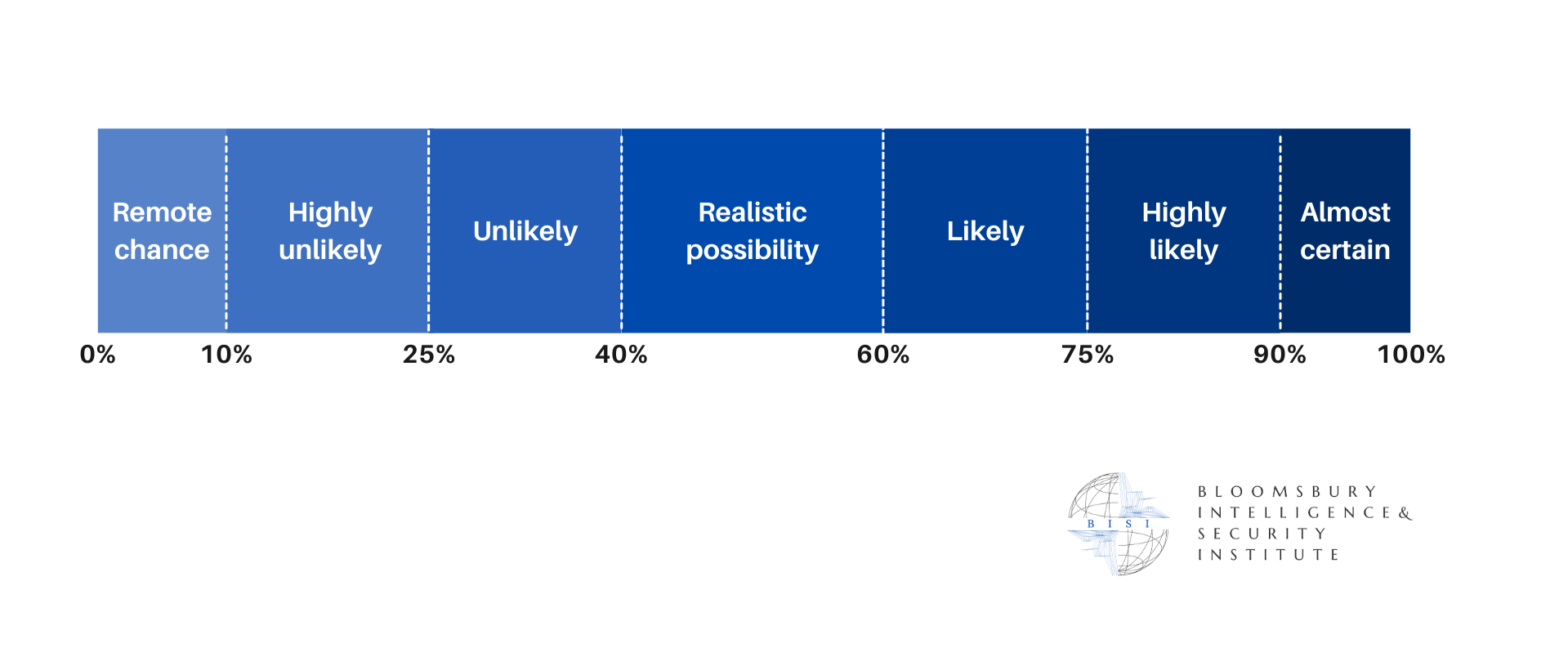
It is highly likely that the German Bundeswehr will face shortfalls elsewhere, making its 2029 deadline for full combat-readiness difficult to meet.
Medium-term (3 - 12 months)
In addition to the Lithuania Brigade, it is highly likely that states on NATO’s Eastern border will continue to demand greater involvement of all allied states in defence against Russia, renewing calls for a European defence framework or army.
Long-term (>1 year)
Russia will likely increase its hybrid warfare efforts in the Baltics, requiring Europe to invest significantly in protection against sabotage and frameworks for a swift, multinational response to Russian aggression in the Baltics to support the Brigade.
If Germany’s national focus on defence procurement and financing continues, it is a realistic possibility that its rearmament will spark unease among its neighbours despite the European nature of the Lithuania Brigade, renewing questions around deeper European defence integration.